


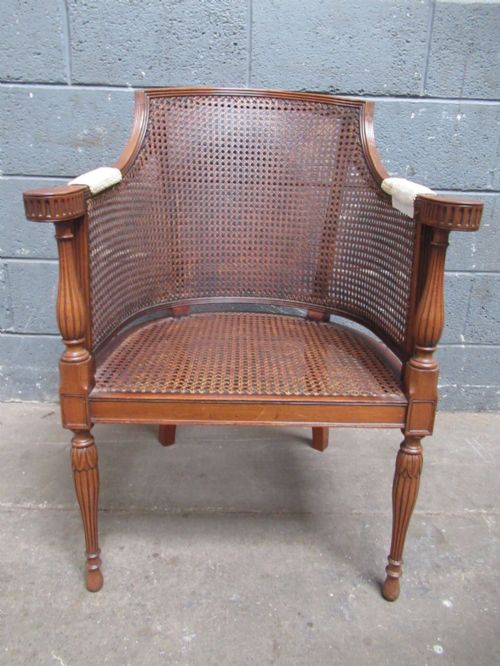
Edwardian Style Armchair
When choosing an edwardian style armchair, you select a piece that mirrors earlier historic revivals while offering deep, sprung comfort.
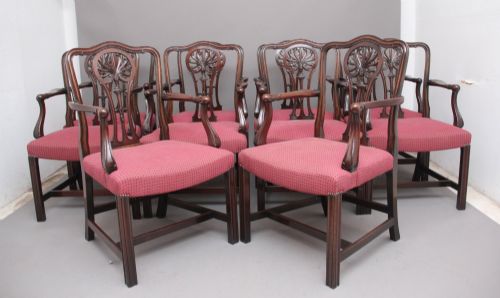
Edwardian Style Armchair
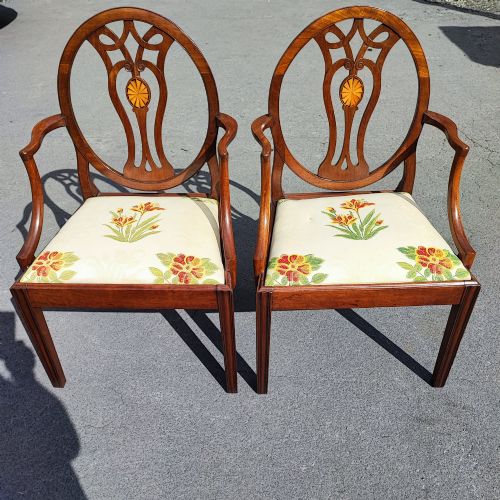
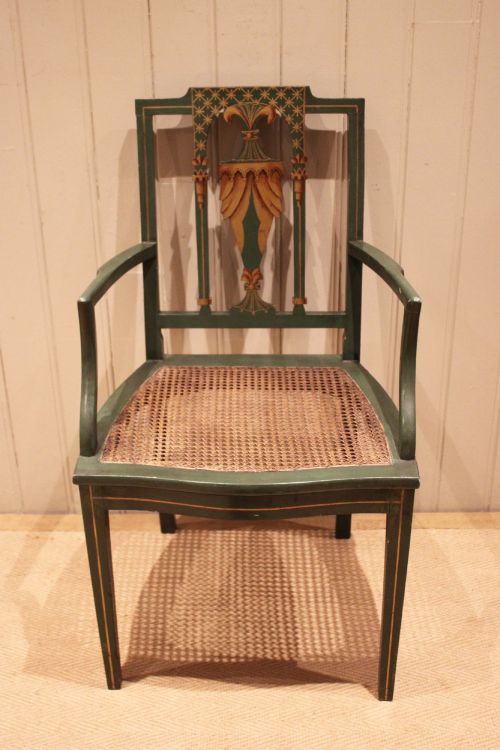
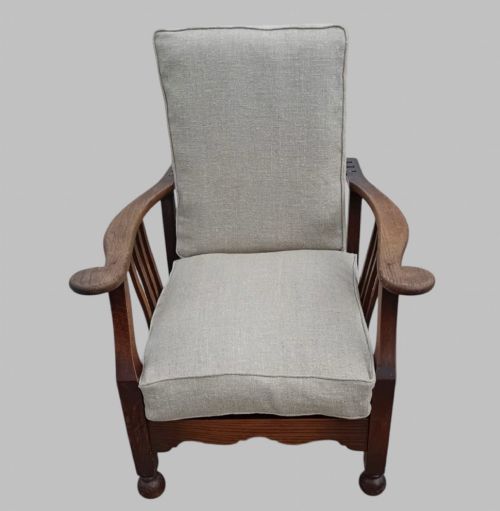
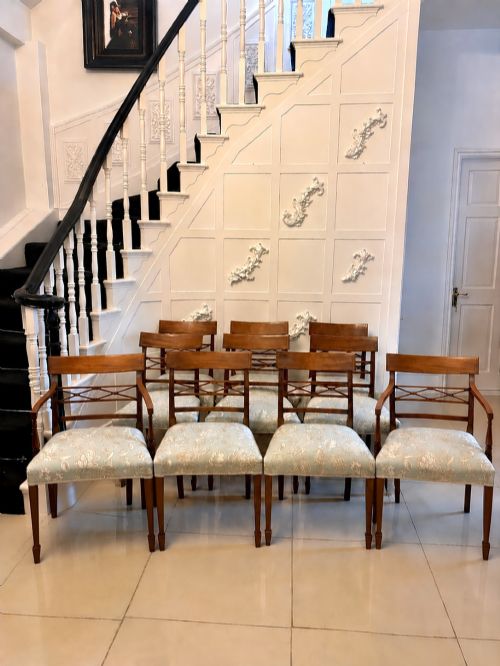
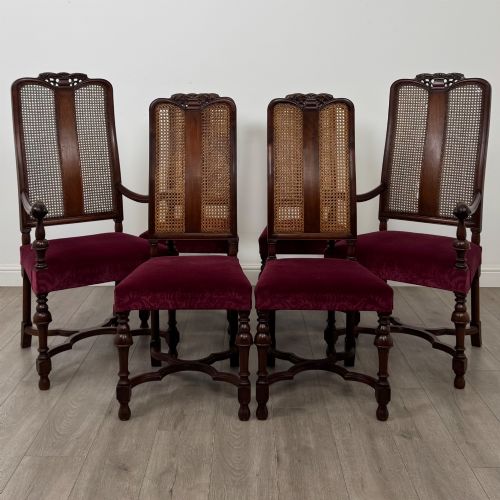
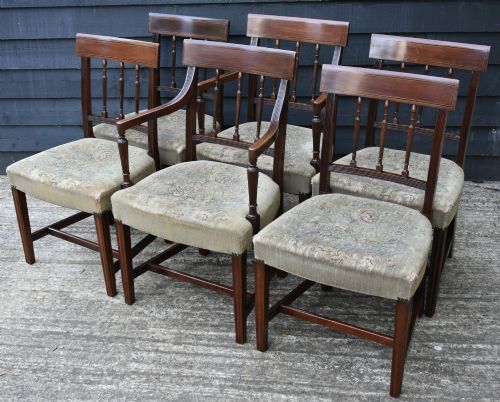
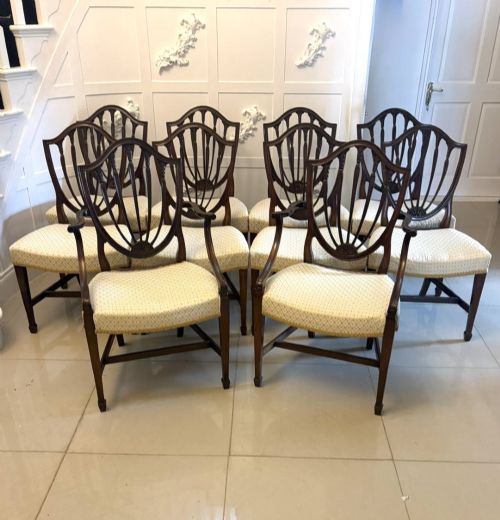
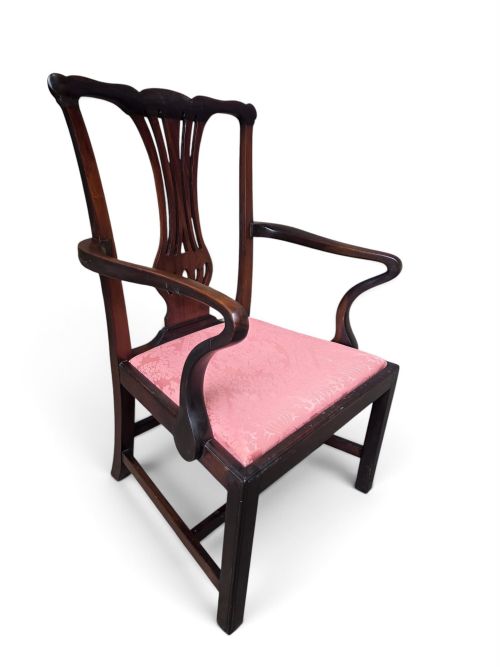
An edwardian style armchair draws heavily on eighteenth-century design vocabulary, reinterpreting Georgian, Chippendale, and Sheraton forms for early twentieth-century interiors. These seats range from formal dining carvers in polished mahogany to deep-sprung lounge chairs designed purely for domestic ease.
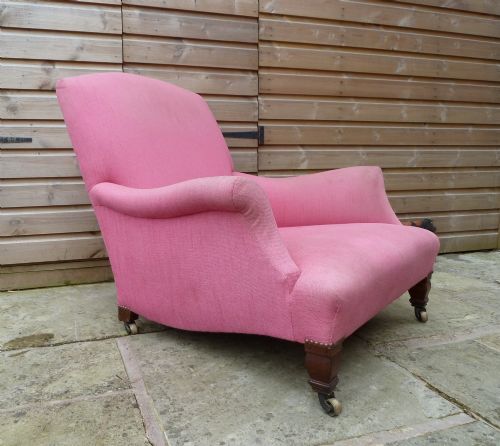
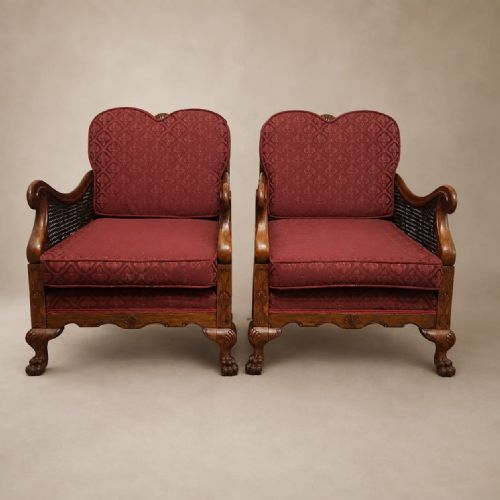
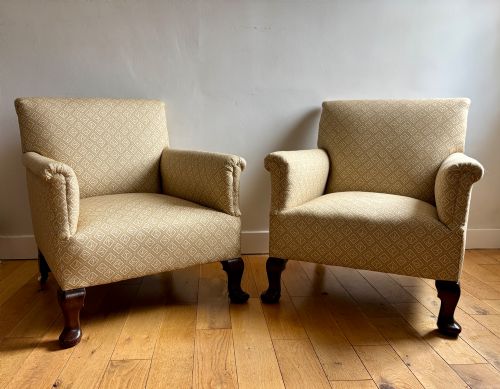
The most common iterations on this page channel the low-slung, cushioned comfort associated with Howard and Sons, alongside formal open-arm chairs featuring carved splats. They bridge the gap between historic grandeur and the relaxed domestic requirements of the Edwardian era.
Makers of the period frequently adapted classic styles like the Queen Anne or Hepplewhite, utilising rich woods and traditional upholstery to create seating that felt both established and contemporary.
How They Were Made
Frames are predominantly constructed from solid mahogany, walnut, or oak, often finished with detailed mahogany veneers and subtle inlay work. Structural integrity relied on traditional joinery, sturdy wood frames, and supportive coil spring systems in the deep-seated lounge models.
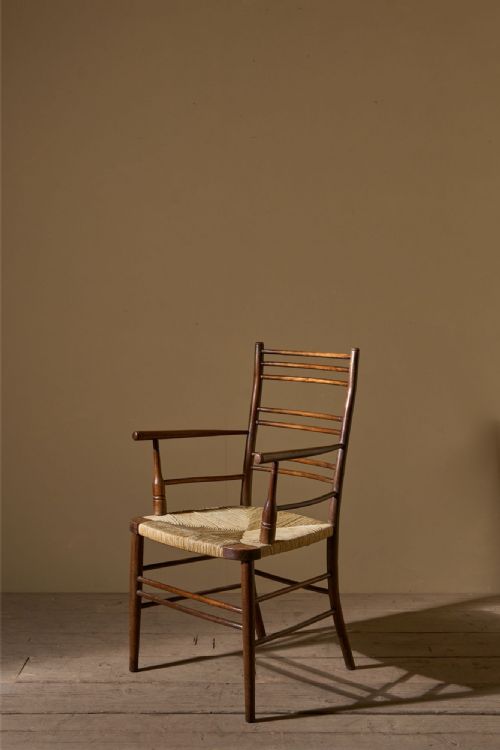
Upholstery materials reflect a mix of practicality and luxury, utilising leather, heavy woven fabrics, velvet, and rush or split cane for seats and panels. Brass castors and detailed wood carving frequently complete the construction of finer library and drawing-room chairs.
Edwardian Style Armchair Retail Price Guide 2026
Typical asking prices for edwardian style armchair among the pieces listed under this phrase on Sellingantiques today, from the lower quarter to the upper quarter. They describe what is for sale here now, not the wider market.
Several miniature bentwood and child-sized versions appear, proving that Edwardian toddlers also required proper architectural seating.
What Varies in Quality
The distinction between ordinary and exceptional seating lies in the depth of hand-craftsmanship, from the crispness of the wood carving to the resilience of the internal stuffing. Superior examples employ dense horsehair and supportive springs that retain their intended profile through decades of use.
Material selection also dictates overall grade, where finely figured mahogany, perfectly woven split cane, and hand-dyed leathers elevate a piece far above standard production chairs of the same era.
Howard and Sons·Liberty Morris And Co·Maple And Co·Whytock And Reid·Alfred Allen Of Birmingham·SF Cullen·Waring And Gillow·J And J Kohn
The Edwardian Style Armchair Glossary
- Bergere
- An enclosed upholstered armchair with wooden framing and cane-work sides or back. This French-inspired form gained immense popularity in Edwardian drawing rooms.
- Carver
- An armchair designed to match a set of dining chairs, typically featuring open arms to accommodate wide clothing. They were traditionally placed at the heads of dining tables.
- Gainsborough armchair
- A wide, low-seated upholstered chair with open padded arms and mahogany legs, originating in the mid-eighteenth century. Edwardian makers recreated these as luxurious desk or library seats.
- Shield back
- A chair back shaped like a heraldic shield, commonly associated with Hepplewhite designs. The form reappeared frequently in Edwardian dining chair production.
- Splat
- The vertical wooden strip down the centre of a chair back. Elaborate carving on this element often denotes the specific revival style.
Edwardian Style Armchair: Frequently Asked Questions
What defines an edwardian style armchair?
These chairs combine early twentieth-century comfort with revivalist aesthetics, drawing heavily on eighteenth-century Georgian and Sheraton design principles.
They utilise traditional timbers like mahogany and oak, paired with sprung upholstery or cane panels to suit domestic living spaces.
How do I identify a Howard style chair?
Howard-style seating is characterised by low, deep proportions, rolled arms, and heavily sprung loose cushions designed for maximum comfort.
Original pieces and quality revivals often feature marked castors and sturdy internal webbed frames hidden beneath tailored upholstery.
Are these chairs suitable for daily use?
Most pieces on this page were built for domestic living rooms and studies, making them robust enough for regular seating when structurally sound.
Their deep proportions and supportive coil springs mean they function just as well in modern interiors as they did a century ago.
How do I tell different revival periods apart?
Chirps of Chippendale revival styles usually show heavy carved mahogany and claw-and-ball feet, whereas Sheraton-influenced pieces lean towards delicate inlay and tapered legs.
Looking closely at the timber choice and structural joinery helps separate true Edwardian interpretations from later reproductions.