

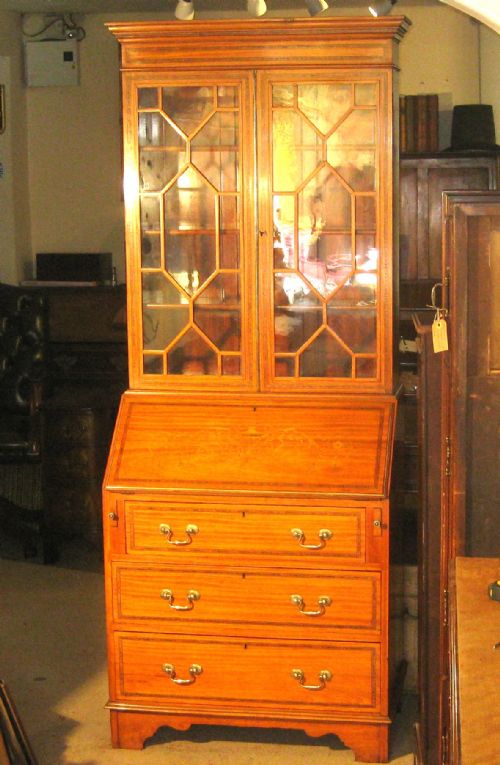
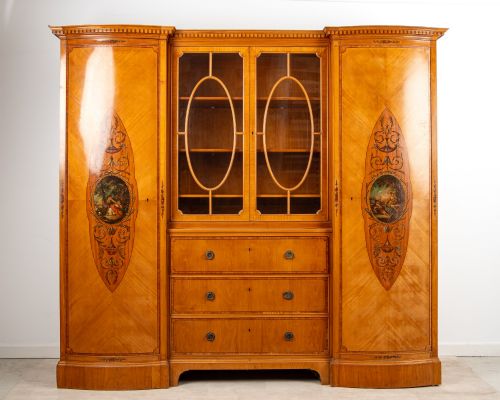
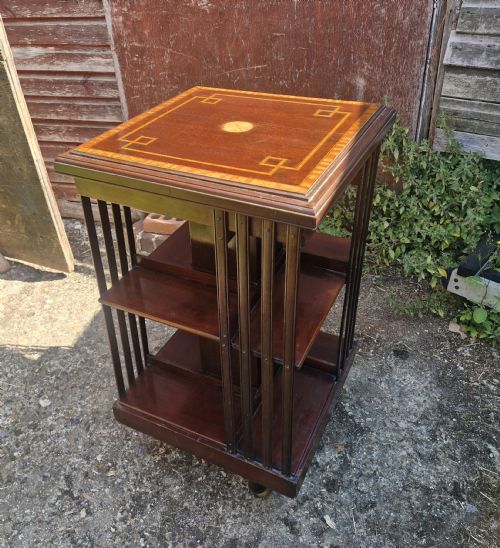
Edwardian Satinwood Bookcase
An Edwardian satinwood bookcase brings bright timber and refined neoclassical revival styling to any domestic interior.
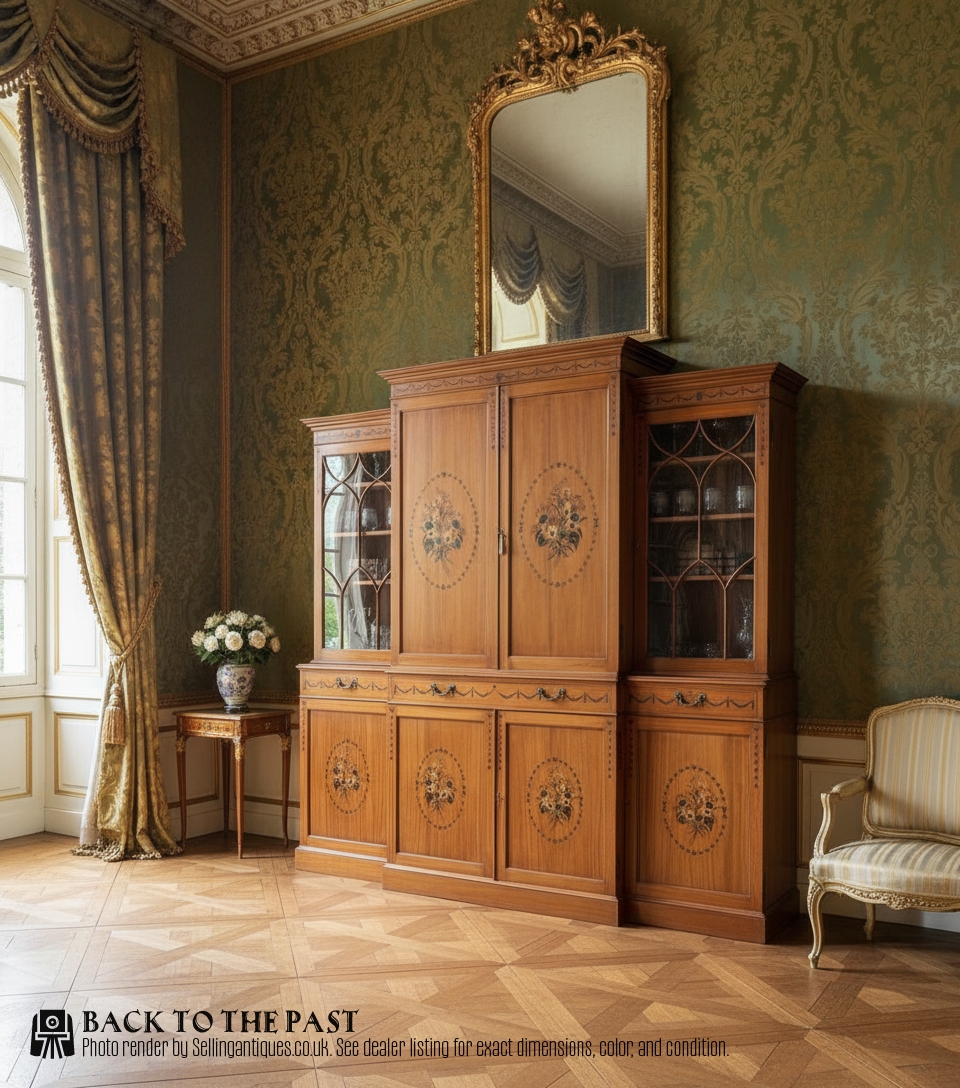
Edwardian Satinwood Bookcase
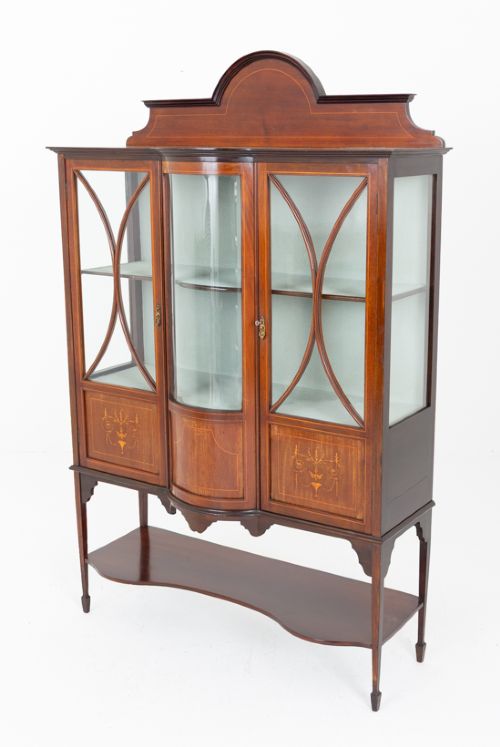
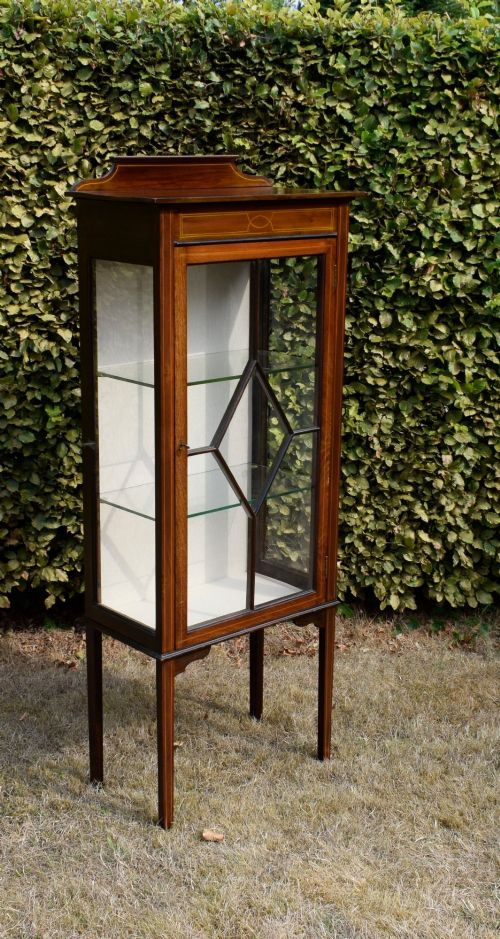
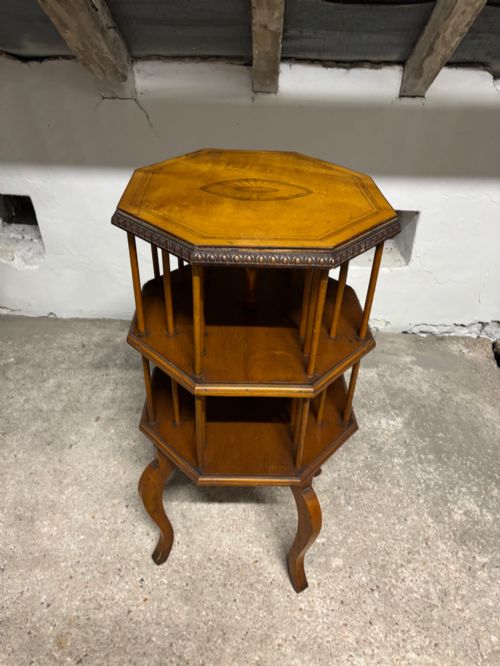
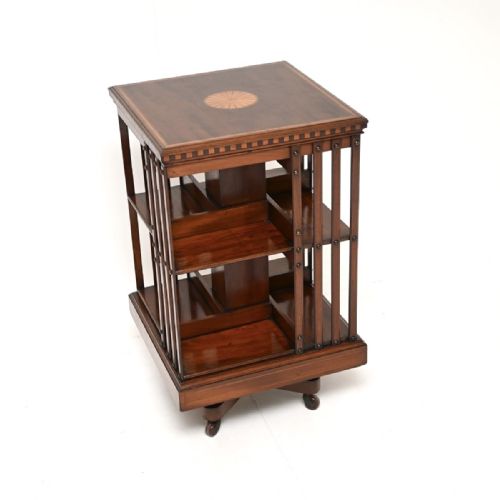
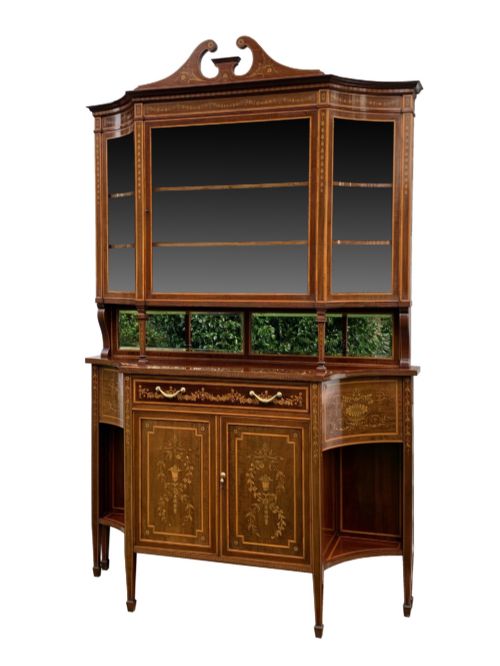
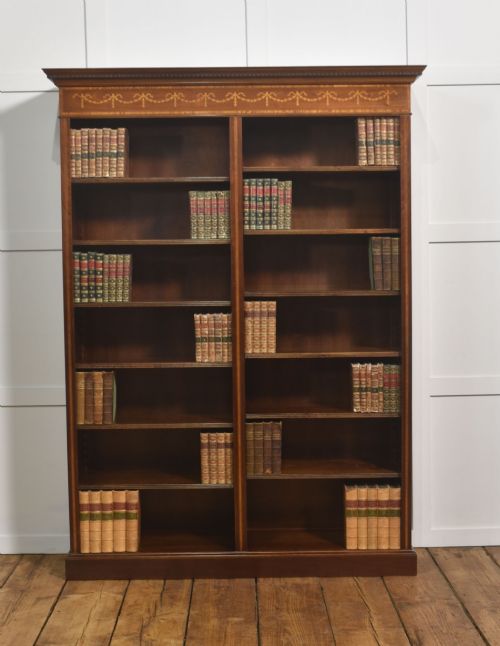
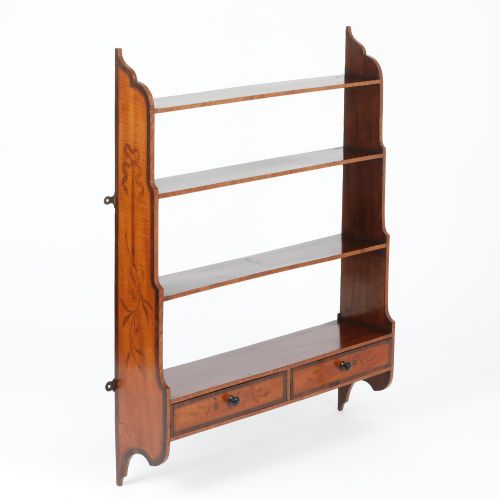
An edwardian satinwood bookcase unites fine cabinet-making with the lighter aesthetic tastes of the early twentieth century and the late nineteenth century. These items span various formats, from revolving table versions and open shelves to tall glazed display cabinets and bureau combinations.
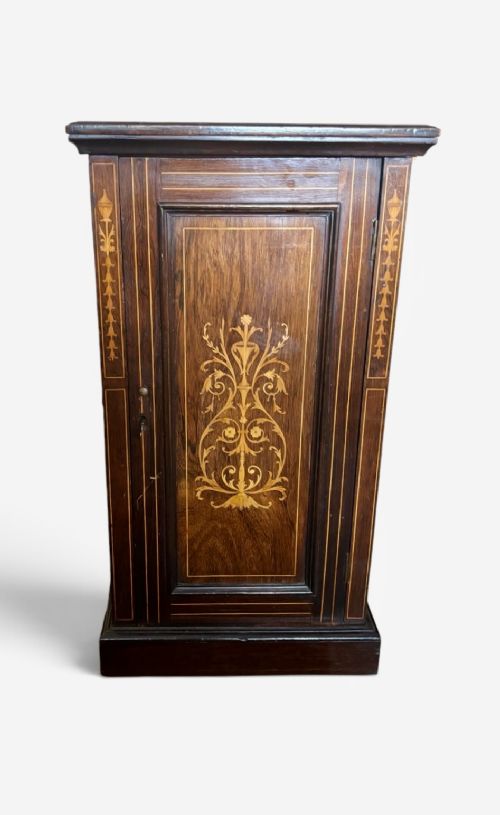
Makers of the period frequently paired satinwood with mahogany, utilising contrasting banded borders and intricate inlay work to accentuate the grain. Buyers searching for an edwardian satinwood bookcase will discover both solid satinwood showpieces and mahogany carcases veneered in pale exotic timbers.
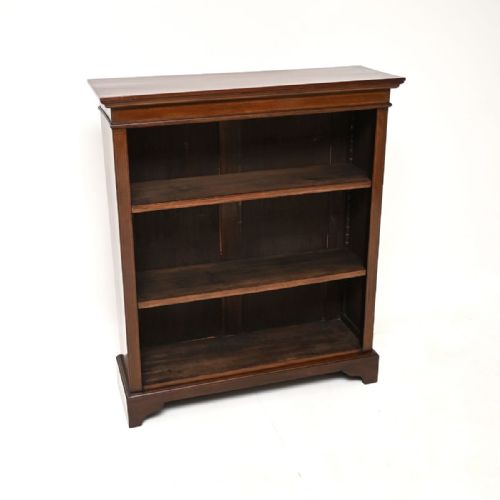
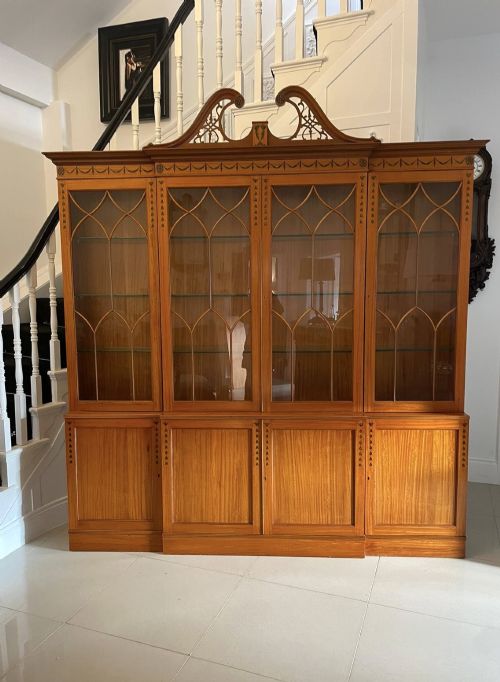
Sheraton Revival designs dominate the surviving examples, reflecting a strong fascination with eighteenth-century neoclassical elegance. Pieces range from compact dwarf bookcases designed for domestic studies to large breakfront library cabinets.
How they were made
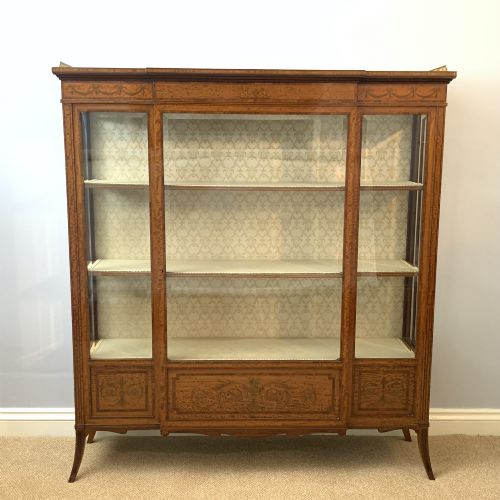
Cabinet-makers constructed the carcases using dense timbers like mahogany, applying figured satinwood veneers to prominent exterior surfaces. Boxwood and darker stringing lines were meticulously inlaid to form geometric borders and classical motifs.
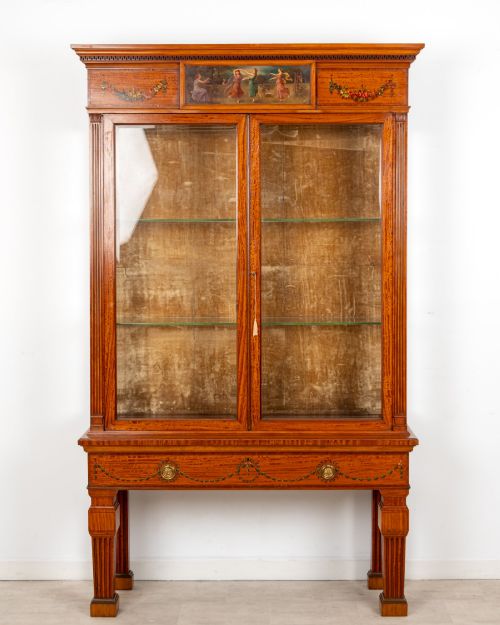
Surface decoration frequently included hand-painted floral panels or classical swags executed directly onto the satinwood ground. Glazed doors utilised fine wooden astragal bars to create geometric panes, while revolving models relied on concealed internal ball-bearing mechanisms.
Some rotating models feature hidden compartments originally intended for private journals or small valuables.
What varies in quality
The distinction between standard commercial output and superior craftsmanship lies in the selection of the timber and the precision of the marquetry. Highly figured satinwood with strong natural chatoyancy commands greater appreciation than plain or heavily stained substitutes.
Hand-painted panels attributed to notable West End retailers demonstrate a higher level of artistic skill than repetitive factory decoration. Furthermore, the crispness of the boxwood inlay and the retention of original brass hardware elevate the standing of a piece.
Hampton and Sons·Edwards and Roberts·Maple and Co·Waring and Gillow·James Shoolbred
The Edwardian Satinwood Bookcase Glossary
- Satinwood
- A dense, lustrous tropical hardwood displaying a natural golden sheen and smooth grain. It forms the primary visual signature of these bookcases.
- Astragal
- Moulded wooden bars dividing a glass door into smaller panes. They provide structural support while framing the interior display.
- Marquetry
- Elaborate veneer patterns composed of various exotic woods assembled to form pictorial or decorative motifs. It appears frequently on friezes and door panels.
- Crossbanding
- A narrow strip of veneer laid perpendicular to the surrounding grain to create a contrasting border. It frames shelves and drawer fronts.
- Compactum
- A multi-functional wardrobe or cabinet combination incorporating hanging space, shelves, and enclosed compartments. Surviving examples often feature extensive satinwood inlay.
Edwardian Satinwood Bookcase: Frequently Asked Questions
How do I care for satinwood?
Keep the timber away from direct sunlight and extreme temperature fluctuations to prevent the delicate veneer from drying or lifting. Apply a microcrystalline wax periodically to preserve the natural lustre.
Avoid using silicone-based polishes or harsh chemical cleaning agents, which can damage the traditional French polished finish. Dust gently with a dry, soft cloth.
Were these bookcases made for large libraries?
Many examples were manufactured for domestic drawing rooms, studies, and boudoirs rather than institutional libraries. Consequently, dimensions tend to be more modest and decorative.
Compact revolving styles and open waterfall shelves were specifically designed for accessible everyday reading material in smaller domestic spaces.
How do I distinguish Sheraton Revival from original pieces?
Sheraton Revival pieces date from the late nineteenth and early twentieth centuries, mimicking the lighter neoclassical forms of the late eighteenth century. Secondary softwoods, machine-cut veneers, and modern internal hardware usually reveal the later construction date.
Original eighteenth-century furniture employs different construction techniques, timber preparation methods, and distinct cabinet-maker markings compared to edwardian revivals.
Can revolving bookcases hold heavy books?
Revolving bookcases were engineered to hold standard octavo volumes and novels rather than massive folio atlases. The central rotating pivot distributes weight efficiently when loaded in a balanced manner.
Overloading one side can strain the internal mechanism, so distribute heavier volumes across the lower tiers for stability.