
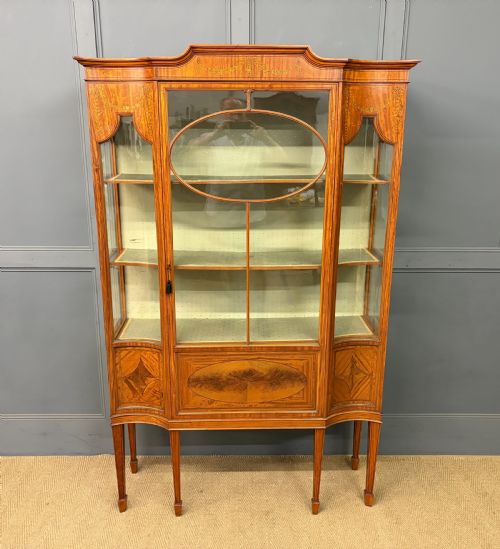
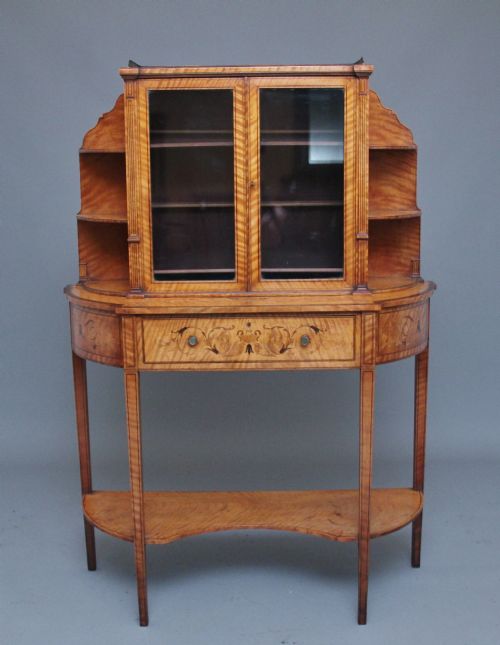
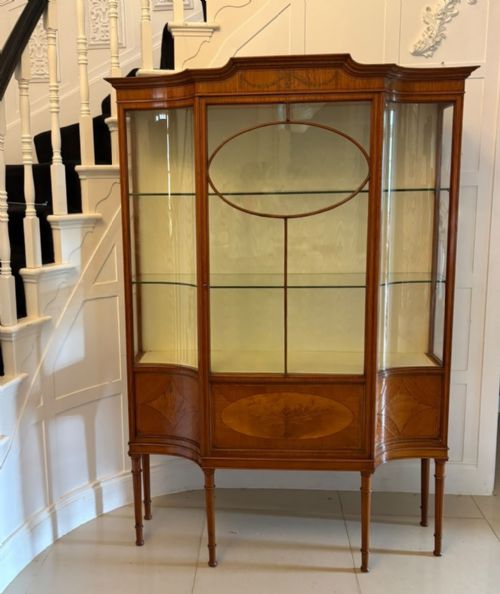


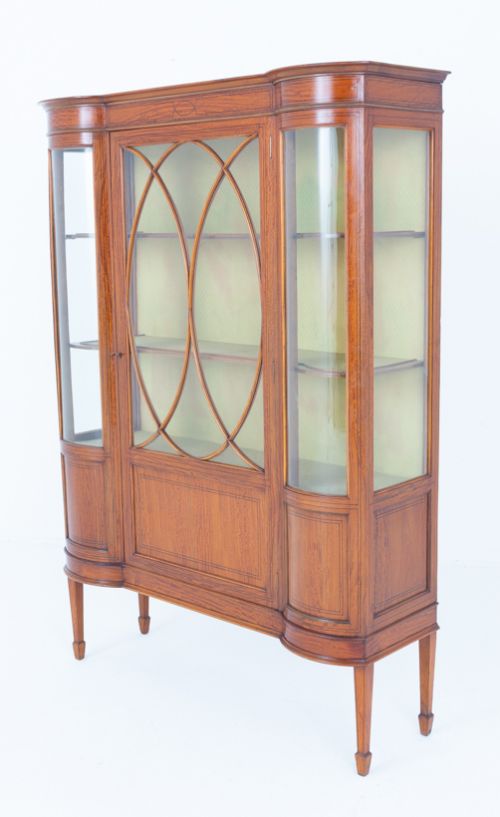


Golden Satinwood Vitrine
A golden satinwood vitrine brings radiant warmth and refined display space to a room, holding cherished objects behind glass.
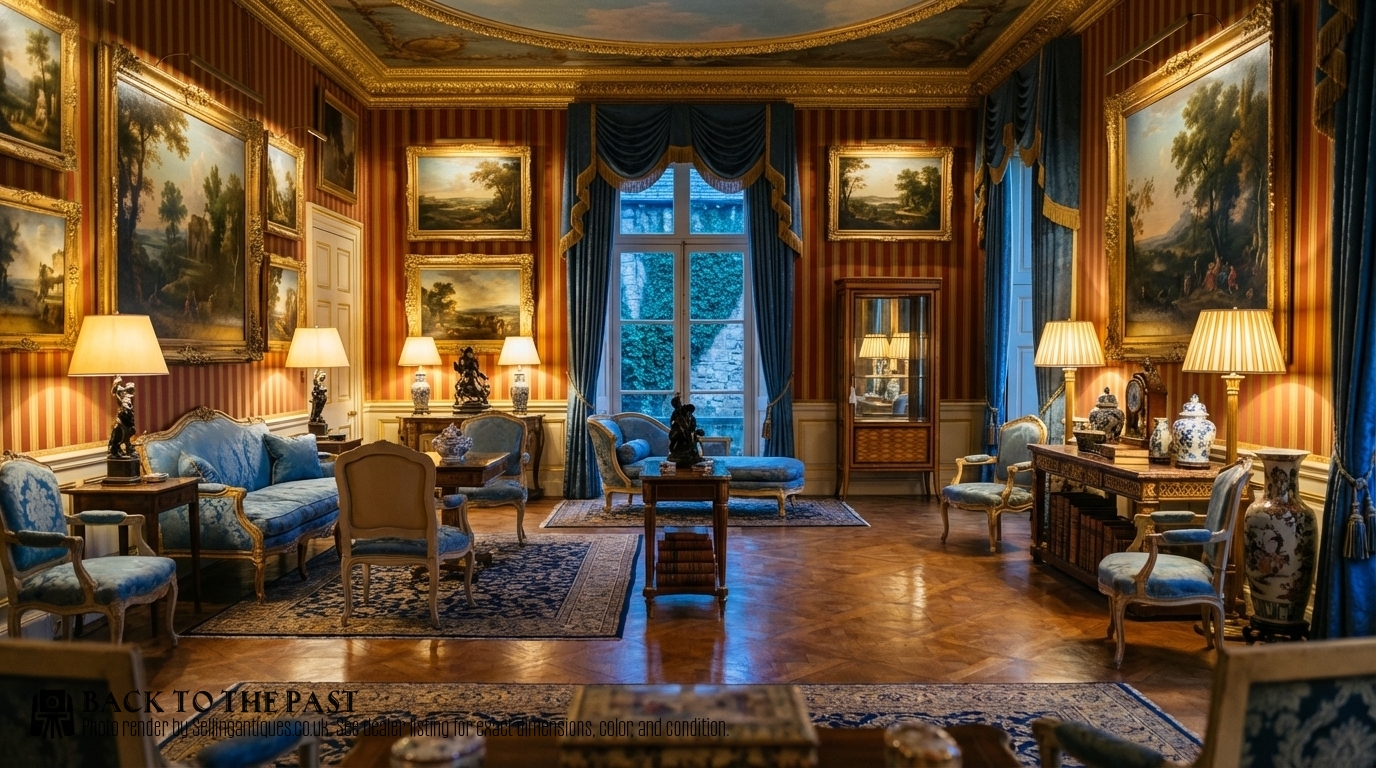
What golden satinwood vitrine pieces are
A golden satinwood vitrine is a display cabinet designed to showcase fine objects while protecting them behind glass doors. These pieces serve as elegant focal points in a room, combining practical storage with decorative presence.
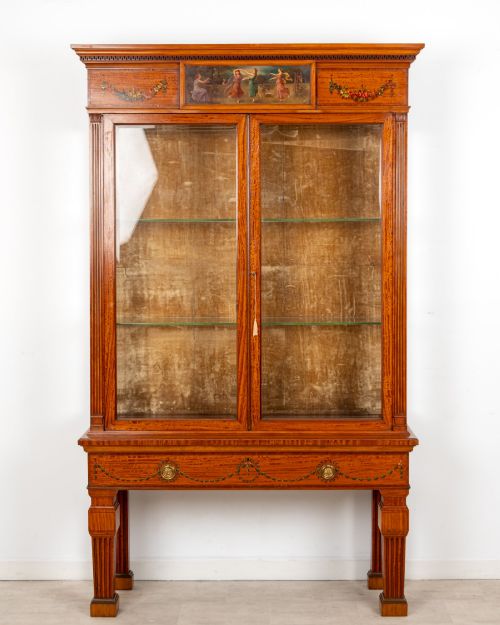
The golden satinwood vitrine examples encountered here span the Georgian period, the nineteenth century, and the Edwardian Sheraton Revival style. Makers drew upon eighteenth-century vocabulary, producing refined cabinets with single glass doors and delicate proportions.
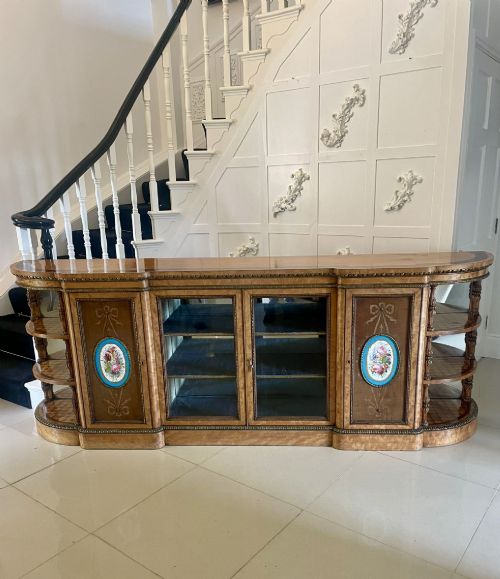
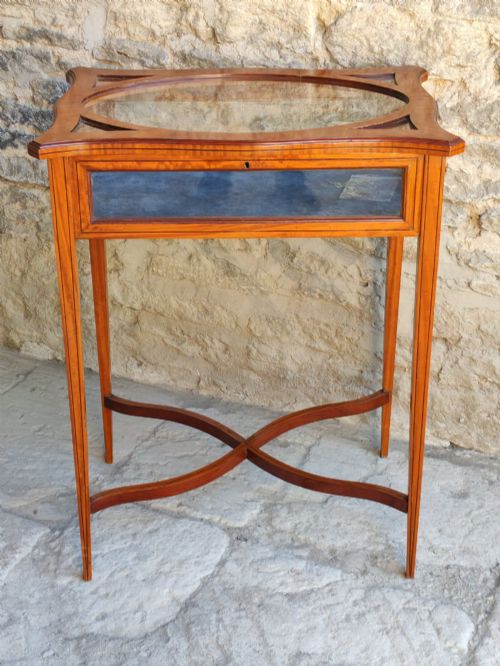
Forms include traditional display cabinets and Dutch vitrines from eighteen fifty. Each piece relies on the luminous natural grain of satinwood to create a striking visual impact.
How they were made
Makers utilised timber veneers of satinwood laid over solid wood foundations to achieve a shimmering, light-reflective surface. Glass panels were fitted into wooden door frames to enclose the display interior.
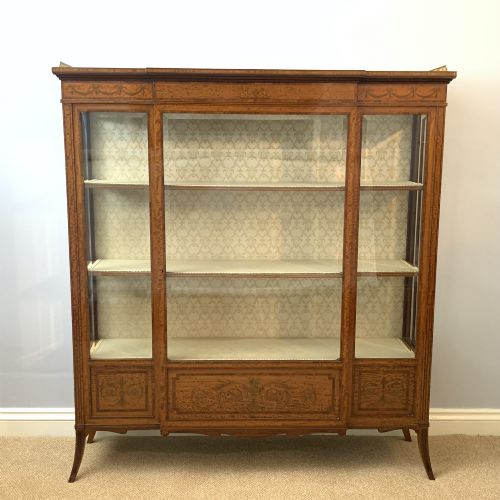
Wood inlay and marquetry added intricate geometric or floral patterns across the cabinet facades. Brass fittings secured the doors and added subtle metallic contrast to the polished timber.
Fabric linings frequently covered the interior back panels to provide a soft backdrop for displayed items. Joinery techniques ensured sturdy construction while maintaining the delicate appearance characteristic of the style.
Retail Price Guide 2026
Typical UK retail prices for golden satinwood vitrine, calculated from the Sellingantiques database of over a million retail prices indexed since 2003. This retail price guide relies exclusively on Sellingantiques data; no external sources or auction records are used, so the figures do not describe the wider market.
Current listings feature satinwood, glass, brass, wood inlay, and fabric across pieces dating from eighteen fifty to the nineteenth-century Georgian revival.
What varies in quality
The refinement of the wood inlay and marquetry distinguishes standard cabinets from exceptional works. Crisp execution in cutting and fitting contrasting timbers demonstrates superior craftsmanship.
The choice of satinwood veneer dictates the visual depth and radiance of the piece. Highly figured grain patterns reflect light more dynamically than plain timber surfaces.
Proportion and structural grace separate modest furniture from masterwork production. Pieces that maintain a light, balanced aesthetic despite their solid construction represent the peak of the cabinetmaker's art.
The Golden Satinwood Vitrine Glossary
- Satinwood
- A lustrous hardwood native to tropical regions, prized for its golden yellow colour and natural sheen. It takes a high polish and forms the primary surface of these cabinets.
- Vitrine
- A glass-fronted display cabinet used for showing porcelain, silver, or curiosities. The term derives from the French word for glass.
- Marquetry
- The art of applying decorative veneer pieces to a structure to form intricate pictorial or geometric designs. Craftsmen assemble various tinted woods like a puzzle.
- Parquetry
- A geometric mosaic of wood pieces used for decorative floors and furniture surfaces. It creates repeating patterns such as cubes or chequers.
- Sheraton Revival
- A late nineteenth-century design movement inspired by the neoclassical furniture of George Sheraton. It favours slender proportions, satinwood, and delicate painted or inlaid decoration.
Frequently Asked Questions
What is a golden satinwood vitrine?
A golden satinwood vitrine is a glass-fronted display cabinet constructed from luminous satinwood timber. These pieces were built to exhibit valued possessions while protecting them from dust.
The use of pale, reflective wood gives the furniture a distinctive brightness that sets it apart from darker mahogany or walnut cabinets of similar eras.
How do I date a satinwood vitrine?
Dating involves examining the construction methods, secondary timbers, and decorative vocabulary of the cabinet. Pieces from the Georgian era display different structural characteristics compared to nineteenth-century interpretations or Edwardian Sheraton Revival revivals.
Style details such as the complexity of the wood inlay and the thickness of the glass also offer clues to the decade of manufacture.
Where should I place a vitrine?
A vitrine requires a prominent position in a drawing room, dining room, or hallway where its display contents can be appreciated. Placing the cabinet away from direct sunlight protects the timber and interior fabric from fading.
Ensure the room has stable humidity levels to preserve the integrity of the delicate veneers and old joinery.
What items belong inside a vitrine?
Historically, owners filled these cabinets with porcelain collections, silver trinkets, glass figures, and miniature portraits. The glass shelving and fabric backdrops were designed to complement such delicate cabinet curiosities.
Today, any treasured collection of small objects finds a fitting home behind the glazed door of a golden satinwood vitrine.