
Edwardian Revival Chair
When you examine an edwardian revival chair, you encounter a purposeful recreation of earlier centuries built to satisfy turn-of-the-century taste.
Edwardian Revival Chair
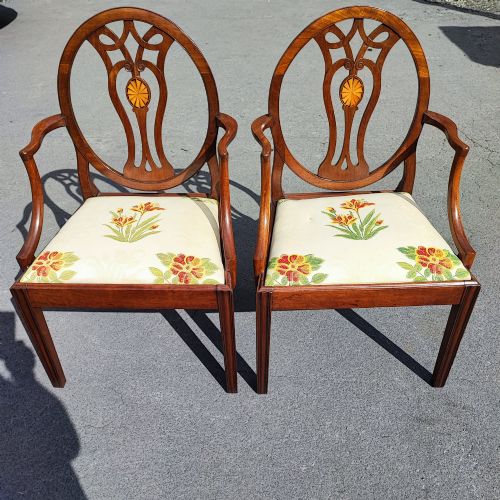
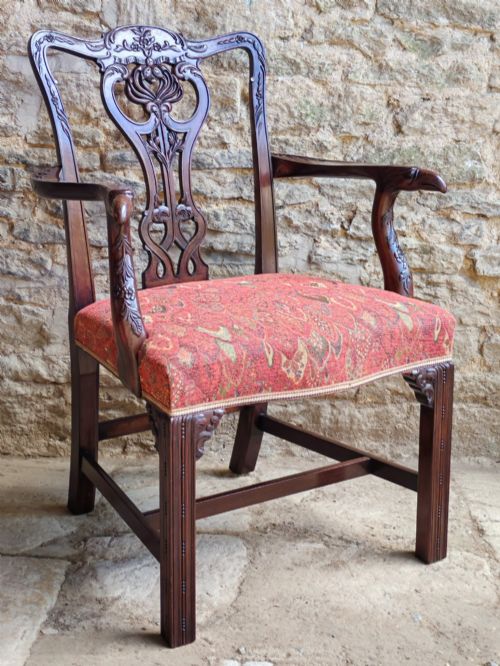
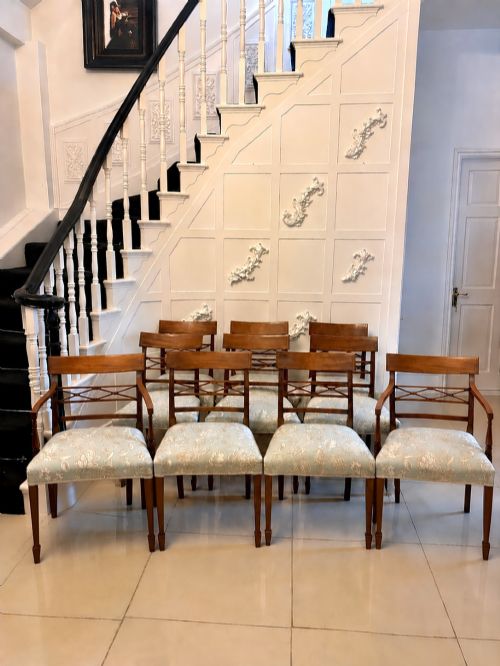
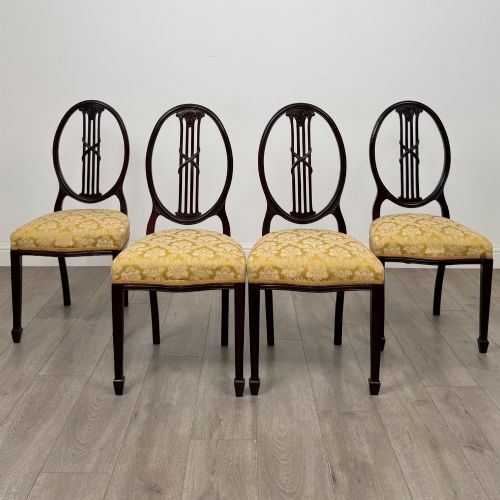
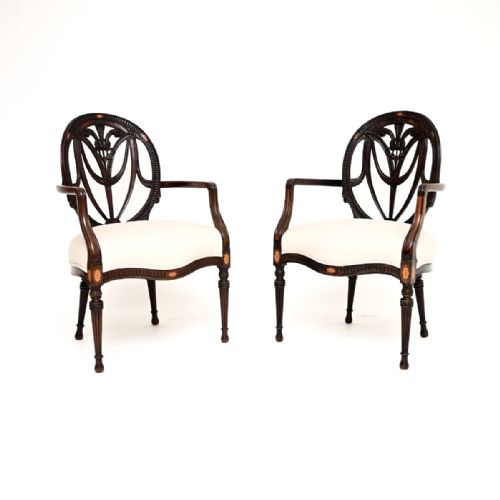
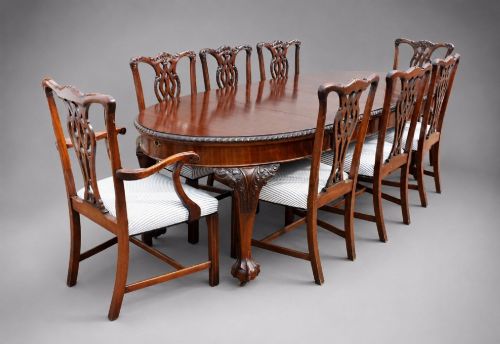
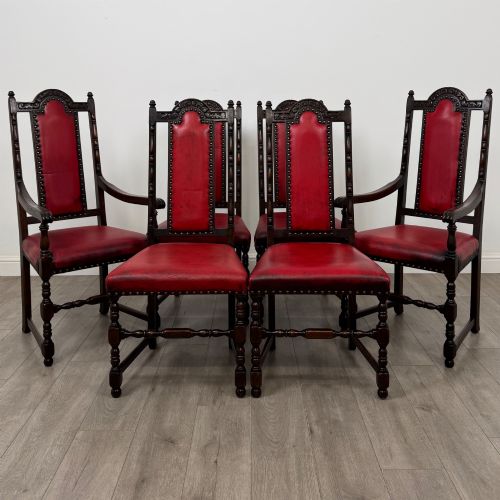
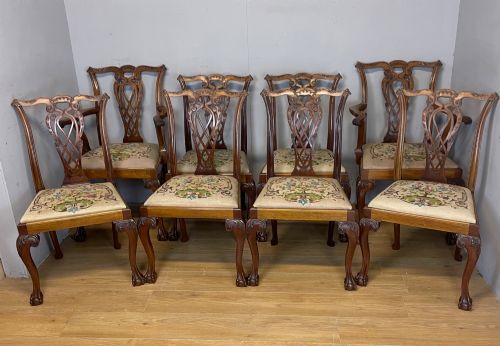
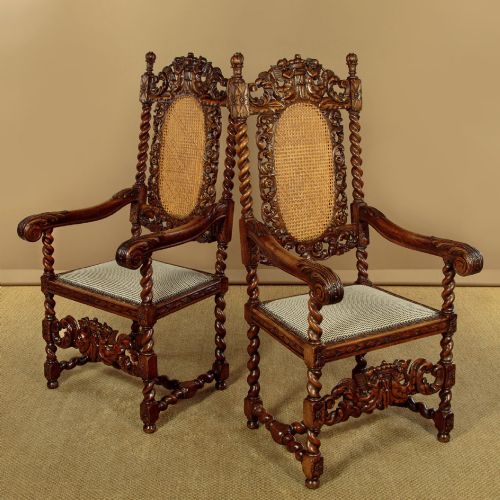
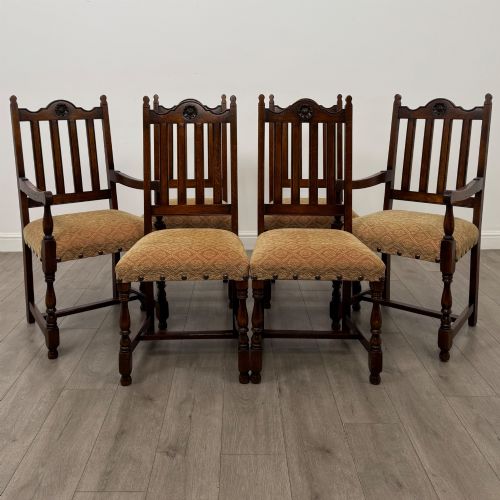
An edwardian revival chair draws upon design vocabularies established during the Georgian, Sheraton, Chippendale, and Jacobean periods, reinterpreting them through the manufacturing standards of the early twentieth century. Buyers encounter everything from single salon chairs and library armchairs to matched sets of dining chairs intended for formal domestic interiors.
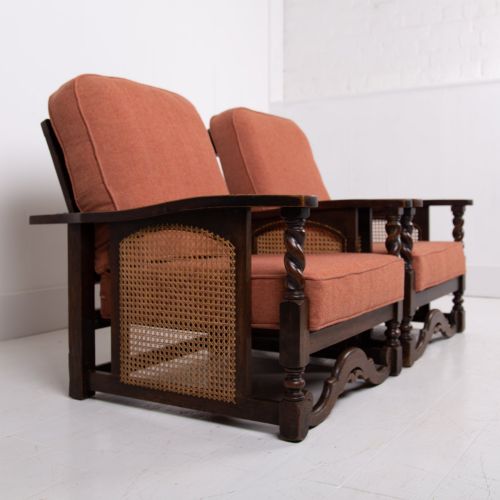
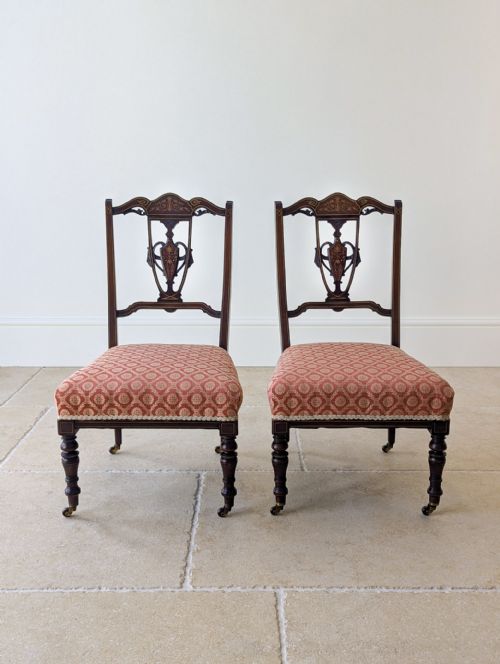
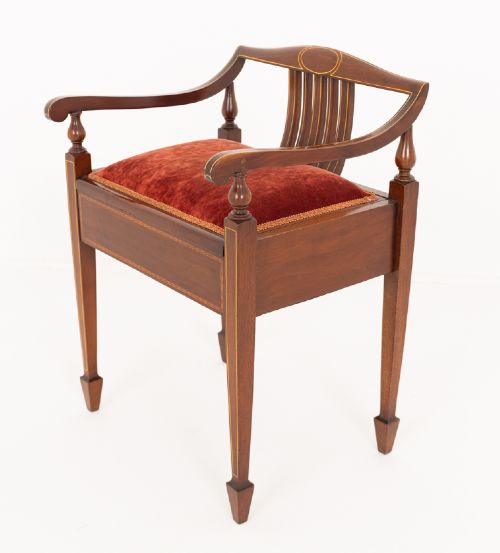
The material record shows a distinct preference for mahogany and oak frames, often enriched with satinwood inlay or cane panels. Dining sets and carver armchairs dominate the surviving pieces, accompanied by occasional chairs, piano stools, and hall seats that reflect the period's domestic routines.
Materials and construction
Makers relied heavily on solid mahogany and oak for structural integrity, utilising brass fittings and leather or fabric upholstery to finish the seating surfaces. Satinwood was frequently employed for decorative painted panels and contrasting stringing on lighter occasional pieces.
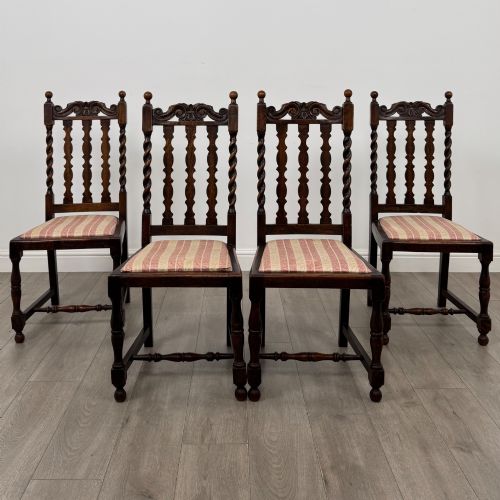
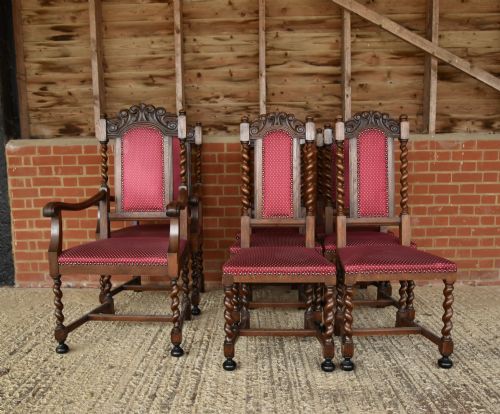
Joinery techniques combined traditional hand-carving with early industrial production methods, allowing workshops to produce intricate Chippendale splats, Sheraton shield backs, and barley twist legs in matched sets. Canework and woven rush seats required specialist hand-weaving skills to insert into carved wooden frames.
Piano stools from this era often conceal sheet music storage beneath hinged seats, ready for domestic musical evenings.
Evaluating craftsmanship
The distinction between standard commercial production and finer work lies in the depth of timber selection and the precision of the carved details. Superior examples display crisp hand-carved foliage, tightly fitted joints, and meticulous mahogany grain matching across entire dining sets.
Decorative elements such as painted satinwood panels and delicate inlay require high levels of artisan skill to avoid superficial execution. The integrity of the original frame construction, undisturbed by excessive rebuilding, determines the enduring merit of the piece.
Howard and Sons·Warings
The Edwardian Revival Chair Glossary
- Carver armchair
- An armchair designed with elbow rests, traditionally placed at the head of a dining table or used as a desk seat.
- Sheraton revival
- A style mimicking the classical, refined geometry and delicate inlay associated with late eighteenth-century cabinet maker Thomas Sheraton.
- Bergere
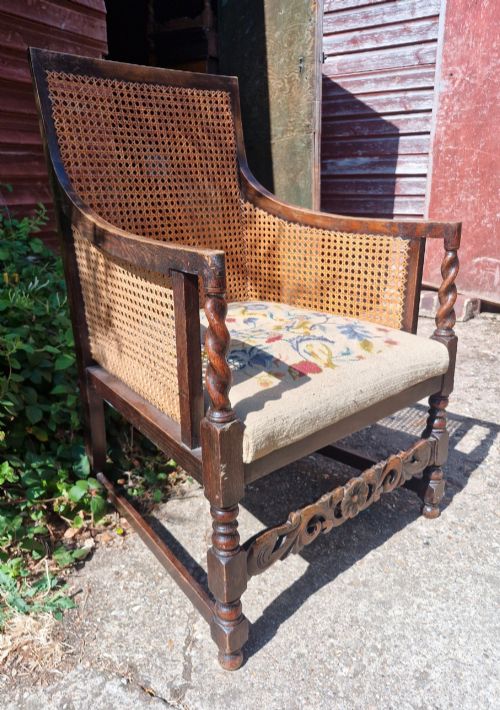
- An enclosed upholstered armchair with exposed wooden framing and woven cane sides or back panels.
- Barley twist
- A turned wooden furniture leg resembling a spiral rope, frequently seen on oak framework from this era.
- Splat
- The vertical wooden strip down the centre of a chair back, often intricately pierced or carved in revival pieces.
Edwardian Revival Chair: Frequently Asked Questions
How do I date an edwardian revival chair?
Examine the timber species, construction hardware, and secondary woods used in the frame underneath. Turn-of-the-century pieces often combine machine-planed internal components with hand-finished decorative surfaces.
Compare the specific revival style against documented cabinet maker catalogues from the period. The integration of Edwardian upholstery methods alongside historical stylistic motifs provides a reliable chronological anchor.
Can these chairs be used daily?
Solid mahogany and oak frames possess robust structural integrity suited to regular domestic use. Checking the stability of the joints ensures the piece handles daily sitting safely.
Upholstered seats and cane panels may require professional webbing or weaving reinforcement if they show age-related slackness. Proper maintenance keeps them functional in modern settings.
Are these pieces considered authentic antiques?
Objects manufactured around nineteen hundred now exceed a century in age, placing them firmly within the antique category. They represent a distinct historical period that looked backward to earlier eras for inspiration.
Rather than being original eighteenth-century furniture, they are period interpretations created by Edwardian craftsmen. This dual identity gives them their own collectible status.