





Hepplewhite Revival Carver
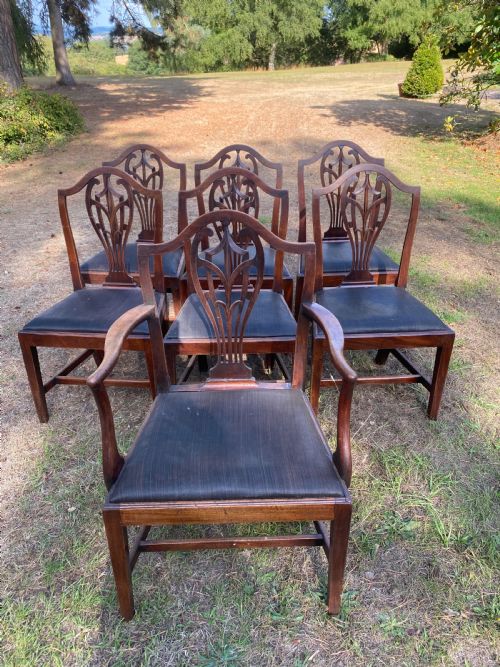
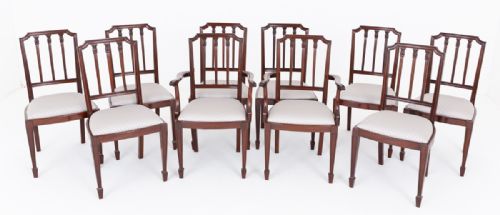
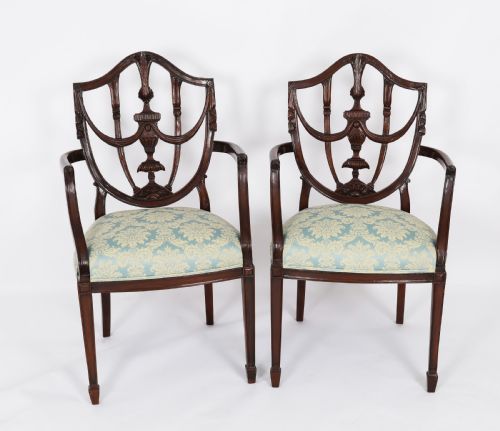
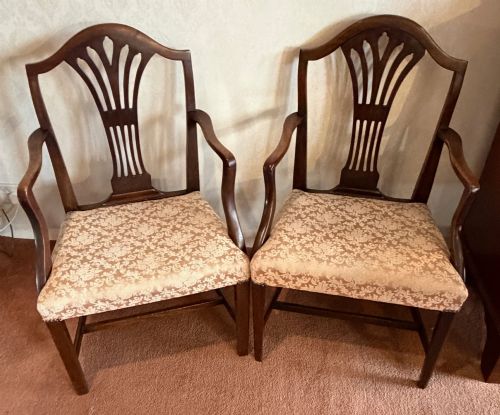
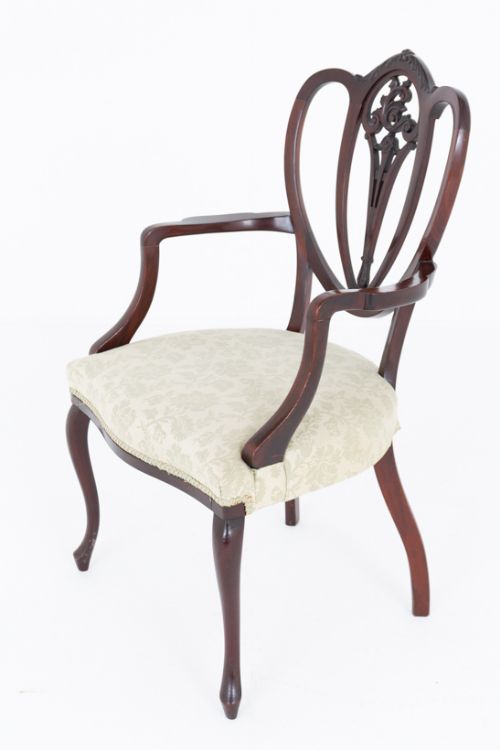
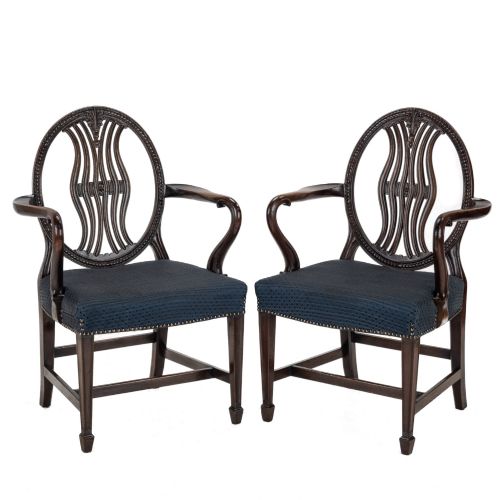
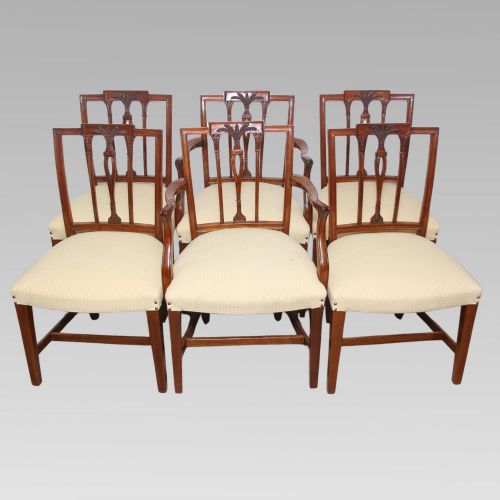
These hepplewhite revival carver chairs bring neoclassical elegance to a dining room, offering substantial timber frames and classic shield backs.
Hepplewhite Revival Carver
A hepplewhite revival carver takes its primary design cues from the late eighteenth century, translating classic shield backs and slender proportions into later nineteenth and early twentieth-century seating. These armchairs typically serve as the commanding end seats at a dining table, pairing open arms with supportive upright backs.
Most examples found here date from the Victorian, Edwardian, and early twentieth-century periods, alongside occasional eighteenth-century originals. Buyers frequently encounter sets that include both standard dining chairs and matching carvers, executed primarily in mahogany.
How they were made
Makers constructed these carvers predominantly from solid mahogany, utilising its strength to fashion slender splats and curved arm supports without sacrificing structural integrity. Timber selection was vital for achieving the graceful lines characteristic of the style.
Upholstery forms an integral part of the construction, utilising traditional textiles, fabric, and leather stretched over padded seat frames. Brass elements sometimes appear in structural reinforcement or decorative detailing.
Hepplewhite Revival Carver Retail Price Guide 2026
Typical asking prices for hepplewhite revival carver among the pieces listed under this phrase on Sellingantiques today, from the lower quarter to the upper quarter. They describe what is for sale here now, not the wider market.
Listings feature mahogany timber across multiple periods, ranging from eighteenth-century originals to early twentieth-century revivals.
What varies in quality
The refinement of the hand-carving defines the upper tier of these carvers, distinguishing crisp, deeply incised shield backs and wheatsheaf motifs from softer, more mechanised decoration. Superior examples demonstrate a careful balance between structural heft and visual lightness.
The integrity of the timber joinery and the quality of the upholstery foundations separate workshop standards. Finer pieces retain tight joints and proportioned arm scrolls that respect the eighteenth-century archetype.
The Hepplewhite Revival Carver Glossary
- Carver
- An armchair designed to match a set of dining chairs, usually positioned at the head of the table. These pieces feature integrated armrests for added comfort.
- Shield back
- A chair back shaped like a heraldic shield, characteristically narrowing towards the base. This silhouette is a defining feature of the design.
- Mahogany
- A durable, reddish-brown tropical hardwood favoured by cabinetmakers for its stability and grain. It takes a fine polish and supports intricate carving.
- Georgian revival
- A design movement spanning the nineteenth and twentieth centuries that reinterprets eighteenth-century domestic aesthetics. It encompasses the specific forms associated with Hepplewhite.
Hepplewhite Revival Carver: Frequently Asked Questions
Are these carvers comfortable for long dinners?
These armchairs offer generous proportions and padded seats designed for dining use. The open arms provide natural support while allowing plenty of room at the table.
Upholstery depth varies across different periods of manufacture, with some Edwardian and Victorian versions featuring sprung foundations that enhance everyday seating comfort.
How do I match carvers with single chairs?
Matching a carver with single chairs relies on matching wood tones, leg shapes, and back silhouettes. Many period dining sets were originally produced with mixed configurations of armchairs and side chairs.
Paying attention to the specific revival period helps maintain visual harmony around the dining table, even when combining individual pieces from similar decades.
Can I use these chairs around a modern table?
These timber armchairs integrate easily with contemporary dining tables, adding architectural contrast to minimal interiors. Their slender frames and open backs prevent them from dominating the room.
Checking the arm height against the underside of your table ensures the chair can be pushed in correctly when not in use.
How do I care for mahogany frames?
Routine maintenance involves dusting with a soft cloth and occasionally feeding the timber with appropriate wax polish. Keeping the wood away from direct heat sources prevents the mahogany from drying out.
Upholstered components benefit from regular gentle vacuuming using a low-suction attachment to protect the fabric or leather surfaces.