

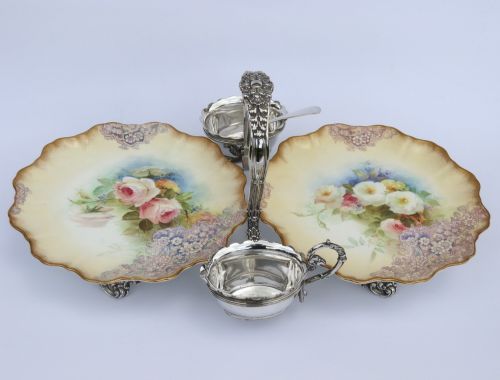


Edwardian Porcelain Centrepiece
An Edwardian porcelain centrepiece brings a commanding presence to a table, combining intricate ceramic form with delicate painted detail.
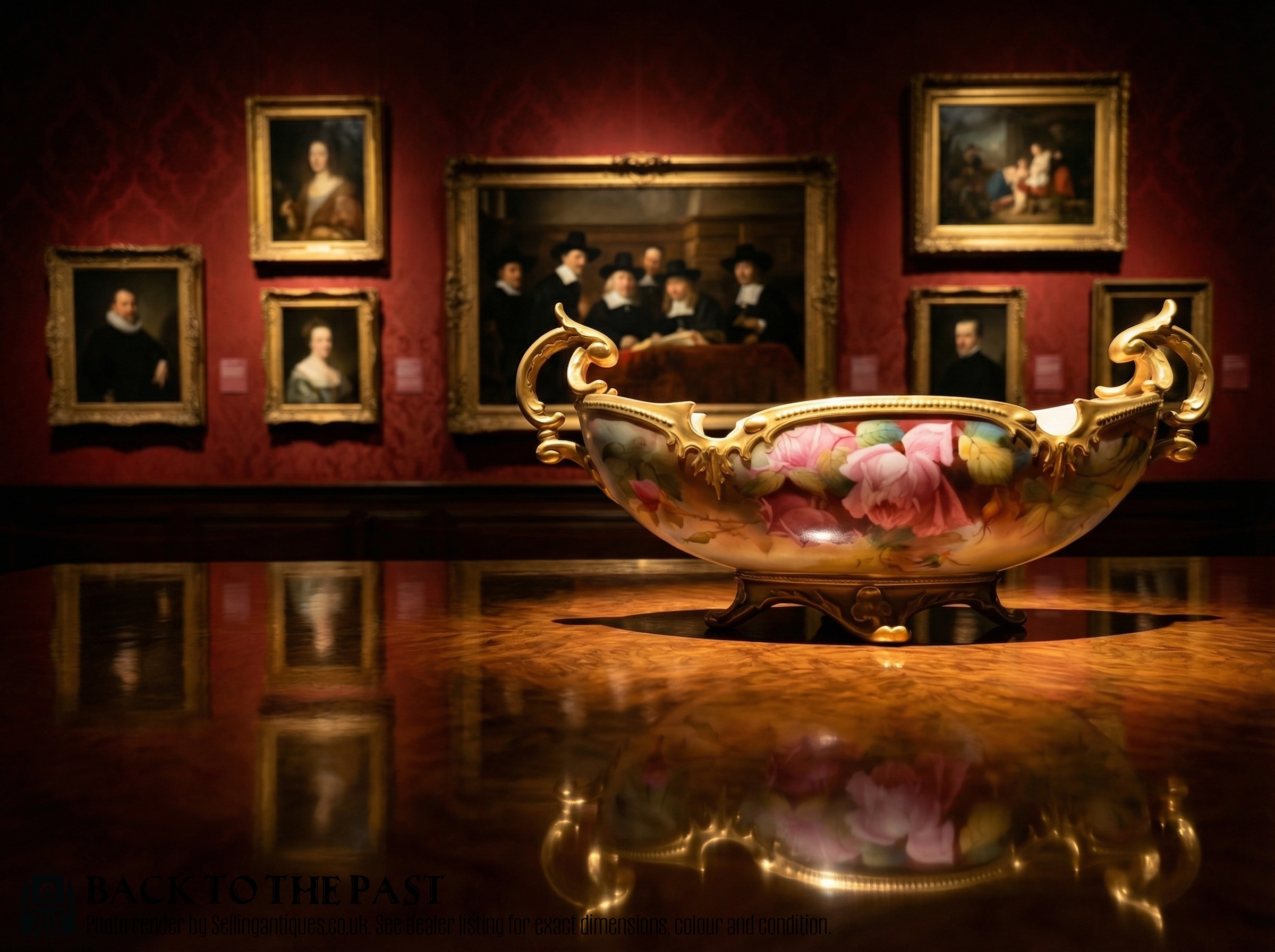
Edwardian Porcelain Centrepiece
When you search for an Edwardian porcelain centrepiece, you encounter large decorative vessels designed to anchor a dining table or sideboard. These pieces originate predominantly from the early twentieth century, alongside related examples from the nineteenth century and the decades following the Edwardian era.
Makers represented in this tradition include Royal Worcester, Royal Crown Derby, Wedgwood, and continental houses like Schierholz and Royal Dux. These works display hand-painted floral sprays, birds, and figural scenes executed by named artists.
How they were made
These pieces utilise fine porcelain, ceramic, and earthenware bodies shaped into intricate bowls, figures, and vessels. Artisans applied detailed glazes, enamel colours, and hand-painted motifs, often finishing edges and highlights with gold leaf and rich gilt.
Many elaborate centrepieces incorporate applied sculptural elements such as cherubs, putti, and roses modelled separately before attachment to the main body. Certain examples integrate metalwork components, pairing the ceramic vessels with silver plated stands and brass mounts.
Several porcelain cherubs spend their days holding up heavy fruit bowls without ever complaining about the weight.
What varies in quality
Quality rests significantly on the skill of the painting and the prominence of the artist involved. Pieces featuring signed work by recognised painters command greater attention than standard factory output.
The complexity of the modelling defines the upper tier, particularly in continental centrepieces where finely sculpted figures and applied floral work demand exceptional technical mastery. The integrity of the gilding and the preservation of delicate enamel colours further distinguish superior examples.
Royal Worcester·Royal Crown Derby·Wedgwood·Schierholz·Royal Dux·Doulton Burslem
The Edwardian Porcelain Centrepiece Glossary
- Putti
- Plump, winged figures of male infants often seen in classical art and porcelain modelling. They frequently adorn the bases and stems of continental centrepieces.
- Gilt
- A thin layer of gold applied to the porcelain surface to highlight rims, handles, and raised motifs. This finish catches the light and frames the painted scenes.
- Imari
- A style of Japanese porcelain featuring a distinctive palette of iron red, cobalt blue, and gold. European makers frequently drew inspiration from these decorative patterns.
- Lustre
- A type of ceramic glaze that produces a metallic or iridescent sheen on the surface. Wedgwood employed this technique extensively on decorative bowls.
- Blush Ivory
- A specialised porcelain finish developed by Royal Worcester that mimics the soft, creamy tone of real ivory. It provides a subtle background for delicate floral painting.
Edwardian Porcelain Centrepiece: Frequently Asked Questions
How were centrepieces used?
These large vessels sat at the middle of formal dining tables during the Edwardian period and earlier eras. They held fruit, flowers, or sweetmeats to serve guests.
Beyond dining rooms, households placed them on sideboards and pedestals purely for decorative display. Their scale and elaborate design made them focal points for interior decoration.
What defines the Edwardian style?
Edwardian design draws heavily on historical precedents, mixing Rococo Revival curves with delicate floral painting and classical ornamentation. Artisans favoured bright, optimistic aesthetics.
At the same time, Art Nouveau influences introduced flowing organic lines and natural motifs. This period produced both grand ornamental vessels and refined tableware.
How do I identify a maker?
Look underneath the base for factory backstamps, impressed ciphers, and painted pattern numbers. Many major English and continental potteries used distinct marks for different decades.
Signatures from individual artists occasionally appear alongside the factory mark. These painted names point directly to the specialist who decorated the piece.