

Edwardian Oak Tea Table
An edwardian oak tea table brings sturdy domestic utility and period warmth into a modern sitting room.
Edwardian Oak Tea Table
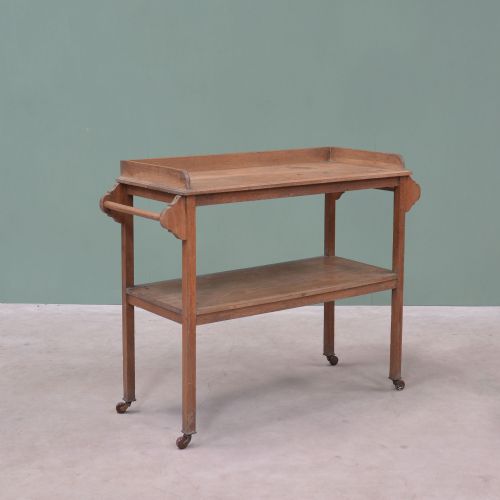
When you search for an edwardian oak tea table, you encounter practical furniture designed for domestic hospitality during the early twentieth century and the late Victorian era. These pieces encompass side tables, occasional tables, and tiered trolleys intended to serve refreshments in the parlour.
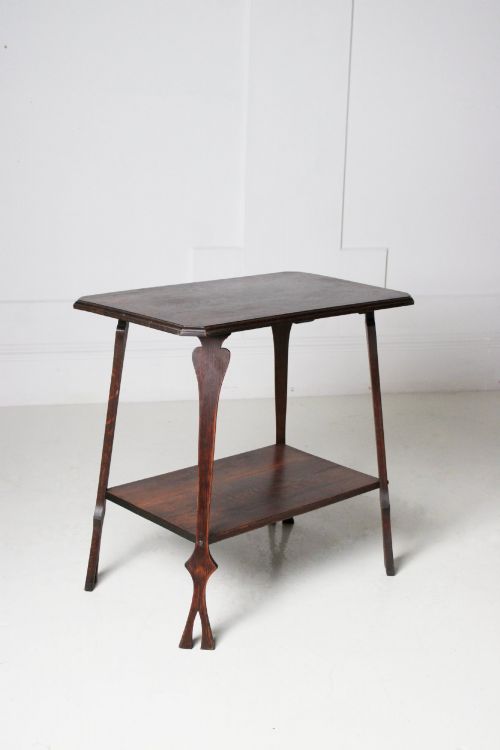
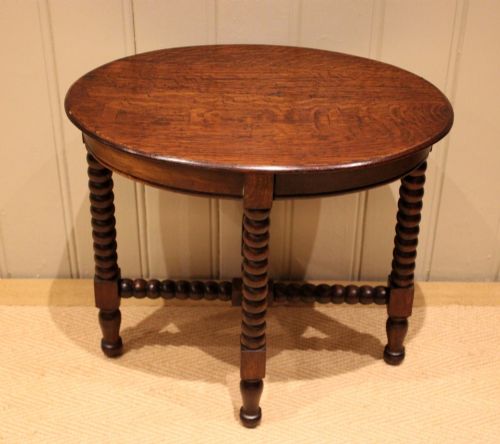
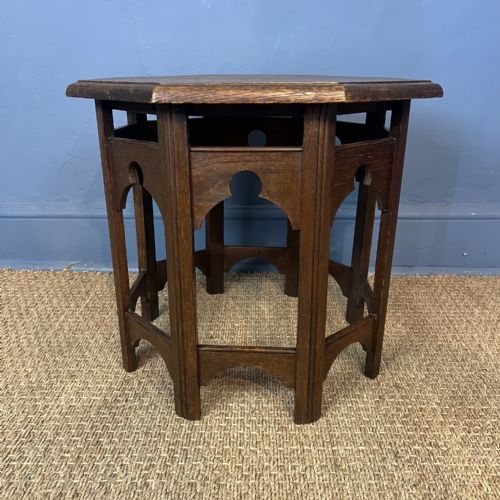
The selections on this page lean heavily towards Edwardian examples alongside pieces from the late nineteenth century and the 1920s. You will find square, oval, octagonal, and hexagonal formats, often featuring two levels or folding mechanisms for ease of movement.
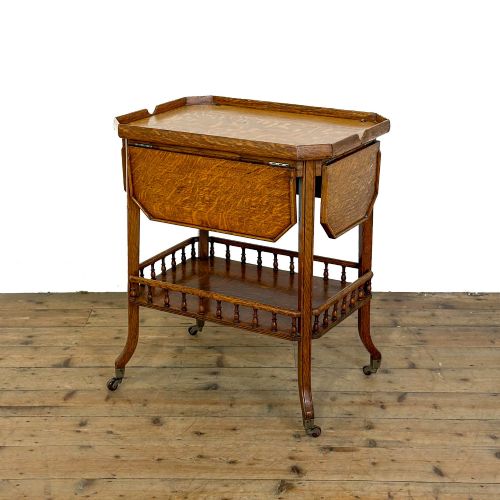
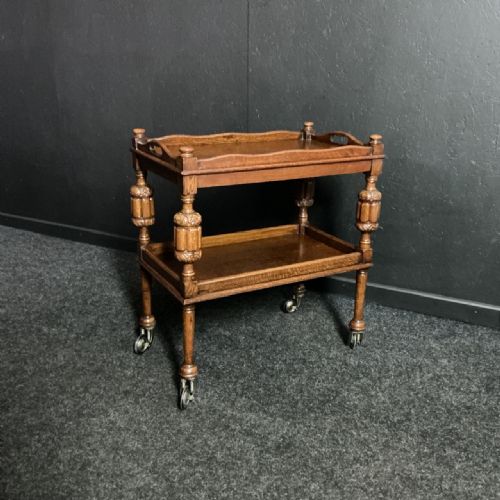
Makers of this era also adapted the form into serving carts, coffee tables, and specialised folding tables. The common thread is the use of sturdy timber paired with utilitarian design suited to the daily rituals of afternoon tea.
Materials and Construction
The primary material across these listings is solid oak, sometimes highlighted as golden oak or figured timber. Workshops utilised this durable wood to construct resilient frames capable of supporting heavy ceramic tea services and metal wares.
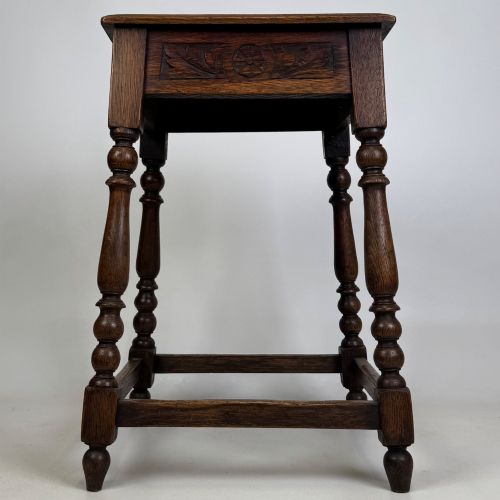
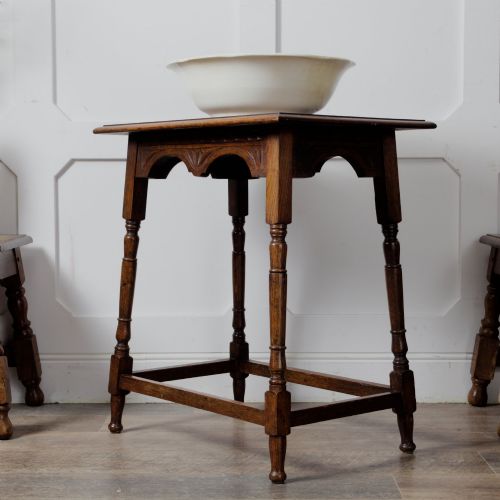
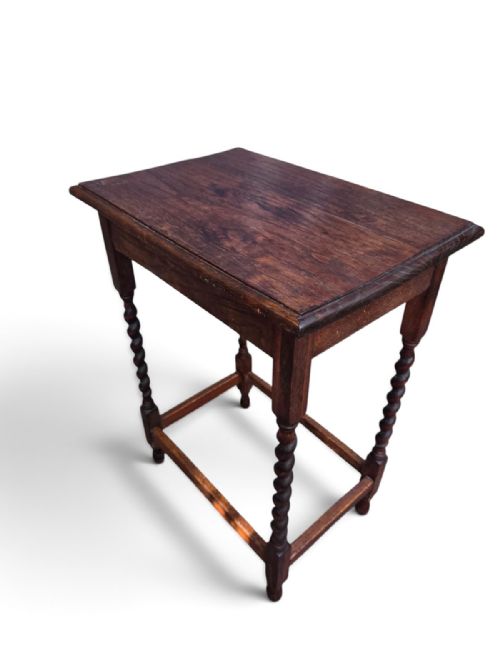
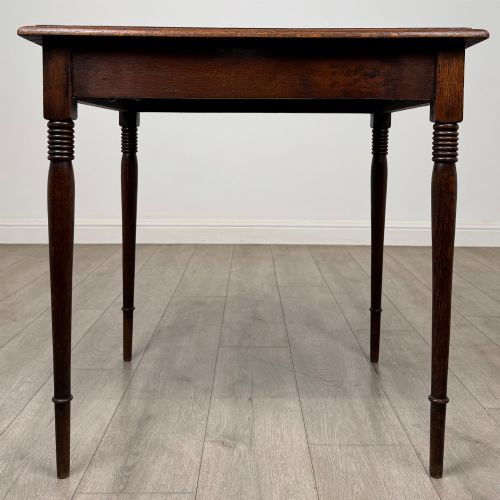
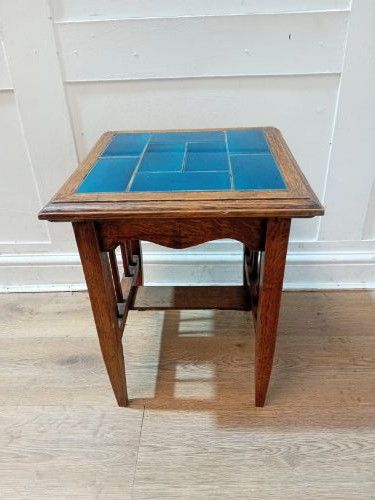
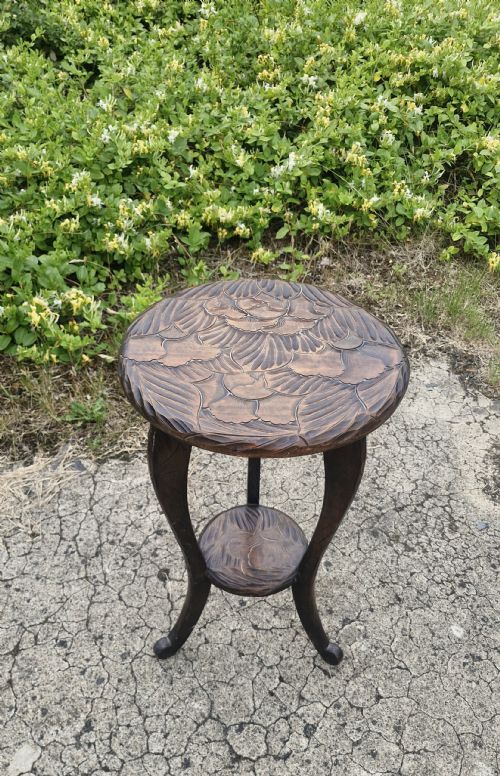
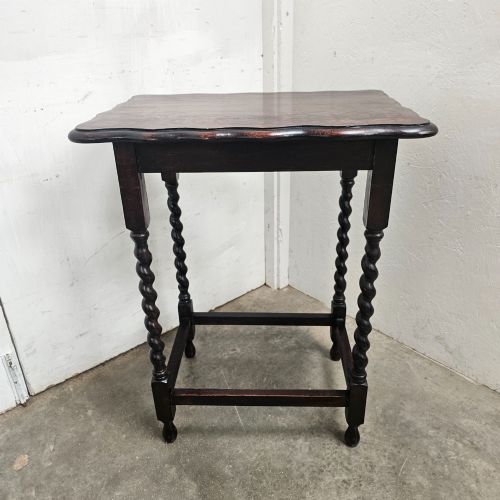
Construction techniques frequently include turned barley twist legs, carved detailing, and tiered shelving supported by brass or metal hardware. Certain pieces incorporate glazed ceramic tiles, glazed tile insets, or silver plate additions to protect the wooden surfaces from hot teapots and moisture.
Listings feature oak combined with brass, ceramic tiles, and silver plate across Edwardian and Victorian periods.
Craft and Distinction
Quality in these tables rests upon the crispness of the carving, the selection of figured timber, and the integrity of the joints. Better examples display hand-carved detailing and well-balanced proportions rather than mass-produced uniformity.
The presence of specialised elements such as gallery edges, folding mechanisms that operate smoothly, and intact decorative tiles elevate a piece. Lesser examples rely on plain, unfigured wood and simple turned legs without additional craftsmanship.
Liberty's
The Edwardian Oak Tea Table Glossary
- Barley twist
- A type of turning shaped like a spiral rope, commonly found on table legs and supports from this era.
- Tea trolley
- A movable serving cart with two or more levels, often fitted with wheels for transporting tea services across rooms.
- Tile top
- A table surface inset with glazed ceramic or decorative tiles designed to resist heat from teapots.
- Occasional table
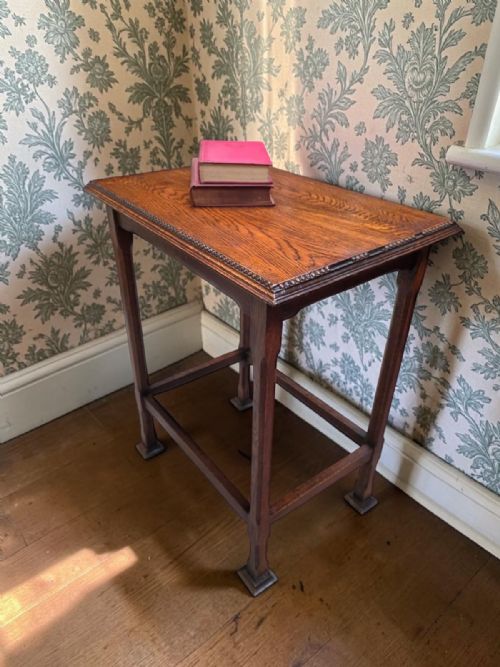
- A small, movable table intended for specific, intermittent uses such as holding books or tea cups.
- Gallery edge
- A raised border around the top shelf of a table or trolley that prevents items from sliding off during movement.
Edwardian Oak Tea Table: Frequently Asked Questions
How were tea tables used?
These tables served as mobile or stationary stations for holding afternoon tea services, biscuits, and teapots in domestic sitting rooms.
Households utilised them to bring refreshments directly to guests without requiring a trip to the main dining room.
Are these tables sturdy enough for daily use?
Solid oak construction provides substantial durability, making these pieces well-suited for holding drinks and books in contemporary rooms.
Tiered trolleys and side tables offer reliable surfaces, though folding mechanisms require careful handling during movement.
How do I distinguish Edwardian from Victorian oak?
Edwardian examples generally display lighter golden oak finishes and simpler, airier lines influenced by the Arts and Crafts movement.
Victorian pieces often feature darker timber, heavier carving, and more elaborate detailing characteristic of the late nineteenth century.
What is a tile top table?
A tile top table incorporates glazed ceramic or art nouveau tiles directly into the wooden surface to protect the timber from heat.
This practical feature allowed households to place hot teapots down directly without needing a separate trivet.