




Edwardian Mahogany Nest
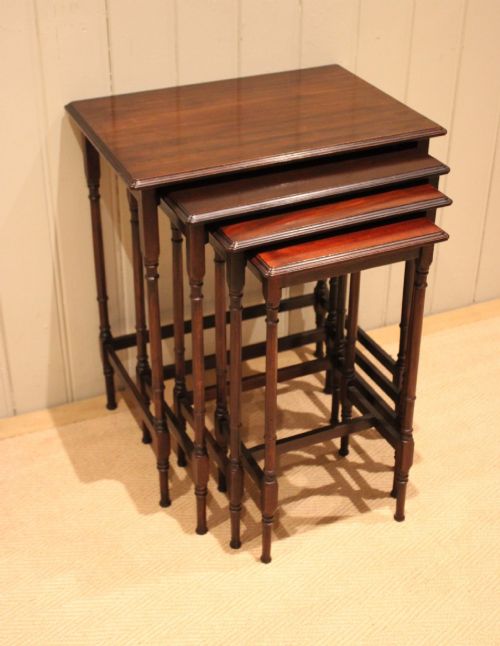
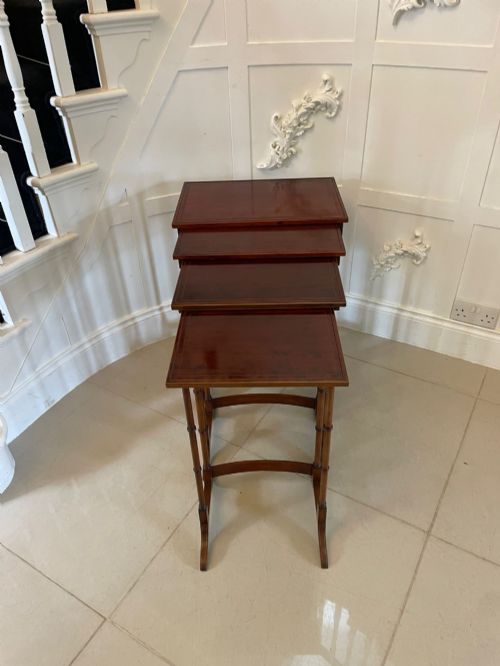
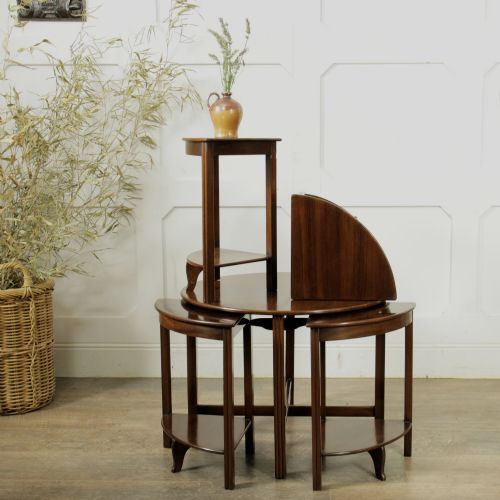
An Edwardian mahogany nest provides graduated stacking tables that offer practical surface space while retaining traditional form.
Edwardian Mahogany Nest
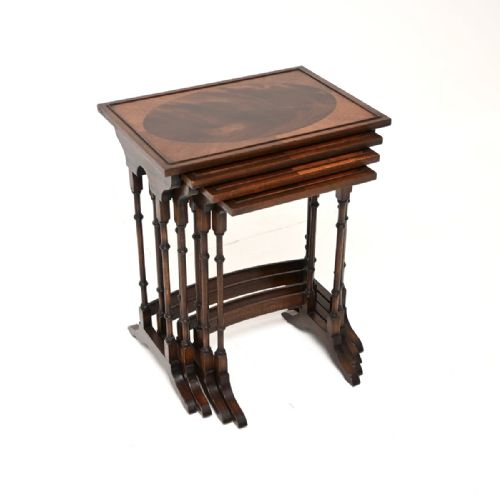
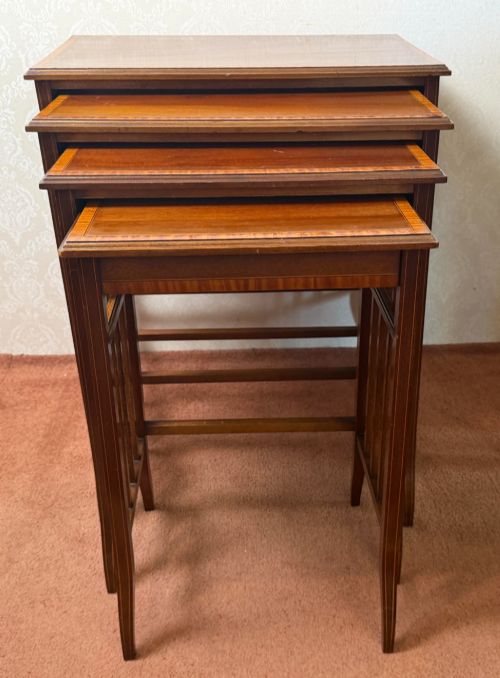
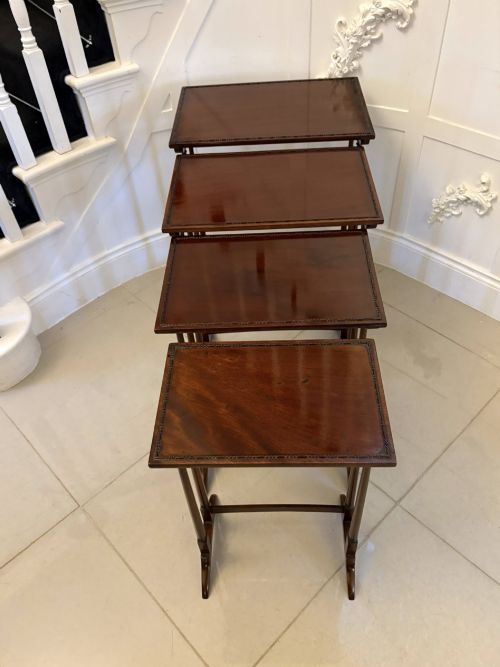
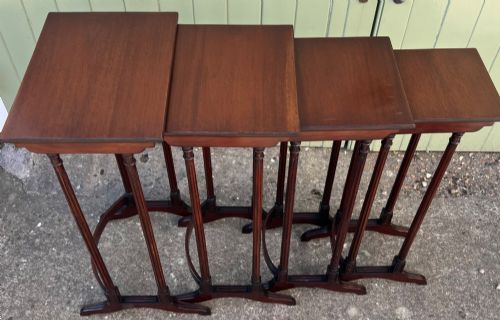
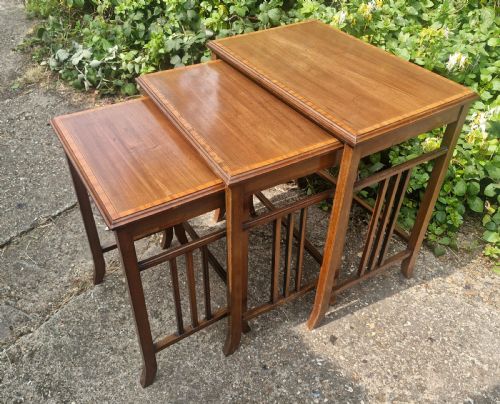
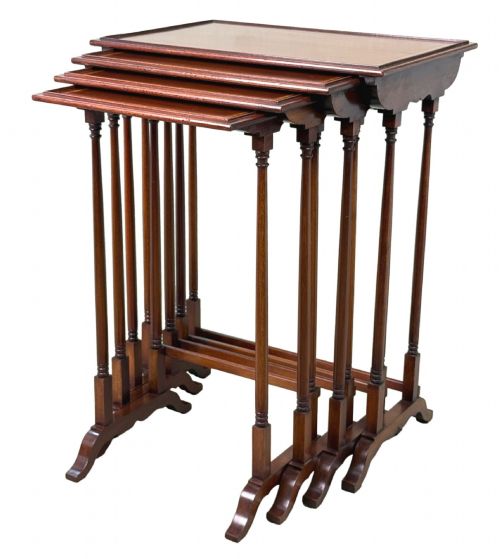
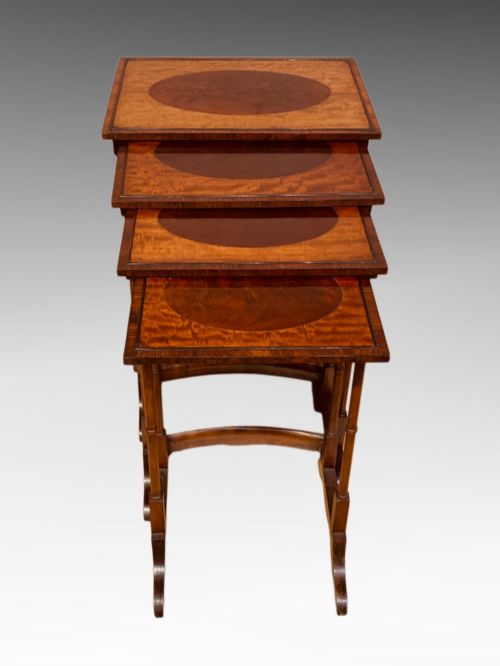
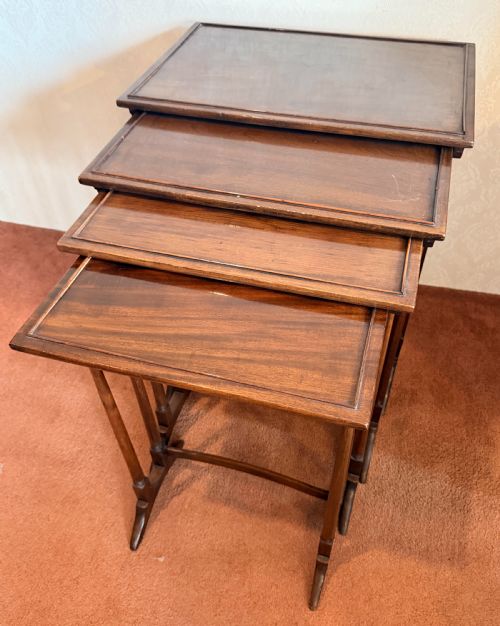
The Edwardian mahogany nest comprises a set of graduated tables designed to stack neatly beneath one another when not in use. These pieces appear frequently in forms of three or four individual tables, often referenced historically as quartetto sets.
Most examples originate from the early twentieth century, spanning Edwardian production alongside late Victorian and subsequent decades up to the 1930s. The primary form serves effectively as occasional, side, or coffee tables within domestic interiors.
Materials and Construction
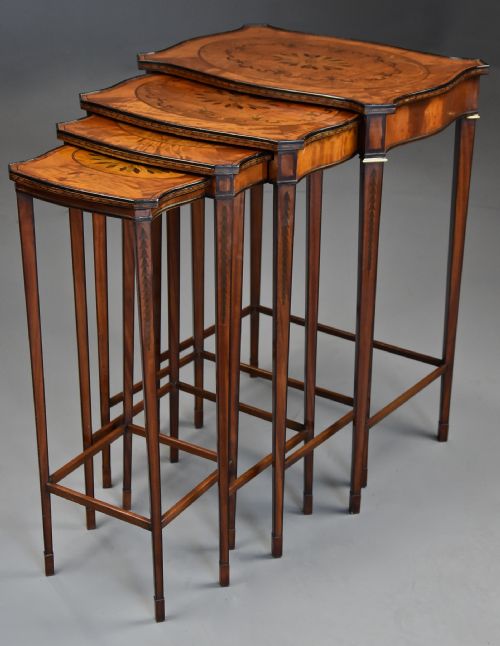
Makers utilised solid mahogany and applied veneers over supportive wood framing to achieve both stability and decorative grain patterns. Detail work frequently incorporated contrasting boxwood and satinwood inlay or crossbanding along the edges.
Tables typically rest on slender supports such as square tapered legs, sometimes accompanied by shaped tops or serpentine profiles characteristic of the Sheraton revival style.
Listings feature mahogany, satinwood, and boxwood materials across Edwardian, Victorian, and 1920s periods.
Judging Quality
Differentiation across the range depends largely on the crispness of the cabinetwork and the precision of the inlaid details. Sets featuring satinwood banding or fine serpentine shaping demonstrate greater artisan skill than plain utility versions.
The overall integrity relies on how smoothly the smaller tables slide into the primary frame and whether the timber retains an even, rich colour across all surfaces.
The Edwardian Mahogany Nest Glossary
- Quartetto
- A matched set of four stacking tables designed to fit one beneath another. This term appears frequently in descriptions of Edwardian nesting furniture.
- Crossbanding
- A strip of veneer applied perpendicularly to the grain of the tabletop. This technique creates a distinct decorative border around the edge.
- Satinwood
- A pale, lustrous timber native to India and Ceylon used for contrasting inlay work. It provides a bright golden accent against darker mahogany surfaces.
- Serpentine
- A gently undulating tabletop profile curving outward and inward. This shape requires careful woodworking to execute successfully on smaller tables.
Edwardian Mahogany Nest: Frequently Asked Questions
What is a quartetto nest?
A quartetto nest consists of four tables built to descend in height so they slide completely under the largest top.
Cabinetmakers designed these sets for compact storage in smaller reception rooms.
How were nesting tables used?
Owners deployed the individual tables around a room for tea, sewing, or writing as needed during gatherings.
Once finished, the smaller surfaces stacked back together to clear floor space.
Are these tables solid mahogany?
Construction typically combines solid mahogany frames with fine timber veneers applied to the flat surfaces.
This method prevented warping while displaying rich grain patterns.
How do I identify Edwardian examples?
Edwardian pieces often feature delicate satinwood inlay, boxwood stringing, and light proportions influenced by Sheraton revival designs.
Production dates generally centre around the early 1900s.