



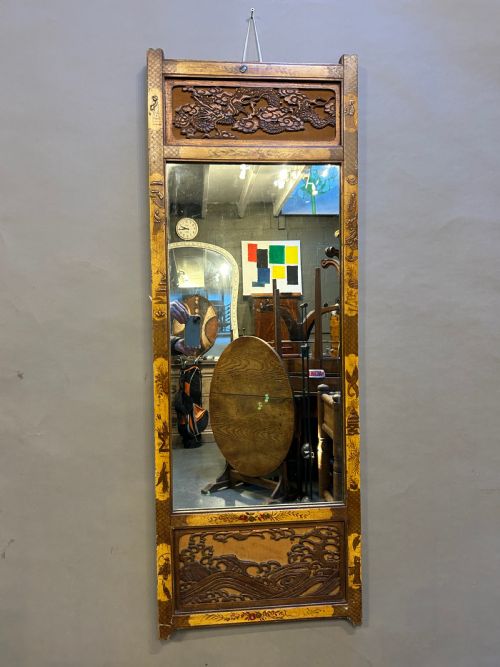

Edwardian Lacquered Mirror
An edwardian lacquered mirror brings painted scenes and dark polished surfaces into a room, offering the decorative depth that collectors seek.
Edwardian Lacquered Mirror
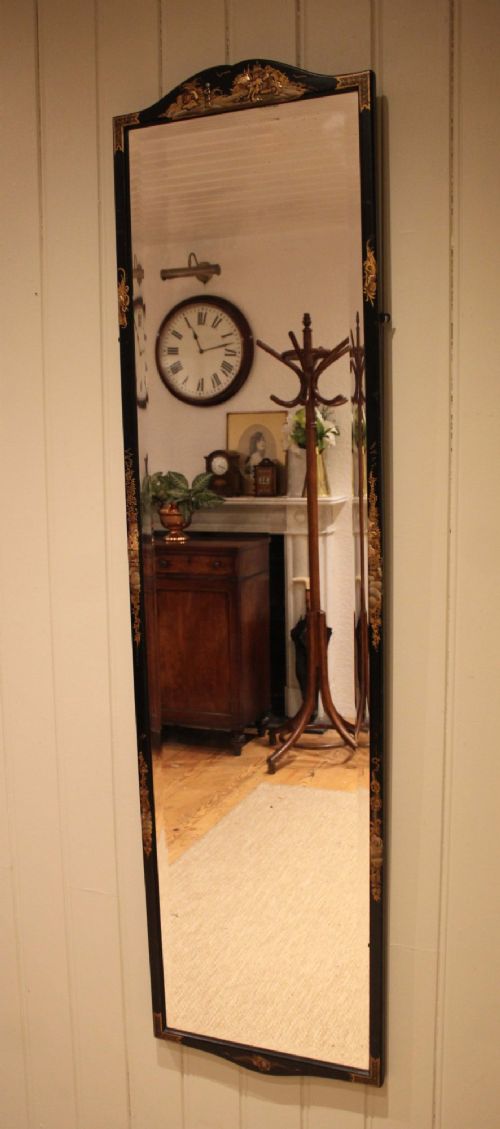
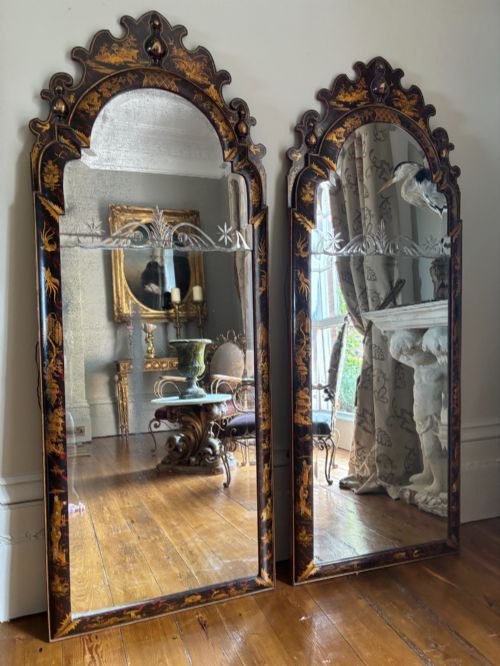
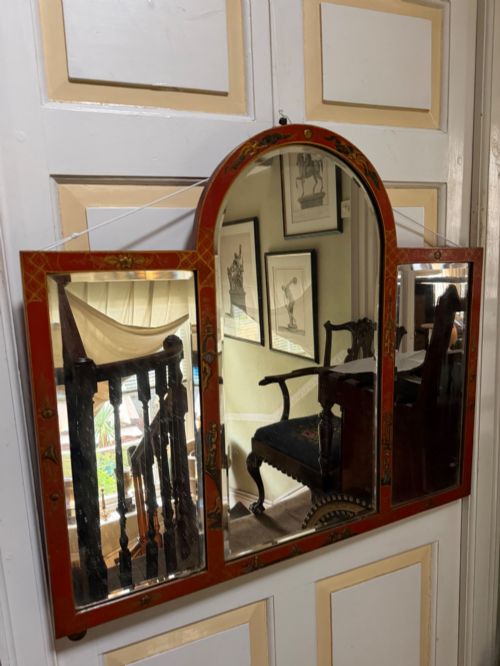
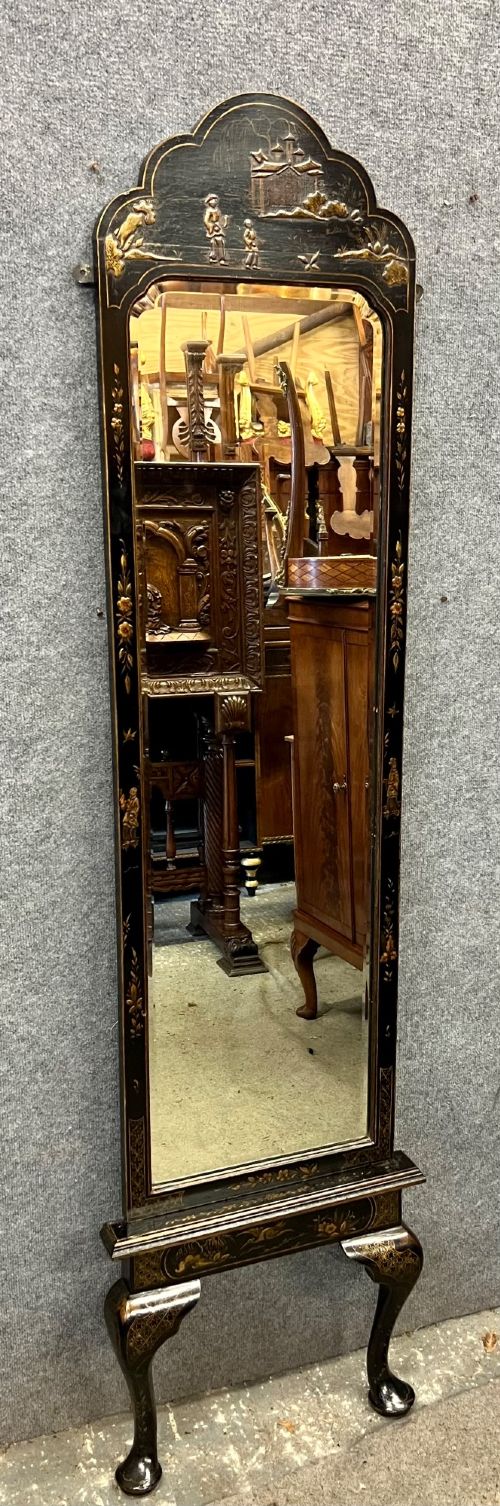
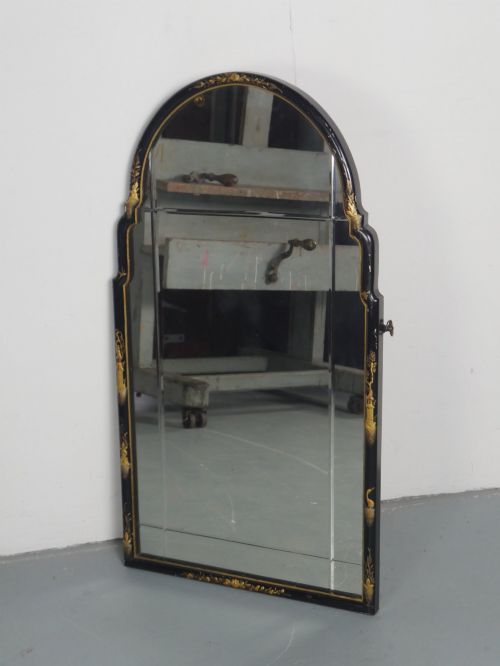
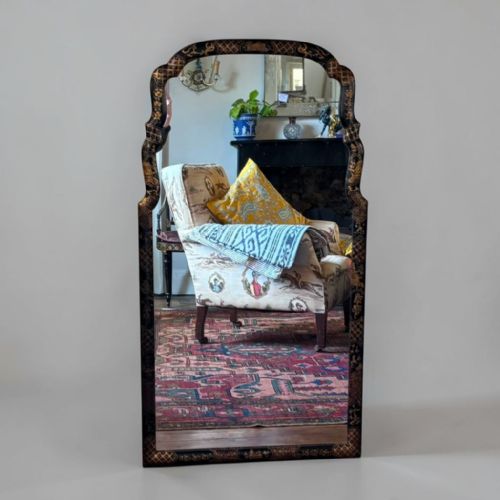
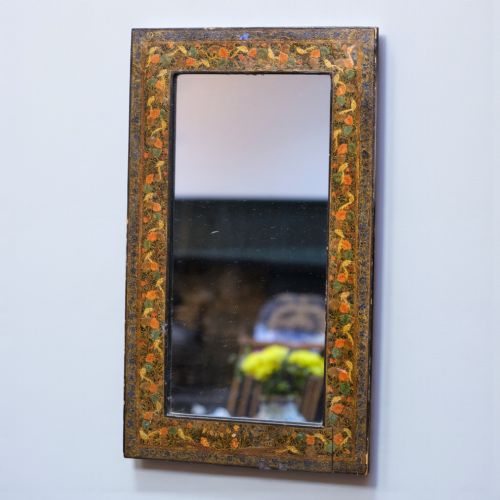
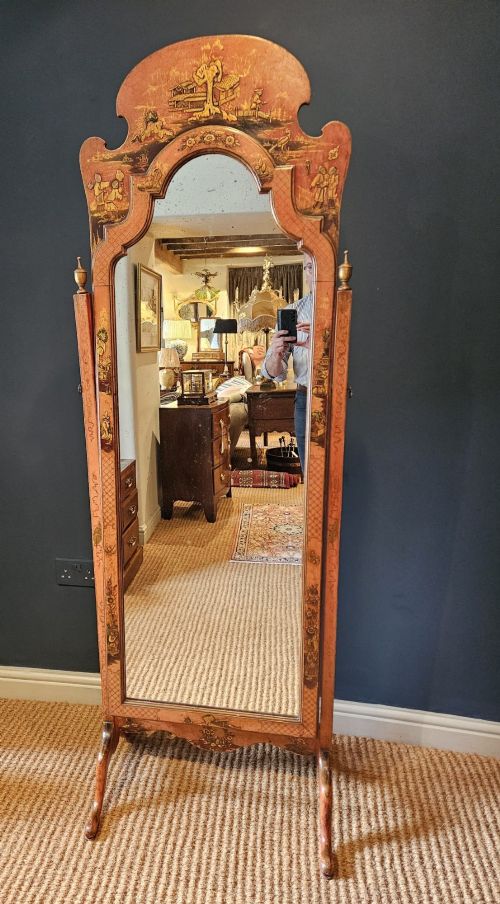
When you search for an edwardian lacquered mirror, you are looking at decorative items that span the turn of the twentieth century and adjacent decades. The selections on this page include wall mirrors, cheval mirrors, and overmantel mirrors alongside dressing table pieces and bedroom furniture suites.
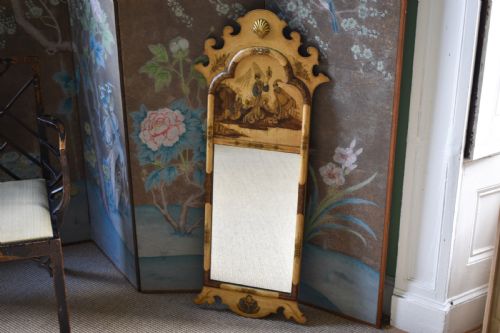
The version you are most likely to encounter here carries painted Chinoiserie decoration on a dark ground. These pieces bridge the Victorian era and the 1920s, drawing on earlier Queen Anne and Aesthetic Movement design traditions.
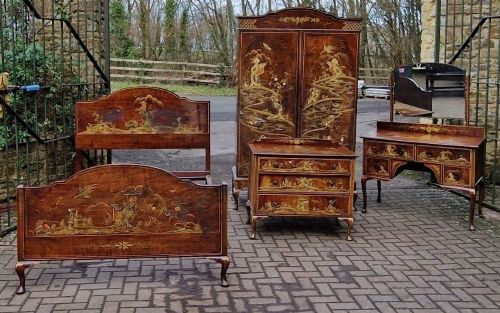
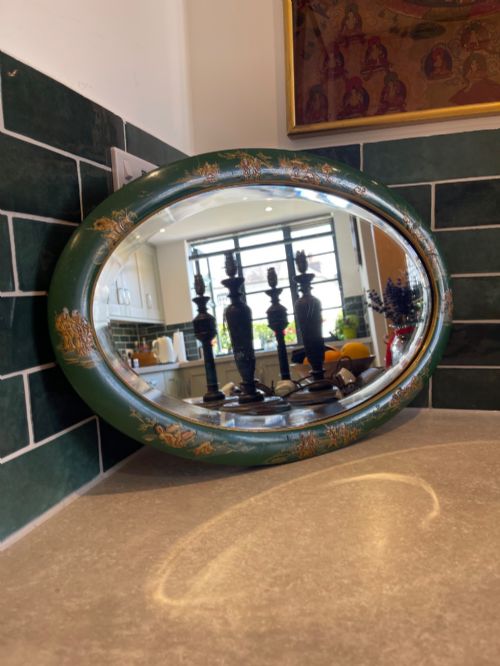
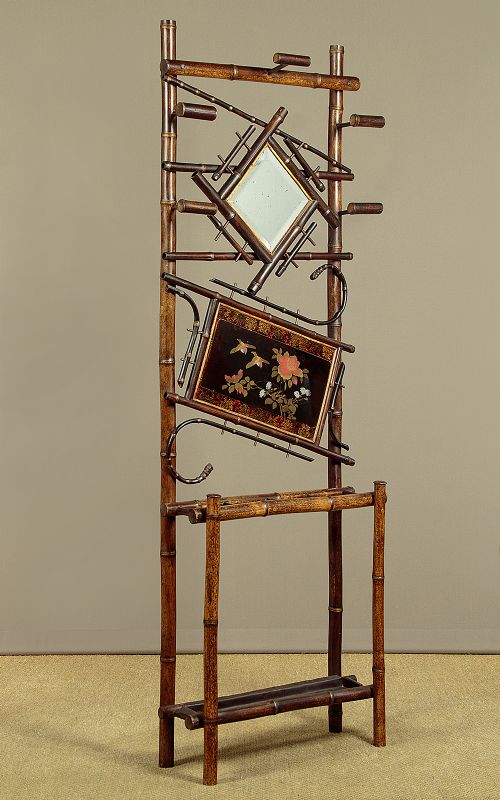
Forms range from small oval wall fixtures to large cheval mirrors designed for the bedroom. Some examples appear within larger bedroom suites or incorporate hall stands, showing how lacquer work was applied across domestic furnishings.
Materials and construction
Makers built these pieces using wood substrates finished with lacquer, often in black or ebonised tones, complemented by gold leaf and gilt detailing. Mirror glass provides the reflective surface, fitted into frames shaped as ovals, rectangles, or distinctive heart outlines.
The decorative surfaces rely on Chinoiserie painting techniques that depict figures, landscapes, and floral motifs in imitation of Asian export wares. This surface work is applied over prepared wooden grounds, including walnut and other timber frames.
Edwardian Lacquered Mirror Retail Price Guide 2026
Typical asking prices for edwardian lacquered mirror among the pieces listed under this phrase on Sellingantiques today, from the lower quarter to the upper quarter. They describe what is for sale here now, not the wider market.
One overmantel design incorporates a heart-shaped mirror within its black lacquer frame.
Assessing quality and finish
The division between standard and finer examples rests upon the execution of the painted decoration and the depth of the lacquer finish. Finer pieces display intricate hand-painted Chinoiserie detailing with careful layering of gold leaf, whereas simpler items feature more repetitive or sparse ornamentation.
Construction standards also separate the range, visible in the choice of solid timbers like walnut and the integrity of the joinery on larger frames and cheval supports. The clarity and preservation of the original mirror glass further influence the standing of an individual piece.
The Edwardian Lacquered Mirror Glossary
- Lacker
- A glossy resin finish applied to wooden furniture to create a smooth, hard surface. In these pieces, it typically forms a dark background for gilded ornamentation.
- Cheval mirror
- A full-length freestanding mirror suspended in a frame that allows it to tilt. These pieces often stand on four footed supports for bedroom use.
- Overmantel mirror
- A large mirror designed to be hung specifically above a fireplace mantelpiece. They frequently incorporate shaped frames such as ovals or hearts.
- Aesthetic Movement
- A late nineteenth-century design current that emphasised visual beauty over narrative content. It influenced the integration of bamboo and exotic decorative motifs in British furnishings.
- Ebonised
- Wood finished to resemble ebony through staining or painting. This dark treatment provided a contrasting base for gold leaf decoration.
Edwardian Lacquered Mirror: Frequently Asked Questions
How do I hang a heavy lacquered wall mirror?
These mirrors require secure wall fixings suited to their weight and frame size. Using appropriate wall anchors or fixing directly into studs ensures the piece remains stable.
Positioning the mirror at eye level helps balance the room and reflects light effectively across the space.
Can I place these mirrors in a hallway?
Hallways and entryways suit wall mirrors and hall stand combinations well. They bounce available light into narrower passages and provide a practical reflective surface near the door.
Ensure the chosen spot protects the lacquered finish from knocks caused by passing foot traffic.
How do I care for the lacquered surface?
Maintenance involves gentle dusting with a soft, dry cloth to prevent accumulation without scratching the finish. Avoid chemical polishes or excessive moisture that might damage the painted Chinoiserie details.
Keeping the mirror away from direct sunlight preserves the richness of the dark lacquer and gold leaf over time.
How do I distinguish Edwardian pieces from Victorian ones?
Dating relies on stylistic shifts and construction details recorded across the pieces. Victorian examples often lean towards heavier ebonised finishes, while Edwardian items frequently embrace lighter proportions or specific revival aesthetics.
Examining the backboards and fixings can also offer clues regarding the period of manufacture.