


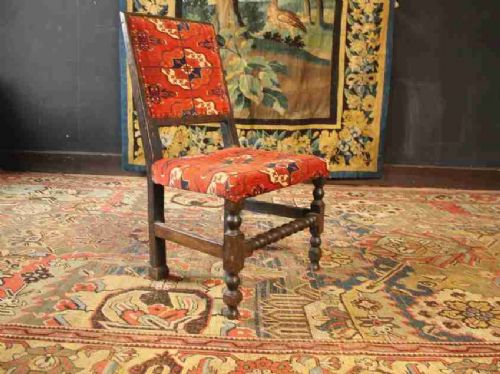


Edwardian Jacobean Dining Chairs
These edwardian jacobean dining chairs bring substantial seventeenth-century revival character to the modern table through sturdy oak frames and traditional turnings.
Edwardian Jacobean Dining Chairs
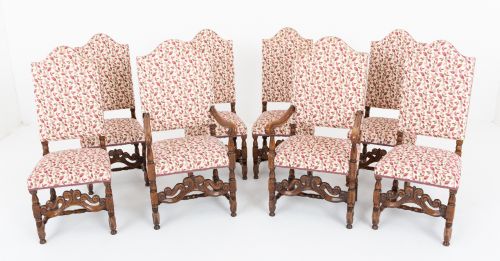
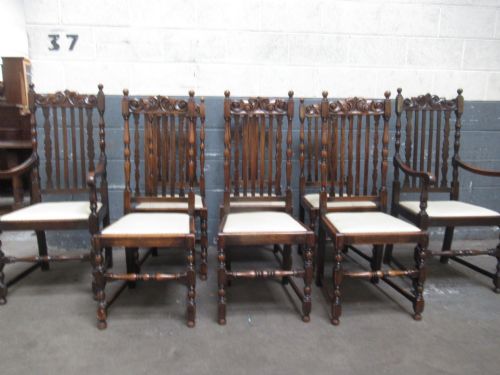
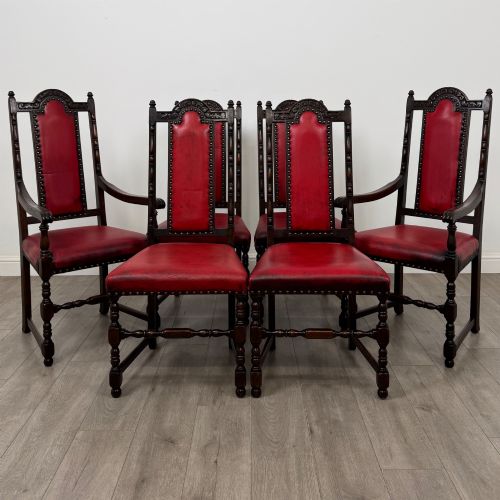
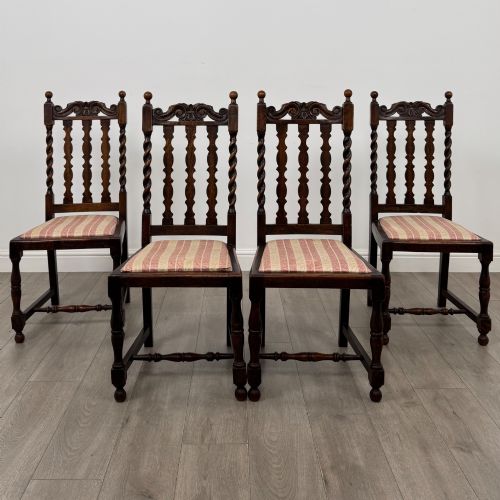
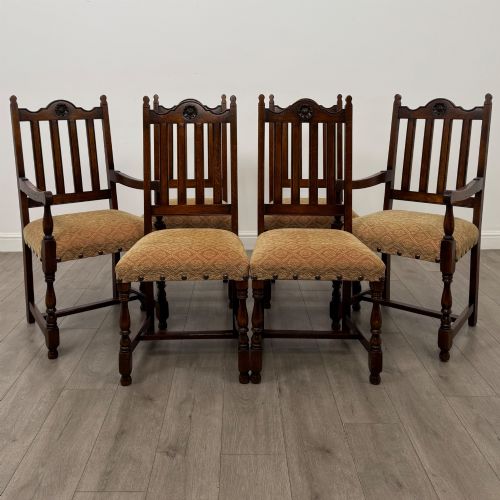
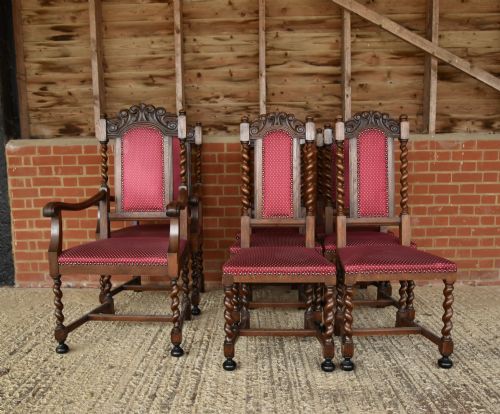
When you search for edwardian jacobean dining chairs, you encounter solid oak seating produced during the early twentieth century that revives heavier seventeenth-century forms. These pieces often appear as large sets for formal dining rooms, alongside matching carver armchairs and hall chairs.
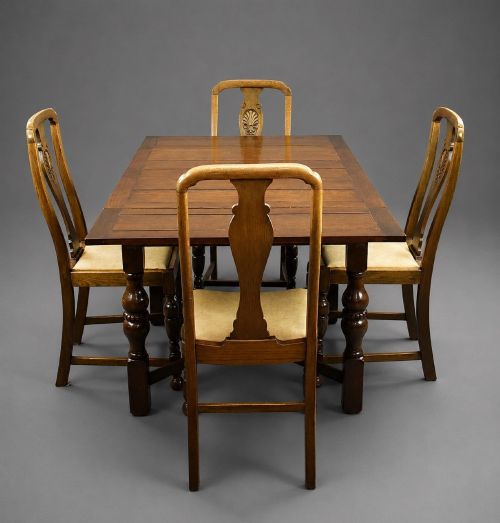
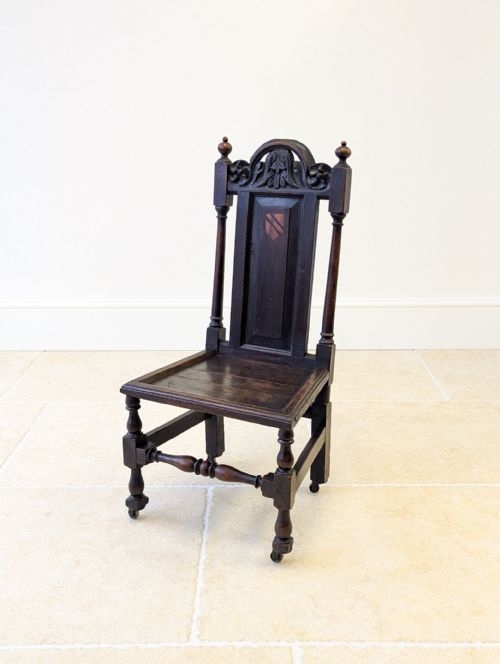
The style draws directly upon Tudor and Stuart vernacular architecture, translating heavy carved motifs into domestic seating intended for Edwardian and interwar homes. You will frequently meet these chairs grouped in sets of four, six, or eight, alongside larger suites complete with draw leaf tables.
While the revival nomenclature spans late Victorian to 1930s production, the core of what you find centres on Edwardian workshop output. The physical presence relies on high backs, sturdy stretcher bases, and dense timber construction designed to anchor a traditional dining space.
Materials and Construction
The primary material across all examples is solid oak, selected for its natural weight, dense grain, and capacity to hold deep hand-carving. Workshops utilised this timber for upright posts, stiles, and decorative splats, ensuring structural longevity through generations of daily use.
Turned components, particularly barley twist legs and stretchers, define the structural rhythm of the frames. Artisans shaped these elements on lathes before joining the uprights with traditional mortise and tenon joints.
Seating surfaces incorporate diverse materials ranging from plain wood panels and woven cane to leather and upholstered pads secured with brass tacks. These coverings reflect both original Edwardian upholstery choices and subsequent reupholstery in fabric or velvet.
Some barley twist chair legs are carved so sharply they practically demand a mid-century detective story.
Distinctions in Quality
Quality in these chairs rests upon the crispness of the carved ornamentation and the architectural proportion of the frame. Higher-tier examples display deep, deliberate relief carving on the crest rails rather than shallow, mechanical stamping.
The integrity of the timber frame and the tightness of the joinery dictate daily usability. Sets that retain their original heavy oak stretchers without movement at the joints represent superior structural execution.
The choice of secondary materials, such as substantial gauge brass tacks and high-grade hide or woven cane, separates workshop tiers. Sets that survive with uniform timber colour and matching grain across every chair command greater cohesion.
The Edwardian Jacobean Dining Chairs Glossary
- Jacobean Revival
- A nineteenth and twentieth-century style imitating the heavy, rectilinear furniture of the early seventeenth century. It utilises dark oak and architectural motifs.
- Barley Twist
- A helical turning technique resembling a twisted rope, carved or shaped into chair legs and stretchers. This form is particularly prevalent in Edwardian revival seating.
- Carver Armchair
- A dining chair featuring open arms, traditionally placed at the head of the table. These match the side chairs in a larger dining suite.
- Draw Leaf Table
- A dining table with pull-out extension leaves stored beneath the main top. These frequently accompany large sets of revival chairs.
- Highback
- A chair design featuring an elongated vertical backrest, common in revival seating to emphasise formal verticality. It often incorporates carved crest rails and upholstered panels.
Edwardian Jacobean Dining Chairs: Frequently Asked Questions
How do I date these chairs?
Dating relies upon examining the timber patina, tool marks, and construction methods used in the frame joints. Edwardian revival pieces generally exhibit early twentieth-century mechanical sawing alongside hand-finishing.
Comparing the turned elements and carving styles against documented periods helps clarify whether a set originates from the Edwardian era or later interwar decades.
Can I mix carvers and side chairs?
Mixing carver armchairs with standard side chairs follows traditional dining suite configurations. The carvers typically sit at the head and foot of the table.
Ensure the timber tone and twist leg profile match the side chairs to maintain visual harmony across the entire dining set.
How do I care for oak frames?
Maintain the timber by applying a traditional beeswax polish periodically to nourish the dry oak surface. Avoid placing the chairs near direct heat sources that might cause the wood to split.
Check the stretcher joints regularly to ensure the frame remains stable during daily use.
What defines Tudor revival style?
Tudor revival incorporates austere rectangular forms, panelled backs, and architectural mouldings reminiscent of sixteenth-century domestic interiors. It shares structural DNA with Jacobean revival pieces.
The aesthetic prioritises visible timber construction and heavy proportions over delicate ornamentation.