






Tapestry Oak Dining Chairs
Tapestry oak dining chairs bring substantial timber and tactile textile panels together to anchor a room with period character.
Tapestry Oak Dining Chairs
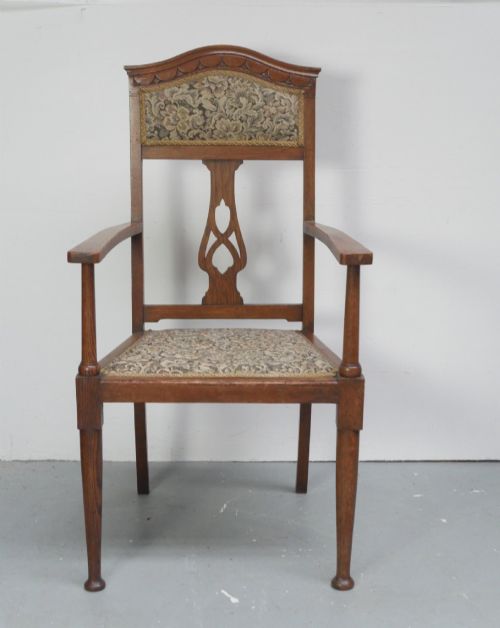
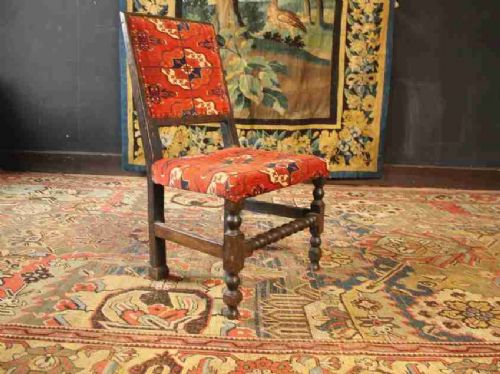
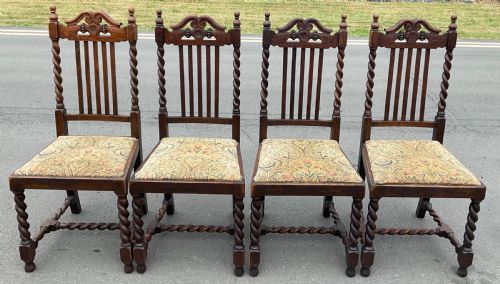
When you search for tapestry oak dining chairs, you encounter seating built from solid timber framed with textile or needlepoint upholstery panels. The selection spans single side chairs, armchairs, and matched sets from various eras.
The pieces appearing here include items from the seventeenth century, the Georgian period, the Victorian era, and twentieth-century revivals like Arts and Crafts and Jacobean styles. You are likely to meet vernacular forms as well as formal revival dining chairs.
Makers and workshops utilised sturdy timber construction paired with textile seats or backs, resulting in functional furniture designed for daily use around a dining table. These chairs combine heavy wood frames with softer woven elements.
Construction and Materials
Makers constructed these chairs primarily from solid oak, sometimes combined with metal or brass fastenings and detailed wood carving. The timber frames provide the structural skeleton while textile upholstery introduces colour and pattern.
The upholstery methods rely on durable fabric, tapestry upholstery, needlepoint, and textile panels secured to the wooden framework. Joinery techniques range from early joined construction to later revival framing methods.
Listings feature solid oak and fabric upholstery across periods spanning the seventeenth century, Victorian era, and twentieth-century revivals.
Assessing Quality and Distinction
Quality rests in the integrity of the timber framing, the crispness of any applied wood carving, and the proportion of the chair. Heavier, earlier pieces or faithful revival sets display tighter joinery and more substantial timber sections.
The condition and execution of the tapestry or textile upholstery also separate examples, as hand-worked needlepoint or period fabric panels require careful integration with the structural wood frame.
Liberty & Co
The Tapestry Oak Dining Chairs Glossary
- Back stool
- An early form of seating without arms, essentially an upholstered chair designed for dining or parlour use. These pieces often feature prominent vertical backs.
- Jacobean revival
- A nineteenth or twentieth-century style imitating the heavy, carved oak furniture of the early seventeenth century. This style frequently employs turned legs and rectilinear framing.
- Arts and Crafts
- A design movement focusing on traditional craftsmanship and simple materials. Pieces from this tradition emphasise honest construction and visible timber grain.
- Gothic revival
- An architectural and decorative style drawing on medieval forms. Furniture in this style often incorporates pointed arches, tracery, and heavy carved details.
- Needlepoint
- A type of canvas work embroidery used for upholstery. This technique creates dense, durable decorative panels suited for chair seats and backs.
Tapestry Oak Dining Chairs: Frequently Asked Questions
What periods do these chairs come from?
The listings encompass items ranging from the seventeenth century through the Georgian and Victorian periods, extending into twentieth-century revivals.
Twentieth-century interpretations sit alongside genuine antique examples from earlier centuries, offering various levels of age and historical reference.
Are these chairs sold as sets?
Many listings comprise matched sets of dining chairs, such as groups of four, six, or eight pieces. Sets are typically produced in revival styles to provide a uniform look around a table.
Single armchairs, side chairs, and pairs also appear for buyers seeking accent seating rather than a full dining suite.
What timber is used?
Solid oak forms the primary structural material for all these chairs, providing a heavy and durable framework. Some pieces incorporate ebonised finishes or contrasting brass and metal components.
The timber grain and colour vary according to the age of the wood and the specific revival period of the piece.
How do I identify a revival piece?
Revival pieces often date from the nineteenth or twentieth centuries but intentionally copy earlier styles like seventeenth-century Jacobean or Gothic forms. Examining the joinery, tool marks, and timber ageing helps distinguish original early pieces from later interpretations.
Stylistic cues such as standardised turning and specific upholstery types also point toward later revival workshops.