

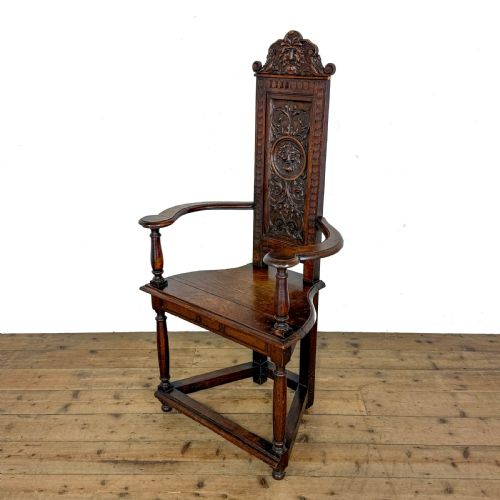


Jacobean Style Carver Chairs
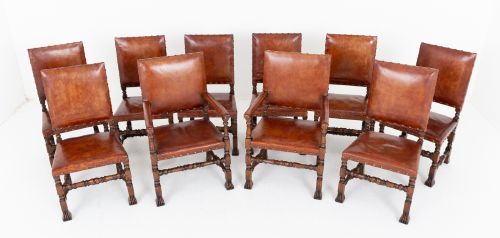
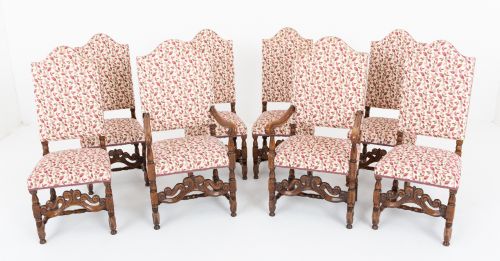
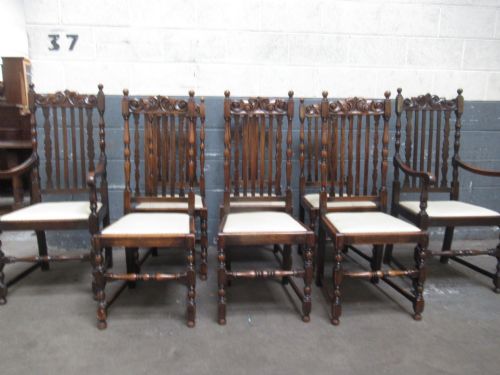
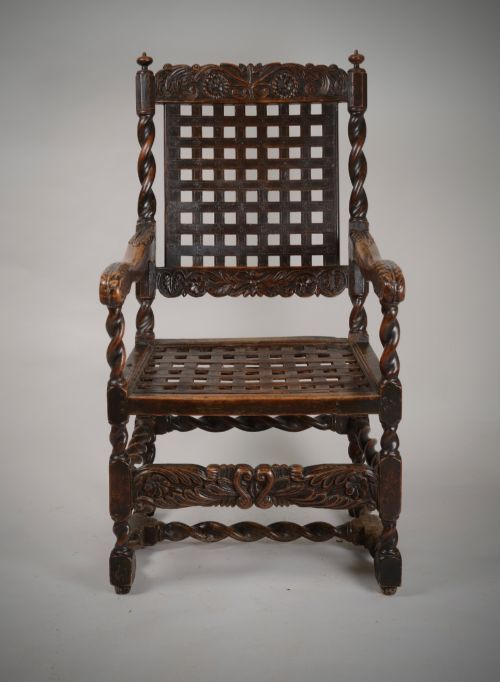
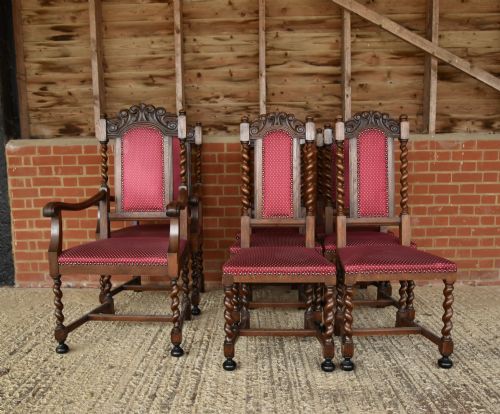
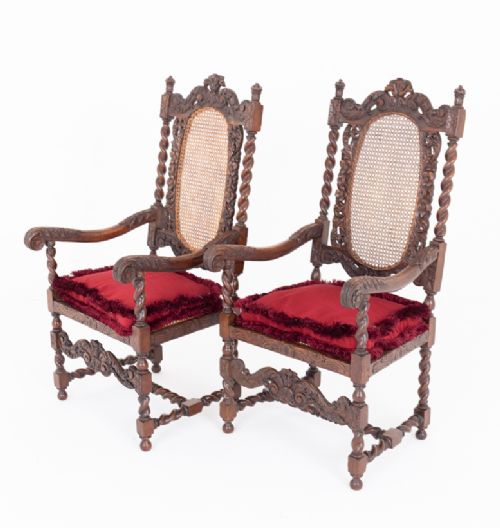
These jacobean style carver chairs bring heavy timber and formal stance to a room, offering sturdy arms and carved backs.
Jacobean Style Carver Chairs
When you search for jacobean style carver chairs, you encounter sturdy armchairs rooted in seventeenth-century forms, alongside nineteenth-century and early twentieth-century revivals. The versions you are most likely to meet on this page date from the Victorian era through the 1930s, reflecting historical revivals rather than original seventeenth-century construction.
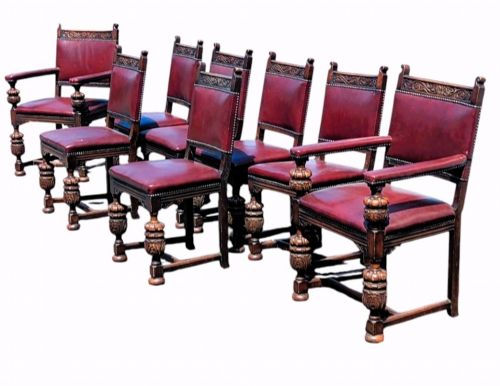
These pieces function primarily as armchairs, desk chairs, and dining carvers, often appearing as matched sets or pairs. The overarching forms draw from Jacobean, Carolean, and Tudor styles, displaying upright proportions designed for formal seating.
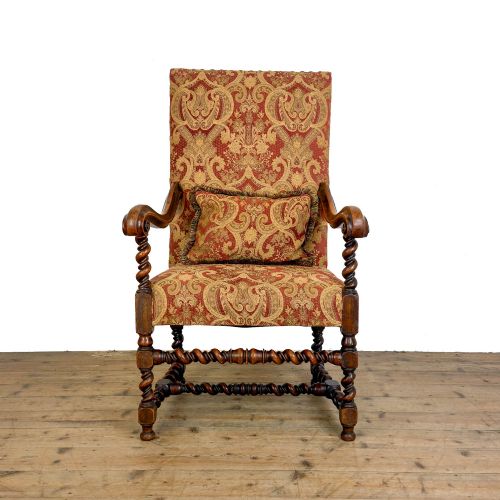
The material palette centres on oak, supplemented by walnut, leather, cane, and brass hardware. Upholstery fabrics and velvet also appear across seat pads and back panels, matching the substantial timber frames.
Assessing quality
The distinction between tiers of pieces rests on the crispness and depth of the timber carving, alongside the selection of the primary wood. Heavier framing and denser grain patterns signal a higher standard of manufacture.
The integration of secondary materials, such as supple leather, genuine cane work, or substantial velvet upholstery, elevates the finish. Uniformity across large sets of chairs further distinguishes superior examples from standard workshop output.
Some chairs possess arms wide enough to rest a heavy ledger, designed when desk work required a sturdy seat and solid timber support.
The Jacobean Style Carver Chairs Glossary
- Carver chair
- An armchair, typically designed to sit at the head of a dining table or function as a desk chair. These pieces feature structural armrests integrated into the primary frame.
- Barley twist
- A type of wood turning resembling a spiral rope, frequently found on the legs and stretchers of revival seating. This decorative technique adds visual movement to heavy oak frames.
- Throne chair
- A large, high-backed armchair featuring heavy carving and imposing proportions. These chairs often incorporate raised seats and elaborate crest rails.
- Crest rail
- The uppermost horizontal member of a chair back. On these pieces, the crest rail frequently bears carved ornamentation.
- Stile
- The upright vertical side post of a chair back framing. Stiles provide the main structural support for the backrest and join directly to the rear legs.
Jacobean Style Carver Chairs: Frequently Asked Questions
How do I identify a revival chair?
Revival pieces combine seventeenth-century stylistic motifs with nineteenth-century or twentieth-century manufacturing techniques. Look at the timber seasoning, tool marks, and overall construction methods to determine the period.
Many chairs on this page date from the Victorian era through the 1930s, using traditional oak and walnut forms to recreate earlier historical styles.
Were these chairs used at dining tables?
Carver chairs traditionally served as principal seating at the head and foot of a dining table, accompanied by matching side chairs. Their arms required extra space around the table setting.
Today, they function equally well as standalone desk chairs or accent seating in living spaces.
What wood was used?
Oak is the predominant timber found across these pieces, providing a strong and durable structural framework. Walnut also appears on specific revival models, offering a finer grain and darker natural tone.
Both woods were chosen for their ability to support deep carving and heavy turned elements.
How do I care for leather and oak?
Keep timber surfaces nourished with appropriate wax polishes to maintain the natural finish of the oak or walnut. Avoid placing chairs in direct sunlight or near heat sources to prevent the wood from splitting.
Leather seat pads benefit from gentle conditioning treatments to keep the material supple and prevent cracking over time.