

Jacobean Revival Seating
These pieces of jacobean revival seating bring heavy timber and formal carved presence straight into a modern interior.
Materials and construction
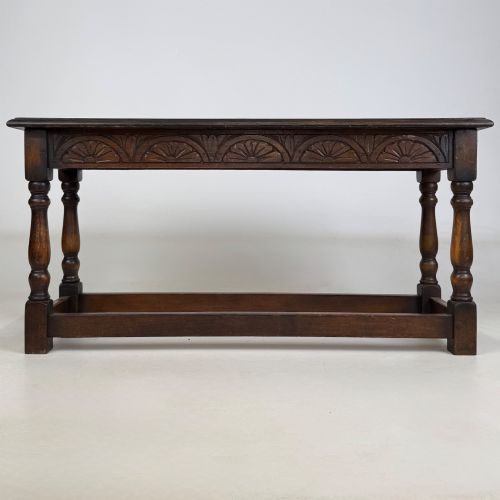
Oak forms the primary structural material across nearly all pieces, selected for its strength and suitability for deep relief carving. Walnut and rosewood appear in select armchairs and library seating from the nineteenth century.
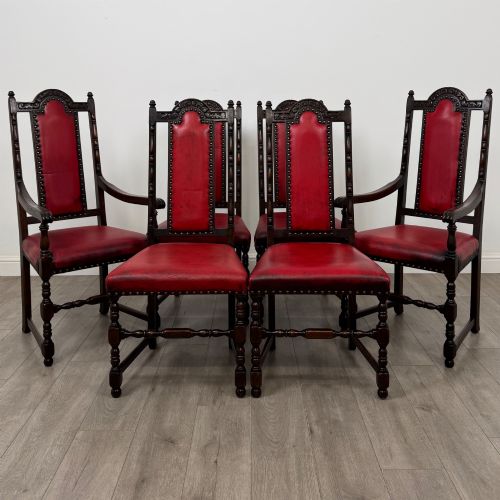
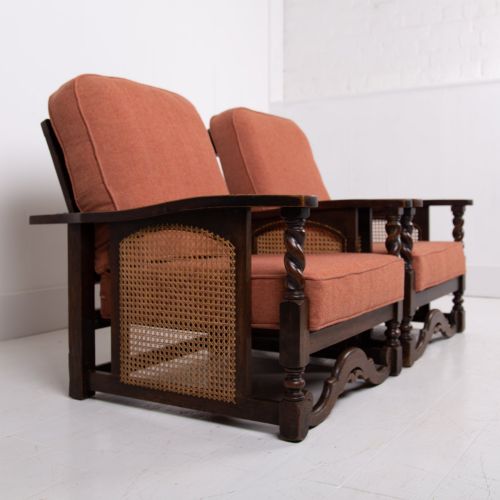
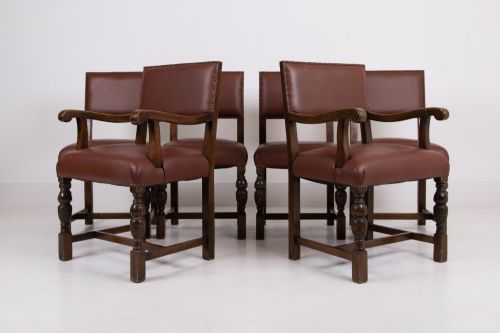
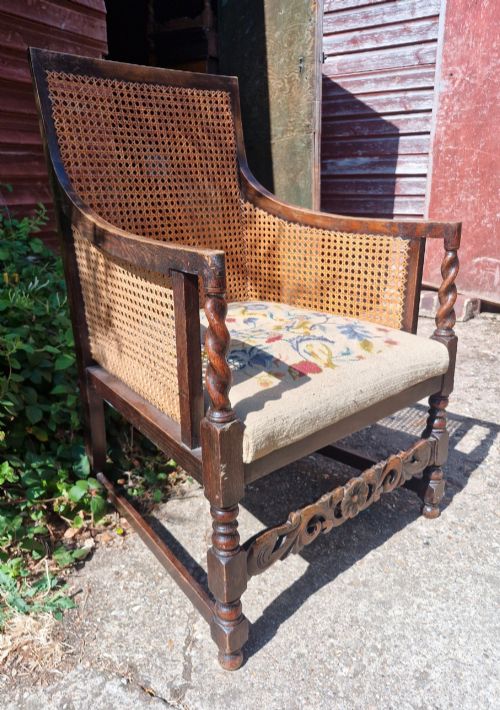
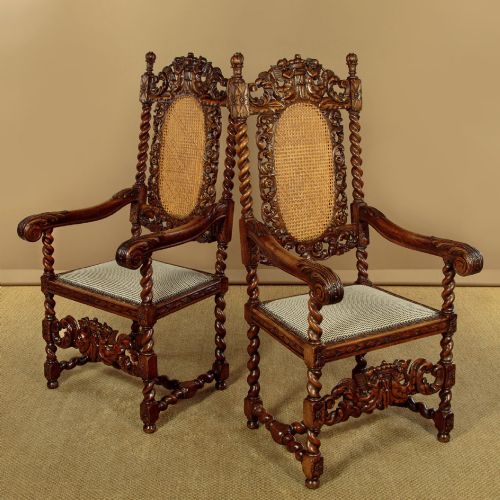
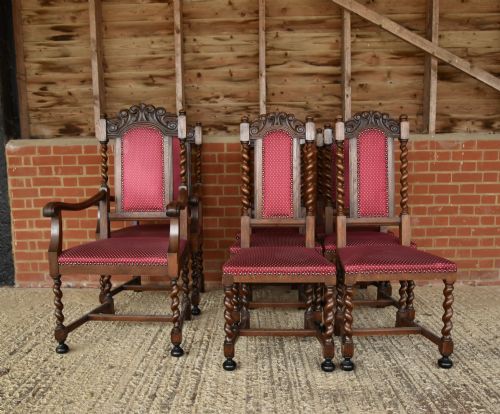
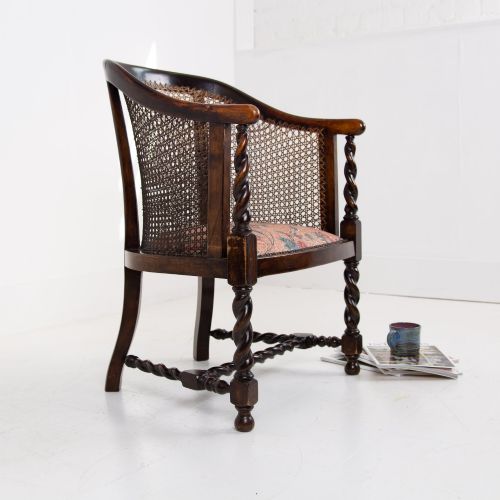
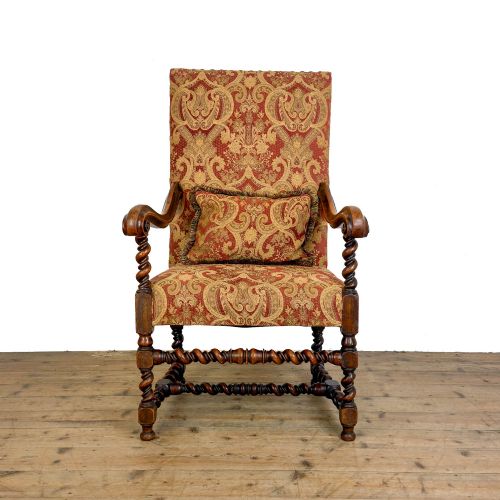
Makers utilised traditional joinery combined with turned elements such as barley twist and bobbin legs. Seating surfaces incorporate cane, leather, solid timber panels and upholstered pads covered in fabric or tapestry.
Judging quality
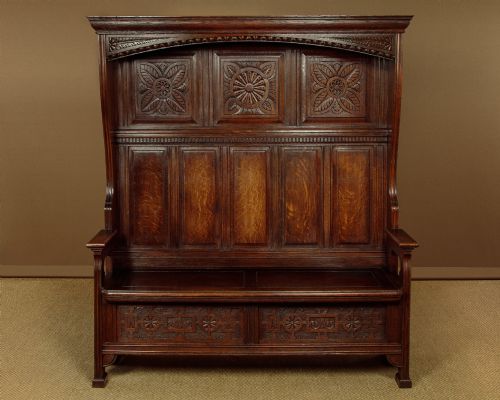
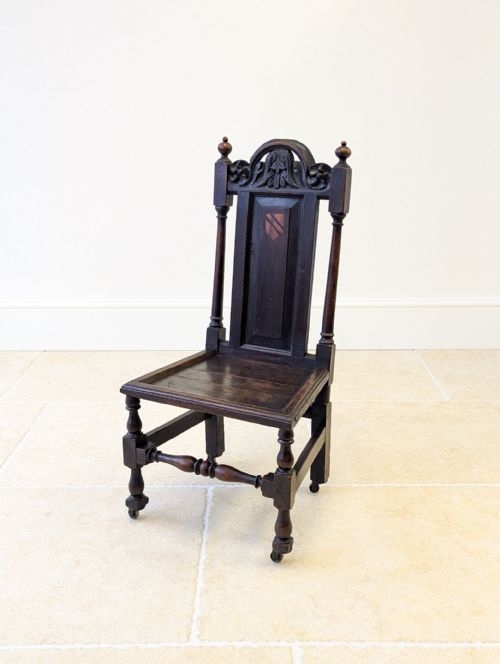
Depth and crispness of the carved ornamentation separate standard production pieces from superior examples. Hand-chiselled foliage and panel work show greater definition than pressed or shallow machine mouldings.
The integrity of the timber frame and the quality of the timber grain dictate long-term durability. Matched sets with uniform colour and original joinery command more attention than assembled groupings.
Several heavy throne chairs include carved green man faces peering out from the woodwork.
The Jacobean Revival Seating Glossary
- Jacobean revival
- A nineteenth- and twentieth-century design movement copying the dark, heavily carved furniture style of the early seventeenth century. It emphasises rectilinear frames, strapwork carving and turned supports.
- Settle
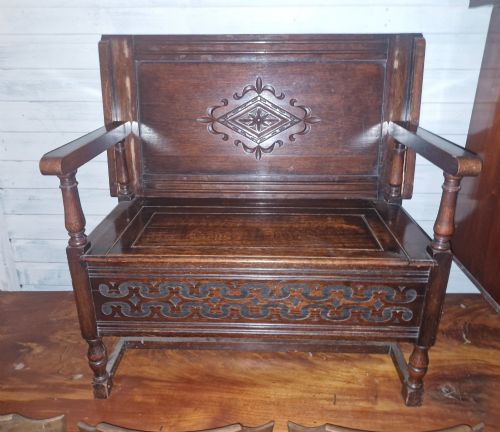
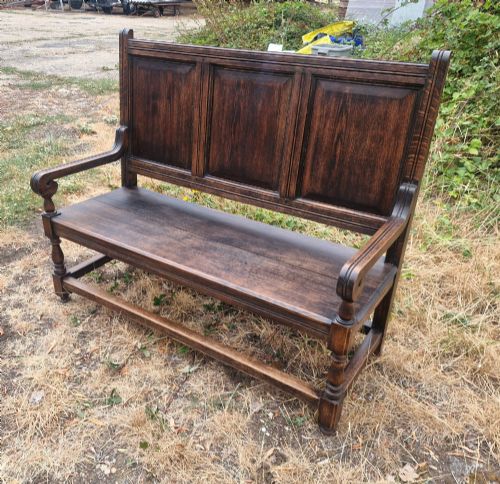
- A wooden bench with high back, solid arms and enclosed storage or seating box beneath the seat. They served to block draughts in large hallways and reception rooms.
- Barley twist
- A cylindrical furniture leg or stretcher carved in a continuous spiral resembling a twisted rope. This turned detail appears frequently on chairs and tables from the revival period.
- Bergere
- An enclosed armchair featuring woven cane panels on the back and sides. The style provides a lighter visual weight compared to solid panelled wood.
- Derbyshire chair
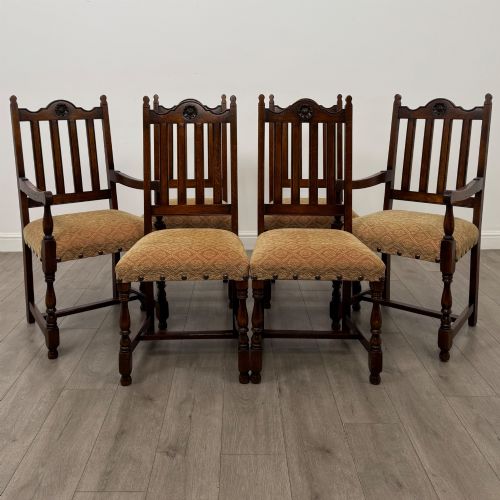
- A type of seventeenth-century oak side chair characterised by open carved backs and turned posts. Revival versions replicate these regional English vernacular forms.
Jacobean Revival Seating: Frequently Asked Questions
How do I date jacobean revival seating?
Dating relies on timber colour, tool marks and the consistency of the revival style with known production eras. Victorian and Edwardian examples often display softer internal wear and machine-assisted turning compared to earlier work.
Hardware, upholstery webbing and secondary woods hidden beneath seats provide further clues to the manufacturing decade. Comparing the construction methods to dated comparative pieces helps confirm the period.
Are these chairs comfortable for daily use?
Many dining chairs and armchairs offer upright, supportive seating postures typical of historic domestic habits. Replacement cushions and updated padding frequently improve comfort on surviving frames.
Throne chairs and hall benches prioritise formal presence over ergonomic relaxation. Selecting pieces with appropriate seat heights ensures practical integration into modern rooms.
How should I care for dark oak furniture?
Maintenance requires regular dusting with a dry, soft cloth and occasional treatment with quality beeswax to nourish the timber. Avoiding direct sunlight and sudden temperature changes prevents the wood from splitting.
Leather and fabric elements need specific cleaning treatments suited to their textile composition. Keeping upholstery dry preserves both the covering materials and the internal stuffing.
What is the difference between side chairs and arm chairs?
Side chairs lack arms, allowing multiple seats to tuck neatly around a dining table or line a hallway wall. Their compact footprints suit smaller spaces and group arrangements.
Armchairs feature structural side supports designed for reading or relaxing by a fireplace. They occupy more floor space and typically serve as statement pieces within a room.