
Edwardian Inlaid Writing Table
An Edwardian inlaid writing table combines the refinement of turn-of-the-century cabinet making with delicate surface decoration designed for the parlour or study.
Edwardian Inlaid Writing Table
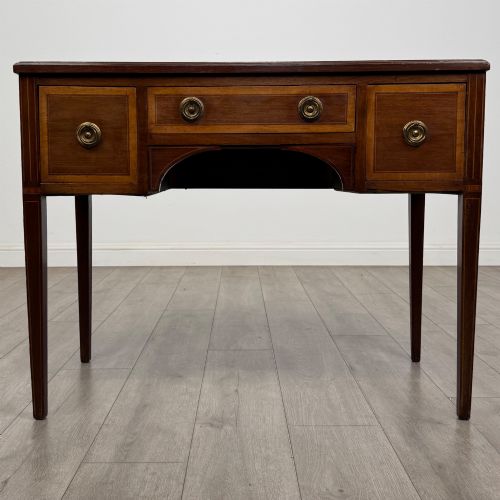
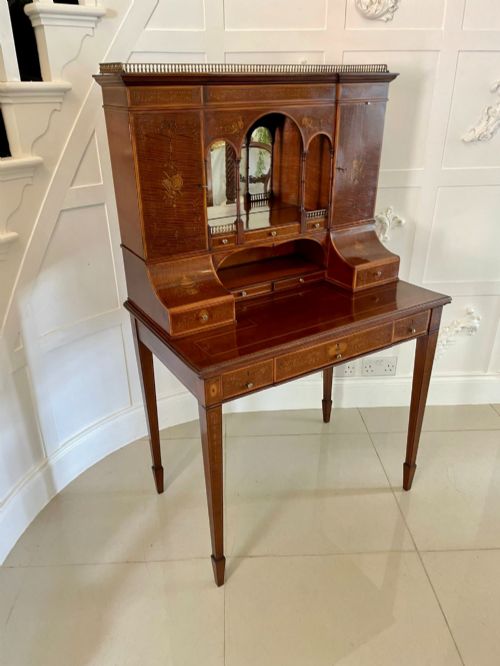
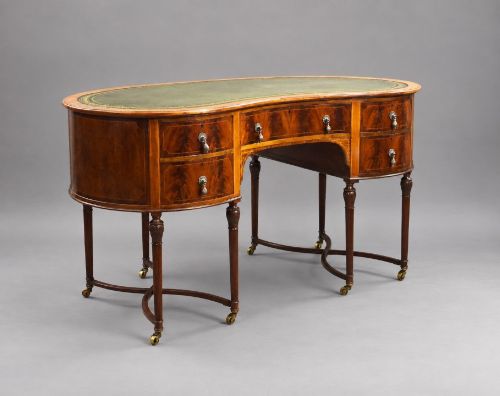
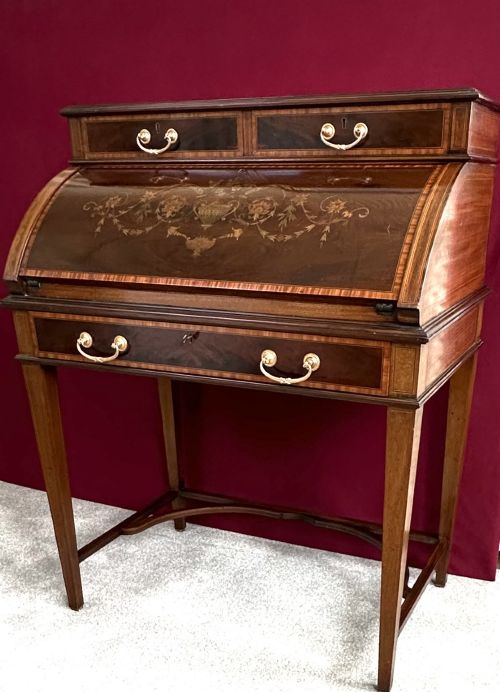
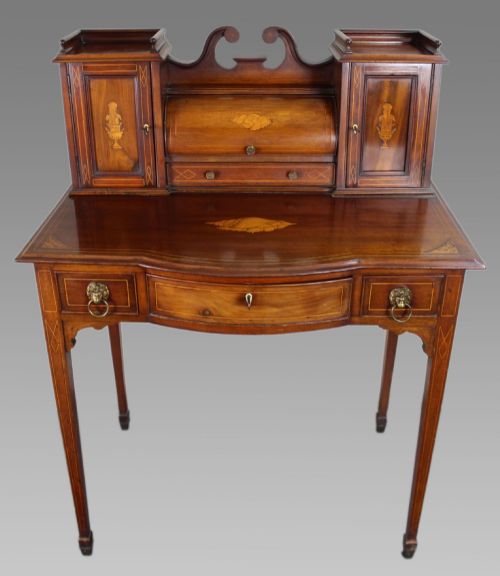
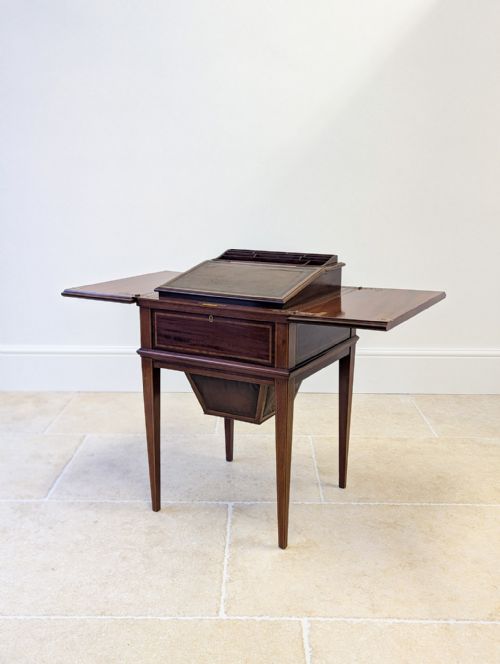
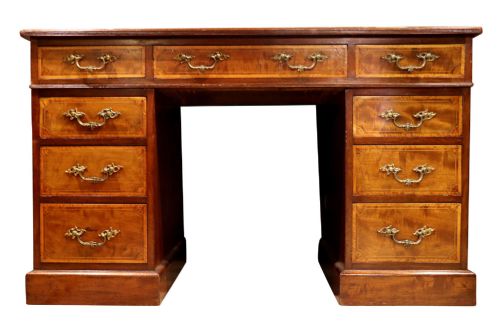
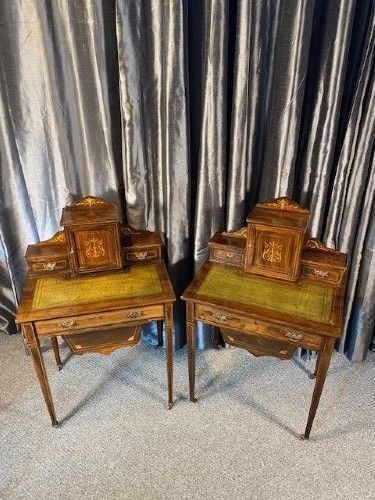
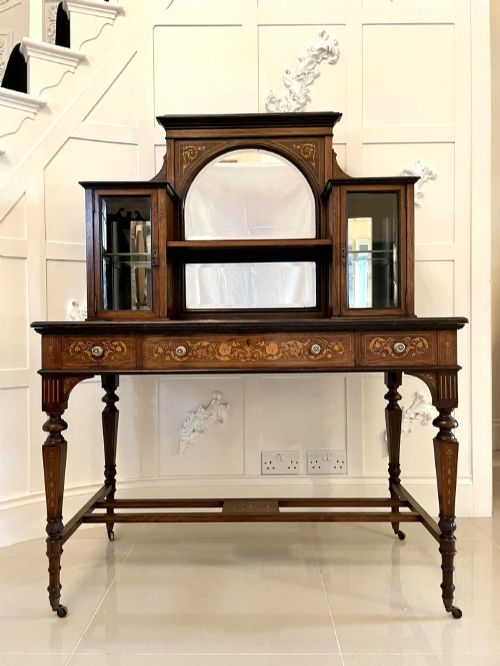
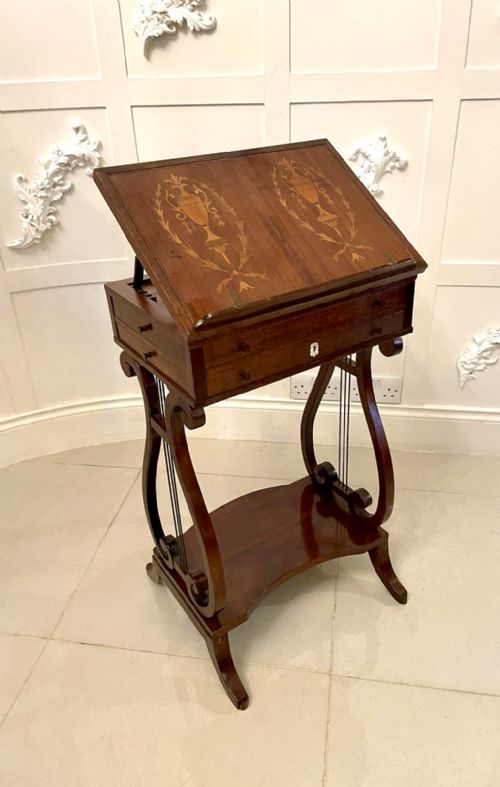
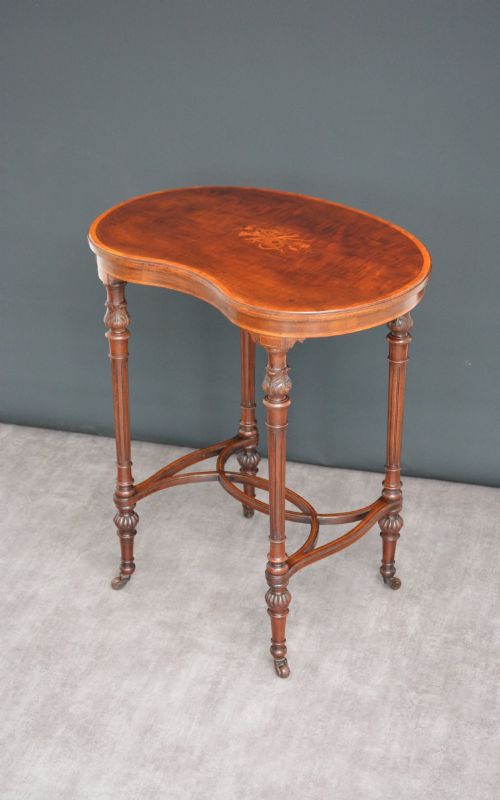
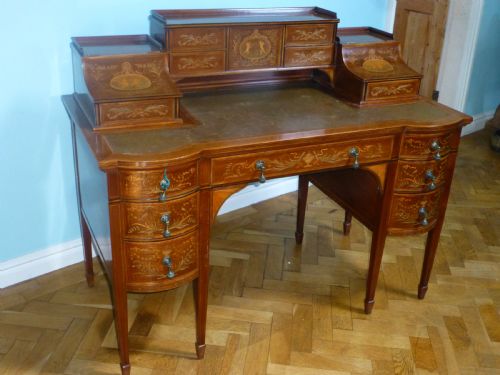
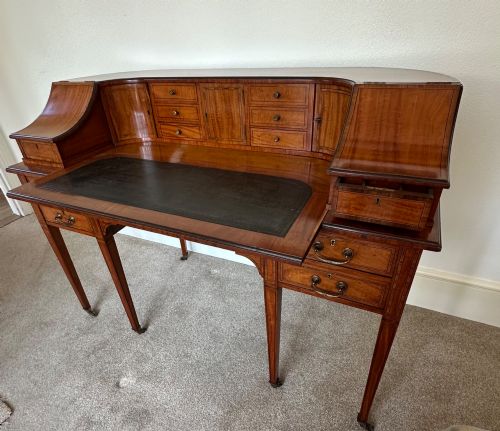
The edwardian inlaid writing table is a domestic surface designed for correspondence, spanning the period around nineteen hundred alongside related pieces from the late nineteenth century. You encounter rectangular formats, kidney-shaped models, and compact ladies' desks such as the bonheur de jour.
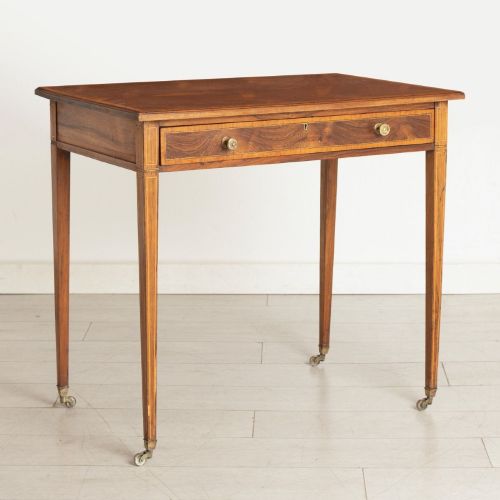
The form ranges from simple freestanding mahogany tables to elaborate rosewood, satinwood, and burr walnut variants influenced by French revival taste and earlier regency styles.
Materials and construction
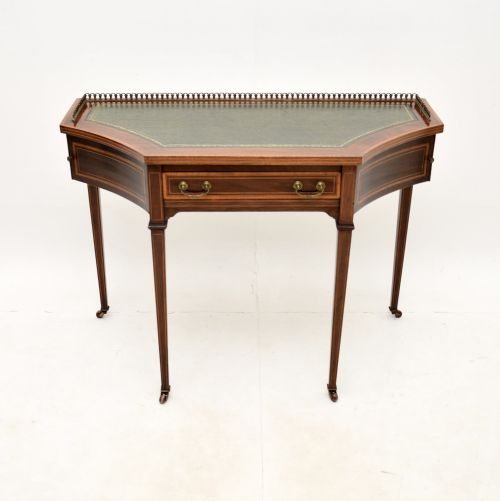
Cabinet makers built these pieces using solid and veneered timbers including mahogany, satinwood, rosewood, burr walnut, and kingwood, often set on slender tapered legs.
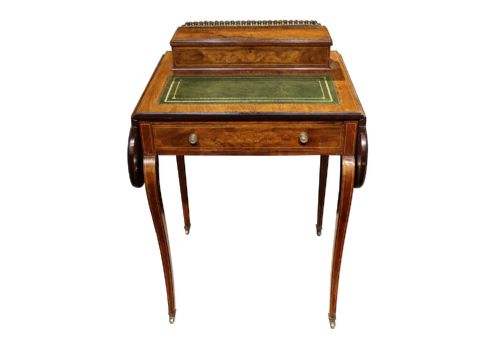
Surfaces received intricate ornamentation through boxwood and fruitwood inlay, stringing, and marquetry, supplemented by brass handles, glass elements, and inset leather writing surfaces.
Edwardian Inlaid Writing Table Retail Price Guide 2026
Typical asking prices for edwardian inlaid writing table among the pieces listed under this phrase on Sellingantiques today, from the lower quarter to the upper quarter. They describe what is for sale here now, not the wider market.
Kidney-shaped formats and the bonheur de jour form represent the principal variants among compact ladies writing desks.
Distinctions in craftsmanship
Quality rests in the precision of the timber selection and the crispness of the boxwood or fruitwood inlay, where tighter botanical and linear motifs reflect superior workshop output.
The integration of secondary timbers, the weight and finish of brass mounts, and the fidelity of French revival shaping distinguish standard utility items from pieces bearing maker attributions.
Maple and Co·S and H Jewell
The Edwardian Inlaid Writing Table Glossary
- Bonheur de jour
- A small ladies writing desk featuring a tiered superstructure with drawers, pigeonholes, or a small cupboard above the main writing surface. It became particularly popular during the late Victorian and Edwardian periods.
- Marquetry
- The art of applying decorative pieces of veneer to a structure to form intricate pictorial or geometric patterns. Makers utilised contrasting woods like satinwood and fruitwood to create shaded floral designs.
- Stringing
- Thin lines of contrasting timber inlaid into channels cut into the solid wood or veneer of a surface. This technique defined the borders of drawers and tabletops on Edwardian furniture.
- Kidney shape
- A curved desk or table configuration resembling a kidney bean, designed to wrap partially around the user. These pieces often incorporate leather tops and multiple small drawers.
Edwardian Inlaid Writing Table: Frequently Asked Questions
What is a bonheur de jour?
A bonheur de jour is a compact ladies desk that includes a small cabinet or set of pigeonholes built onto the upper surface.
These pieces were intended for light correspondence and display in a private sitting room rather than heavy administrative work.
How do I care for leather desk tops?
Leather surfaces benefit from occasional light dusting and conditioning with appropriate wax or balm to prevent drying and cracking.
Keeping the table away from direct sunlight and excessive heat preserves both the leather and the surrounding wood veneer.
Are these tables suitable for daily writing?
Many Edwardian writing tables function effectively for modern correspondence, laptop use, or as decorative console surfaces.
Their lighter proportions mean they occupy less visual space than heavier Victorian pedestal desks while providing practical drawer storage.
How do I distinguish Edwardian from Victorian writing tables?
Edwardian tables generally display lighter proportions, paler timber selections like satinwood, and more delicate inlaid stringing.
Victorian counterparts tend to utilise heavier dark mahogany or walnut with bolder mouldings and less reliance on intricate contrasting inlays.