
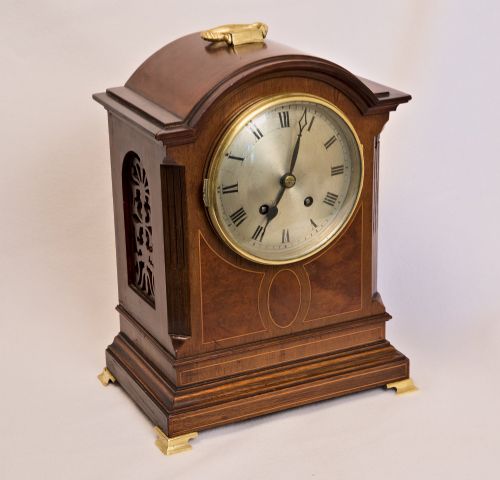


Edwardian Inlaid Mantel Clock
When you search for an edwardian inlaid mantel clock, you are looking at timepieces combining cabinetwork and precision engineering from the early twentieth century.
Edwardian Inlaid Mantel Clock
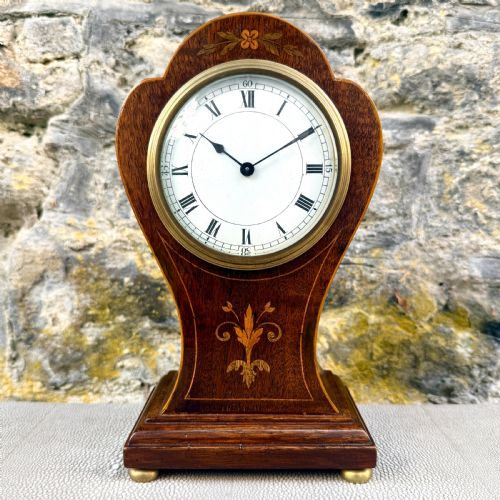
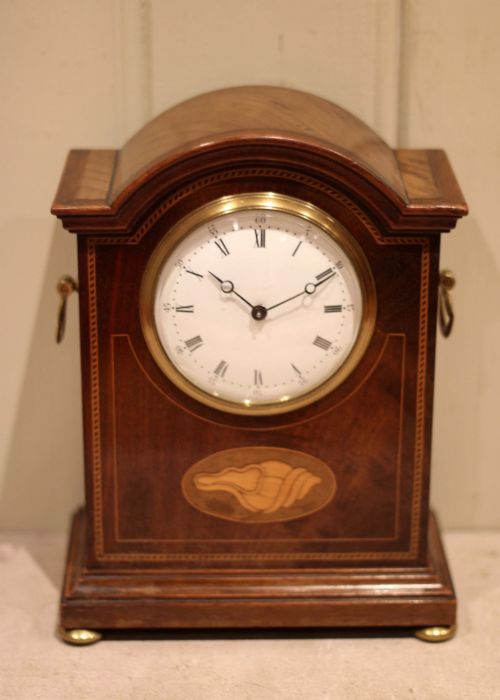
An edwardian inlaid mantel clock is a domestic timepiece designed to sit on a shelf or fireplace mantel, housing a mechanical movement inside a decorative wooden case. These pieces date predominantly from the Edwardian period and the early twentieth century, though examples stretch back into the Victorian era and forward to the nineteen-twenties.
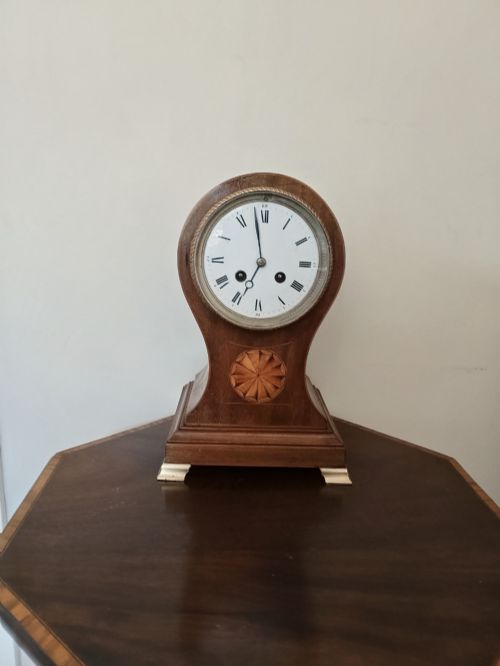
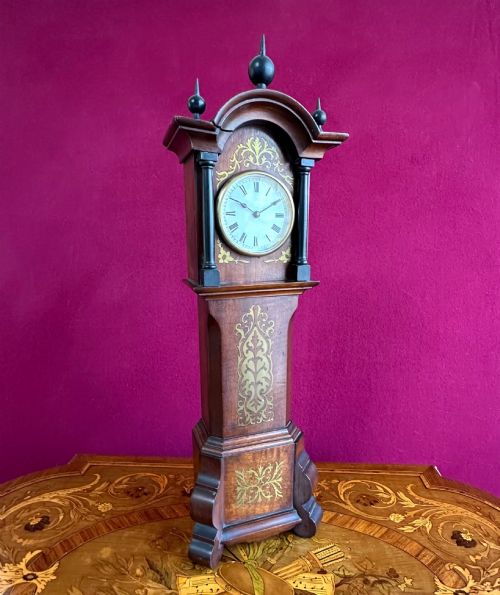
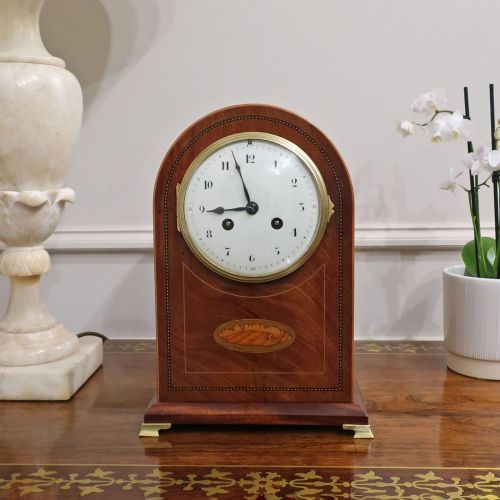
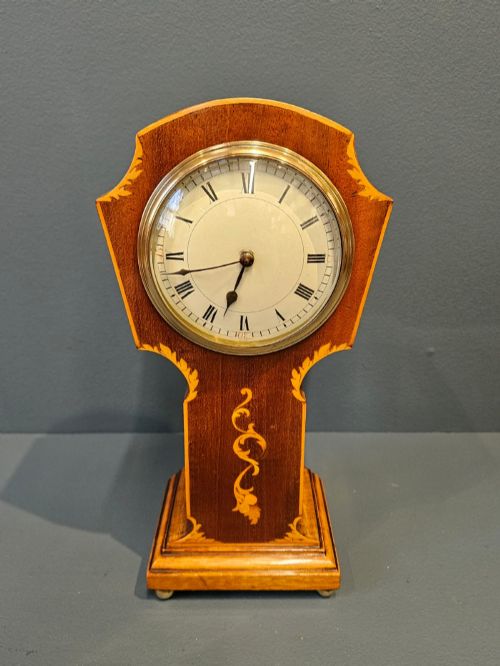
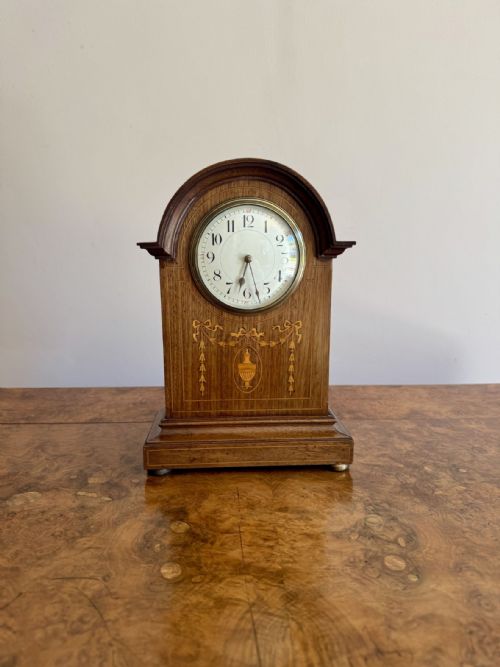
The version you are most likely to meet on this page is housed in a mahogany case, frequently accented with satinwood, boxwood or contrasting fruitwood inlay. Their silhouettes range from traditional balloon and arched shapes to dramatic Art Nouveau profiles featuring botanical motifs like poppies or stylized floral garlands.
Makers and retailers of the era, including notable firms like Dent of London and W. Burton, housed these movements in compact table clocks and larger chiming bracket clocks alike. They serve both as functional timekeepers and as decorative wooden sculptures for the home interior.
Materials and Construction
Cabinetmakers constructed these clock bodies primarily from solid and veneered mahogany, oak or rosewood, building up shapes like the popular balloon or break arch cases. Craftsmen then embedded contrasting veneers such as satinwood and boxwood into the timber surface to create decorative stringing, shell motifs and floral marquetry.
The wooden housings shelter metal mechanical movements, which incorporate brass plates, steel pivots and occasionally silvered dials behind protective glass doors. Enamel chapter rings with bold numerals provide high contrast for reading the time across a room.
Listings feature brass, mahogany, glass, enamel, satinwood, boxwood, and oak across Victorian, Edwardian, and Art Nouveau styles.
Judgments of Quality
Quality in these timepieces rests upon the precision of the cabinetwork and the sophistication of the internal movement. Finer examples display crisp, tightly fitted inlay with no visible gaps in the contrasting wood veneers, alongside substantial brass fusee or striking movements.
Cases with balanced proportions, heavier brass fittings and signed dials from recognised makers command greater regard. The intricacy of the decorative motifs, from simple stringing to elaborate fruitwood garlands, elevates the visual presence of the clock.
W. Burton·W&H·Junghans·Dent of London·Sharman D Neill of Belfast·Benson of London·Aspreys
The Edwardian Inlaid Mantel Clock Glossary
- Fusee
- A conical pulley connected to the mainspring by a chain or cord that equalizes the power output as the spring unwinds. This mechanism improves the timekeeping accuracy of the clock.
- Inlay
- The technique of embedding pieces of contrasting wood or other materials into a recessed wooden surface to form a decorative pattern. In these pieces, satinwood and boxwood are common.
- Balloon clock
- A mantel clock featuring a case shaped like a hot air balloon, curving outward from a narrow base to a rounded top. This form is particularly common in Edwardian designs.
- Ting Tang
- A striking mechanism that sounds the quarters on two different bells before the hour is struck. It provides a distinct double chime.
- Marquetry
- The art of applying pieces of veneer to a structure to form decorative pictorial designs. Floral patterns and shell motifs frequently appear on these clock faces.
Edwardian Inlaid Mantel Clock: Frequently Asked Questions
How do I wind my clock?
Most mechanical clocks require a key to tension the mainspring through holes in the dial face. Care must be taken not to overwind the movement.
Different models utilise eight-day movements or shorter durations, requiring regular attention to maintain accurate timekeeping.
Where should I place a mantel clock?
These clocks belong on stable, level surfaces away from direct sunlight, dampness and extreme temperature fluctuations. Wooden cases react poorly to radiators and damp walls.
A firm surface ensures the pendulum or balance wheel maintains an even beat.
How do I tell an Edwardian clock from a Victorian one?
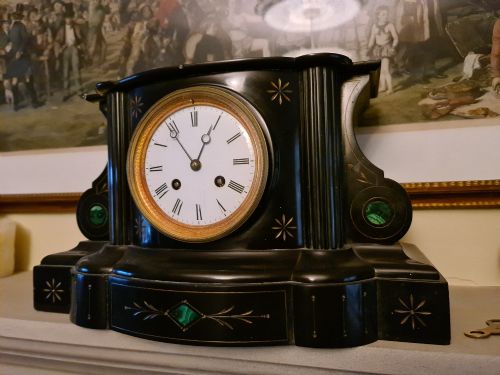
Edwardian examples generally favor lighter wood tones, satinwood stringing and cleaner lines influenced by Art Nouveau and Sheraton revivals. Victorian models often display heavier proportions and darker timbers like black marble or dense mahogany.
Inlay details on Edwardian pieces tend toward delicate floral garlands and satinwood contrasts.
What maintenance do these movements need?
Mechanical clocks require professional cleaning and oiling every few years to prevent wear on the brass pivots and steel gears. Dust accumulation inside the case can impede the movement.
Keeping the glass door closed protects the enamel dial and delicate hands from accidental damage.