





Georgian Style Desk Clock
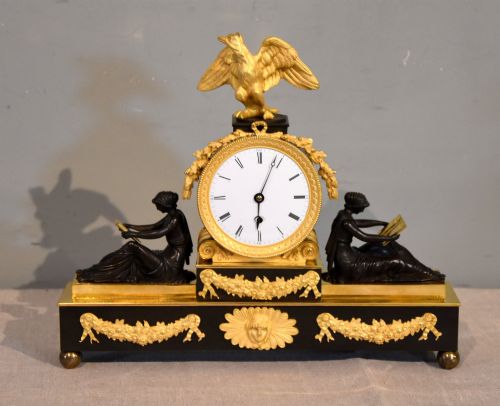
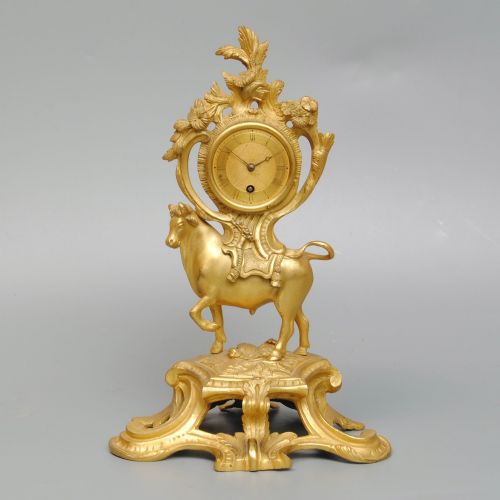
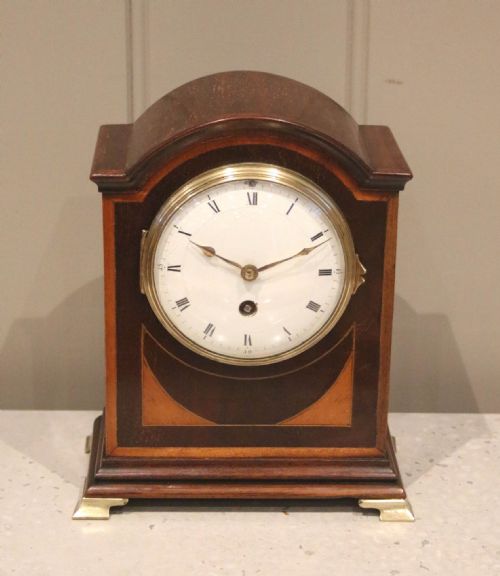
These georgian style desk clock examples are brass, mahogany, and gilt bronze timepieces spanning the Regency to Edwardian periods, offering classic domestic timekeeping for a traditional desk.
Georgian Style Desk Clock
A georgian style desk clock brings together bracket clocks, mantel clocks, and library timepieces created across the Regency, Victorian, and Edwardian eras. The selection on this page shows pieces originating from the nineteenth and early twentieth centuries, drawing heavily on earlier aesthetic idioms.
Most examples function as portable table or desk clocks, utilising traditional movements housed in timber or metal cases. Buyers encounter mahogany, walnut, and pollard oak housings alongside cast brass and gilt bronze architectural forms.
Materials and construction
Casing construction relies on cabinet timbers such as mahogany, satinwood inlay, and burr walnut, often paired with ebonised details or brass mounts. Metal cases utilise gilt bronze, patinated bronze, and ormolu to achieve decorative depth.
Movements incorporate mechanical systems like single and twin chain fusee mechanisms, driving enamel dials protected by glass panels. The integration of brass and glass components requires precision fitting within the heavier wood and bronze frames.
One pollard oak clock originates from Camberwell, proving that even a London suburb could keep excellent time.
Assessing the range
The standard of a clock is governed by the crispness of its cast bronze mounts and the choice of cabinet woods, where figured mahogany and burr walnut denote finer workshops. Heavier gilt and patinated finishes demonstrate greater attention to decorative detail.
Movement sophistication dictates the upper tier of the range, particularly those featuring chain fusee mechanisms or signed dial work by recognised makers. Simpler timepiece movements or unmarked French table clocks represent the more accessible examples.
Mappin & Webb·Baetens London·Viner London·Pennington of Camberwell London·McCabe London·FB Adams London·Baldwin of Loughborough
The Georgian Style Desk Clock Glossary
- Fusee
- A conical pulley used in clock movements to maintain an even pull as the mainspring unwinds. This mechanical device ensures more accurate timekeeping throughout the duration of the wind.
- Ormolu
- Finely ground high-carat gold mercury-gilded onto a bronze object. It provides a rich, durable golden finish characteristic of decorative metalwork.
- Bracket clock
- A portable spring-driven clock originally designed to sit on a wall bracket to aid acoustics and visibility. Later versions function readily on desks and tables.
- Enamel dial
- A metal face fused with powdered glass powder fired at high temperatures. This creates a smooth, white surface resistant to fading, usually featuring painted numerals.
- Patinated bronze
- Metal treated chemically or exposed to environmental elements to produce a darkened, stable surface layer. It accentuates the underlying cast details of sculptural clock cases.
Georgian Style Desk Clock: Frequently Asked Questions
What is a fusee movement?
A fusee is a mechanical mechanism featuring a conical pulley that equalises the power of the mainspring as it runs down. This helps the clock maintain consistent timekeeping between windings.
Such movements are typically found in better quality English mantel and bracket clocks from the Regency period onwards.
How do I wind an antique desk clock?
Antique mechanical clocks require a key matched to the winding squares on the dial face. Care must be taken not to overwind the mainspring.
Most pieces listed feature eight day or single chain fusee movements requiring weekly attention.
Are these clocks suitable for daily use?
These pieces function as working timepieces when properly maintained and serviced by a professional horologist. Their mechanical nature means they benefit from stable room temperatures away from direct drafts.
Many retain their original strike or quarter striking capabilities, adding audible character to a room.
How do I distinguish Regency from Edwardian examples?
Regency pieces date from the early nineteenth century, showing strict classical restraint, gilt bronze mounts, and fusee movements. Edwardian items often date from around nineteen hundred, sometimes interpreting earlier Georgian styles with lighter wood inlays.
Examining the casework and movement signatures helps clarify the period of manufacture.