
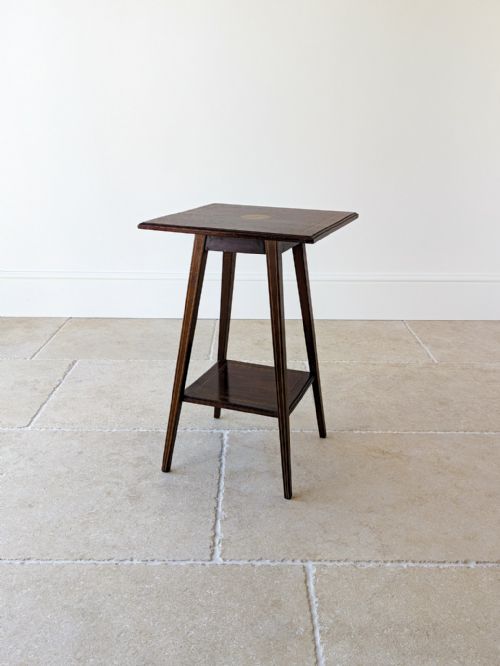
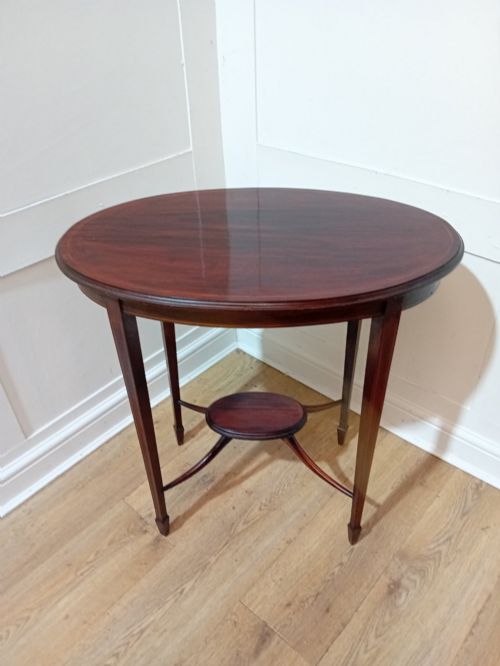

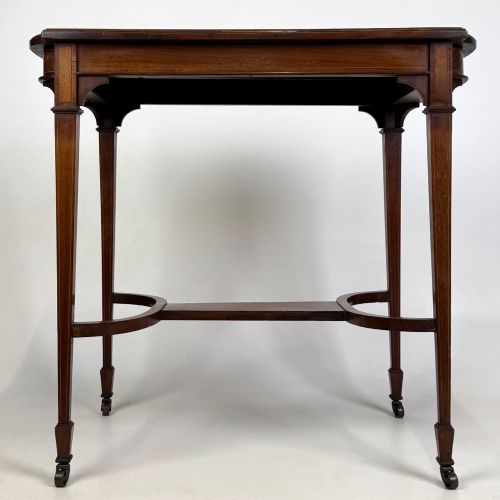
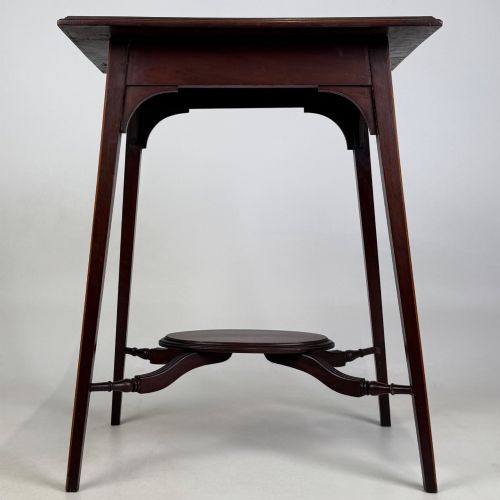

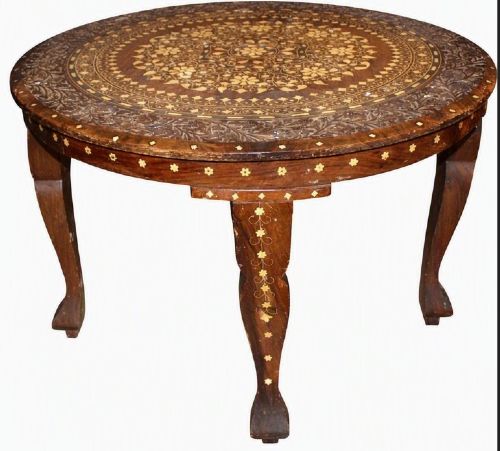
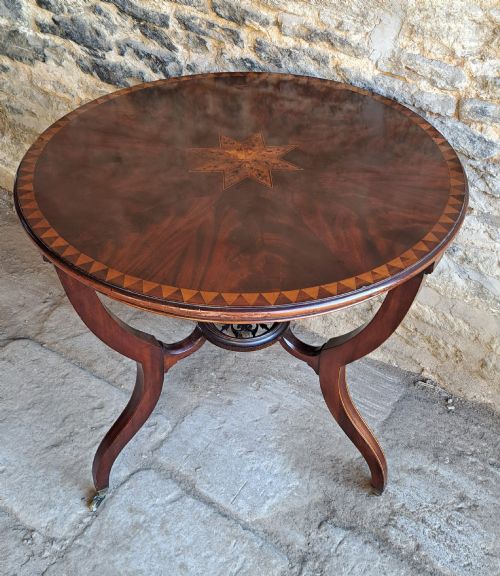
Edwardian Inlaid Accent Table
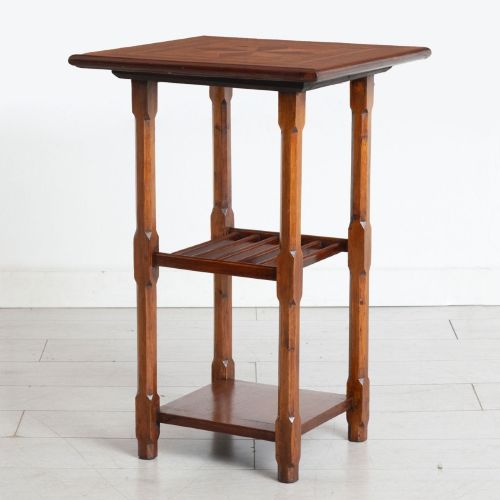
An edwardian inlaid accent table brings refined surface detail and slender proportions to a room, offering both function and decorative focus.
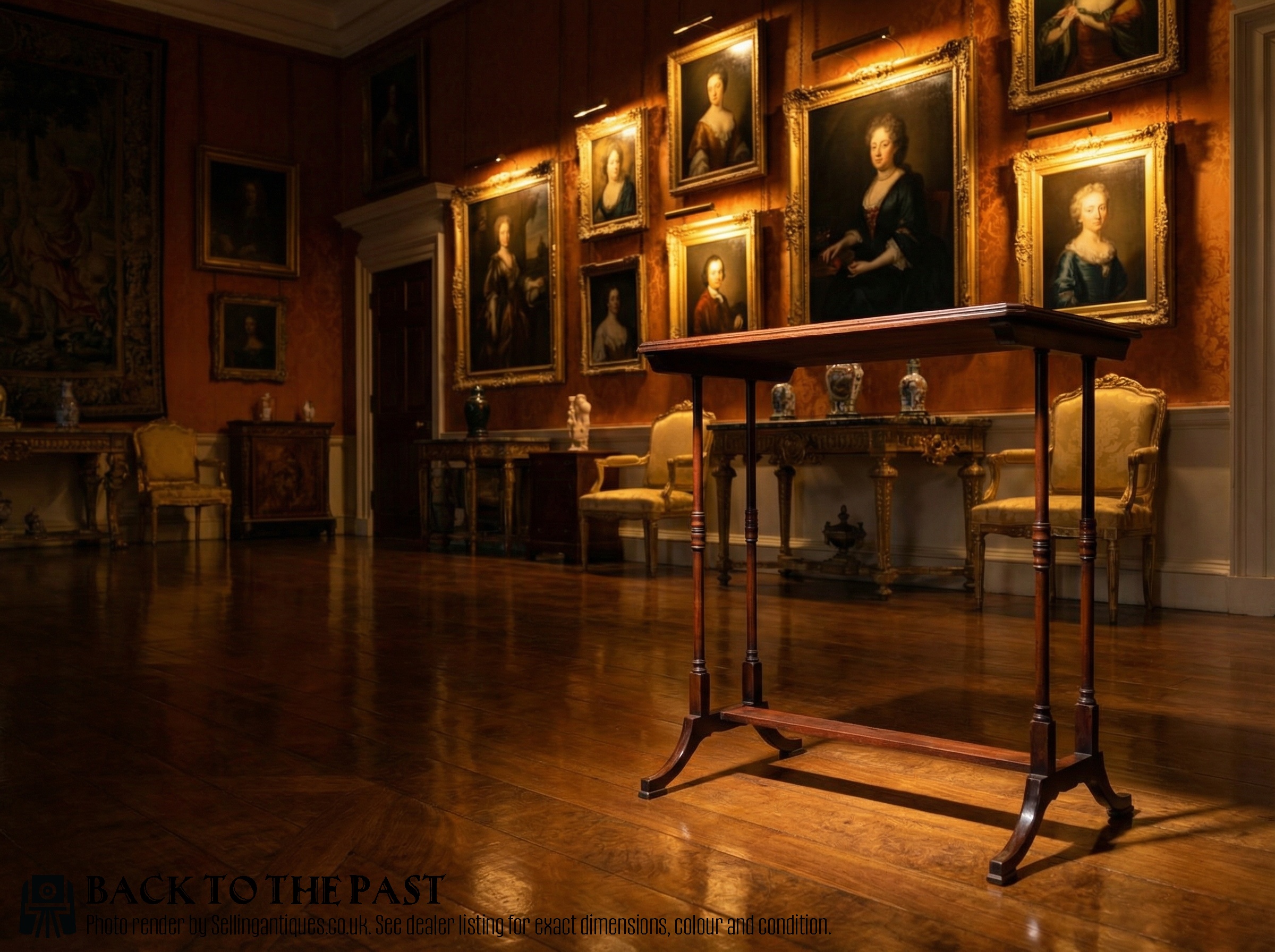
Edwardian Inlaid Accent Table
An edwardian inlaid accent table provides a compact surface for lamps, drinks or display while adding period character to a room. These pieces appear primarily in forms such as occasional tables, side tables, nests of tables, wine tables and Pembroke tables.
Most examples date from the Edwardian era and the late nineteenth century, spanning periods from Victorian to the early twentieth century. Makers drew heavily on Sheraton Revival and Arts and Crafts styles, producing lighter, more delicate furniture than their mid-Victorian predecessors.
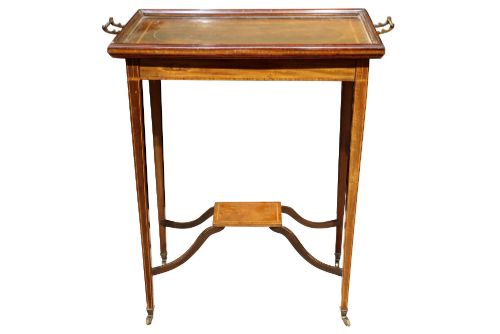
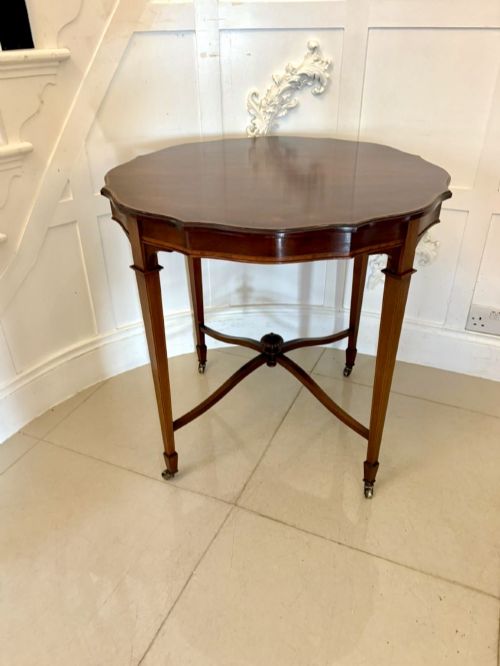
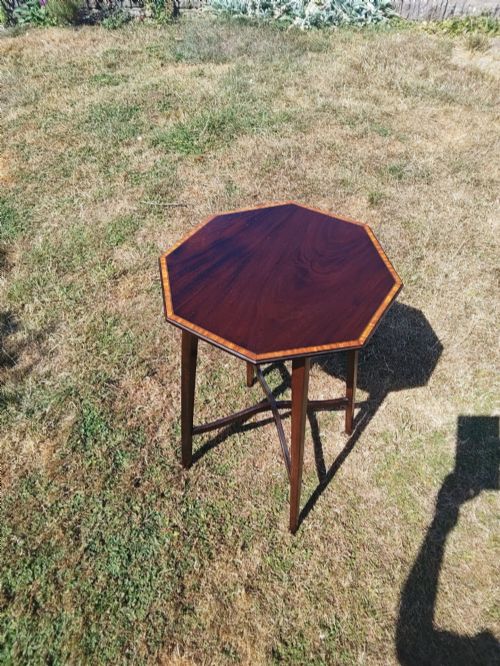
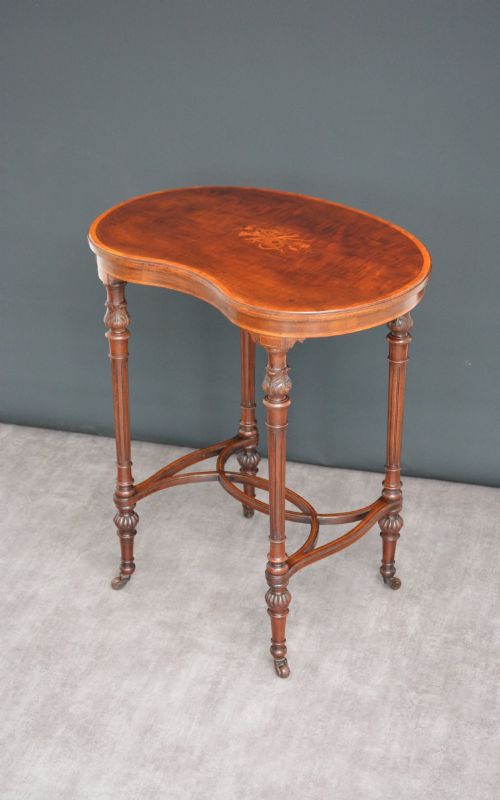
Buyers meet varied shapes including circular, oval, octagonal, kidney and serpentine forms. Common variations include tray tops, fitted interiors and multi-tiered nests designed for flexible placement in domestic spaces.
How They Were Made
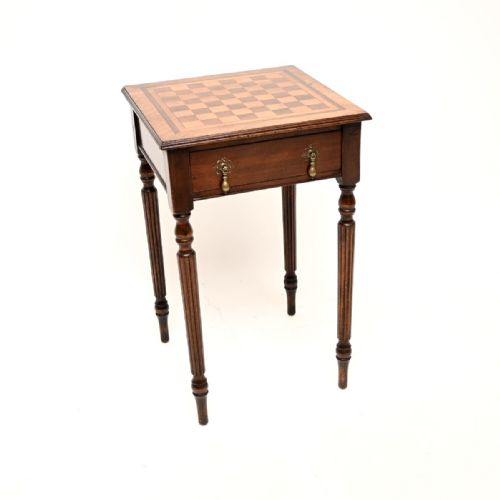
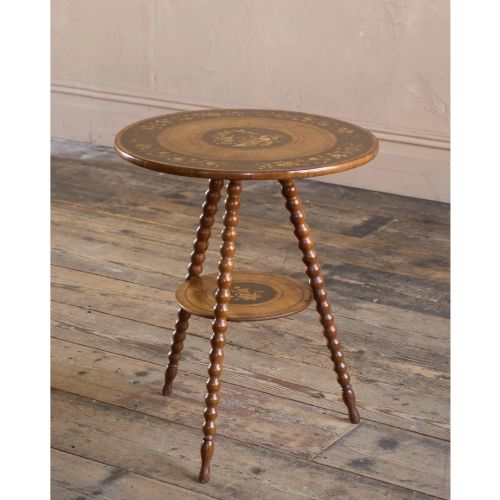
Cabinetmakers built these tables using primary timbers such as mahogany, satinwood, walnut and rosewood, often combining them with contrasting woods for decorative effect. Solid construction meets veneered surfaces, supported by slender legs that range from tapered supports to bobbin turned designs.
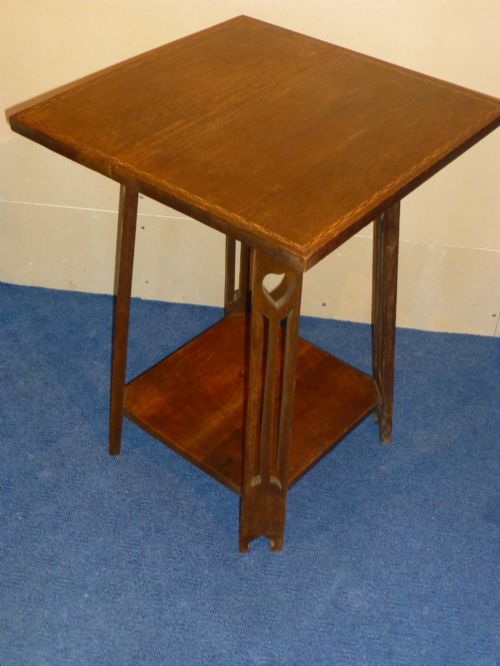
Wood inlay and marquetry form the central decorative technique, utilising boxwood and other light or dark species to create floral motifs, banding and geometric patterns. Some tables incorporate bone inlay, brass hardware or carved elements alongside the primary woodwork.
Tables with bobbin legs bring a cheerful, tactile rhythm to the room.
What Varies in Quality
Quality shows in the precision and complexity of the woodwork, particularly the crispness of the inlay and the selection of figured timber veneers. Superior pieces display carefully matched grains and intricate marquetry rather than simple printed or stamped decoration.
Construction methods and overall stability separate standard examples from exhibition grade pieces. Heavier framing, finer joinery in items like nests or Pembroke tables, and maker attributions or stamps elevate certain pieces above domestic utility goods.
Liberty & Co.·William Birch·Collingson & Lock
The Edwardian Inlaid Accent Table Glossary
- Marquetry
- A decorative technique applying pieces of veneer to a structure to form pictorial or geometric designs. This method covers table tops and friezes with contrasting wood grains.
- Inlay
- The technique of inserting pieces of contrasting material into depressions in a solid base wood. Boxwood and satinwood frequently serve this purpose on dark mahogany surfaces.
- Pembroke table
- A small table with hinged drop flaps on either side, often fitted with a drawer. These versatile pieces suit occasional use in reception rooms.
- Quartetto nest
- A set of four graduating tables designed to slide one beneath another. Edwardian makers produced these in satinwood and mahogany.
- Tray top
- A table top finished with a raised rim or gallery to prevent items from sliding off. This feature appears on various occasional and serving tables.
Edwardian Inlaid Accent Table: Frequently Asked Questions
Where should I place an accent table?
These tables fit easily beside armchairs, sofas or empty corners where a small surface is useful. Their slender proportions mean they take up minimal floor space while holding lamps or decorative objects.
In larger rooms, circular or oval models work well freestanding near the centre of the space. Nest tables offer the flexibility of pulling out extra surfaces when entertaining guests.
How do I care for polished wood surfaces?
Keep wooden tables away from direct sunlight and strong heat sources to prevent the timber and veneers from drying out or cracking. Regular dusting with a soft cloth maintains the finish without building up residue.
Use coasters or mats beneath glasses and hot items to protect the polished surface and delicate inlay work from moisture rings and heat damage.
How do I distinguish Edwardian from Victorian tables?
Edwardian tables generally display lighter construction, simpler lines and brighter satinwood or mahogany timbers. They frequently reflect the Sheraton Revival style with delicate inlay and slender legs.
Victorian pieces tend to be heavier, darker in tone, and more robustly proportioned. Earlier nineteenth-century examples rely on denser timber selection and heavier turned supports.
What is the function of a nest of tables?
A nest provides a set of graduating tables that stack into the footprint of a single small table. They save space in daily use while supplying additional surfaces when needed.
During the Edwardian period, these sets became popular for serving tea or holding books in reception rooms without cluttering the floor space.