





Sorrento Ware Occasional Table
A sorrento ware occasional table brings intricate Italian marquetry and warm fruitwood veneers into a room, offering both history and decorative charm.
Sorrento Ware Occasional Table
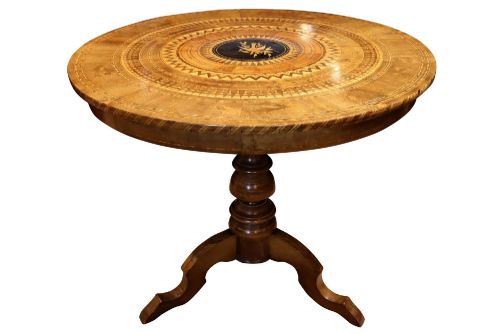
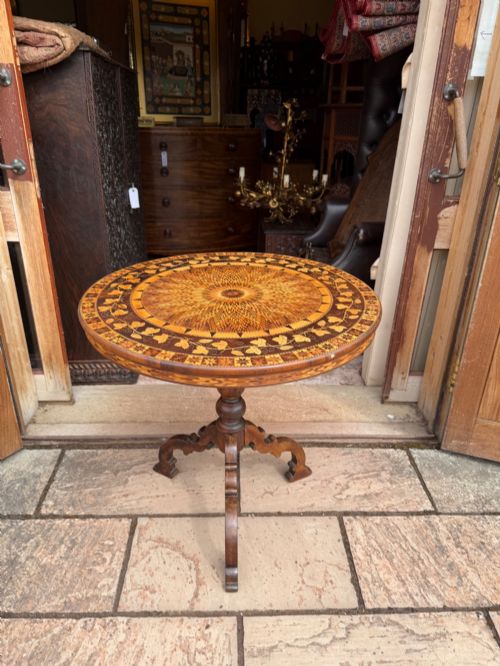
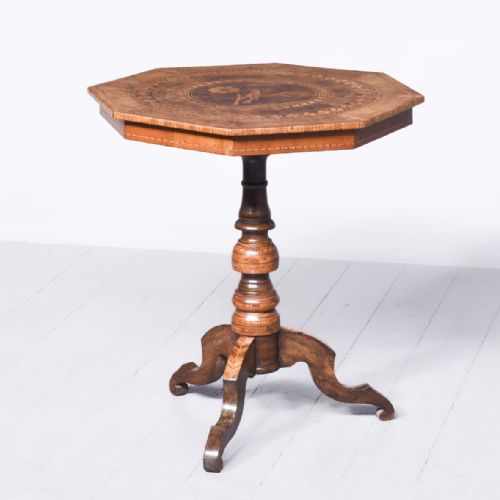
A sorrento ware occasional table is a piece of 19th century Italian furniture defined by detailed marquetry and parquetry inlay. These tables originate from Sorrento and reflect the taste of the Italian Grand Tour during the Victorian era.
Makers utilised mixed hardwood veneers to create rich contrasts in tone, ranging from pale fruitwood inlay to deep walnut bases. Pedestal and low table formats appear frequently among the nineteenth-century pieces.
How they were made
Craftsmen built these tables using solid carcase woods overlaid with mixed wood veneers, including olivewood and walnut. Individual pieces of fruitwood were meticulously cut and fitted by hand to form intricate marquetry and parquetry designs.
The surface decoration relies entirely on the natural colours of the timbers rather than applied paint. Lighter fruitwoods provide contrast against darker walnut or olive backgrounds, creating detailed pictorial scenes or geometric borders.
Sorrento Ware Occasional Table Retail Price Guide 2026
Typical asking prices for sorrento ware occasional table among the pieces listed under this phrase on Sellingantiques today, from the lower quarter to the upper quarter. They describe what is for sale here now, not the wider market.
Listings feature pieces spanning from the nineteenth century into the early twentieth century, utilising walnut, olivewood, and fruitwood veneers.
What varies in quality
The distinction between standard and superior pieces rests on the complexity and precision of the marquetry inlay. Tables featuring elaborate pictorial scenes or dense parquetry demand greater skill from the maker than simpler geometric borders.
The choice of timber also marks the grade of the piece, with select olivewood and figured walnut veneers reserved for the finest tables. The integrity of the underlying pedestal construction and the crispness of the wood-cutting determine the overall standard.
The Sorrento Ware Occasional Table Glossary
- Sorrento Ware
- A style of decorative woodworking originating from the Italian town of Sorrento. It is characterised by intricate marquetry and parquetry using local and exotic timbers.
- Marquetry Inlay
- The art of applying pieces of veneer to a structure to form decorative patterns and pictures. Craftsmen cut contrasting woods to fit flush within the surface.
- Parquetry
- A geometric mosaic of wood pieces used for decorative floors and table tops. It relies on repeating angular shapes rather than pictorial motifs.
- Grand Tour
- A traditional trip of Europe undertaken by upper-class European young men of means. Visitors to Italy frequently acquired inlaid tables as souvenirs of their travels.
Sorrento Ware Occasional Table: Frequently Asked Questions
What is a sorrento ware occasional table?
A sorrento ware occasional table is a 19th-century Italian small table decorated with detailed wood marquetry and parquetry. These pieces showcase traditional inlay techniques developed in Sorrento.
They were often brought back by travellers on the Grand Tour and reflect the ornate tastes of the Victorian period.
How do I care for olivewood and walnut surfaces?
These veneered surfaces require gentle cleaning with a soft, dry cloth to remove dust. Avoid exposing the timber to direct sunlight or excessive moisture, which can damage the delicate veneers.
Applying a suitable wax occasionally helps to nourish the wood and maintain the natural lustre of the marquetry.
What woods were used in these tables?
Cabinet makers utilised a variety of timbers including walnut, olivewood, and fruitwood. Mixed hardwood veneers provided the contrasting tones necessary for pictorial marquetry designs.
Lighter fruitwood inlay stands out sharply against darker walnut and olive backgrounds across the table tops.
How can I tell a 19th century table?
Nineteenth-century tables exhibit traditional construction methods appropriate to the Victorian era and the Italian Grand Tour period. The specific use of fruitwood inlay on walnut and olivewood is characteristic of this timeline.
Stylistic markers such as pedestal bases and specific marquetry motifs align closely with 19th-century Sorrento production.