





Edwardian Glassware Set
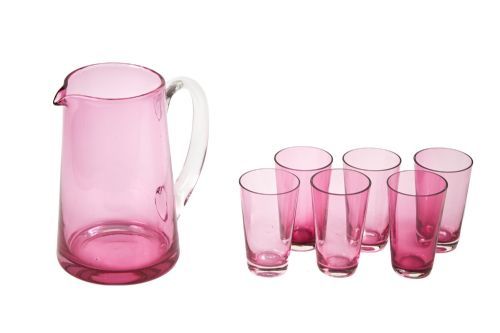
An edwardian glassware set brings matching elegance to the table through period drinkware crafted in clear glass, rich cranberry, and cut crystal.
Edwardian Glassware Set
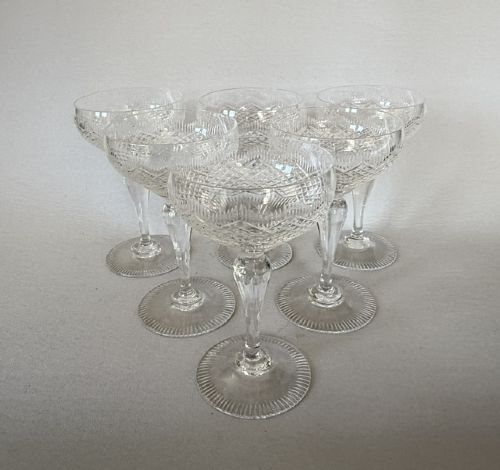
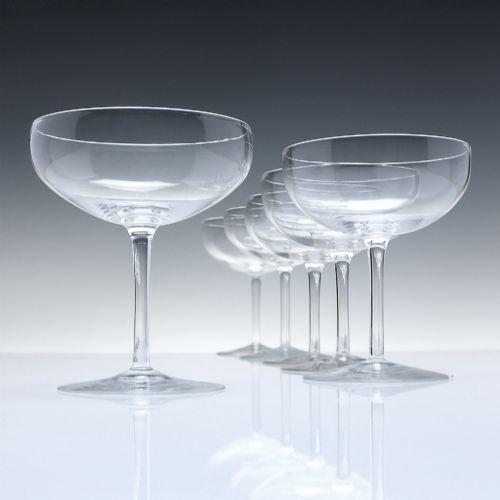
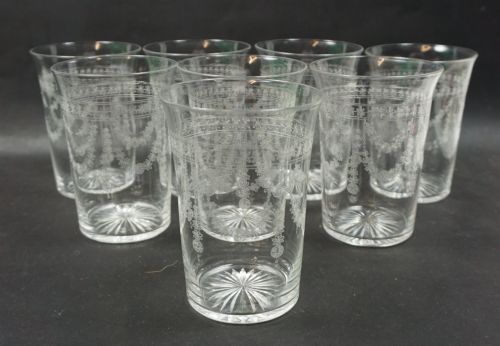
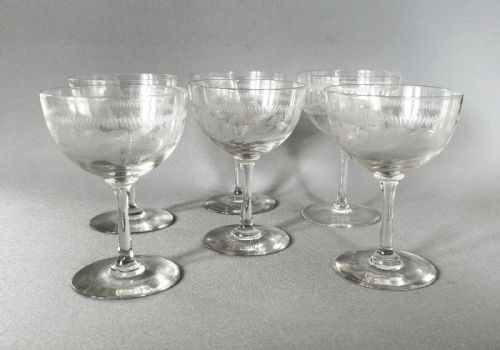
An edwardian glassware set comprises coordinated drinking vessels and serving pieces originating primarily from the early twentieth century and the Edwardian period. You will most frequently encounter matching sets of six champagne coupes, wine glasses, and whiskey tumblers designed for formal dining.
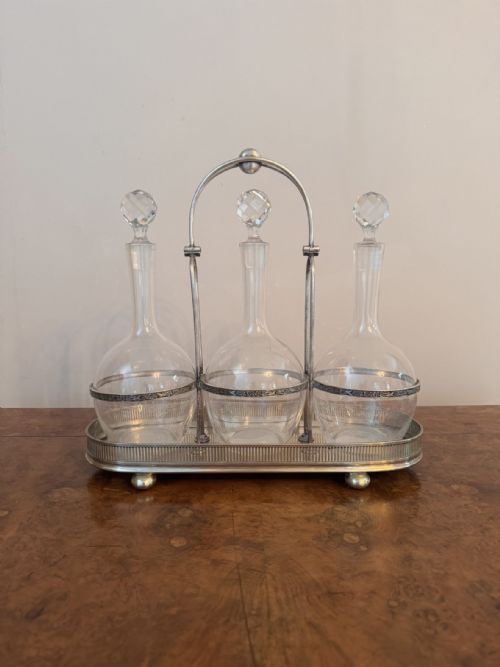
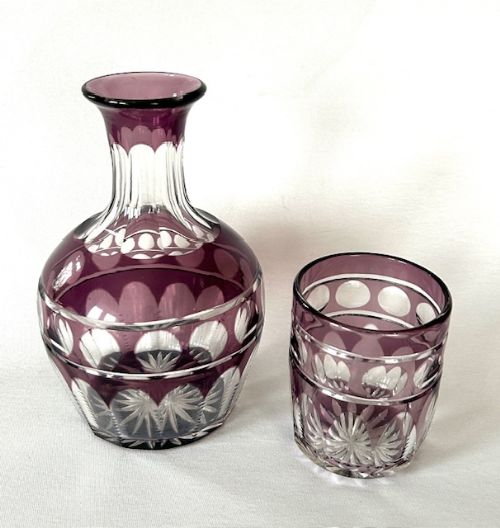
The selections span functional drinkware, decanter sets, and preserve dishes produced across distinct stylistic movements including Arts and Crafts, Art Nouveau, and late Victorian traditions. These ensembles capture the social entertaining habits of the era through specialised vessels for wine, cordials, and spirits.
While the core of the selection adheres strictly to Edwardian dates, related pieces stretch from Victorian origins into the nineteen-twenties. The unifying thread remains the matched format intended for communal dining and sideboard display.
Judging Quality
Quality rests upon the crispness of the cutting, the weight of the metal, and the uniformity across all pieces in the service. Superior sets display sharp facet edges and consistent wall thickness that demonstrate high-level glassblowing and wheel work.
The complexity of the decoration elevates the standard, distinguishing simple mould-blown items from pieces featuring detailed intaglio engraving or hand-applied enamel. Complete matching tallies without replacements represent a higher tier of desirability.
The presence of named maker signatures or verified workshop attributions adds distinct weight to a service. Heavy lead crystal formations that retain sharp acoustics and clear ring indicate superior raw materials.
Listings feature items spanning from eighteen-eighty to nineteen-twenty, incorporating lead crystal, cranberry glass, and silver plate.
James Powell·Webb Corbett·Theresienthal
The Edwardian Glassware Set Glossary
- Champagne coupe
- A broad, shallow-bowled glass designed for sparkling wine during the period. These wide bowls allowed the bubbles to dissipate quickly.
- Intaglio
- A technique where designs are sunk below the surface of the glass by wheel-cutting. This creates a tactile, frosted relief effect.
- Cranberry glass
- Transparent red glass coloured with gold chloride during melting. It appears frequently in Edwardian jugs, bowls, and preserve sets.
- Lead crystal
- Glass containing substantial lead oxide to increase weight, refractive index, and acoustic resonance. It forms the basis of heavy cut tumblers.
- Acid etching
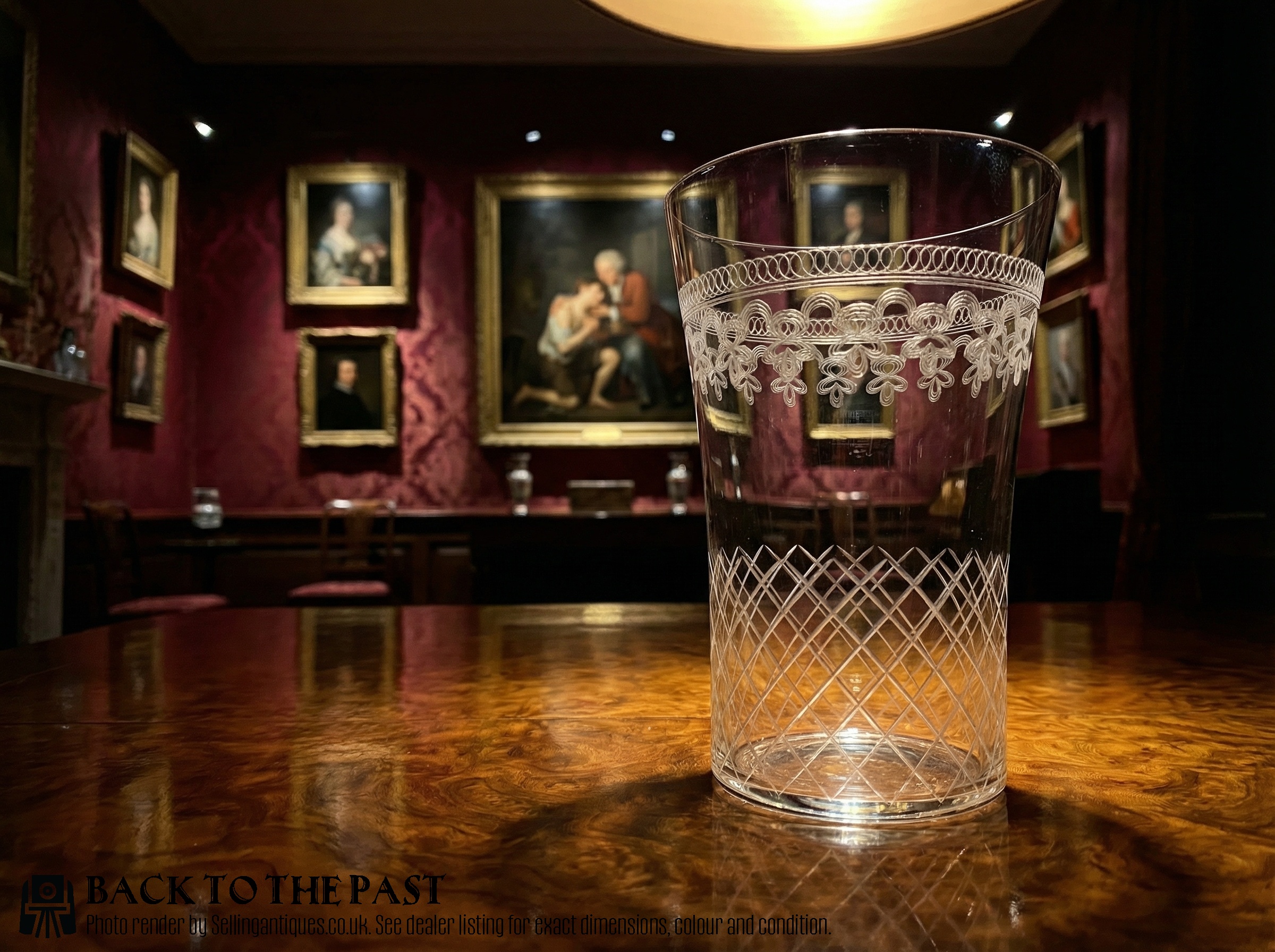
- A method of decorating glass surfaces using acid baths to eat away unprotected areas. This process produced delicate repeating patterns.
- Rock crystal
- A term used in the period to describe exceptionally clear, heavy, and brilliant cut lead glass. It emulates natural quartz through deep polishing.
Edwardian Glassware Set: Frequently Asked Questions
Can I use an antique glass set daily?
These historical drinking vessels withstand careful everyday use if handled with respect for their age and delicate composition.
Hand washing remains essential to preserve the clarity of the glass and prevent damage to any engraved or enamelled decoration.
How do I clean antique crystal safely?
Wash each piece individually in warm water using mild detergent rather than exposing them to thermal shock in a dishwasher.
Dry them immediately with a lint-free cloth to maintain the brilliance of the cut facets.
Were these sets originally boxed?
Certain fine services, particularly shot glasses and presentation drinkware, were retailed in fitted cases lined with fabric.
Survival of the original box indicates a high-status commission intended for gifting or special storage.
How do I spot replacement glasses in a set?
Compare the weight, ring, and precise dimensions of each vessel against its companions under good natural light.
Slight variations in the depth of the cut decoration or the hue of the glass often reveal a later substitution.