
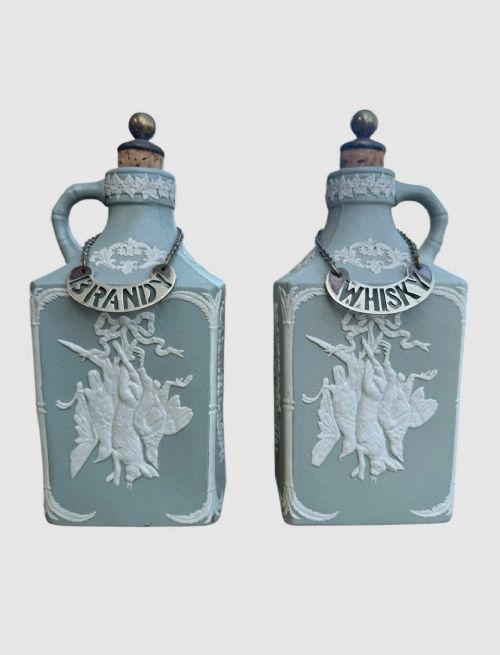


Vintage Liquor Decanter Set
A vintage liquor decanter set brings together matching bottles and vessels for entertaining, uniting functional glassware with decorative stands.
Vintage Liquor Decanter Set
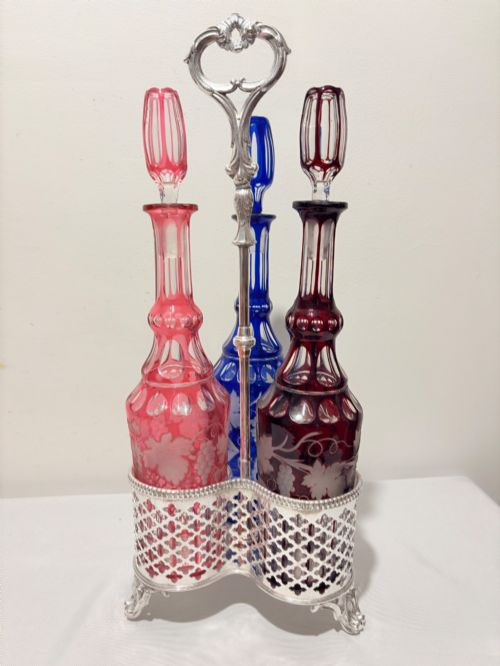
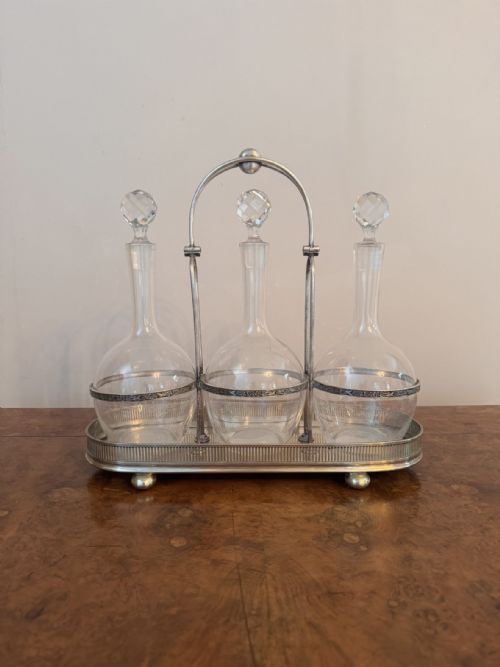
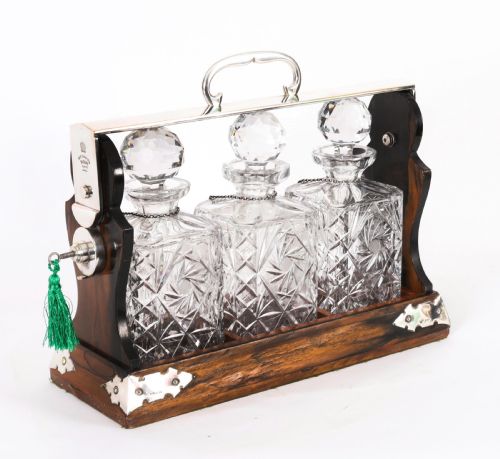
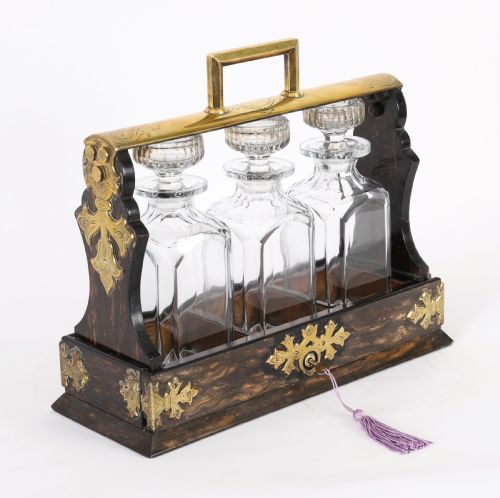
A vintage liquor decanter set typically comprises matched glass bottles housed within silver-plated, brass, or wooden frames, often designed to lock securely.
The selections available here range from Edwardian ruby glass and Victorian cut crystal to geometric Art Deco crystal sets originating from Bohemia.
Buyers frequently encounter three-bottle configurations alongside cased liqueur services known as caves à liqueur from the nineteenth century.
Subtleties of material and mechanism
The distinction between standard and superior examples rests on the clarity of the lead crystal, the crispness of the wheel-cut facets, and the weight of the glass.
Enclosure quality also dictates value, seen in the precision of the joinery on oak or coromandel cases and the original functioning of the locks and silver-plated labels.
Betjemann·Karl Palda·Baccarat·James Powell·Val Saint Lambert·Elkington·Hukin and Heath
The Vintage Liquor Decanter Set Glossary
- Tantalus
- A locking wooden or metal frame that secures spirit decanters by their stoppers, preventing access without a key while displaying the contents. This device takes its name from the mythological figure of Tantalus.
- Cave à liqueur
- A French fitted box or caddy containing a set of liqueur decanters and matching glasses, frequently lined with velvet or silk. These portable bars date primarily to the nineteenth century.
- Lead crystal
- Glass containing metal oxides that increase refractive index, weight, and resonance. This material allows for deep, sharp facets when cut.
- Old Sheffield plate
- A composite material made by fusing a thin sheet of silver to a thicker copper base. Pieces produced this way show subtle copper bleed at high wear points.
Vintage Liquor Decanter Set: Frequently Asked Questions
What is a tantalus?
A tantalus is a secure frame designed to hold decanters upright while locking the stoppers in place with a metal bar. This arrangement permitted hosts to display expensive spirits while restricting unmonitored access by household staff.
The mechanism uses a key-operated lock that releases the top bar, allowing individual bottles to be lifted from the wooden or metal base.
How do I date a decanter set?
Dating relies on stylistic clues such as the geometric lines of Art Deco pieces or the heavy cast mounts of Victorian furniture. Maker marks, silver hallmarks, and the manufacturing technique of the glass provide further chronological markers.
Undated sets can often be narrowed down by examining the hardware, screw types, and the presence of original stoppers matched to the bottle necks.
Were these sets meant for travel?
Certain liquor sets, particularly campaign cases and eighteenth-century officer sets, were engineered for transport on ships or carriages. These feature fitted wooden boxes designed to keep fragile bottles secure during movement.
Most domestic tantalus sets and table decanters, however, remained stationary on sideboards or in dedicated home bars.
How do I care for antique glass?
Antique glass requires gentle hand washing in lukewarm water with mild detergent, avoiding sudden temperature changes that can crack aged material. Drying with a lint-free cloth preserves the clarity of cut facets.
Wooden frames and metal mounts should be cleaned with appropriate non-abrasive dressings, keeping moisture away from vulnerable lock mechanisms.