
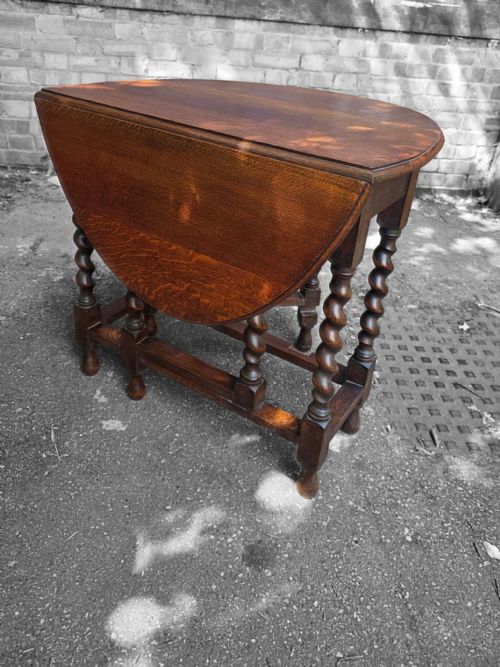
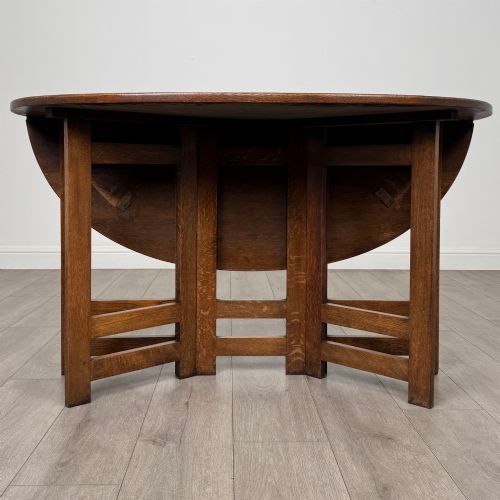

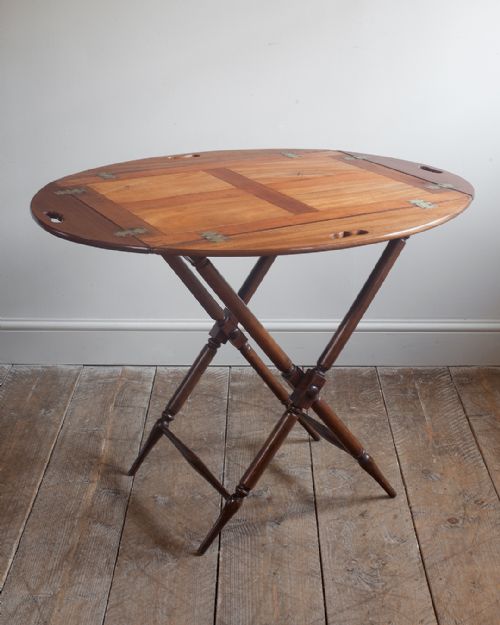
Edwardian Folding Side Table
An Edwardian folding side table offers adaptable surface space in mahogany, rosewood, or oak, combining period charm with practical portability for modern rooms.
Edwardian Folding Side Table
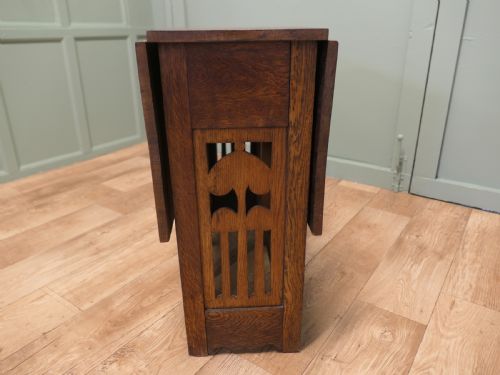
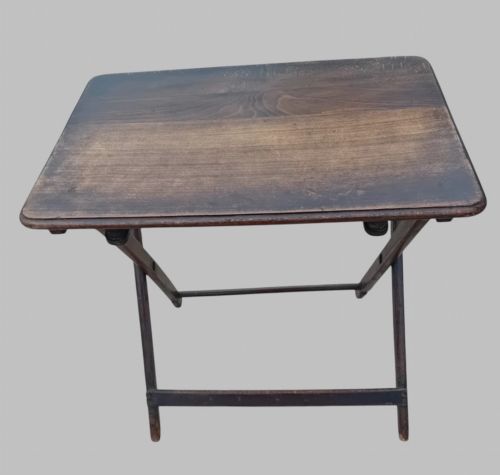
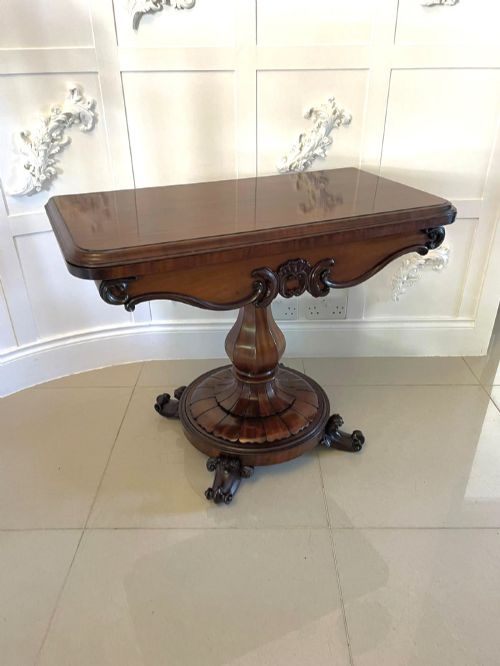
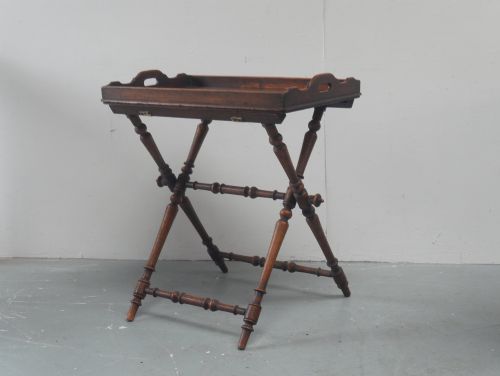
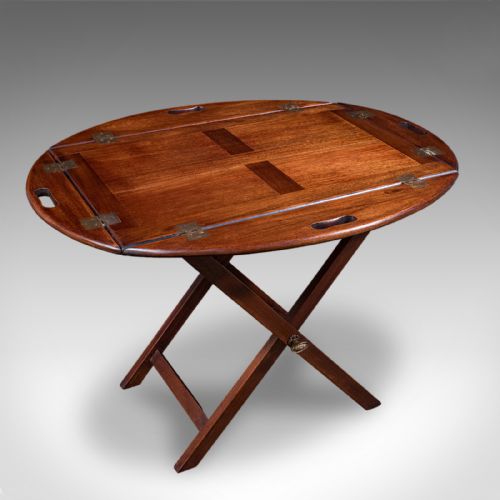
An edwardian folding side table brings compact versatility to a room, appearing frequently in forms such as occasional pieces, card tables, and butler's trays. These designs span the Edwardian era alongside Victorian and early twentieth-century examples, reflecting a period of ingenious domestic furniture.
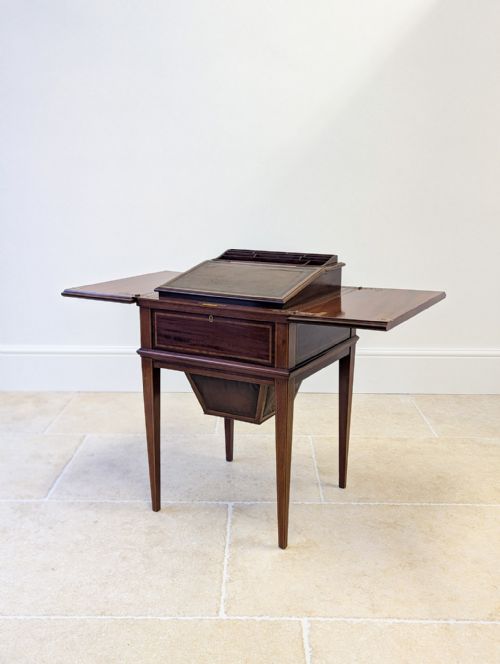
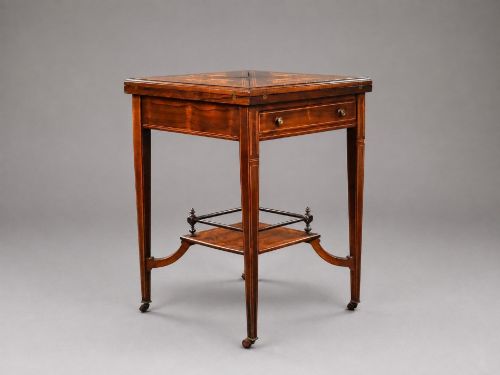
Buyers encounter variations ranging from simple campaign styles to inlaid envelope card tables and drop-leaf occasional pieces. The selection includes specialist items like writing tables, games tables, and sewing tables alongside standard side formats.
Origins stretch from English workshops to Anglo-Indian production centres, incorporating styles influenced by the George III period, Regency, and Arts and Crafts movements. The primary function remains space-saving utility, whether deployed for serving, writing, or card games.
How they were made
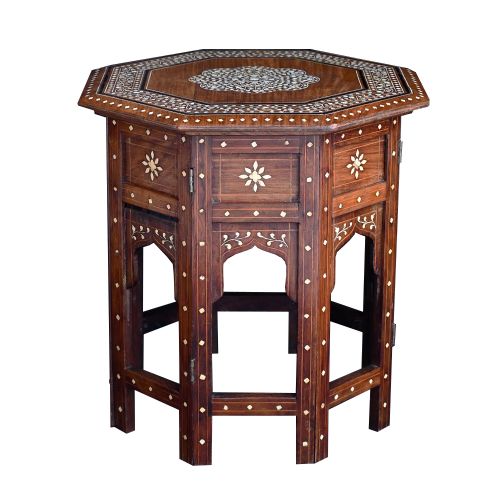
Cabinet makers utilised dense hardwoods including mahogany, rosewood, and oak as structural foundations, often pairing them with lighter decorative timbers. Satinwood, boxwood, and bone inlay provided contrasting details for borders and geometric motifs.
Construction techniques focussed on folding mechanisms, hinges, and drop-flap supports that allowed tables to collapse flat for storage or transport. Surface treatments included polished mahogany, cross-banding, and intricate hand-carving seen on Anglo-Indian pieces.
Some folding tables retain their original baize playing surfaces, preserving the quiet rustle of nineteenth-century card games.
What varies in quality
The refinement of the inlay work and timber selection separates standard items from the finest examples. Rich grain patterns in rosewood or mahogany paired with crisp boxwood stringing indicate superior workshop production.
Mechanical execution defines the upper tier, where folding leaves, swivel tops, and gateleg supports operate with absolute precision and stability. The integrity of the original hinges and the crispness of carved woodwork determine the overall standard.
The Edwardian Folding Side Table Glossary
- Sutherland table
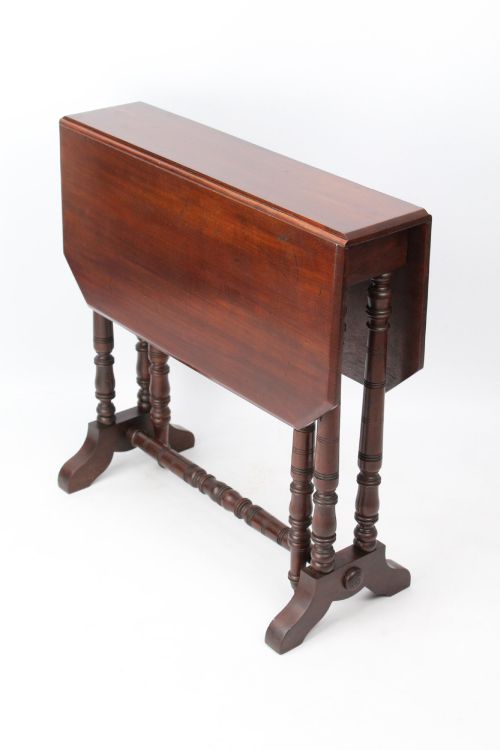
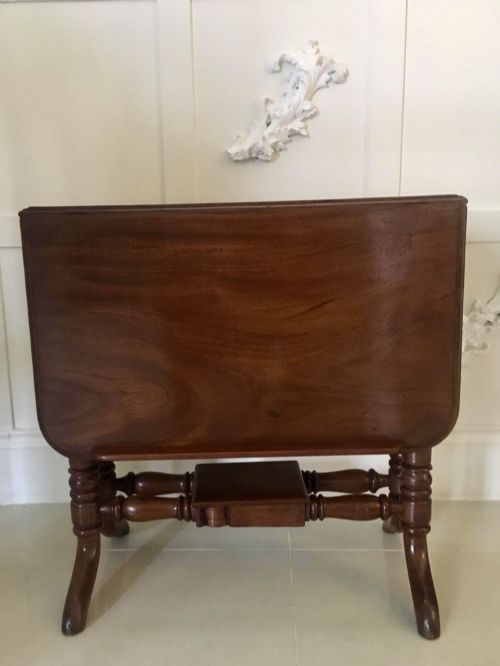
- A narrow drop-leaf table featuring exceptionally slender legs and leaves that fold down almost vertically. This form maximises floor space when closed.
- Campaign style
- Portable furniture designed for travel, typically incorporating folding frames, brass corners, and carrying handles. These pieces dismantle easily.
- Gateleg table
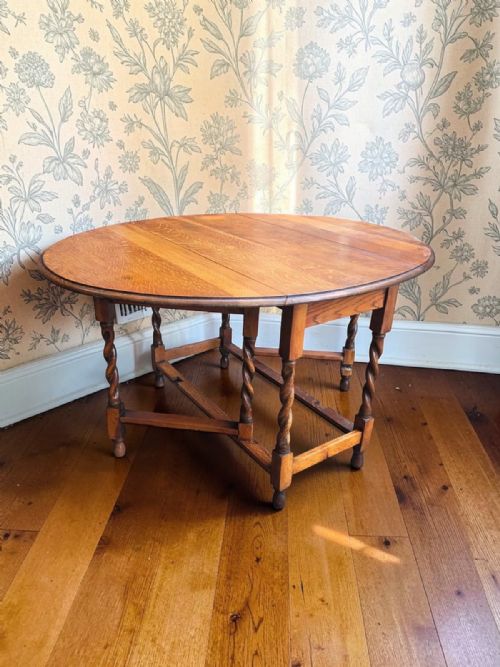
- A table with hinged leaves supported by legs that swing outward like a gate. This design provides sturdy support for drop-leaves.
- Envelope card table
- A square table with a rotating top that opens via triangular flaps resembling an envelope. It reveals a baize-lined playing surface.
- Butlers tray
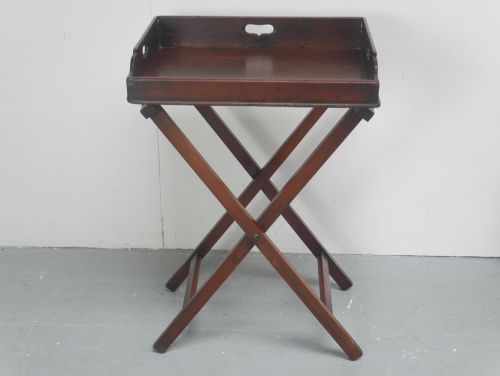
- A removable wooden tray with raised sides, often set upon a folding X-frame stand. It functioned historically for serving and clearing.
- Stringing
- Thin inlaid lines of contrasting wood or bone used to outline panels and borders. It highlights the geometric geometry of tabletops.
Edwardian Folding Side Table: Frequently Asked Questions
How do I use an edwardian folding side table today?
These tables adapt easily to compact modern spaces as bedside surfaces, drink stands, or occasional desks. Their folding mechanisms allow them to be stored flat against a wall when floor space is needed.
They also function effectively as display surfaces for lamps and decorative objects, bringing period character to living rooms and hallways without dominating the room.
What is the difference between a sutherland table and a gateleg table?
A Sutherland table is a specific, narrower evolution of the drop-leaf table designed with exceptionally thin legs and leaves that drop almost vertically. They take up minimal space when folded down completely.
Traditional gateleg tables are generally heavier, utilising swinging leg frames to support larger leaves intended for dining or games. Both styles rely on hinged leaves but serve different scales of domestic use.
What woods were commonly used in these folding tables?
Mahogany served as the primary structural timber for many English folding tables due to its durability and rich grain. Rosewood, oak, and walnut also appear frequently across different stylistic periods.
Decorative accents frequently incorporated contrasting woods such as satinwood and boxwood, alongside bone inlay on Anglo-Indian pieces. Baize was also utilised to line the surfaces of card and games tables.