



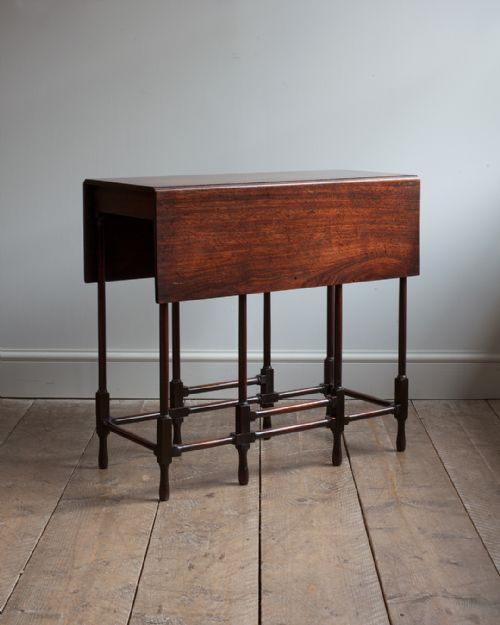

Slender Mahogany Side Table
A slender mahogany side table offers neat proportions and rich timber, providing a practical surface for compact spaces.
Slender Mahogany Side Table
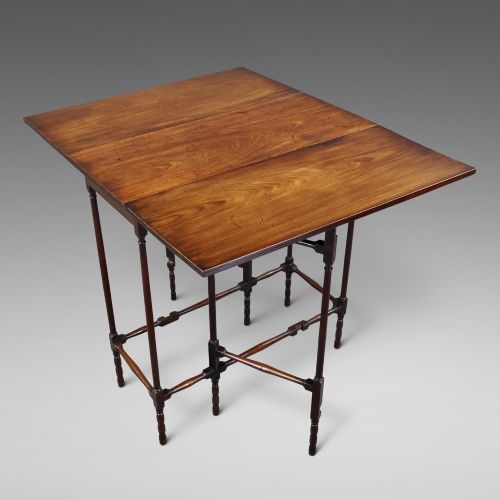
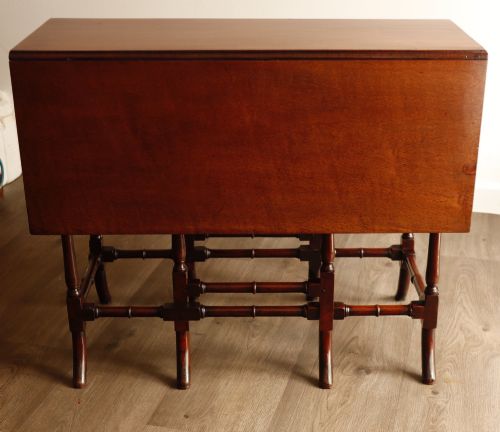
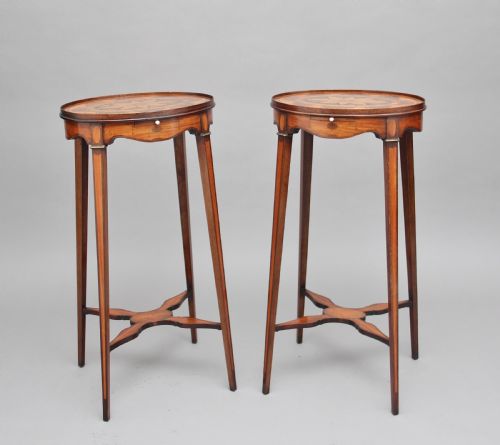
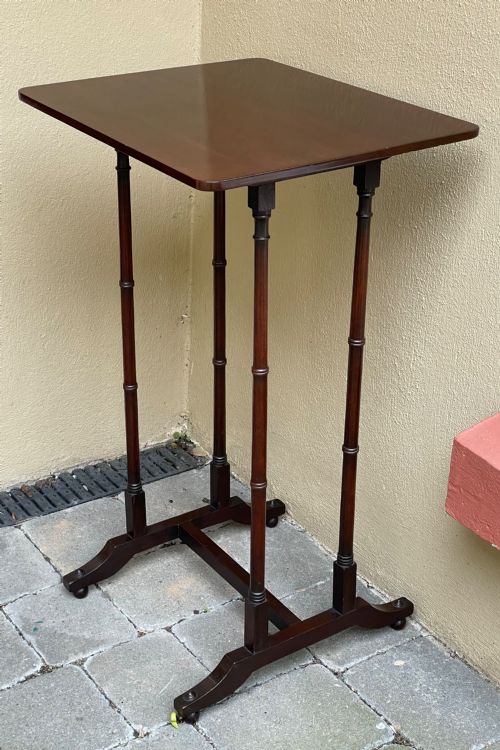
A slender mahogany side table groups together narrow occasional furniture designed for compact placement in eighteenth and nineteenth-century interiors. These examples range from eighteenth-century spider leg tea tables and drop flap designs to nineteenth-century inlaid bedside pieces and urn stands.
How they were made
Makers utilised solid mahogany and timber veneers, often pairing the dark primary wood with lighter contrasting details such as satinwood and bone inlay. Brass fittings frequently appear on operational elements like drop leaves and folding mechanisms.
Construction relies on delicate turning and joinery to achieve the exceptionally thin legs that define spider leg tables. Drop leaf and folding actions require precise hinge placement to ensure stability while maintaining a narrow profile.
Slender Mahogany Side Table Retail Price Guide 2026
Typical asking prices for slender mahogany side table among the pieces listed under this phrase on Sellingantiques today, from the lower quarter to the upper quarter. They describe what is for sale here now, not the wider market.
Spider leg tables deploy dozens of impossibly thin wooden limbs to hold tea, somehow avoiding collapse for centuries.
What varies in quality
Quality rests on the crispness of the timber turning and the subtlety of any wood inlay or contrasting stringing. Superior examples maintain structural rigidity despite exceptionally slender legs and delicate folding frames.
The choice of mahogany grain and the preservation of original patination distinguish finer items from later revivals and heavily restored pieces.
The Slender Mahogany Side Table Glossary
- Spider leg table
- A type of occasional table featuring exceptionally thin turned legs connected by multiple slender stretchers. This construction provides a stable yet visually light frame for drop leaf surfaces.
- Drop leaf table
- A table with hinged flaps on the sides that fold down to save space or lift up to extend the surface. Brass hinges and rule joints commonly support the folding sections.
- Urn stand
- A tall, slender small-scale table originally designed to hold a tea urn. These pieces typically feature square or shaped tops raised on elongated legs.
- Satinwood
- A durable exotic hardwood with a lustrous yellow or golden sheen, frequently utilised for contrasting inlay and stringing on mahogany furniture.
Slender Mahogany Side Table: Frequently Asked Questions
What is a spider leg table?
A spider leg table is a form of drop leaf occasional table supported by an array of exceptionally thin turned wooden legs and slender stretchers.
This construction maximises legroom and minimises visual weight, making the pieces well-suited to smaller sitting rooms.
How do I use a slender side table?
These narrow tables function effectively beside seating to hold lamps, books, or drinks without crowding a room.
Folding and drop leaf versions allow the surface area to expand when needed and contract for daily storage.
What periods do these tables span?
The listings span from the eighteenth century through the Georgian and Regency periods into the Edwardian era and twentieth century.
Earlier examples feature eighteenth-century cabinetmaking traditions, while later items include Sheraton revival and nineteenth-century bedside furniture.
What materials are used?
Mahogany serves as the primary timber across the selection, providing a rich reddish-brown ground and structural stability.
Details incorporate brass hardware, bone elements, satinwood, and various wood inlays to accent the design.