



Edwardian Fold Top Table
An edwardian fold top table provides versatile surface space through ingenious pivoting leaves and folding mechanisms.
Edwardian Fold Top Table
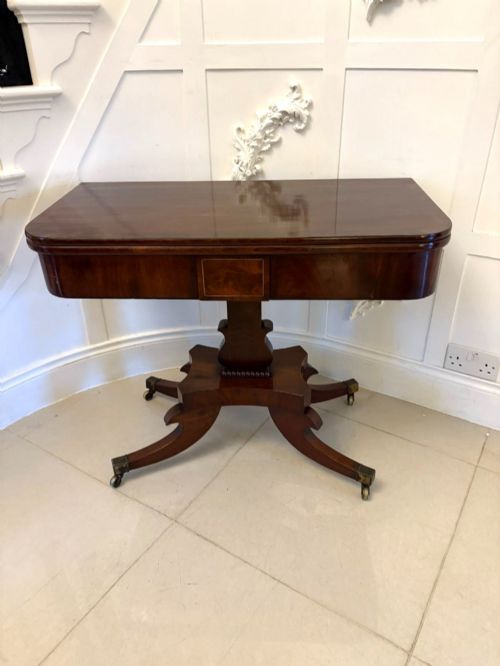
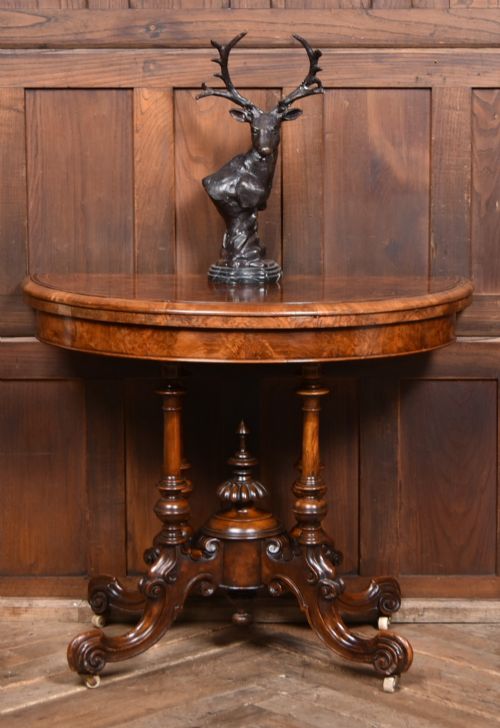
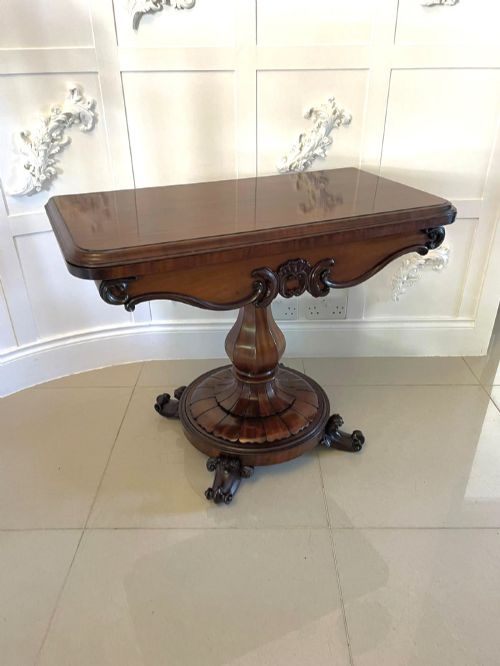
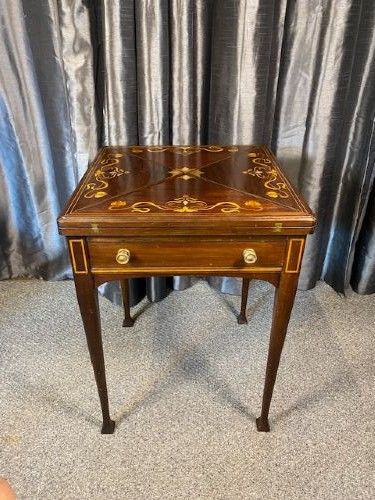
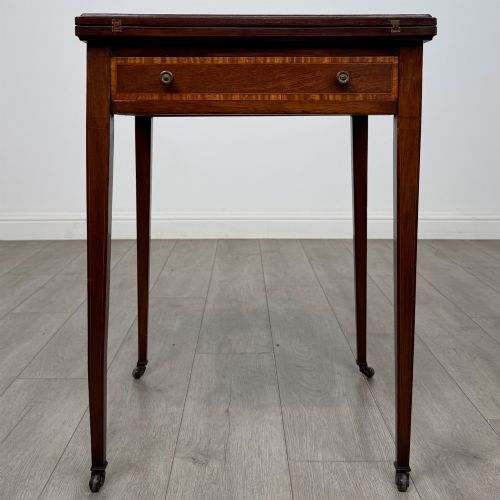
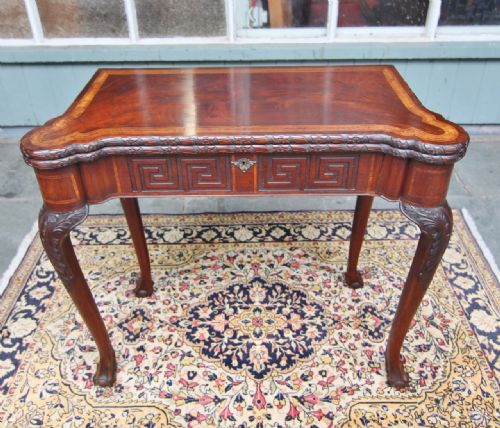
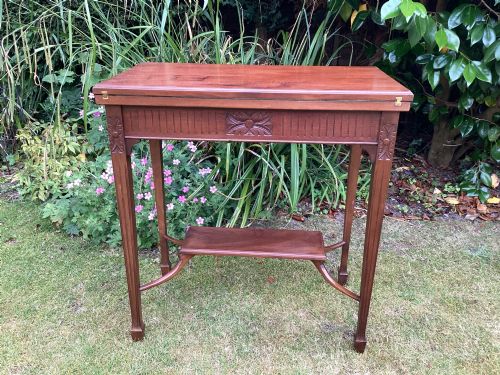
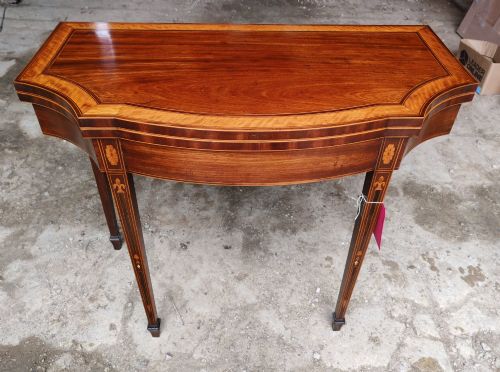
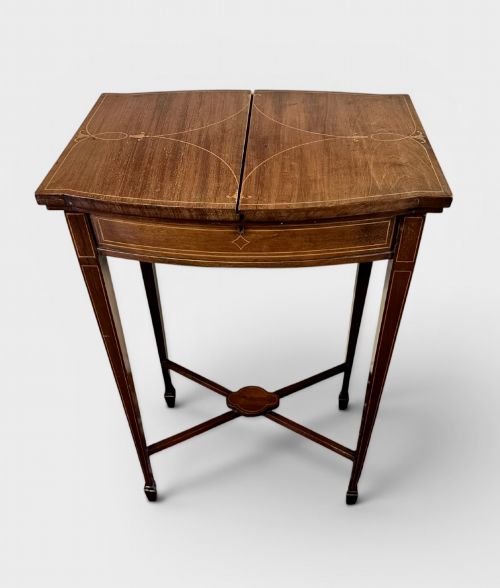
An edwardian fold top table serves multiple functions in domestic interiors through clever convertible designs that transform from compact consoles into full-sized gaming or dining surfaces. The pieces encountered most frequently on this page combine mahogany or satinwood construction with the characteristic lightness of the Edwardian period, often incorporating inlaid boxwood detailing.
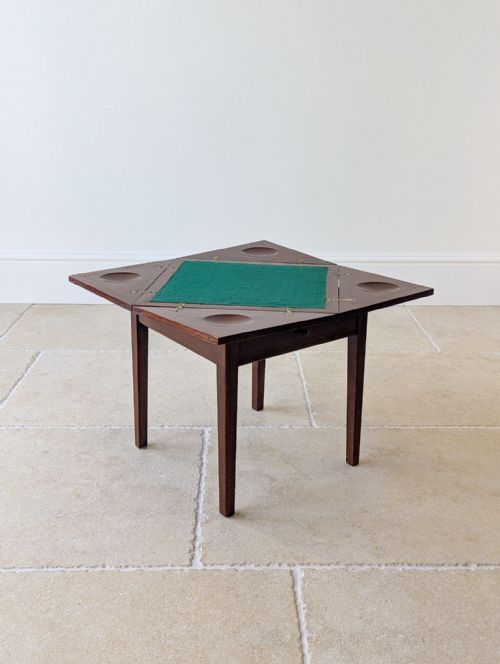
Makers of the era produced specific variations including envelope card tables with rotating four-flap tops, traditional tea tables, and occasional furniture designed for drawing rooms. These adaptable furnishings reflect the social habits of early twentieth century homes, where flexibility of room use was paramount.
How they were made
Cabinet makers utilised dense hardwoods such as mahogany and walnut, frequently applying contrasting veneers like satinwood, rosewood, and burr walnut to create decorative top surfaces. Inlaid stringing in boxwood and ebony defined the geometric borders characteristic of the period's output.
Hinges, swivelling pivots, and folding actions required precise engineering from brass components to ensure smooth transitions between the closed and open positions. Joinery relied on traditional techniques to support the weight of folding leaves without straining the supporting framework.
Listings feature mahogany, walnut, and satinwood predominantly across Edwardian and Victorian iterations.
What varies in quality
The distinction between standard commercial output and superior craftsmanship rests upon the choice of timber figurations and the crispness of inlaid stringing. Finely figured burr walnut and carefully selected satinwood elevate a piece far above plain utility furniture of the same era.
The integrity of the folding mechanism dictates the daily usability of the table, where tight joints and smooth swivel actions distinguish skilled workshop production from looser assembly. Hand-finished polish and well-preserved timber patination indicate superior original materials and careful preservation.
Edwards & Roberts·J.C Vickery
The Edwardian Fold Top Table Glossary
- Envelope table
- A card table with a square top divided diagonally into four triangular flaps that rotate and fold open simultaneously to reveal a baize-lined interior. This specific format gained immense popularity during the Edwardian era.
- Fold-over top
- A hinged surface design where one half folds back upon a supporting rail or swivels to double the available area. It allows a compact console or side table to convert instantly into a games or tea surface.
- Inlay
- A decorative technique where contrasting woods or metals are set flush into the primary timber surface to form geometric patterns or borders. Boxwood and ebony lines are common in Edwardian pieces.
- Satinwood
- A pale, lustrous hardwood sourced from tropical regions, valued for its golden yellow sheen and fine grain. It appeared frequently as a decorative veneer on upscale Edwardian tables.
Edwardian Fold Top Table: Frequently Asked Questions
How do you open an envelope card table?
The mechanism relies on pivoting the triangular flaps outward from the centre, which causes the internal mechanism to lift the corresponding corner covers. Each flap swings independently or in sequence on concealed hinges.
Care should be taken not to force the leaves if the timber has swelled due to atmospheric moisture changes. Gentle pressure on the opposing corners ensures the pivoting action remains smooth.
What were fold top tables used for?
These tables served primarily as multi-purpose furniture for entertaining, functioning as small side or console units when closed. When opened, they provided a stable surface for card games, tea service, or writing.
In smaller Edwardian drawing rooms, space-saving convertible furniture allowed hosts to adapt their reception rooms rapidly for different social gatherings.
How do I distinguish Edwardian from Victorian tables?
Edwardian tables generally exhibit lighter proportions, brighter satinwood or mahogany veneers, and more restrained neoclassical or Sheraton revival stringing. Victorian examples tend to be heavier, featuring darker polished walnut, heavier turned supports, and bolder serpentine shaping.
The quality of the brass fittings and the style of the inlaid motifs also provide reliable chronological markers.
Where should I place a fold top table?
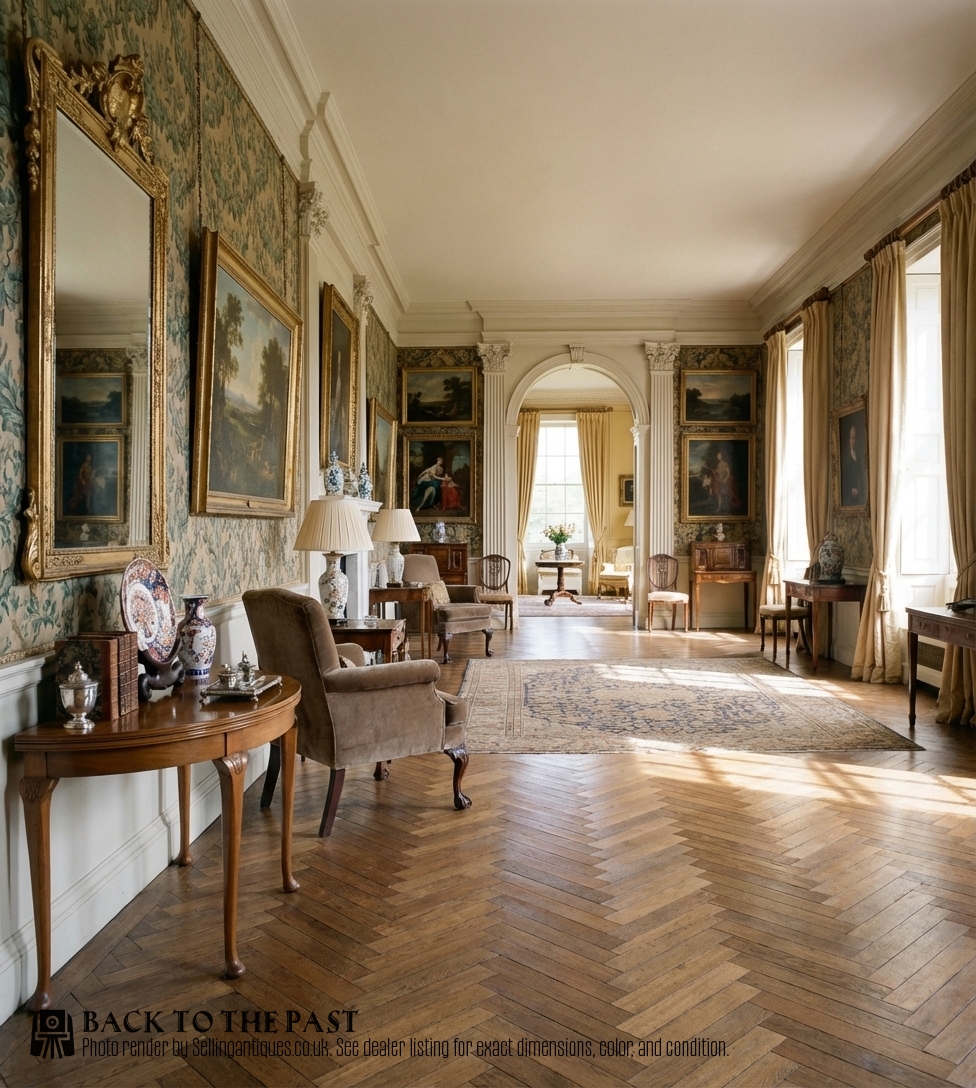
A closed fold top table sits comfortably against a hallway wall or beneath a window as a slim console or side table. Placing it out of direct sunlight preserves the delicate satinwood and mahogany veneers.
Ensure there is adequate clearance around the piece if you intend to unfold the top regularly for display or gaming.