

Edwardian Mahogany Card Table
An Edwardian mahogany card table brings a compact, ingenious surface into a room, ready to unfold for an evening of cards or board games.
Edwardian Mahogany Card Table
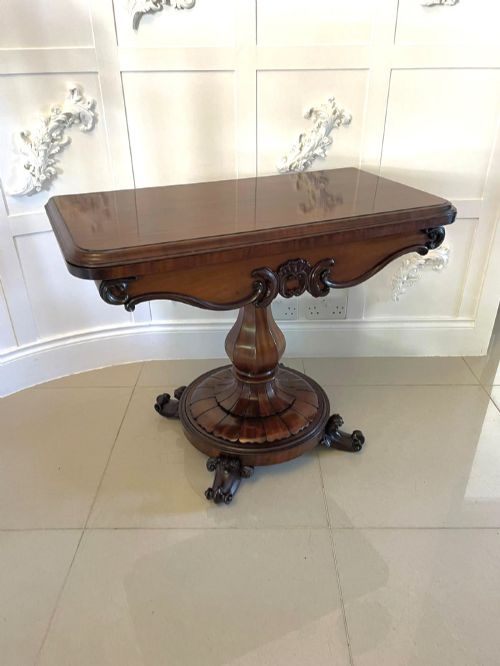
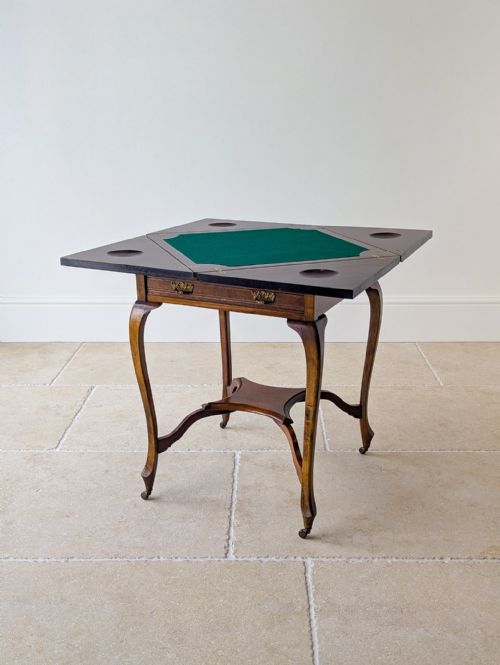
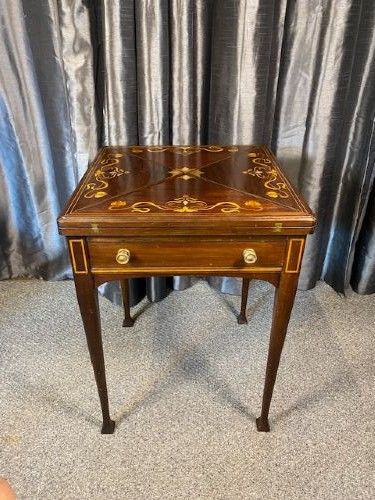
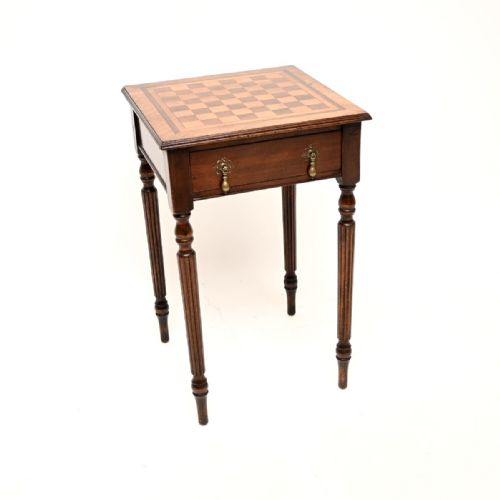
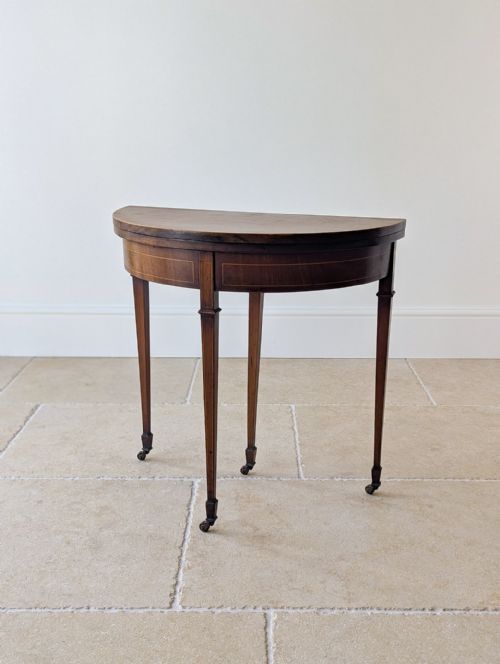
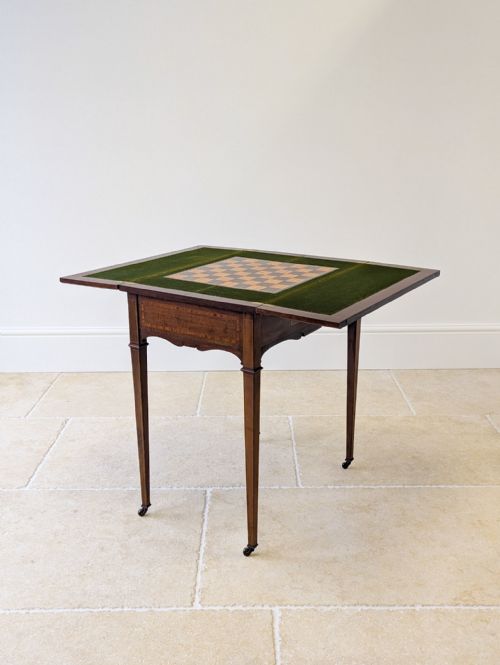
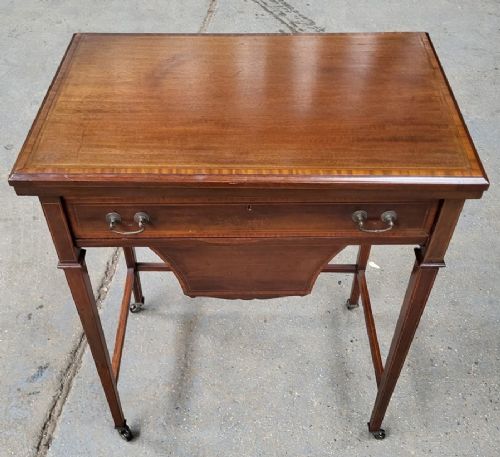
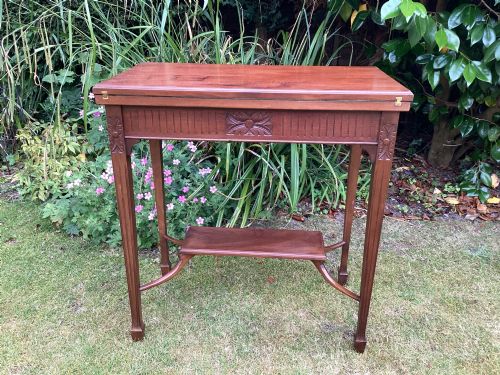
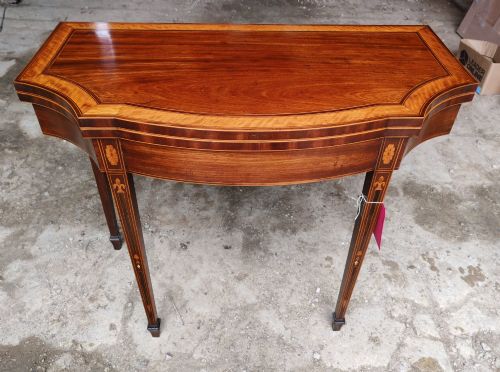
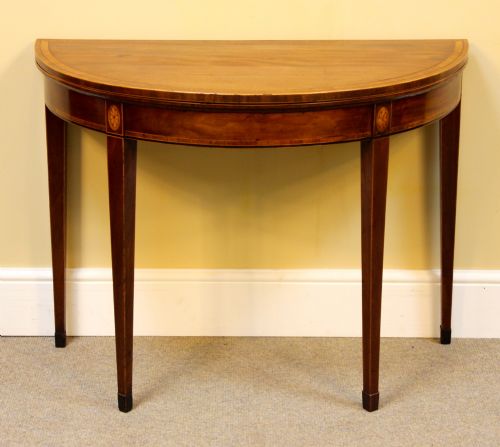
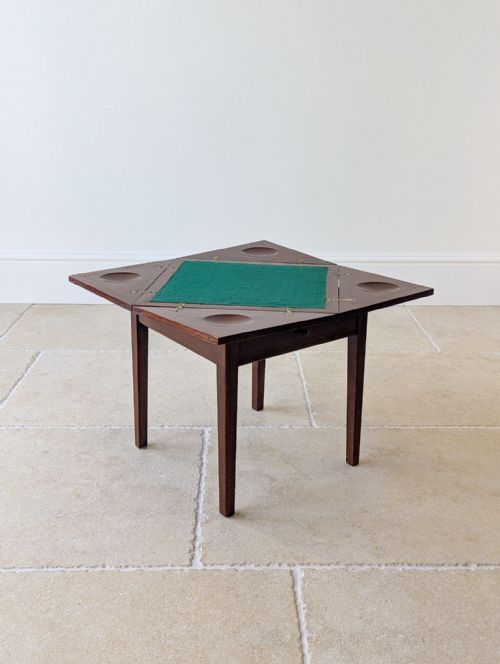
An edwardian mahogany card table typically takes the form of an envelope top, a fold-over demi-lune, or a standard rectangular folding surface designed for games and entertaining. The envelope version stands out as the most common meeting on this page, featuring four triangular flaps that swivel open to reveal a baize-lined interior.
Makers of the period also produced larger games tables and occasional pieces influenced by earlier Georgian and Sheraton styles. These pieces span standard Edwardian manufacture alongside occasional late Victorian and early twentieth-century interpretations.
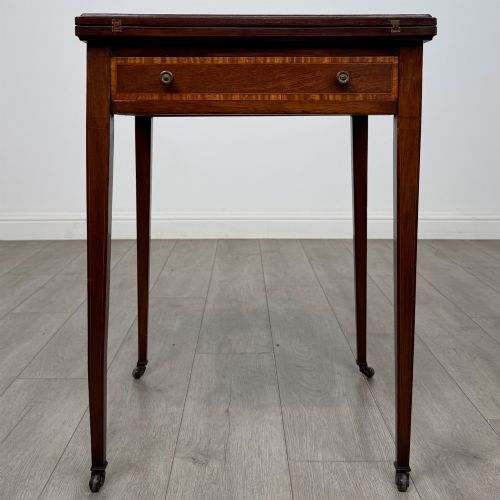
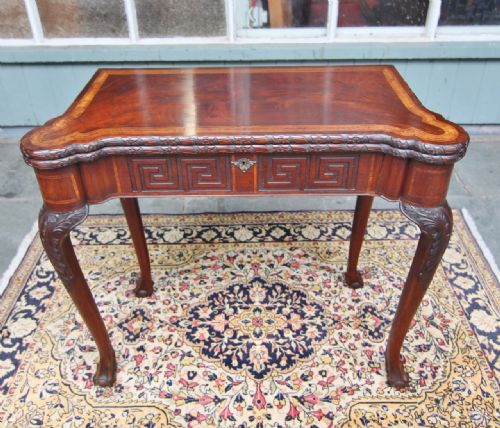
The underlying timber is consistently mahogany, frequently enhanced with boxwood, satinwood, or marquetry inlay. Many examples rest on slender tapering legs or cabriole supports suited to smaller drawing rooms.
How they were made
Cabinet makers utilised solid mahogany and polished veneer over secondary timbers such as pine to construct the folding leaves and internal mechanisms. The woodwork often incorporates cross-banding and delicate stringing in contrasting woods like boxwood and satinwood.
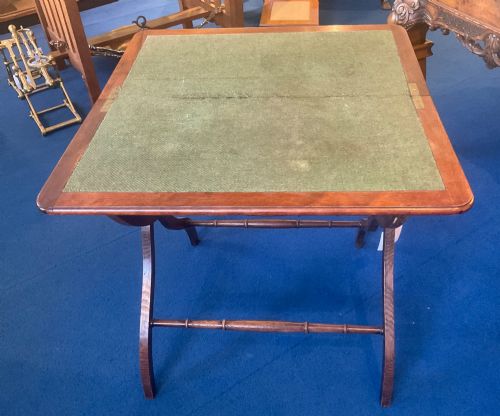
Interior playing surfaces relied on baize, felt, or leather inserts to provide a quiet ground for cards. Brass hinges and specialised pivoting mechanisms allowed envelope tops and fold-over leaves to operate smoothly.
Edwardian Mahogany Card Table Retail Price Guide 2026
Typical asking prices for edwardian mahogany card table among the pieces listed under this phrase on Sellingantiques today, from the lower quarter to the upper quarter. They describe what is for sale here now, not the wider market.
What varies in quality
The standard of timber selection and the precision of the inlay create the primary distinction across these pieces. Finer workshops employed richly figured mahogany and meticulous satinwood marquetry rather than simpler painted or printed lines.
Mechanical execution defines the better examples, where envelope leaves pivot on their central axes without binding and fold-over tops align flush when closed. The stability of the frame and the retention of original baize linings further distinguish superior specimens.
Howard & Son's·Whytock & Reid of Edinburgh·Maple & Co
The Edwardian Mahogany Card Table Glossary
- Envelope top
- A square table top formed of four triangular flaps that rotate and fold open together to reveal the playing surface.
- Demilune
- A half-moon shape used for table tops and frames designed to stand flush against a wall when closed.
- Baize
- A coarse woolen fabric traditionally used to line the playing surfaces of card and games tables.
- Cross-banding
- A border of veneer laid with the grain running perpendicular to the surrounding timber for decorative contrast.
- Marquetry
- Elaborate decorative patterns formed by the insertion of different coloured veneers into a solid wood ground.
Edwardian Mahogany Card Table: Frequently Asked Questions
How do envelope card tables work?
The four triangular flaps are weighted and pivoted so that lifting one causes the remaining three to unfold simultaneously.
This reveals a concealed interior, often lined with baize and fitted with small wells for counters or coins.
Were these tables used only for cards?
While designed primarily for card games, their hinged tops made them versatile for writing, sewing, or general occasional use.
Many doubled as console or lamp tables when closed against the wall of a drawing room.
How do I distinguish Edwardian from Georgian examples?
Edwardian versions tend to employ lighter framing, factory-cut stringing, and envelope mechanisms developed around nineteen hundred.
Georgian predecessors generally feature heavier solid timber construction, hand-carved details, and simpler fold-over or tea-table configurations.
Can I replace worn baize on the playing surface?
Replacement baize or felt can be fitted into the recessed well of the table by a specialist restorer.
Retaining the original fabric is preferable for collectors, but new lining restores full utility for regular play.