
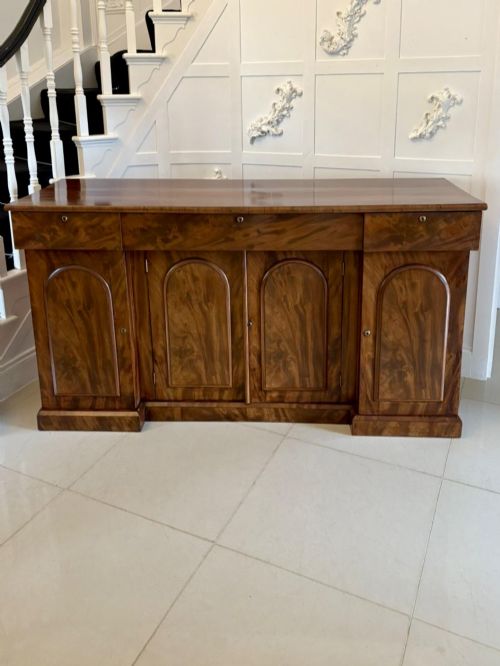
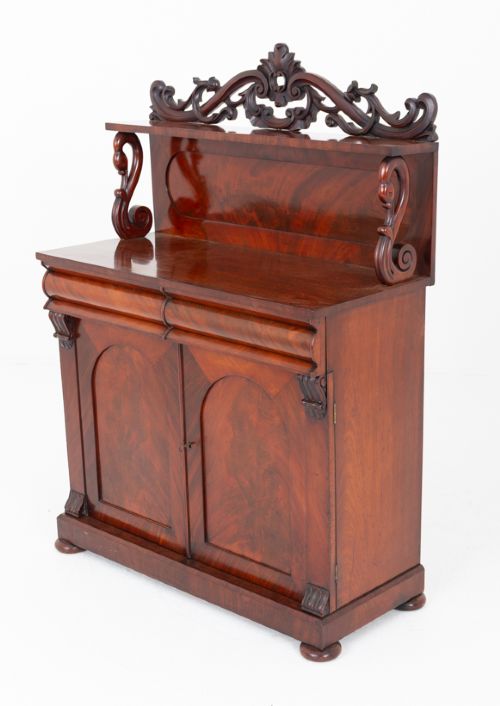
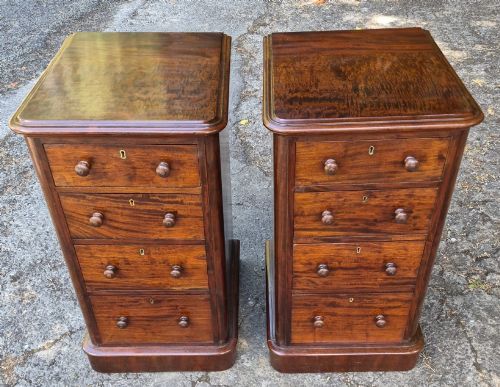
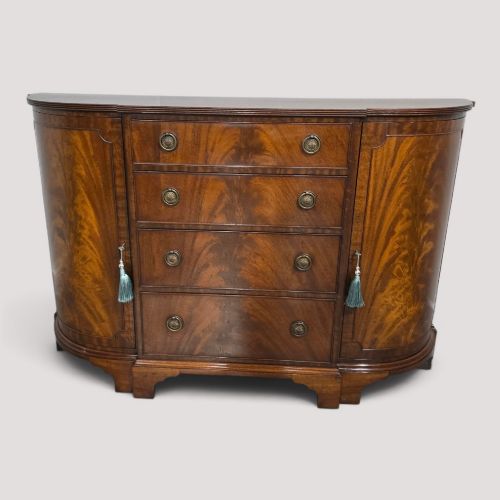
Edwardian Flame Mahogany Cabinet
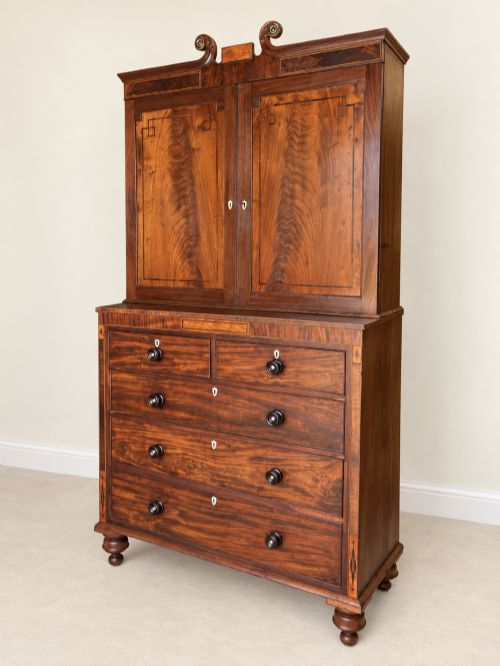
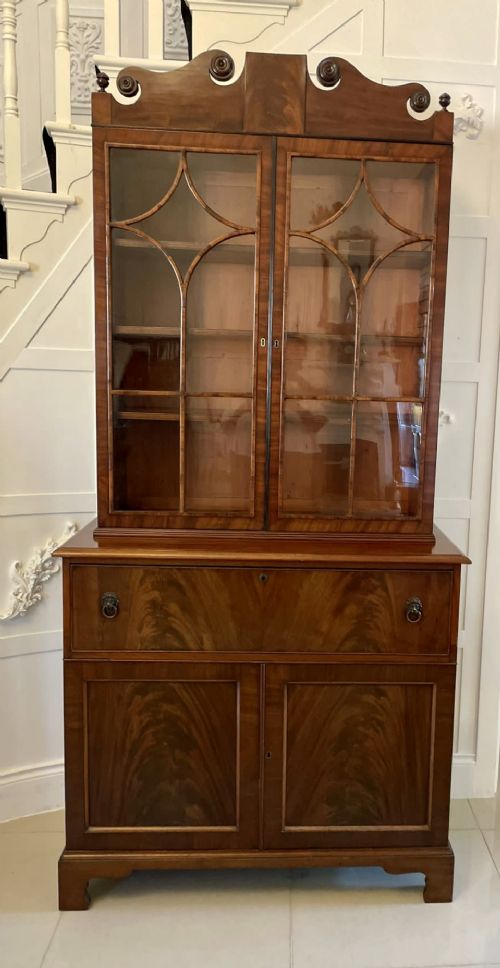
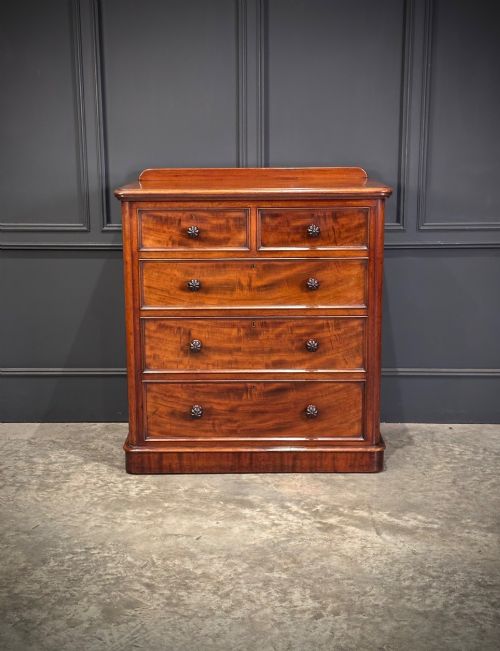
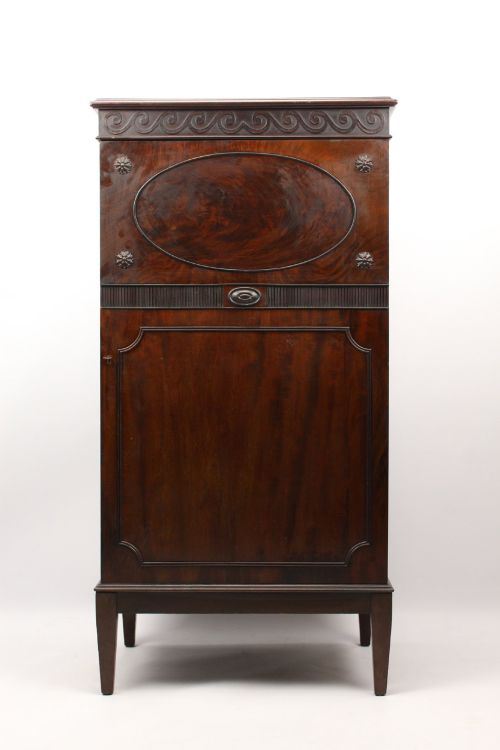
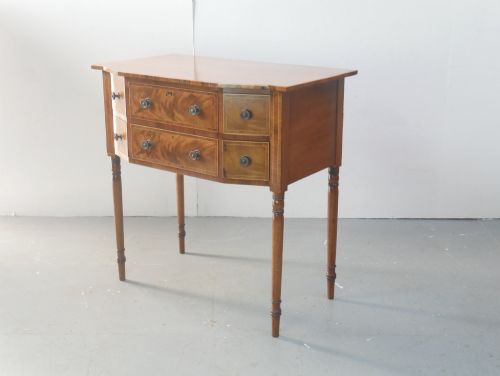
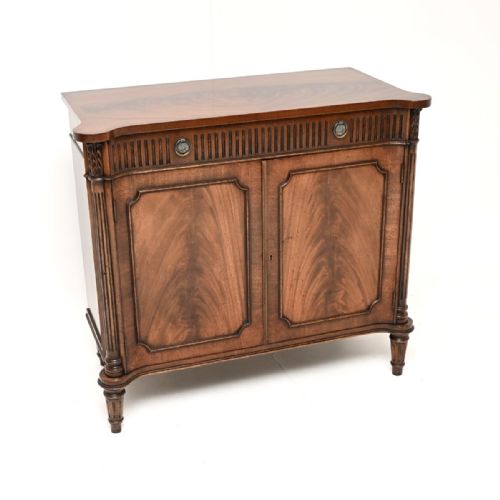
An edwardian flame mahogany cabinet brings dramatic timber grain and practical storage into a room.
Edwardian Flame Mahogany Cabinet
When you search for an edwardian flame mahogany cabinet, you are looking at early twentieth century case furniture designed for domestic storage and display. These pieces combine utilitarian function with the decorative appeal of figured timber veneers.
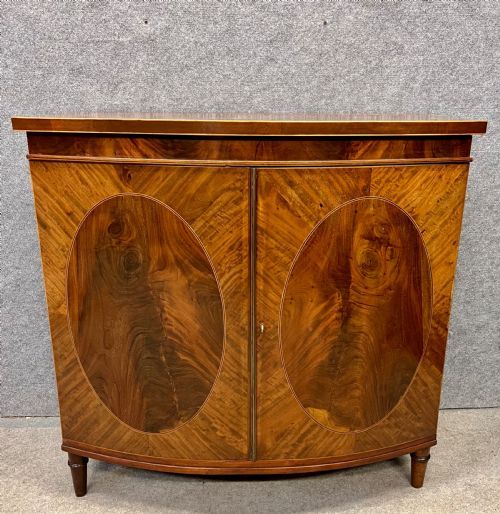
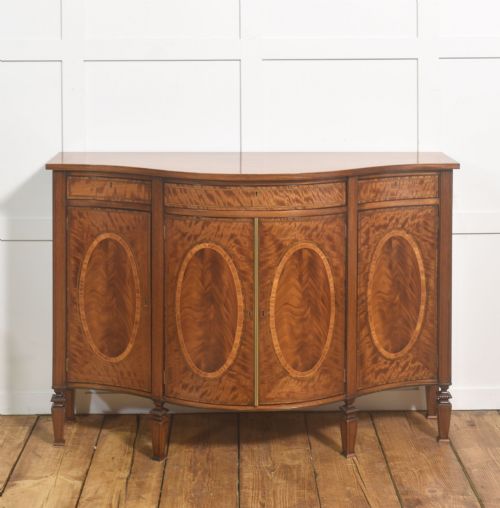
The versions you are most likely to meet on this page date from the Edwardian period and feature distinctive bow-front, serpentine, or demi-lune shapes. Makers of the era utilised the striking patterns of the wood to create visually engaging focal points for dining rooms and reception rooms.
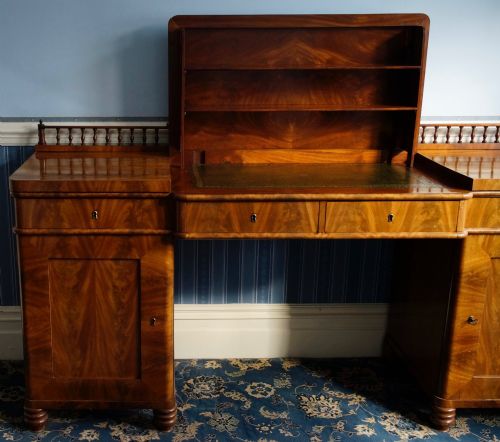
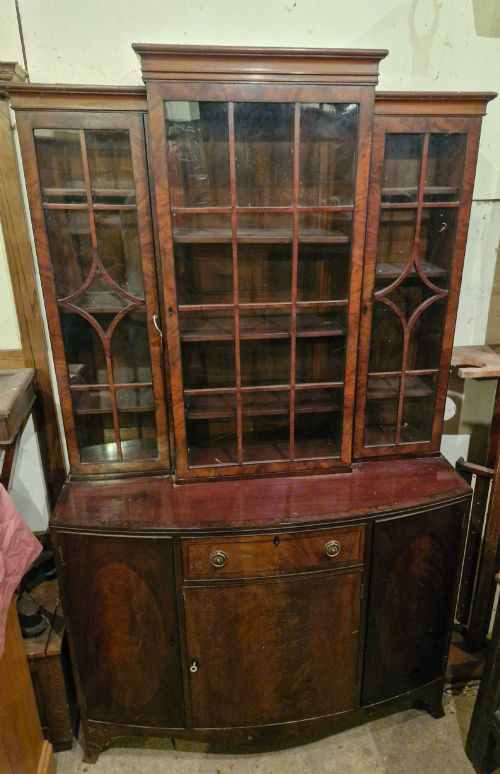
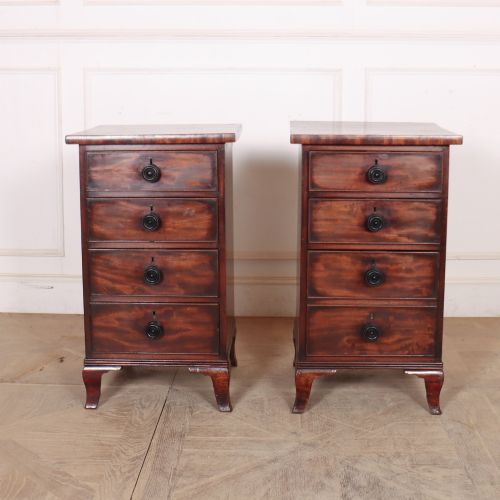
Alongside dedicated cabinets, the evidence shows related forms including sideboards, display cabinets, and bedside tables sharing the same Edwardian aesthetic. These items range from compact side cabinets to large breakfront sideboards.
How They Were Made
Craftsmen built these pieces using a solid timber carcase overlaid with thin flame mahogany veneer to achieve symmetrical and dramatic grain patterns on the doors and drawer fronts. Cabinetmakers selected veneers with characteristic fire-like swirls and curls.
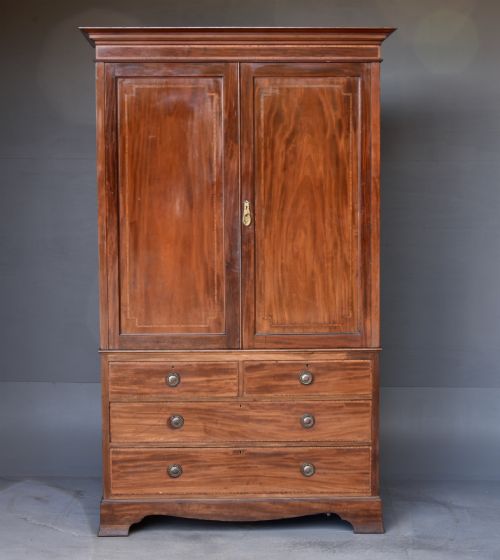
Details were often enhanced through contrasting materials, incorporating satinwood inlay, boxwood stringing, and brass hardware such as handles and key escutcheon plates. Oak and secondary timbers frequently formed the internal framing and drawer linings.
Listings feature Edwardian flame mahogany cabinets alongside related forms such as display cabinets, bedside tables, and breakfront sideboards.
What Varies in Quality
Quality rests significantly on the selection and matching of the veneer, where top-tier examples display continuous, book-matched flame patterns across multiple doors or drawers. Lesser pieces show disjointed grain or plain timber substitution on less visible sections.
Construction methods also set pieces apart, distinguishing workshop-built furniture with careful dovetail joinery and solid secondary woods from mass-produced carcases. The crispness of inlaid stringing and the retention of original brass fittings further separate standard production from finer cabinet work.
maples & co·Denby & Spinks·Wylie and Lochhead·Waring S Gillows·T. Inglesant & Sons Leicester
The Edwardian Flame Mahogany Cabinet Glossary
- Flame mahogany
- A veneer taken from the fork of the mahogany tree where the branch joins the trunk, producing a rippling, flame-like grain pattern. This highly decorative surface defines the appearance of Edwardian luxury furniture.
- Bow-front
- A cabinet or sideboard design featuring a convex, outward-curving front facade. This shape softens the room and catches the light across the polished veneer.
- Demi-lune
- A half-moon shape used for small cabinets and sideboards designed to sit flush against a wall. The curved top surface provides a compact display area.
- Inlay
- A technique where contrasting woods such as satinwood or boxwood are inserted into recesses in the primary surface to create decorative borders and motifs. It frames the central flame mahogany panels.
- Breakfront
- A piece of furniture where the central section projects forward from the flanking outer sections. This architectural form adds depth and formal presence to large cabinets.
Edwardian Flame Mahogany Cabinet: Frequently Asked Questions
What is flame mahogany?
Flame mahogany is a specialised wood veneer sliced from the fork of a mahogany tree. It produces a distinctive, swirling pattern that resembles flickering flames.
Cabinetmakers used this timber on prominent surfaces like doors and drawer fronts to catch the light and create a decorative finish.
How do I date Edwardian furniture?
Edwardian furniture dates from the reign of King Edward VII, spanning roughly from 1901 to 1910, though styles often overlapped into the surrounding decades. You can identify pieces from this era by their lighter proportions and revivalist decorative motifs.
Makers during this time frequently drew inspiration from Sheraton and Chippendale designs while utilising modern machinery alongside traditional hand joinery.
Where should I place a cabinet?
These cabinets suit dining rooms, hallways, and living spaces where their surface and internal storage can be utilised daily. Bow-front and demi-lune shapes work well against flat walls while softening corners in smaller rooms.
Keep wooden furniture away from direct sunlight and strong heat sources to protect the delicate veneer and polish.
How do I maintain the wood?
Maintain the polished finish by dusting regularly with a soft, dry cloth and avoiding silicone-based sprays. Applying a quality beeswax occasionally helps nourish the mahogany and preserve the depth of the grain.
Stable indoor humidity levels prevent the veneer from drying out and lifting over time.