


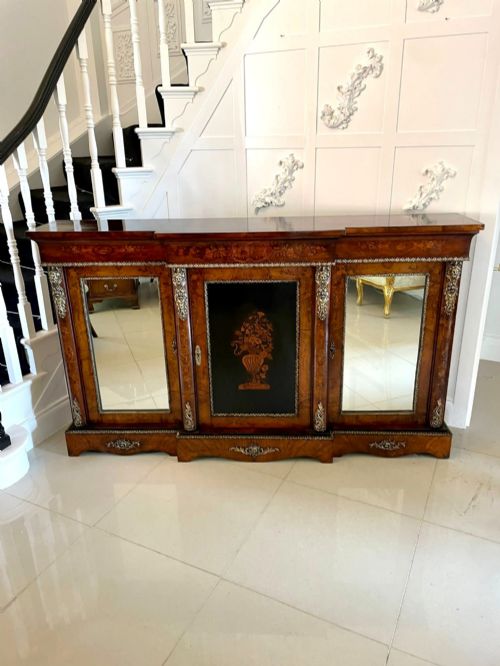
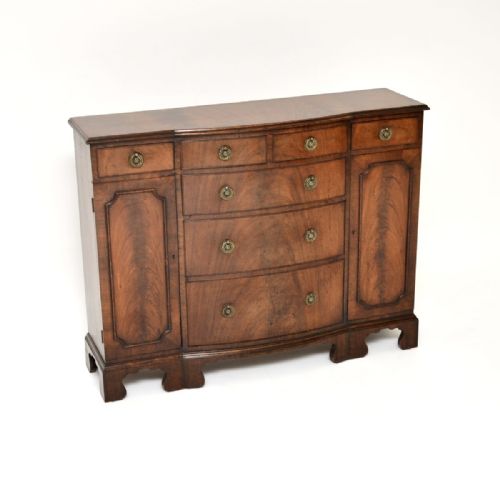
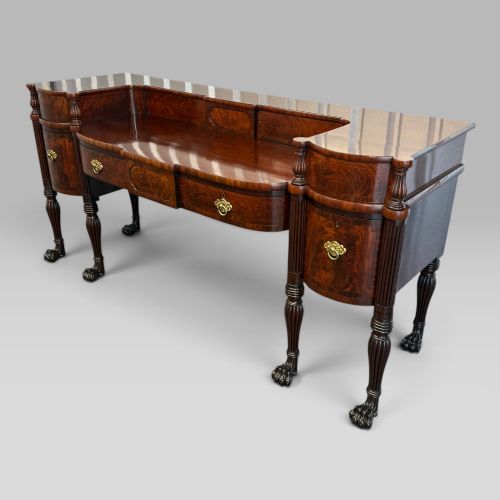
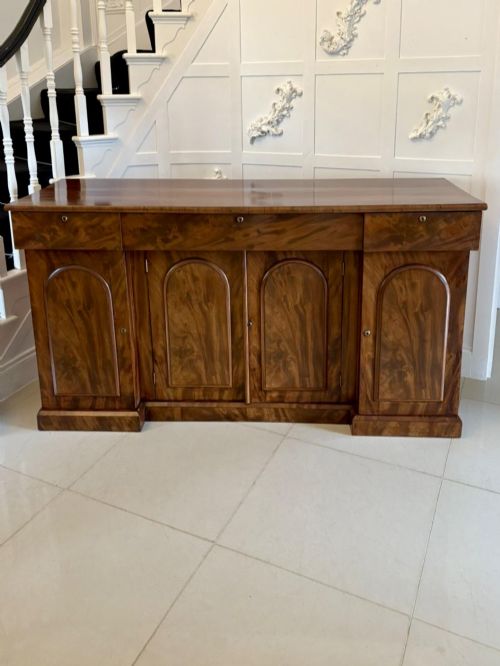
Antique Breakfront Buffet
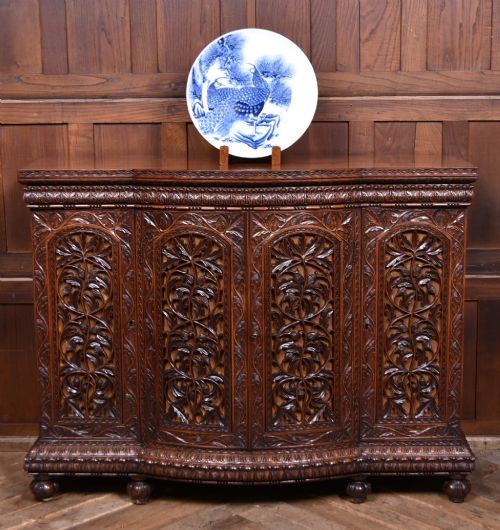
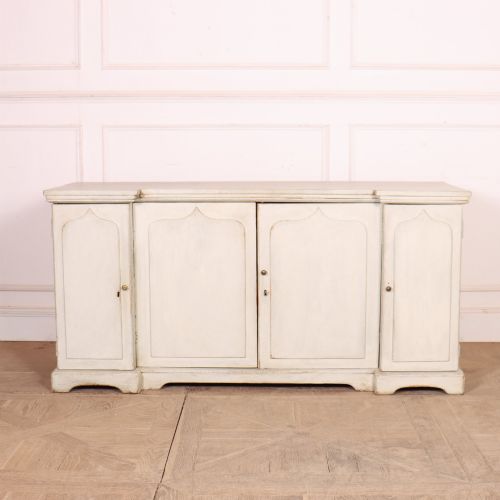
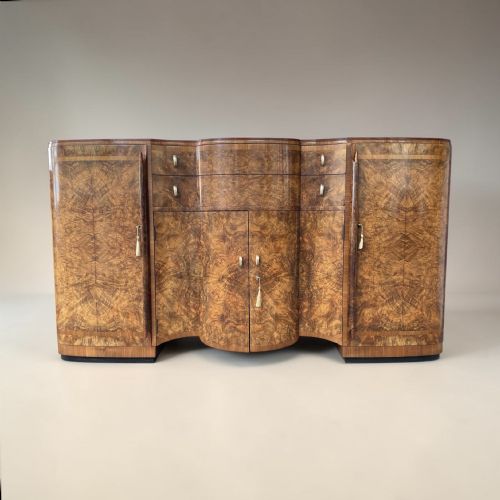
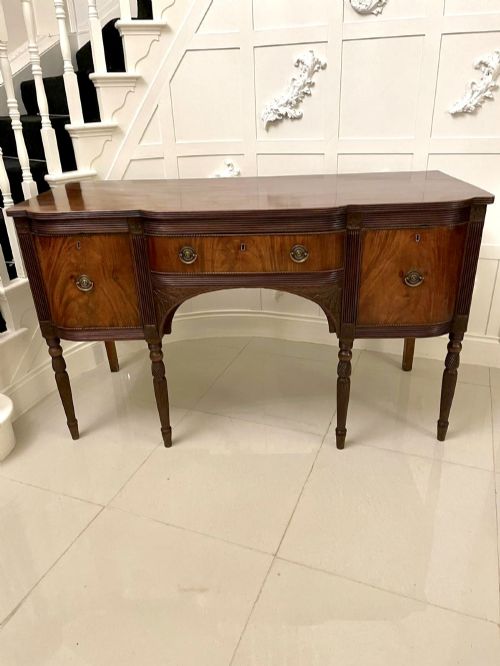
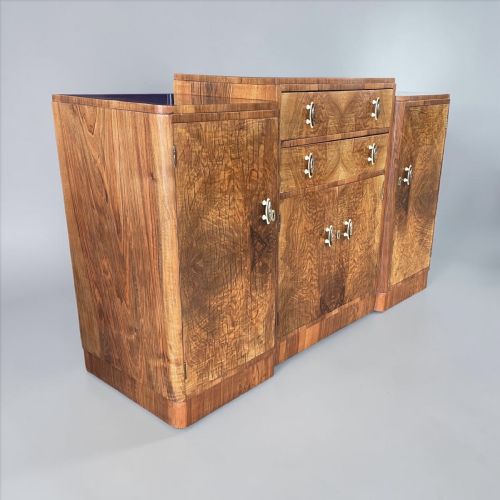
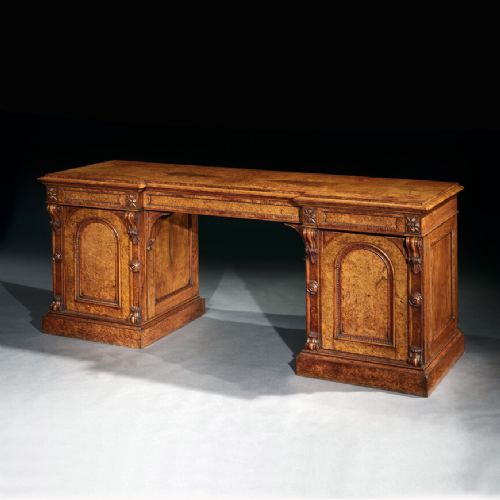
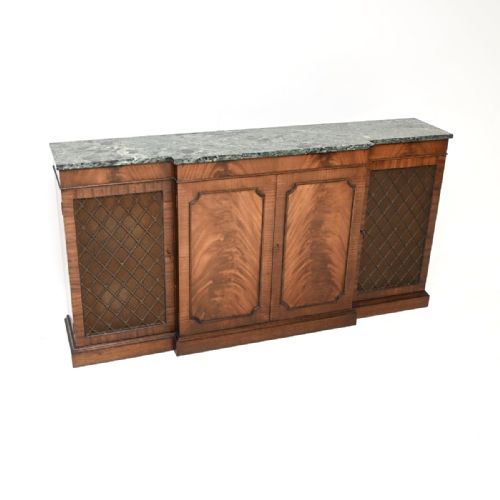
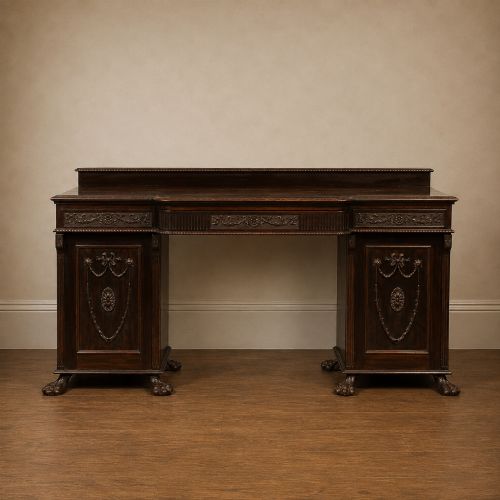
An antique breakfront buffet brings substantial presence to a room, offering generous storage through prominent central sections flanked by recessed wings.
Antique Breakfront Buffet
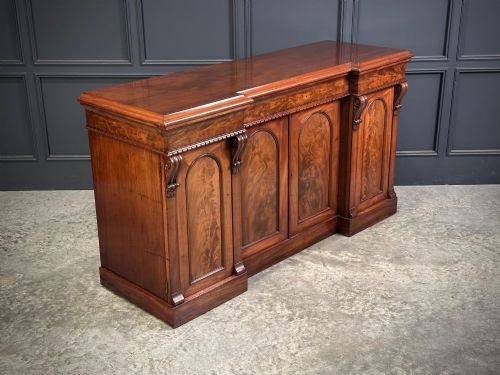
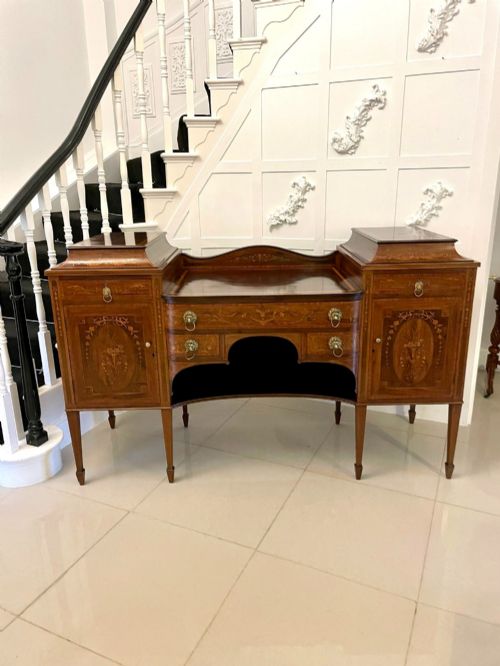
An antique breakfront buffet encompasses large dining room storage pieces, frequently recorded as sideboards, credenzas, and dresser bases with a distinct protruding central section. Pieces span the Georgian, Regency, Victorian, and Art Deco eras, with nineteenth-century examples appearing frequently alongside earlier styles and twentieth-century interpretations.
Makers and workshops construct these large items in mahogany, burr walnut, oak, and rosewood, often integrating marquetry, brass inlay, or marble tops. The selection ranges from substantial Victorian flame mahogany four-door cupboards to compact Edwardian variations and streamlined Art Deco designs.
Materials and Technique
Cabinetmakers select figured timbers such as flame mahogany, burr walnut, and pollard oak, applying veneers over sturdy pine or oak carcases to display complex grain patterns. Workshops enhance these surfaces with satinwood marquetry, ebony stringing, and cast brass mounts.
Construction methods involve hand-cut dovetails for drawers and framed panel doors, alongside specialised additions like marble tops, mirrored backs, and brass grill fronts on credenza variations.
Listings feature woods including mahogany, burr walnut, oak, satinwood, kingwood, rosewood, and pollard oak across multiple centuries.
Craftsmanship and Proportion
Superior examples display carefully matched timber veneers that flow continuously across the breakfront facade, whereas lesser items rely on simpler, mismatched grain patterns. The integration of high-grade mounts, such as fire-gilt ormolu, Sevres porcelain plaques, and finely chased brass inlay, elevates the status of a piece.
Structural harmony defines better work, where carved details like lion paw feet, reeded pilasters, and precise cabinetry joints remain crisp and well-proportioned.
Hewetsons London·Maurice Adams·Maple And Co·Gillow
The Antique Breakfront Buffet Glossary
- Breakfront
- A cabinet design where the central section projects forward from the flanking side cupboards. This configuration creates visual depth and breaks the horizontal line of large dining furniture.
- Credenza
- A low cabinet, frequently featuring glass doors or central cupboards flanked by curved ends, often mounted with ormolu and ceramic plaques. Originating in Italy, the form evolved in nineteenth-century British interiors for display and storage.
- Marquetry
- The art of applying thin slices of varied wood veneers to form decorative pictures and geometric patterns on a carcase. Craftsmen utilise contrasting timbers to achieve pictorial depth.
- Ormolu
- Gilded bronze mounts applied to furniture for decorative enrichment. These cast metal ornaments highlight corners, panels, and feet on high-status Victorian and Regency pieces.
- Flame mahogany
- A distinct grain figure obtained from the branch junctions of the mahogany tree, resembling flickering flames. Cabinetmakers prize this timber for primary display surfaces.
Antique Breakfront Buffet: Frequently Asked Questions
What is an antique breakfront buffet used for?
These pieces serve primarily as dining room furniture designed for storing tableware, linens, and serving dishes.
The flat top surface additionally provides a convenient platform for serving food or displaying decorative objects during gatherings.
How do I identify a Victorian piece?
Victorian examples often employ dense timbers like burr walnut and flame mahogany, frequently embellished with elaborate marquetry, ormolu mounts, or glazed doors.
Construction details during this period include machine-assisted cuts alongside traditional hand dovetailing, reflecting the industrial shifts of the nineteenth century.
Where should I place a large sideboard?
A substantial breakfront piece requires a dedicated wall in a spacious dining room or hallway where its extended width and depth can sit comfortably.
Ensure adequate clearance in front of the piece so that large cupboard doors and drawer boxes open fully without obstruction.
What distinguishes Regency furniture from earlier styles?
Regency designs favour classical restraint, drawing inspiration from ancient Roman and Greek motifs alongside exotic influences.
Pieces from this era frequently showcase brass inlay, lion paw feet, and dark mahogany surfaces with clean architectural lines.