

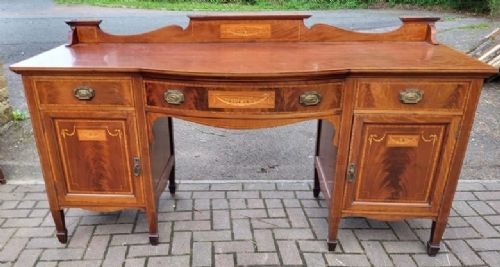
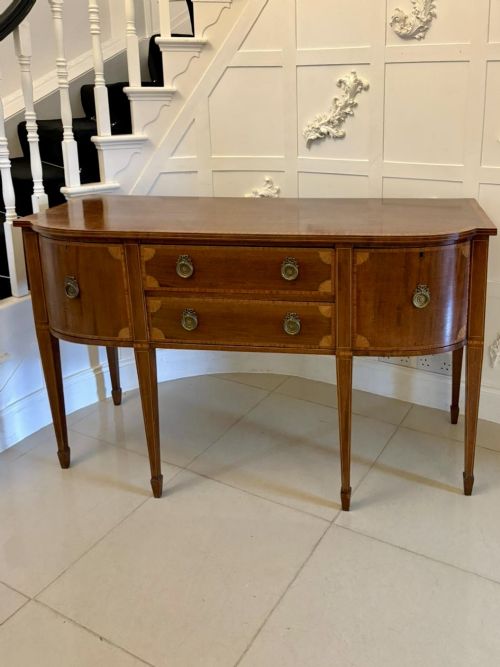
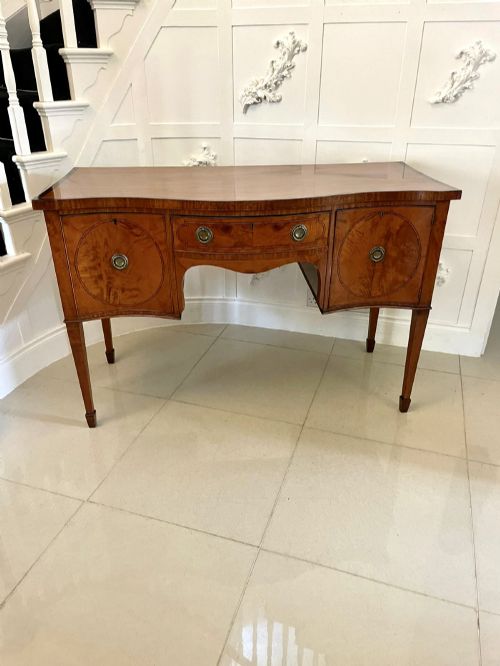
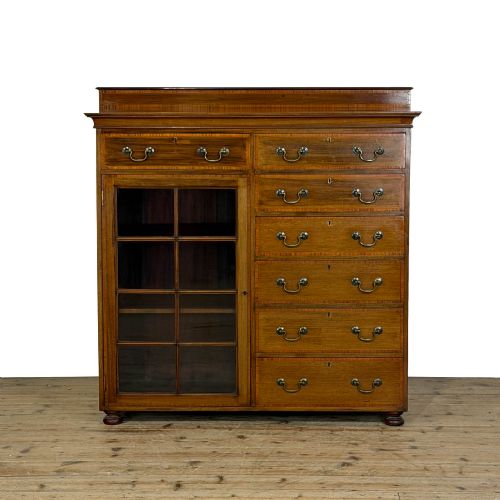
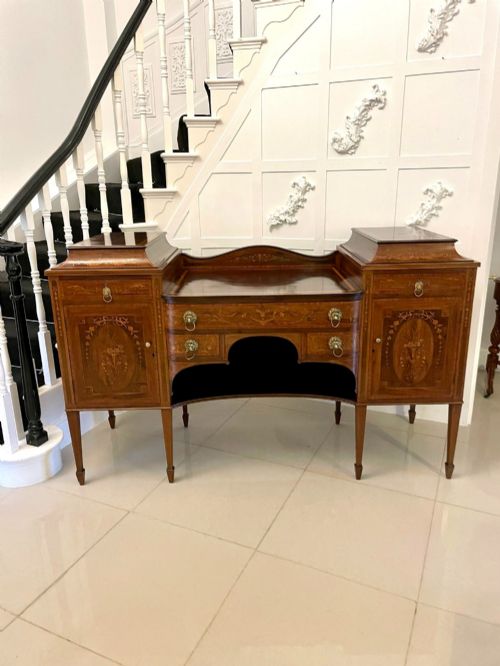
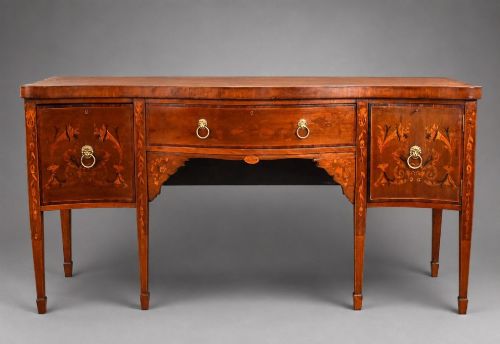
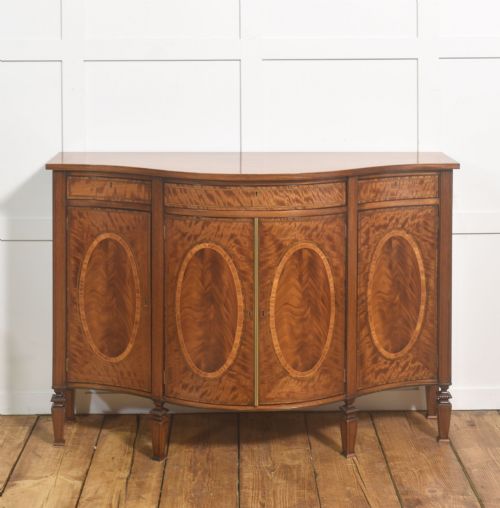
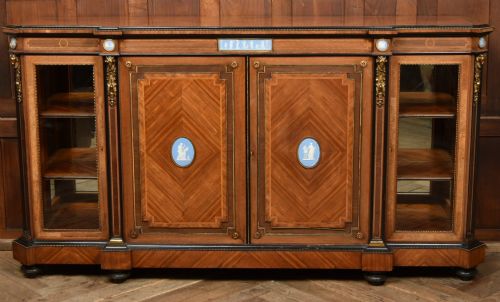


Edwardian Inlaid Buffet Cabinet
An edwardian inlaid buffet cabinet brings formal dining rooms the refined warmth of mahogany, satinwood and delicate boxwood stringing.
Edwardian Inlaid Buffet Cabinet
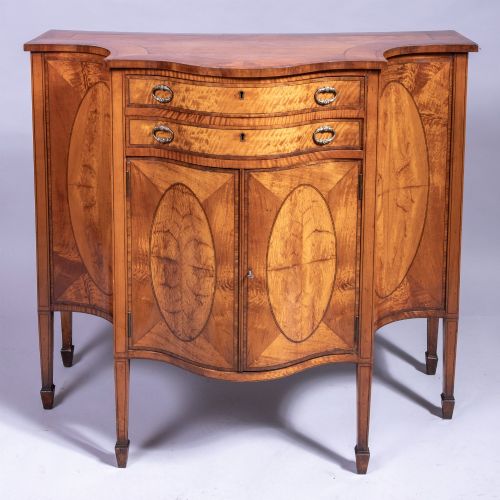
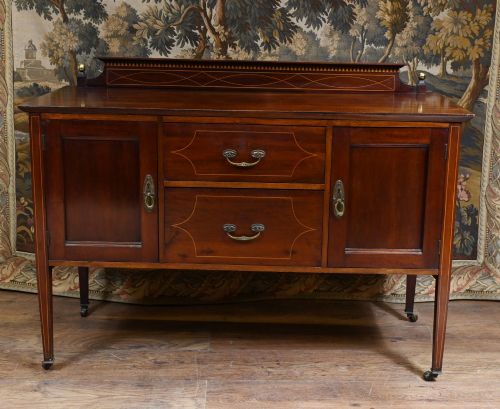
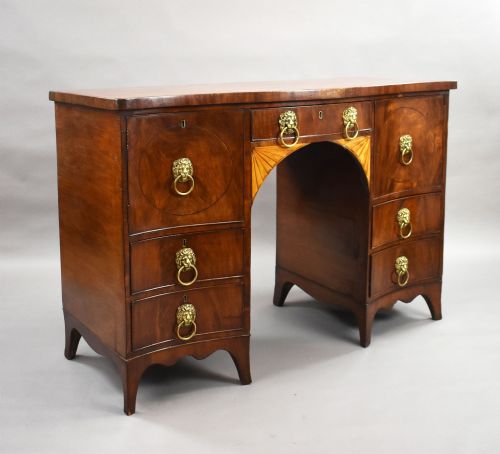
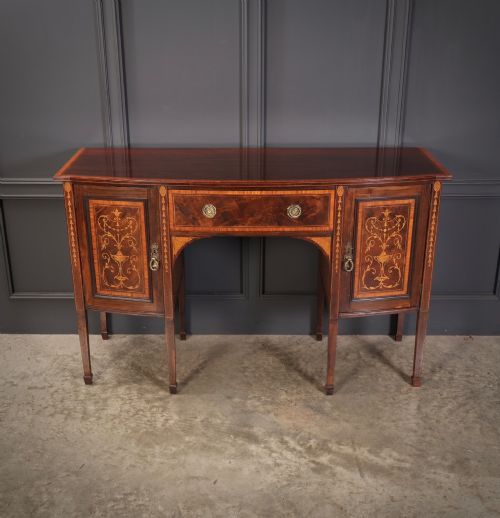
An edwardian inlaid buffet cabinet typically takes the form of a substantial sideboard, server or credenza designed for the formal dining room or drawing room. The listings here centre primarily on Edwardian pieces, alongside related Victorian and Sheraton Revival examples from the nineteenth and early twentieth centuries.
The primary forms on this page include bow-fronted, breakfront and serpentine sideboards alongside side cabinets and credenzas. These items served a practical domestic purpose for storing plate and serving food, while their polished surfaces and decorative fronts displayed household status.
How they were made
Cabinet makers utilised solid timbers and selected veneers, predominantly mahogany, satinwood and burr walnut, laid over a secondary wood carcase. Flame mahogany and burr walnut provided rich, figured grain patterns across large surfaces such as cupboard doors and top panels.
Decoration relied on precision woodworking techniques including marquetry, crossbanding and stringing using contrasting lighter and darker woods like boxwood. Brass hardware and occasional glass panels completed the construction, alongside hand-carved details on select Victorian and Edwardian frames.
Edwardian Inlaid Buffet Cabinet Retail Price Guide 2026
Typical asking prices for edwardian inlaid buffet cabinet among the pieces listed under this phrase on Sellingantiques today, from the lower quarter to the upper quarter. They describe what is for sale here now, not the wider market.
Makers occasionally hid small velvet-lined compartments behind secret locking panels for storing precious family silverware.
What varies in quality
Quality rests principally on the choice of timber veneers, the crispness of the marquetry inlay, and the integrity of the cabinet construction. Pieces featuring finely figured flame mahogany or hand-painted satinwood panels demonstrate superior workshop execution.
Attribution to documented makers such as Hewetsons, Edwards and Roberts, Gillows or Robson and Sons elevates a piece through demonstrable cabinet-making pedigree. The complexity of the silhouette, such as a serpentine or breakfront shape, also marks out finer productions.
Hewetsons London·Shapland and Petter·Edwards and Roberts·Robson and Sons·Gillows
The Edwardian Inlaid Buffet Cabinet Glossary
- Marquetry
- Decorative veneer work forming pictures or geometric patterns by fitting together small pieces of coloured wood, ivory or shell. It appears frequently on cabinet doors and drawer fronts.
- Crossbanding
- A narrow strip of veneer laid around the border of a larger panel with the grain running at a right angle to the centre. This frames the primary timber surface.
- Stringing
- Thin lines of contrasting wood inlaid into grooves on table edges, drawer fronts and cabinet doors. Boxwood is commonly utilised for this linear detail.
- Credenza
- A low cabinet or sideboard, often featuring glass doors or mirrored backs in Victorian iterations. Originally used for displaying plate.
- Serpentine
- A furniture front curved in a gentle wave shape with a convex centre flanked by concave curves. It requires advanced carpentry to execute cleanly.
Edwardian Inlaid Buffet Cabinet: Frequently Asked Questions
How do I tell Sheraton Revival from original Sheraton?
Sheraton Revival pieces date from the late nineteenth and early twentieth centuries, mimicking the lighter neoclassical styles popularised by Thomas Sheraton in the eighteenth century. Original pieces date to the Georgian era around seventeen-ninety.
Examining the secondary woods, interior linings, and screw types generally clarifies the age of the item. Revival pieces frequently incorporate machine-sawn elements and distinctively Edwardian or late Victorian hardware styles.
Where should I place a sideboard in my home?
A sideboard suits dining rooms, large hallways or living spaces where surface area and enclosed storage are both useful. Placing the piece against a principal wall allows the decorative grain and marquetry to function as a focal point.
Ensure the room has sufficient clearance for cabinet doors to open fully, particularly with bow-front or breakfront shapes. Placing the item away from direct sunlight protects delicate satinwood and mahogany veneers from fading.
How do I care for antique mahogany and satinwood?
Maintain antique polished wood surfaces by dusting regularly with a soft, dry cloth and avoiding silicone-based sprays. Applying a traditional beeswax polish occasionally nourishes the timber and preserves the sheen.
Keep these cabinets away from direct heat sources and drastic humidity changes to prevent the wood veneers from lifting or splitting. Maintaining stable indoor temperatures protects both the carcase and the fine inlay work.