




Edwardian Fireside Coal Storage
Edwardian fireside coal storage brings practical hearth management to life with brass, copper, and mahogany containers designed to keep fuel tidy.
Edwardian Fireside Coal Storage
Edwardian fireside coal storage encompasses coal boxes, purdoniums, scuttles, and log bins designed to hold fuel neatly beside the hearth. These pieces appear across Victorian, Edwardian, and Art Deco periods, spanning the late nineteenth and early twentieth centuries.
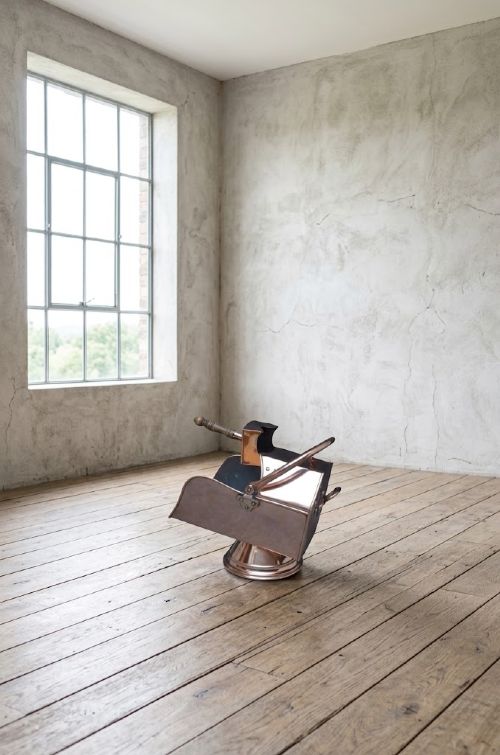
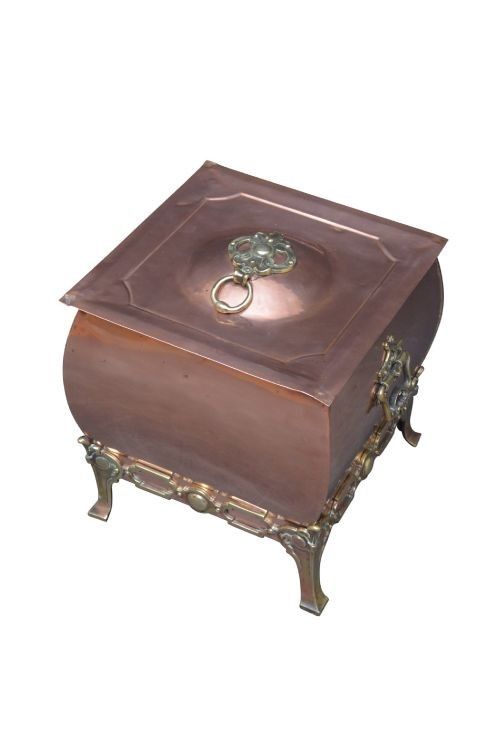
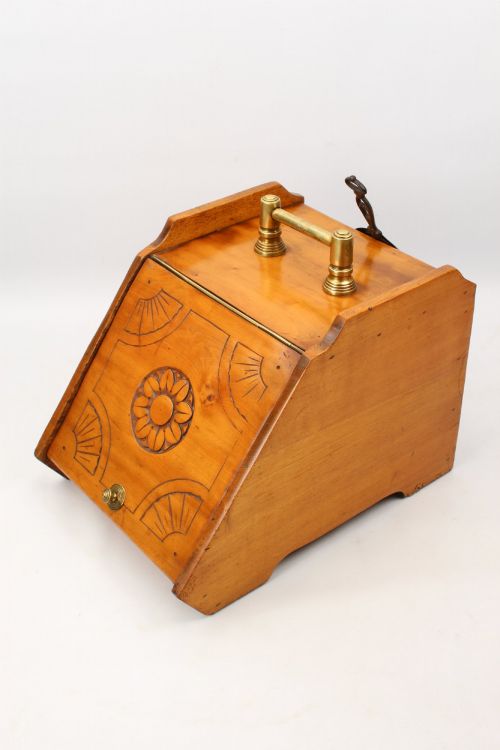
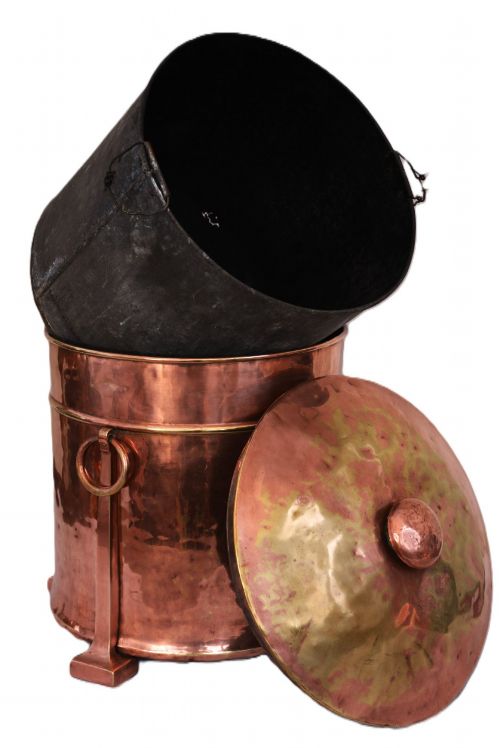
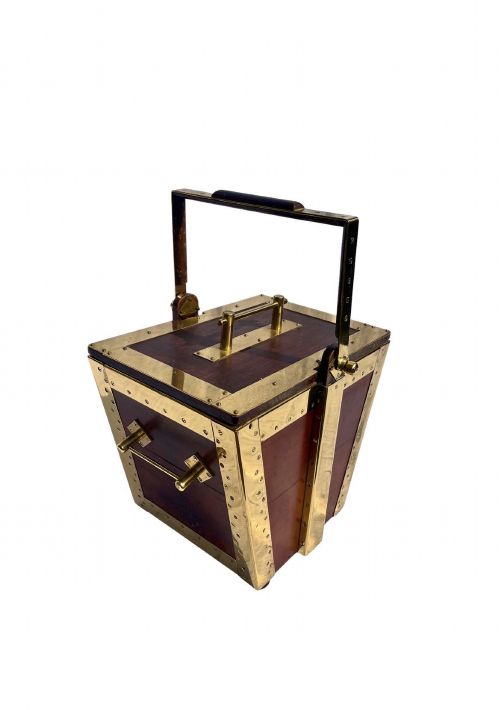
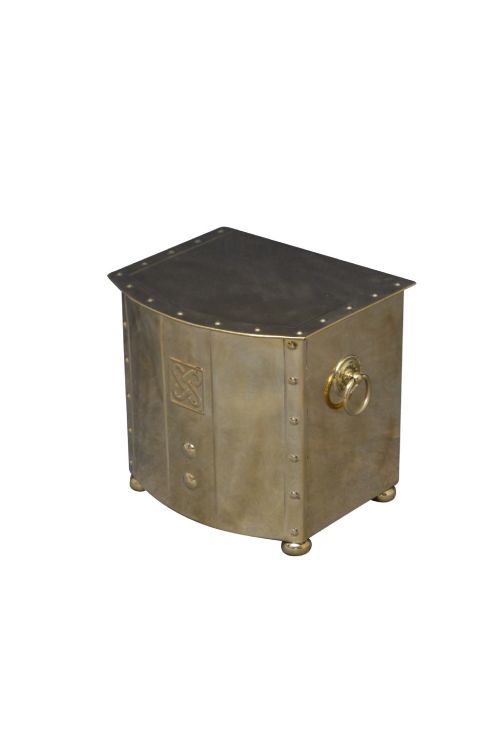
The most common forms on this page include wooden purdoniums with internal metal liners, copper coal helmets, and brass or copper bins. Makers utilised durable timbers like oak and mahogany alongside resilient metals to withstand daily domestic use.
Materials and Construction
Woodwork utilises mahogany, oak, walnut, and rosewood, often enhanced with marquetry inlay or carved decoration. Metal components combine brass and copper with iron frames, handles, and matching shovels.
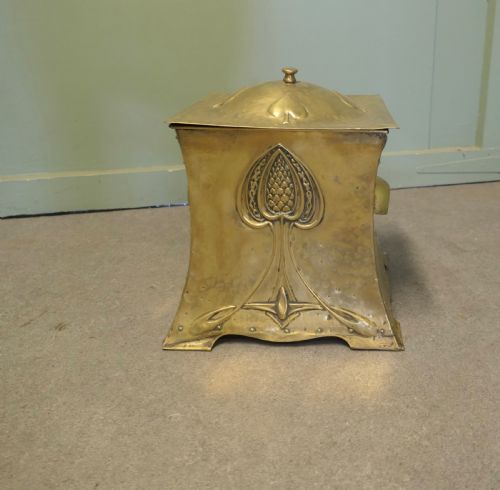
Artisan techniques range from the hammered panels characteristic of Arts and Crafts design to the flowing motifs of Art Nouveau. Many timber purdoniums incorporate drop-front compartments or shovel holders to streamline fuel retrieval.
Listings feature items dated from the nineteenth century through to the 1930s, incorporating styles like Arts and Crafts, Art Nouveau, and Rococo Revival.
Craftsmanship and Proportion
Quality separates standard utility items from finer parlour furnishings through the choice of timber and decorative detail. Rosewood and mahogany cabinets featuring intricate marquetry sit at the upper end of the scale.
Hardware integrity also distinguishes better examples, where heavy brass mountings, robust iron frames, and original matching shovels remain intact. Heavier gauges of copper and well-fitted internal liners indicate superior construction.
The Edwardian Fireside Coal Storage Glossary
- Purdonium
- A specialised coal cabinet or box, typically featuring a sloping drop-front and a removable metal liner for carrying fuel. These enclosed containers kept coal dust contained within a tidy wooden housing.
- Coal Scuttle
- A bucket-shaped container with a swinging handle, designed for transporting coal from an external scuttle to the fireplace. Many take a helmet shape with a wide lip for pouring.
- Marquetry
- The art of applying decorative pieces of wood veneer to a structure to form intricate patterns. This technique frequently appears on Victorian and Edwardian rosewood and mahogany boxes.
- Arts and Crafts
- A design movement emphasising handcraftsmanship, simple forms, and honest materials. Copper panels with repoussé decoration often define pieces from this aesthetic.
Edwardian Fireside Coal Storage: Frequently Asked Questions
What is a purdonium?
A purdonium is an enclosed wooden coal box, usually containing a removable metal liner and a matching shovel.
These cabinets were designed to sit discreetly in the room while containing coal dust and debris.
How do I use a coal scuttle?
A coal scuttle holds fuel beside the hearth and uses a handle for carrying coal from storage.
Open-topped buckets and helmet scuttles allow you to scoop or pour fuel directly onto the fire.
What materials were used?
Constructed pieces combine metals like brass, copper, and iron with timbers such as oak, mahogany, walnut, and rosewood.
Many incorporate internal metal bins to protect the surrounding wood from moisture and dirt.
How do I date these pieces?
Dating relies on stylistic clues, connecting heavy rosewood marquetry to the Victorian era and cleaner oak or copper designs to the Edwardian period.
Art Nouveau and Arts and Crafts motifs also provide clear indicators of late nineteenth and early twentieth-century manufacture.