
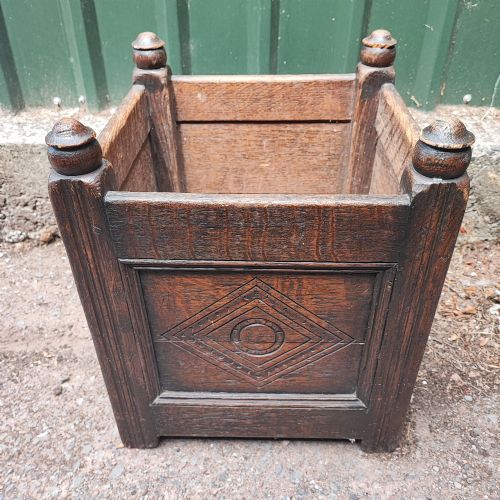


Fireplace Oak Coal Storage
Fireplace oak coal storage boxes and bunkers keep your hearth tidy while adding period character to a room.
Fireplace Oak Coal Storage
Fireplace oak coal storage items span several distinct functional forms, including purdoniums, scuttles, bins, and boxes designed to hold solid fuel near a hearth. These vessels range from rustic country log boxes to formal Edwardian designs and coopered barrels.
The Victorian and Edwardian periods supply the majority of examples seen here, often featuring substantial oak bodies fitted with metal linings. Shoppers most frequently encounter purdoniums with fall fronts or traditional scuttles equipped with swing handles.
Earlier Georgian and 18th-century pieces appear alongside later interpretations, showing how domestic fireside storage evolved from utilitarian bins into decorative interior furnishings.
How they were made
Makers utilised solid oak, sometimes figured as pollard oak, constructed using traditional joinery and coopered staves bound together to form sturdy barrels and buckets. These wooden structures were frequently reinforced with brass hinges, drop handles, and metal linings to withstand daily use near open fires.
Iron and copper components appear alongside brass fittings, providing durability for operational parts such as shovel compartments and drop handles. Carved details and decorative metal accents distinguish the more elaborate Victorian and Edwardian examples from plain country storage boxes.
A Scottish peat bucket brings an aroma of old hearths straight into your modern living room.
What varies in quality
The distinction between standard utility items and finer examples lies in the selection of timber and the execution of metalwork. Figured pollard oak and crisp carving elevate a piece beyond simple utilitarian storage.
Hardware quality dictates longevity and refinement, with heavy cast brass handles, intact metal liners, and original matching shovels marking superior execution. The integrity of coopered staves and tight joinery also separates workshop-produced items from simpler domestic makes.
The Fireplace Oak Coal Storage Glossary
- Purdonium
- A specialised cabinet or box designed for storing coal by the fireside, typically featuring a sloping front or drop-down door to access the fuel. These often include a removable metal liner and a dedicated slot for a coal shovel.
- Coopered
- Made by a cooper using curved wooden staves bound together with metal or wood hoops, similar to barrel construction. This technique appears frequently in round log buckets and peat bins.
- Scuttle
- A vessel used for carrying and storing coal, usually fitted with a raised swing handle at the top and a smaller handle at the back for tipping. They share a lineage with traditional water carriers.
- Pollard oak
- Oak timber taken from a tree that has been pollarded, resulting in a dense, highly figured grain pattern with clustered knots. Cabinet makers prized this wood for decorative fronts.
- Log bunker
- A larger container, often dating to the Georgian or Victorian eras, built to hold substantial quantities of firewood rather than smaller quantities of coal.
Fireplace Oak Coal Storage: Frequently Asked Questions
What is a coal purdonium?
A coal purdonium is an enclosed wooden box designed to hold household coal next to a fireplace. They usually feature a sloping front panel that opens forward to reveal a metal-lined interior.
Many examples include a matching shovel stored in a compartment at the side or back. This design kept coal dust contained and concealed the fuel away from the main room.
How do I distinguish a log box from a coal box?
Log boxes are generally open-topped containers meant for stacking dry firewood pieces within easy reach of the hearth. They often utilise rustic country construction or coopered stave designs.
Coal boxes and purdoniums, by contrast, are fully enclosed with lids or doors and contain metal liners to handle loose fuel and coal dust. The presence of a metal lining usually indicates suitability for coal rather than large logs.
What period do most oak coal boxes come from?
The majority of antique oak fireside storage pieces date from the Victorian and Edwardian eras. Industrial manufacturing during the late nineteenth century increased the production of domestic fireside accessories.
Earlier examples from the eighteenth century, such as Georgian oak bunkers, exist but appear less frequently. Edwardian pieces often display lighter oak tones and refined brass ornamentation compared to heavier Victorian styles.
Can I use these vintage coal boxes for modern fires?
These pieces function well beside modern hearths for storing logs, kindling, or bagged coal. The original metal liners inside Victorian and Edwardian boxes help protect the historic wood from moisture and debris.
Careful cleaning of the interior ensures the antique timber remains undamaged during daily use. Many buyers utilise them purely as decorative objects or for holding magazines and blankets.