
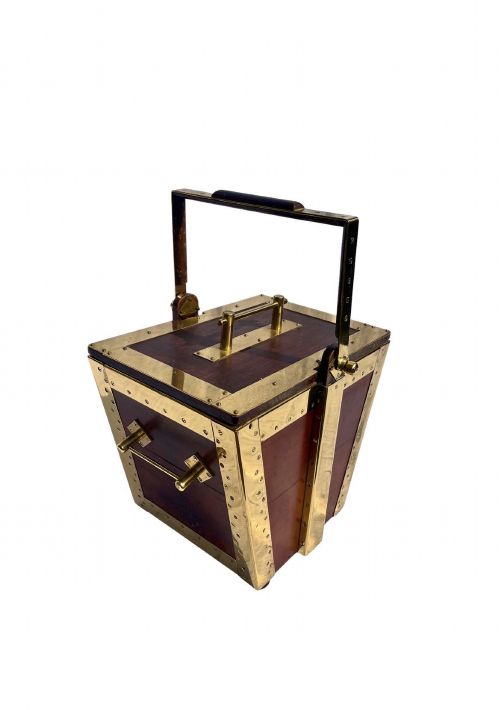


Wooden Coal Container
A wooden coal container keeps your hearth tidy and brings solid nineteenth-century utility straight into the living room.

Wooden Coal Container
A wooden coal container is a practical fireside receptacle designed to hold fuel close to the grate. The most common versions met here date from the Victorian and Edwardian eras, constructed in robust timbers like oak, walnut, and mahogany.
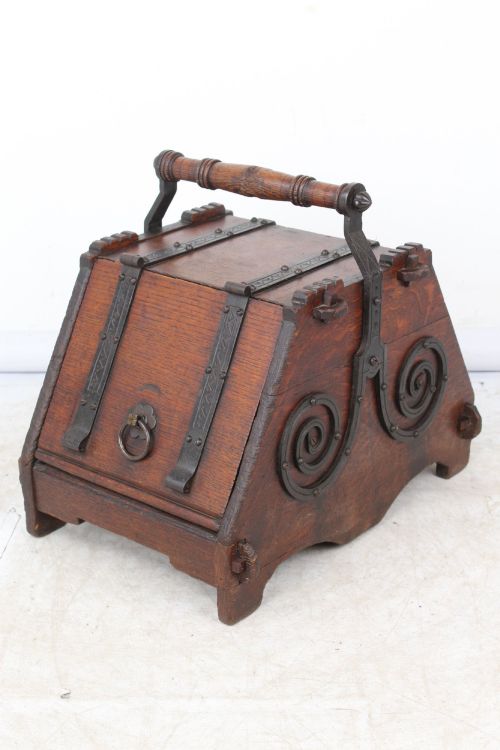
These pieces take various forms, from traditional coal boxes and purdoniums with drop-down fronts to coopered fire buckets and hods. Many retain original metal liners and shovels, showing how domestic hearths were serviced in the nineteenth and early twentieth centuries.
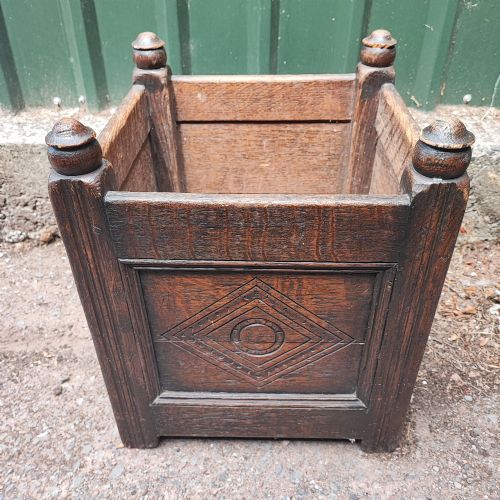
Originating largely in English workshops, these containers range from rustic country log boxes to Gothic Revival designs and brass-banded Georgian buckets. Each style reflects the interior taste of its period, blending heavy utility with domestic display.
Materials and construction methods
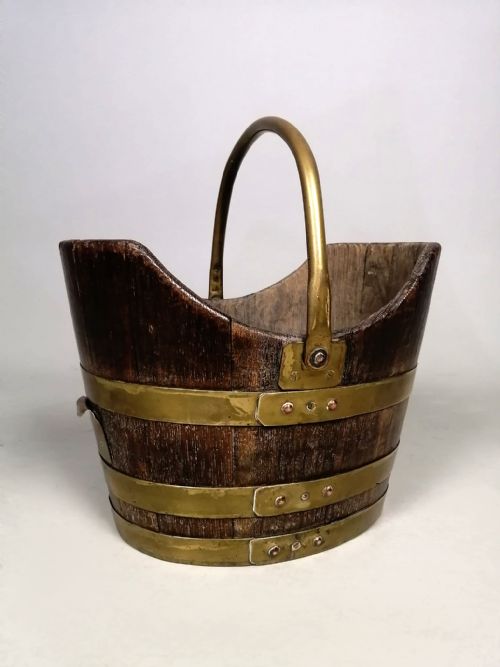
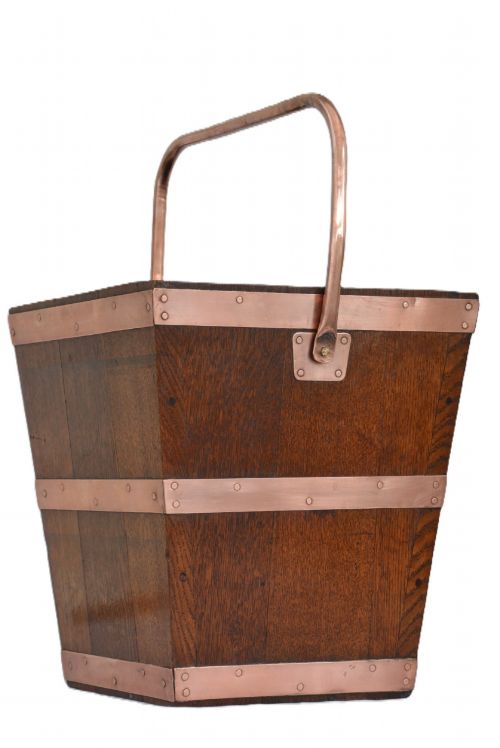
Makers utilised dense hardwoods such as oak, walnut, and mahogany, often pairing them with structural brass bands, copper liners, and wrought iron handles. Coopered construction appears in cylindrical fire buckets, where narrow wooden staves are bound tightly with metal hoops.
Cabinetmakers applied carving, inlay, and metal mounts to elevate simple storage bins into refined domestic furniture. Removable metal liners protected the surrounding wood from moisture and coal dust during daily fireside use.
Listings for wooden coal containers span from the eighteenth century through the Edwardian period, featuring oak, walnut, and mahogany.
Assessing quality and craftsmanship
Quality rests in the integrity of the timber selection and the durability of the metal hardware. Solid oak and figured walnut structures with tight joinery and original brass fittings stand apart from simpler utilitarian boxes.
The Wooden Coal Container Glossary
- Purdonium
- A specialised coal box featuring a sloping drop-down front door designed for easy shovelling. This Edwardian form often conceals an interior metal liner.
- Coopered
- A method of construction where curved wooden staves are joined side by side and bound with metal hoops. This technique is typical of fireside buckets and bins.
- Metamorphic
- Describing a piece of furniture that transforms or conceals its primary function through mechanical design. In coal containers, this involves pivoting or tipping compartments.
- Hod
- A deep receptacle traditionally used for carrying coal or peat to the hearth. These usually feature a strong handle for lifting and pouring.
Wooden Coal Container: Frequently Asked Questions
What is a purdonium?
A purdonium is a specific type of coal box with a slanted drop-down front designed to make accessing fuel straightforward.
They gained popularity during the late nineteenth and early twentieth centuries, often housing a removable metal liner and a matching shovel inside.
How do I clean a wooden coal container?
Maintenance involves dusting the exterior wood and occasionally nourishing the surface with a suitable wax to preserve the grain.
The interior metal liner should be emptied of debris and wiped clean with a dry cloth to prevent moisture damage.
Did these containers always include shovels?
Many Edwardian and Victorian coal boxes and scuttles were supplied with dedicated metal shovels stored in built-in side racks or interior compartments.
Surviving examples that retain their original shovel and liner are particularly complete.
What is a coopered fire bucket?
A coopered fire bucket is constructed from vertical wooden staves fitted tightly together and secured with exterior metal bands.
Originally built for maritime or domestic safety, these sturdy oak and brass containers double effectively as robust log bins.