

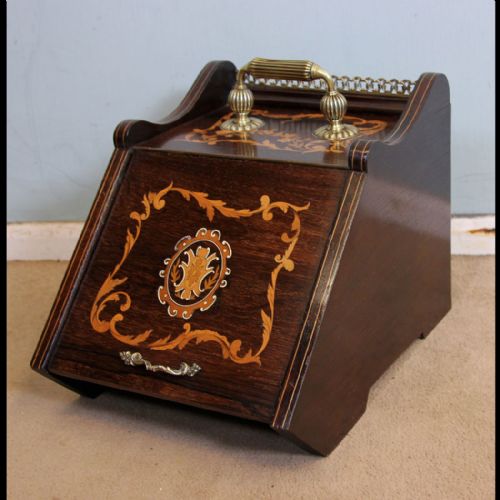
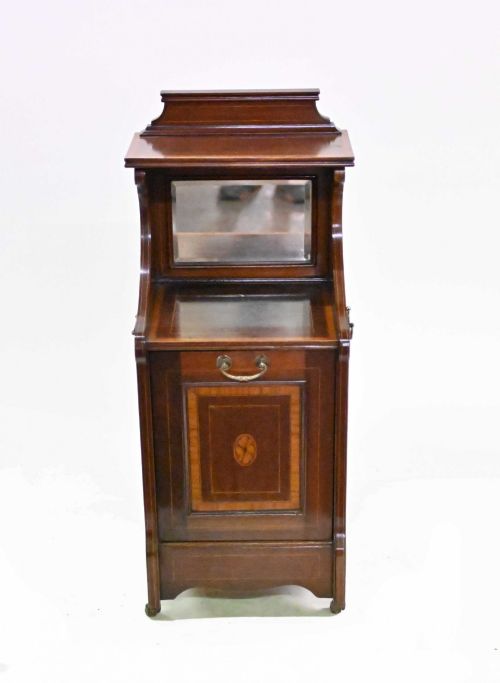


Inlaid Coal Box
An inlaid coal box brings domestic hearth utility into the reception room with polished cabinetmaking and botanical motifs.
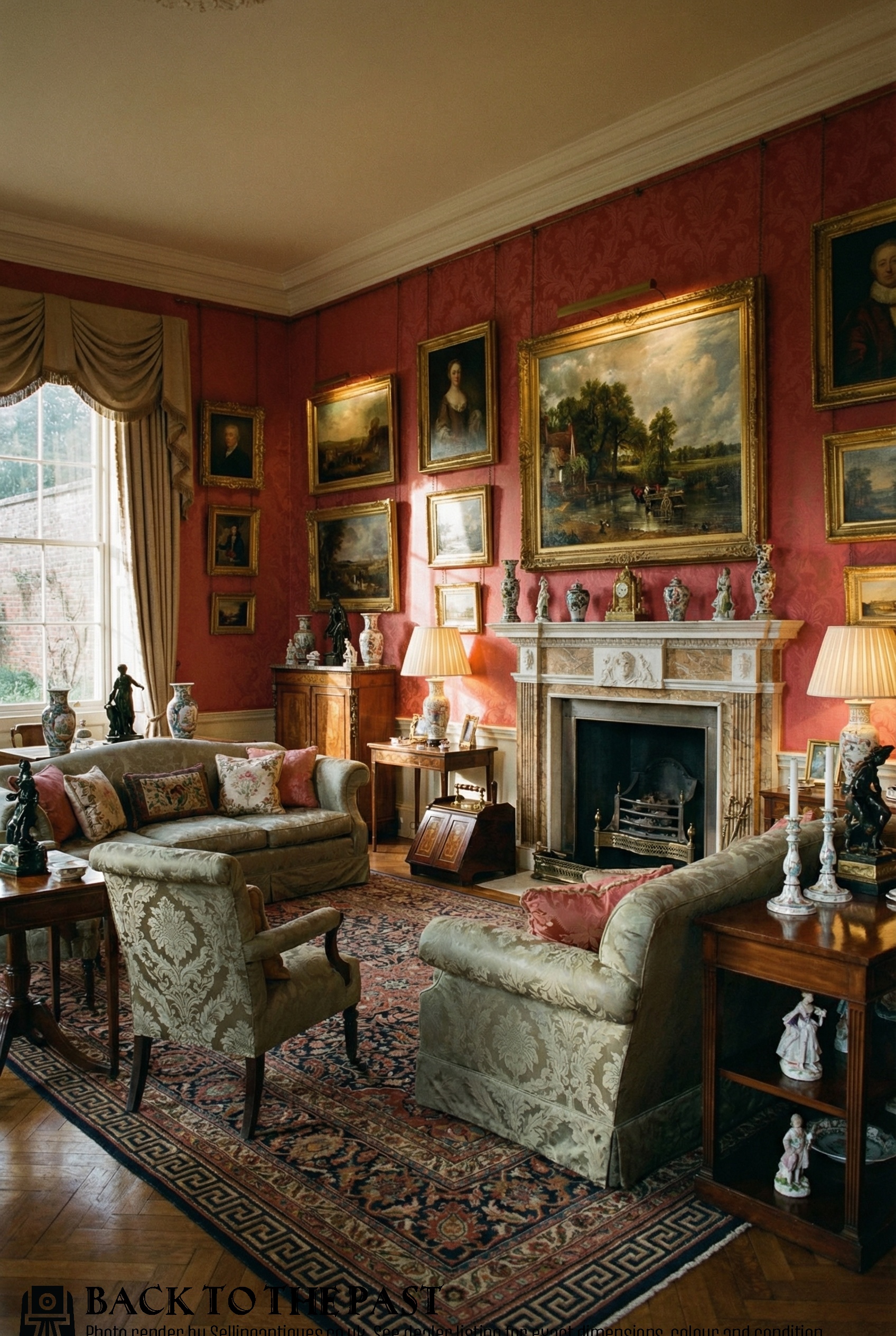
Inlaid Coal Box
An inlaid coal box is a fireside accessory designed to store fuel near the hearth while concealing it inside a decorative timber cabinet, purdonium, or scuttle. These pieces combine practical storage with the aesthetic standards of Victorian and Edwardian domestic interiors.
Buyers browsing this selection will most frequently encounter rosewood and mahogany cabinets from the late nineteenth century and the Edwardian period, often detailed with marquetry or boxwood inlay. Forms range from freestanding coal boxes and cabinets to metamorphic scuttles and purdoniums.
The objects span Victorian, Edwardian, and Art Nouveau styles, sometimes reflecting the design influence of Liberty in their decorative restraint and material finish. They transform a mundane household task into an occasion for refined interior decoration.
How they were made
Joiners constructed the main bodies of these pieces from dense tropical hardwoods like rosewood and mahogany, which provided stable foundations for cabinetwork and polish. Metal liners, often fashioned from brass or black metal, protected the surrounding timber from moisture and coal dust.
Craftsmen enriched the exterior surfaces using marquetry and boxwood inlay to create contrasting geometric or floral patterns. Mother of pearl detail and lacquer further embellished select Victorian and Edwardian examples, adding texture and reflective contrast to the dark wood.
Metamorphic actions and fall-front doors relied on functional metal hinges and handles that operated smoothly within the enclosed cabinet structure. These mechanical elements allowed the fuel container to tilt or open forward while maintaining the clean lines of a fine piece of furniture.
Inlaid Coal Box Retail Price Guide 2026
Typical asking prices for inlaid coal box among the pieces listed under this phrase on Sellingantiques today, from the lower quarter to the upper quarter. They describe what is for sale here now, not the wider market.
Listings feature pieces spanning the Victorian and Edwardian periods, constructed primarily from rosewood and mahogany with boxwood inlay.
What varies in quality
The standard of the timber selection largely determines the baseline quality of an inlaid coal box, with richly figured rosewood and dense mahogany commanding greater appreciation than plainer secondary woods. The crispness and complexity of the marquetry and boxwood inlay further separate standard production items from finer workshop pieces.
Hardware execution plays a significant role in overall merit, evident in the weight of the brass fittings and the smooth operation of metamorphic scuttle mechanisms. Finer examples retain their original internal metal liners and decorative detailing without excessive replacement or repair.
Cohesion of style distinguishes exceptional items, whether reflecting the florid ornamentation of the Victorian period or the cleaner lines of Edwardian and Art Nouveau design. The harmony between the timber ground and the inlaid elements governs the visual impact of the piece beside the hearth.
The Inlaid Coal Box Glossary
- Purdonium
- A type of coal cabinet featuring a sloping front door and an internal metal scoop or liner. This form gained popularity during the late nineteenth century as a tidy alternative to the open coal bucket.
- Marquetry inlay
- The technique of fitting small pieces of veneer into a prepared wooden ground to form pictorial or decorative patterns. It frequently employs contrasting timbers to create depth and shade.
- Metamorphic
- Describing furniture designed to transform its function or shape through pivoting or sliding mechanisms. In coal boxes, this allows the container to tilt forward for easy access while concealing the fuel when closed.
- Boxwood inlay
- The use of pale boxwood threads or geometric stringing inserted into darker woods like mahogany or rosewood. This provides sharp linear contrast around panel borders and lid edges.
- Mother of pearl detail
- Small polished shell sections embedded into the wooden surface to reflect light and add iridescent highlights. It is particularly characteristic of decorative black metal and rosewood Victorian items.
Inlaid Coal Box: Frequently Asked Questions
What is a purdonium coal box?
A purdonium is a specialised fireside cabinet designed with a sloping front and an internal metal liner to hold coal discreetly.
These pieces allowed households to keep fuel in the living room without exposing the dust and mess associated with coal scuttles.
How do you use an antique coal cabinet?
Antique coal cabinets house a removable metal container that holds the fuel behind a hinged or tilting door.
To use one, lift or tip the front panel to access the interior liner, keeping the coal contained and out of sight when not tending the fire.
How do I date an inlaid coal box?
Dating relies on identifying the prevailing timber choices, hardware styles, and decorative motifs associated with specific periods like the Victorian or Edwardian eras.
Rosewood with mother of pearl typically points to the nineteenth century, while lighter mahogany inlays often indicate Edwardian manufacture.
Where were coal boxes placed in a room?
Coal boxes were positioned directly beside the fireplace or hearth for convenient access when stoking the fire.
Because they were finished as fine furniture, they sat alongside other reception room furnishings rather than being hidden away.
What is the difference between a scuttle and a cabinet?
A coal scuttle is traditionally an open bucket form with a swinging handle, whereas a cabinet is a stationary piece of furniture with a door.
Inlaid versions often blur this distinction by incorporating enclosed cabinet structures with metamorphic tilting mechanisms.