
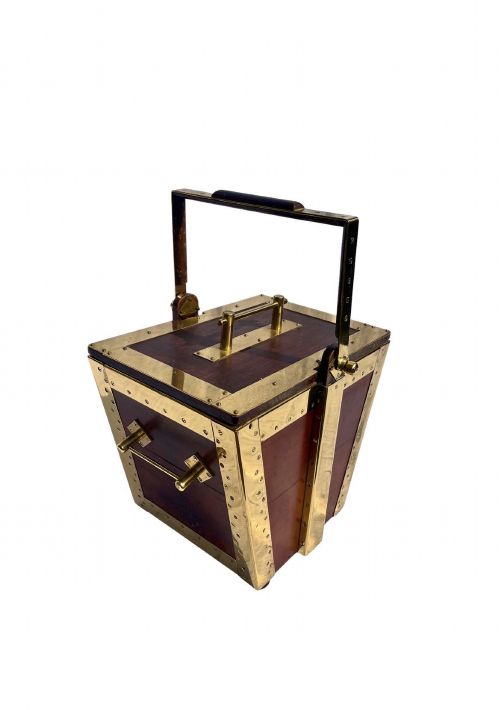


Wooden Coal Scuttle Bin
A wooden coal scuttle bin is a functional hearthside container designed to store fuel, combining sturdy domestic utility with period decorative character.
Wooden Coal Scuttle Bin
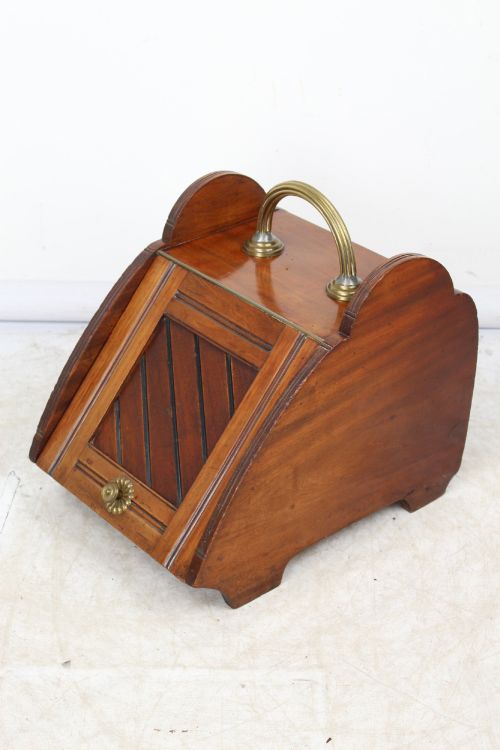
A wooden coal scuttle bin serves as a fireside receptacle for solid fuel, appearing in various forms such as purdoniums, boxes, buckets, and hods. These pieces bridge the gap between heavy utility and decorative interior furnishing, designed to sit beside the hearth.
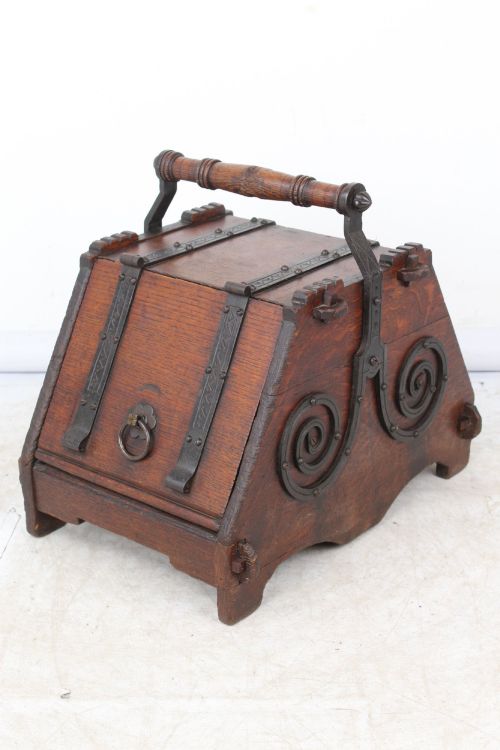
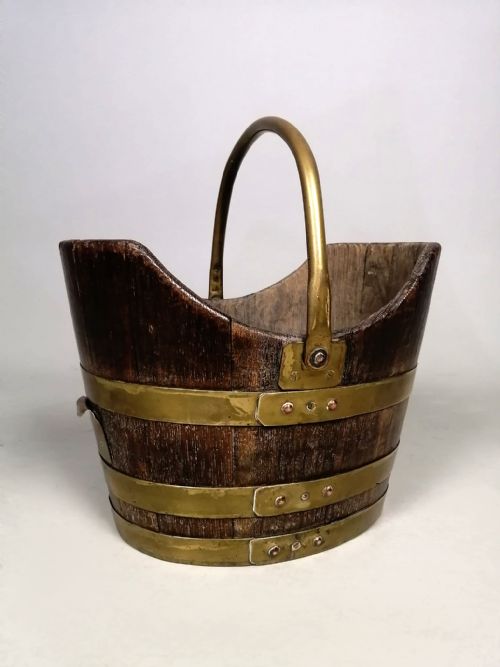
The selection ranges widely across eras, dominated by Victorian and Edwardian examples alongside occasional 18th Century and 19th Century pieces. Forms span from sloping scuttles and hinged coal boxes to coopered buckets and triangular fireside stores.
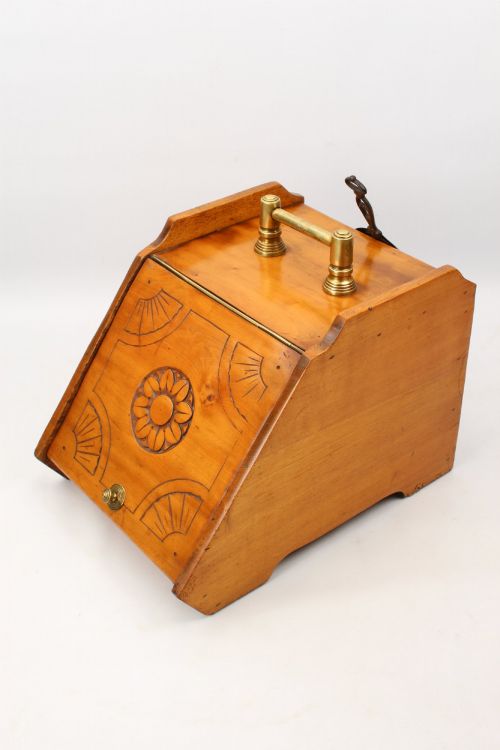
Makers adapted these containers to suit shifting interior tastes, incorporating decorative elements like carved panels, marquetry inlay, and ormolu mounts. Despite their decorative appearance, the internal functionality remains central, usually involving a metal liner to hold the fuel.
Materials and construction methods
Cabinetmakers utilised robust hardwoods including oak, mahogany, walnut, and rosewood, frequently employing cooperage techniques for bucket forms or panel construction for box shapes. Pollard oak and marquetry inlay appear on more decorative examples, while brass, iron, and ormolu provide structural reinforcement and decorative handles.
Metal liners feature prominently inside the wooden bodies to protect the timber from moisture and coal dust, often accompanied by matching shovels or scoops. The assembly relies on dovetail joints, secure metal fixings, and hinged lids designed to withstand daily domestic handling.
Listings feature woods such as oak, mahogany, walnut, rosewood, and pollard oak, paired with brass and iron hardware.
Assessing craftsmanship and finish
Quality rests primarily in the selection of timber and the precision of cabinetmaking, where figured grain, rich mahogany, or intricate marquetry inlay distinguish finer work from plain utility items. Superior examples display careful carving, sturdy dovetail construction, and well-fitted metal liners that endure regular use.
The integration of brass mounts, handles, and ormolu highlights the distinction between standard domestic containers and higher-status fireside accessories. Original shovels and well-preserved internal components further elevate the integrity of the piece.
Christopher Dresser
The Wooden Coal Scuttle Bin Glossary
- Purdonium
- A specific type of coal box featuring a sloping front door that drops forward to reveal the internal metal liner for easy fuel extraction.
- Coopered
- Built using wooden staves bound together with metal hoops, a traditional technique commonly utilised for cylindrical buckets and bins.
- Ormolu
- Gilded bronze or brass mounts applied to furniture and decorative items for ornamentation, seen on select refined coal bins.
- Hod
- A deep receptacle with a handle, traditionally used for carrying materials and adapted into fireside containers for solid fuel.
Wooden Coal Scuttle Bin: Frequently Asked Questions
What is a wooden coal scuttle bin used for?
These containers were originally built to hold coal, logs, or peat beside an open fireplace for domestic heating. The enclosed design kept fuel tidy and contained dust within the hearth area.
Today, they function well as decorative storage bins for logs, kindling, or household items while retaining their historic character beside modern or period fireplaces.
How do I care for a wooden coal bin?
Keep the timber conditioned with suitable wax or polish to prevent the wood from drying out near heat sources. Ensure the internal metal liner is kept clean and dry to protect the surrounding wooden structure from moisture.
Avoid placing the container directly against hot fireplace surrounds to protect the finish and structural integrity of the antique timber.
Are all coal bins lined with metal?
Most traditional examples include a removable metal liner designed to safely hold abrasive fuel and catch residual dust. This protected the timber frame from scratches and moisture damage during daily use.
Some pieces retain their original fitted liners and matching scoops, which adds significantly to the historical completeness of the object.
How can I tell the period of a coal box?
Dating relies on stylistic clues such as Victorian Gothic revival details, Edwardian marquetry inlay, or Georgian brass banding. Construction methods, timber choices, and hardware also provide clear indicators of the era of manufacture.
Early examples often feature hand-coopered staves or heavy brass mounts, while later Victorian and Edwardian models frequently utilise drop-front purdonium mechanisms.