


Edwardian Filing Drawers
Edwardian filing drawers bring purposeful sorting into a room, combining solid timber construction with clever mechanics designed to keep papers in order.
Edwardian Filing Drawers
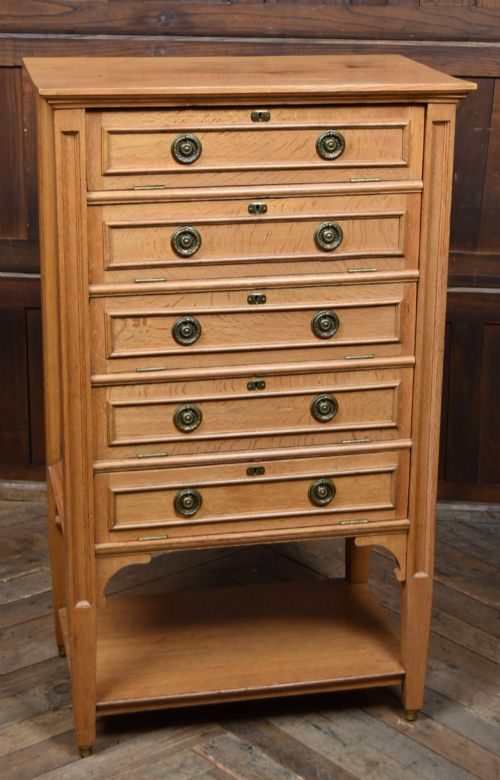
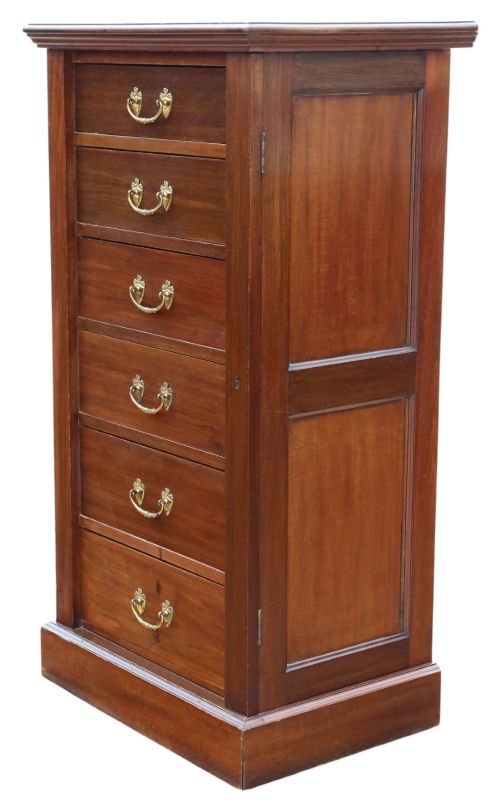
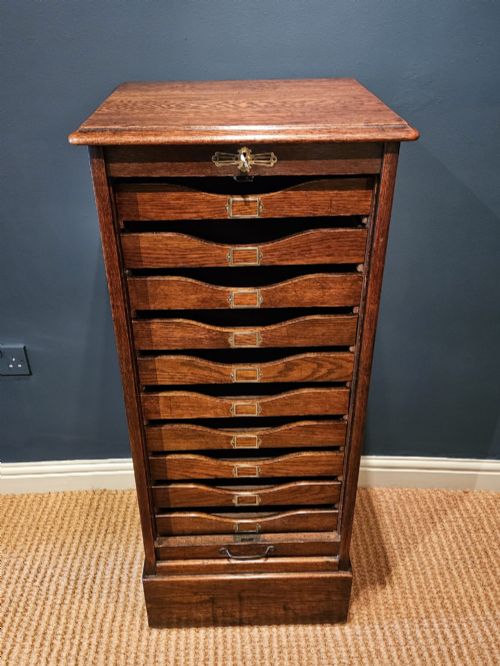
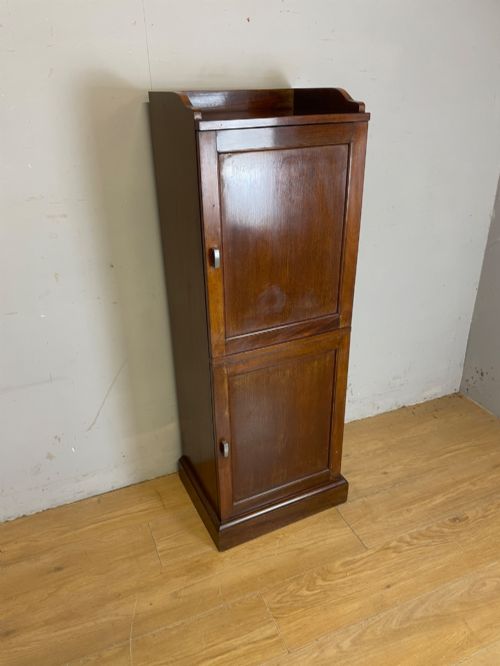
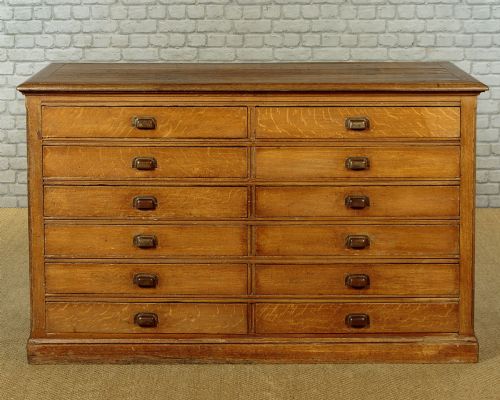
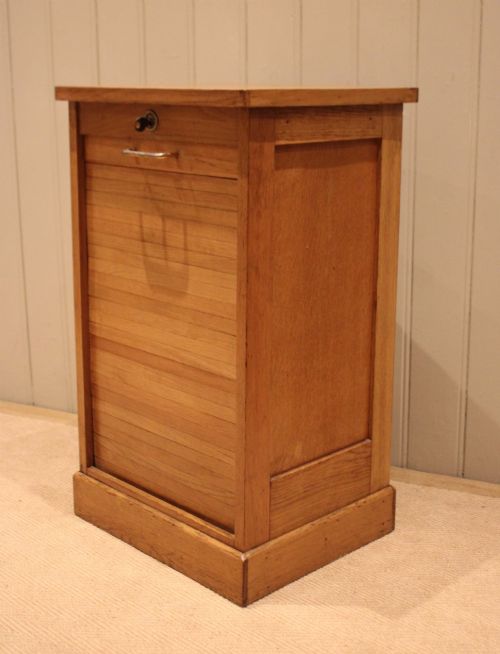
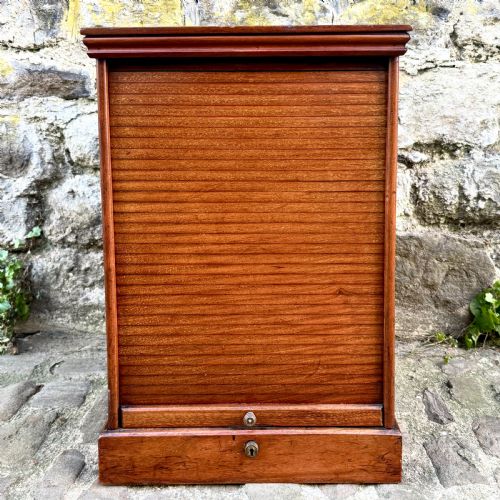
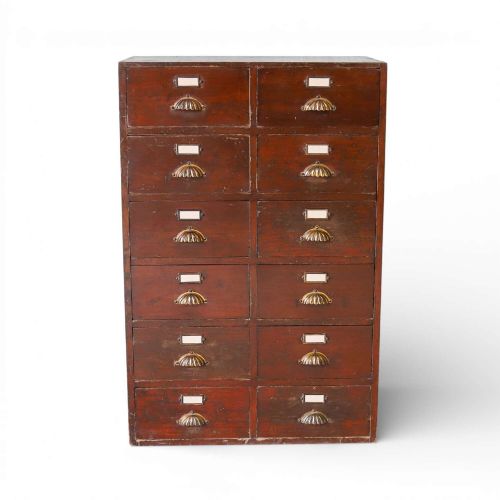
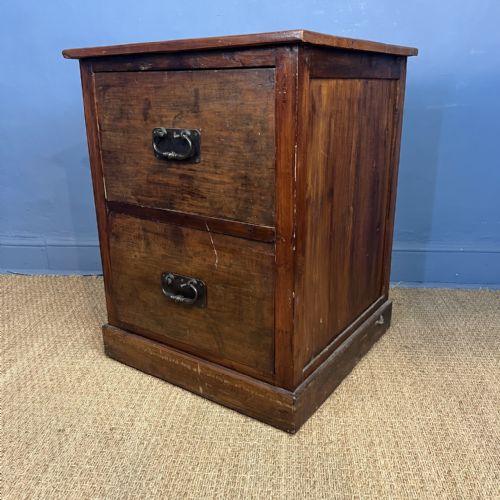
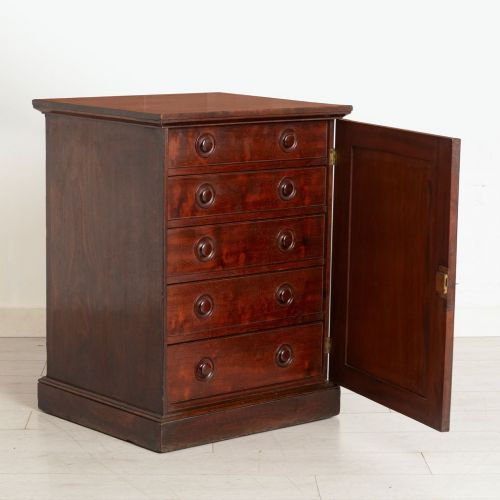
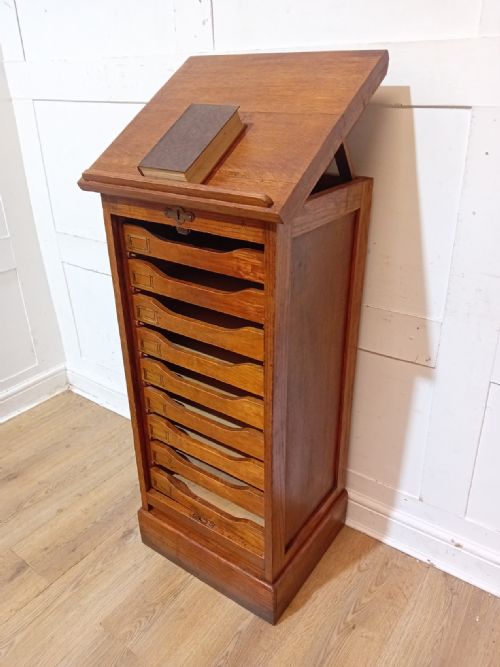
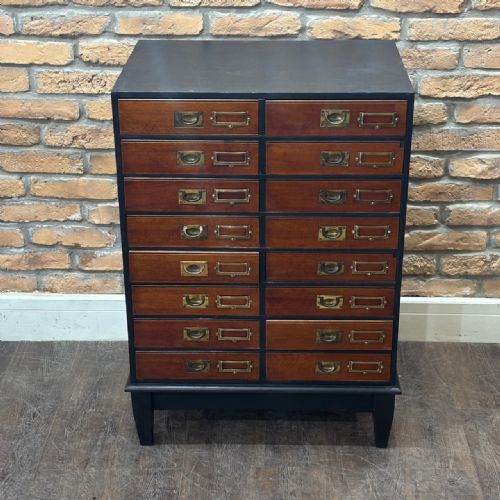
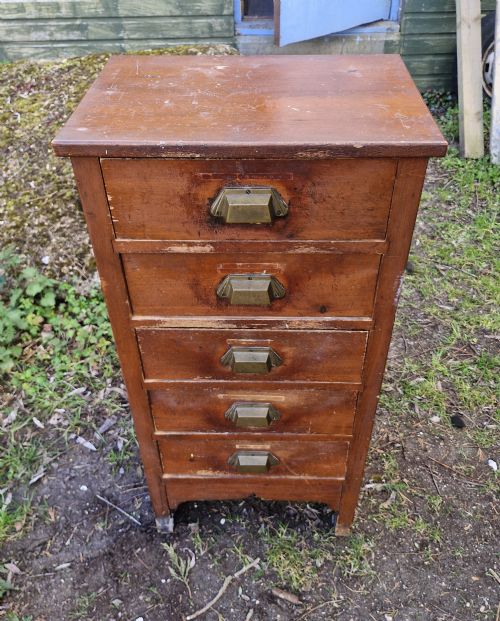
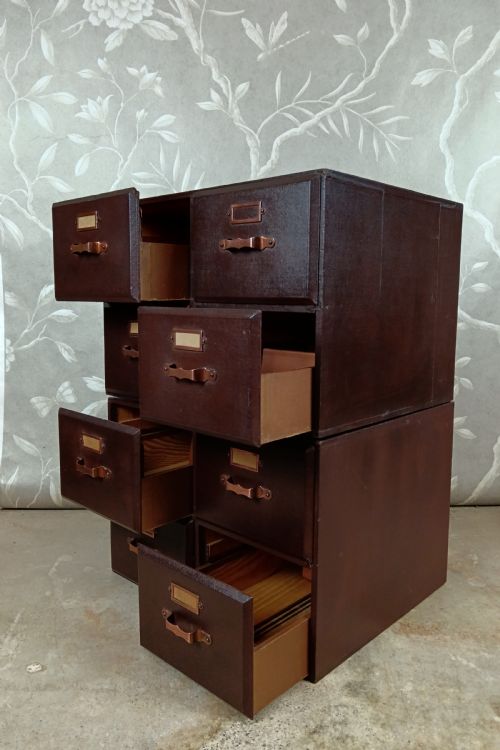
You are most likely to meet solid oak or mahogany versions featuring multiple pull-out compartments, sometimes enclosed by a flexible tambour shutter or fitted with brass label holders. These items adapt easily to modern rooms while retaining the functional aesthetic of a period office.
Materials and construction methods
Cabinetmakers utilised robust hardwoods such as oak, mahogany, and walnut, frequently pairing them with secondary pine linings and durable brass or steel hardware. Handles, label holders, and hinges were cast and fixed to withstand daily commercial use.
Joinery techniques focused on strength and smooth operation, seen in dovetailed drawer boxes and sliding tambour slats tracks. Timber selection prioritized stability, ensuring drawers glided correctly within their frames despite environmental changes.
Listings feature woods including oak, mahogany, walnut, teak, and pitch pine, alongside metal and steel hardware.
Distinctions in quality
Quality rests on the integrity of the mechanism and the completeness of original hardware. Examples retaining their matching brass shell pulls, functional tambour doors, and original panelled backs stand apart from altered pieces.
The refinement of the timber selection and joinery also dictates standard. Finely figured mahogany or quarter-sawn oak with tight grain patterns and precise dovetailing represent the upper tier of period office cabinetry.
Amberg·Shannon
The Edwardian Filing Drawers Glossary
- Tambour
- A flexible shutter door made of narrow wood strips glued to canvas, allowing it to slide smoothly around a curved track to conceal the drawers.
- Wellington chest
- A tall, narrow chest of drawers secured by a locking side pilaster that fastens over the drawer edges.
- Shell pull
- A stamped or cast brass handle shaped like a scallop shell, often incorporating a slot to hold an index label.
- Quarter-sawn oak
- Timber cut radially to the growth rings, producing a distinctive decorative figure known as medullary rays.
- Bank of drawers
- A multi-compartment cabinet housing numerous shallow drawers designed for sorting documents or collections.
Edwardian Filing Drawers: Frequently Asked Questions
What were edwardian filing drawers used for?
These cabinets served businesses, libraries, and studies for sorting correspondence, ledgers, and index cards in an era before standard modern filing systems.
Their modular compartments kept paperwork organised and accessible, a purpose that translates well to sorting stationery in a contemporary home office.
How do tambour doors work?
Tambour doors consist of thin wooden slats attached to a flexible canvas backing that runs along a grooved track inside the cabinet frame.
This mechanism allows the door to slide smoothly around a corner, hiding the drawers without requiring clearance space for swinging doors.
Are these cabinets suitable for modern paper sizes?
Many period filing cabinets and card indexes were built for specific historical paper dimensions, so internal drawer measurements vary significantly across different models.
Checking the specific internal width and depth of the compartments ensures that modern documents or folders will fit comfortably inside.
How do I care for the wood finish?
Maintenance involves applying quality beeswax occasionally to nourish the timber and protect the polished surface from drying out.
Keeping the cabinets away from direct heat sources and sudden humidity changes preserves the wood and keeps the drawer runners operating smoothly.