


Vintage Index Chest
A vintage index chest organises small papers, parts or specimens in multiple shallow drawers designed for professional or commercial use.
Vintage Index Chest
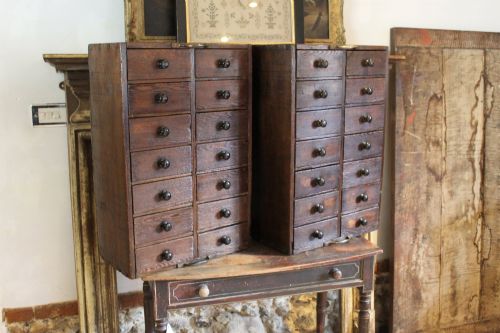
A vintage index chest provides compartmentalised storage through rows of shallow drawers designed for offices, shops and workshops. These pieces range from compact desktop units to towering banks containing dozens of small drawers.
The selections span the Victorian, Edwardian and early twentieth century periods, reflecting the administrative and industrial expansion of those eras. Oak, mahogany, pine and metal form the predominant structures found across these utilitarian pieces.
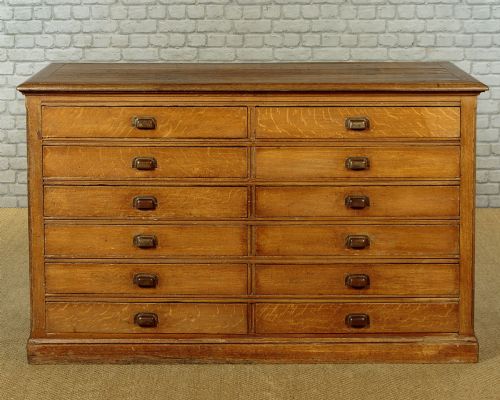
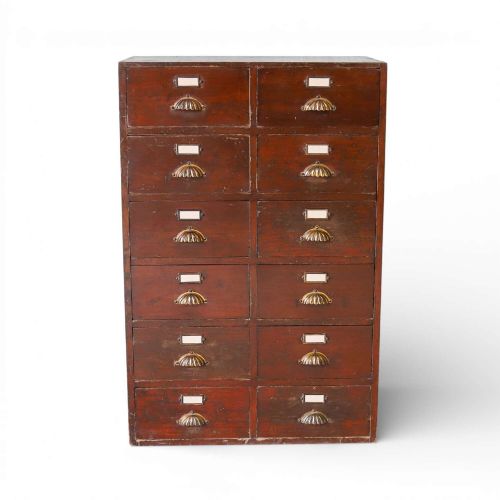
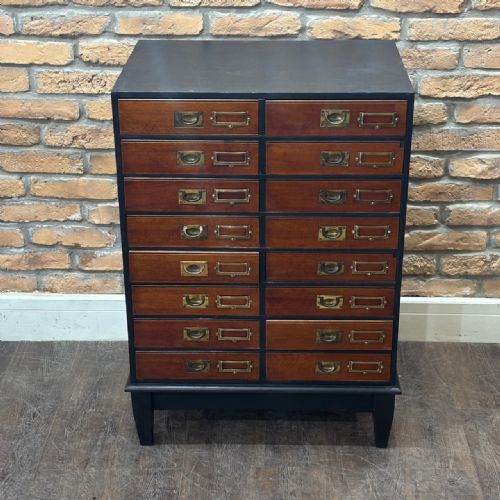
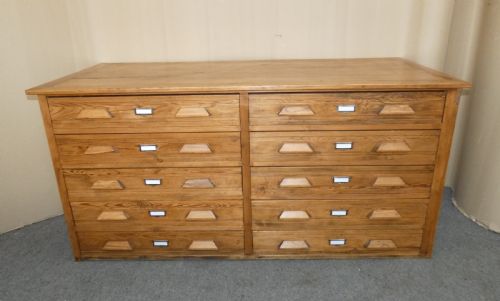
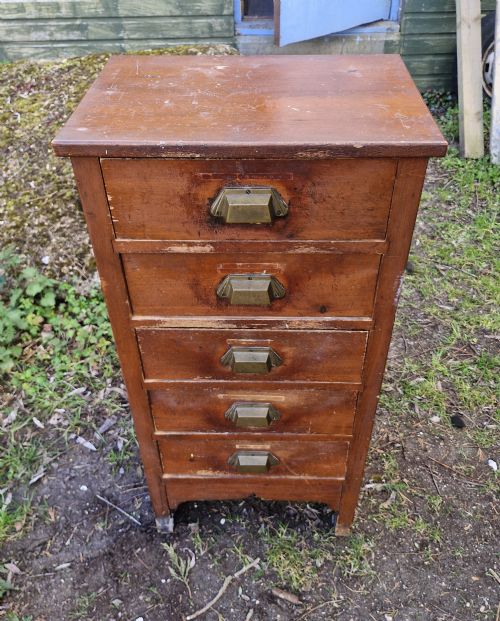
Forms include haberdashers cabinets, filing cabinets, jewellers chests and shop fittings created for specific trades. Many retain original brass label holders and shell pulls that indicate their commercial origins.
Materials and construction
Cabinet makers utilised durable hardwoods such as oak, walnut and mahogany alongside pine and painted metal for heavy commercial use. Drawer construction relied on sound joinery to withstand the daily friction of constant opening and closing.
Original hardware played an essential part in the fabrication, featuring cast brass label holders, drop handles and patent locking mechanisms. Timbers were selected for strength, often finished with polished surfaces or left in industrial painted states.
Listings feature pieces spanning from the nineteenth century through the 1960s, constructed in oak, pine, mahogany, walnut, steel and iron.
Factors of quality
Quality rests upon the integrity of the timber framing, the smoothness of drawer operation and the retention of original fittings. Pieces featuring intact brass label holders, maker stamps and matching hardware stand apart from altered examples.
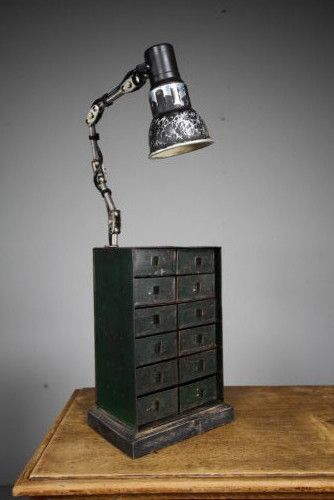
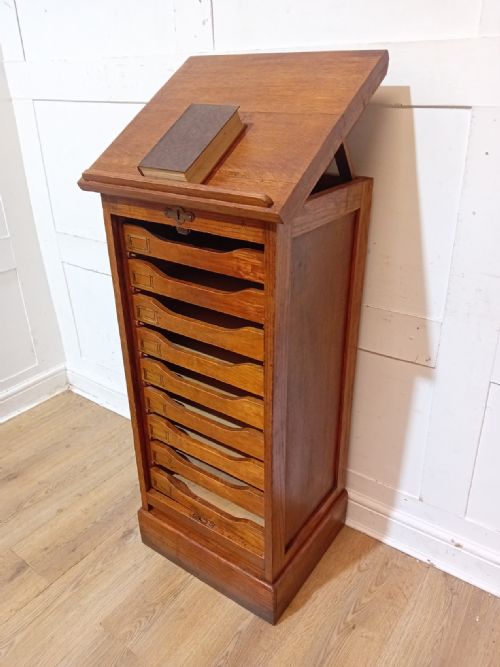
Substantial banks of drawers with panelled sides and tight joinery represent higher standards of period manufacture. The presence of specialist mechanisms, such as patent letter filing systems or original light fittings, elevates a piece.
D Napier & Sons·Brady·Amberg·Shannon
The Vintage Index Chest Glossary
- Label holder
- A small metal frame fixed to a drawer front to hold a paper card identifying the contents. These are frequently cast in brass and match the drawer pulls.
- Haberdashery cabinet
- A shop display unit featuring multiple glass-fronted or shallow wooden drawers used for ribbons, buttons and small textiles. They originate from Victorian and Edwardian retail spaces.
- Cartonniere
- A piece of furniture containing compartments or drawers for storing papers and documents. French examples often incorporate leather accents.
- Bank of drawers
- A large multi-drawer chest designed for commercial, workshop or office storage. They provide numerous small compartments rather than deep storage space.
- Shell pull
- A convex drawer handle shaped like a scallop shell that allows fingers to lift the drawer. These are typical of Edwardian and Victorian office furniture.
Vintage Index Chest: Frequently Asked Questions
What were index chests used for?
These chests served offices, shops and workshops for sorting paperwork, hardware, samples and retail goods. Businesses relied on them to keep large quantities of small items orderly and accessible.
Over time, many commercial storage units transitioned into domestic settings for collecting small objects, craft supplies and stationery.
How do I date a wooden cabinet?
Dating relies on observing construction details, timber types and hardware styles. Victorian and Edwardian pieces often display solid oak, mahogany or walnut with traditional dovetail joints.
Patents marked on metal fittings or stamp marks from makers like Amberg and Shannon provide specific chronological markers.
Are metal and wood cabinets different?
Metal cabinets stem from industrial and utilitarian contexts, often finished with painted surfaces suited for heavy factory or office environments. Wooden chests utilise oak, pine or mahogany to suit both commercial offices and retail shops.
Both materials prioritised function, but wood examples frequently incorporate decorative brass pulls and polished finishes.
How do I care for the wood?
Maintaining vintage timber involves keeping pieces away from direct heat sources and dramatic humidity shifts to prevent warping. Regular dusting with a dry cloth protects the polished surface.
Occasional application of appropriate wax preserves the grain without building up heavy residues on the old finish.