



Edwardian Coal Scuttle
An edwardian coal scuttle brings functional warmth and polished metal or carved timber to the hearth.
Edwardian Coal Scuttle
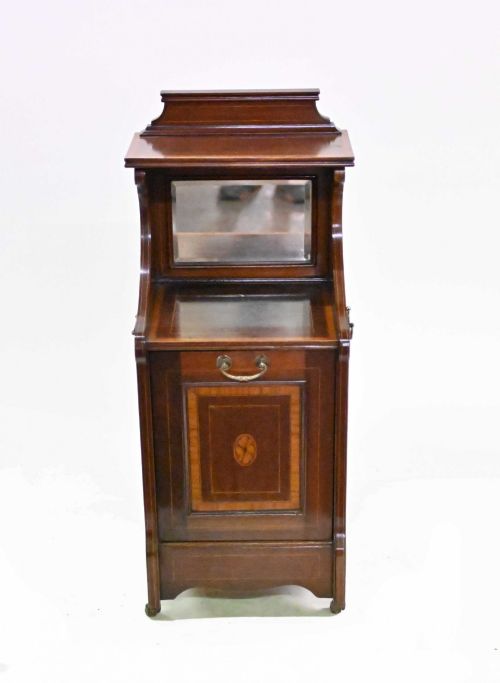
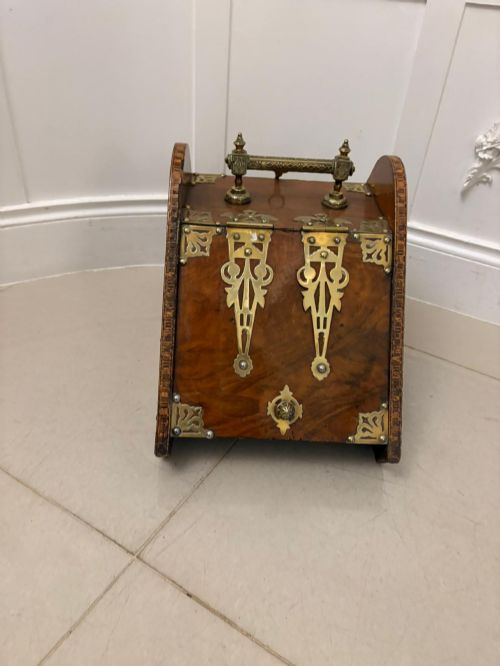
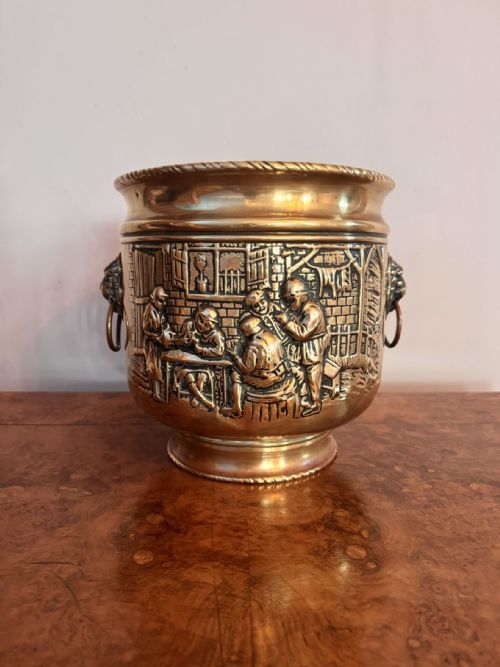
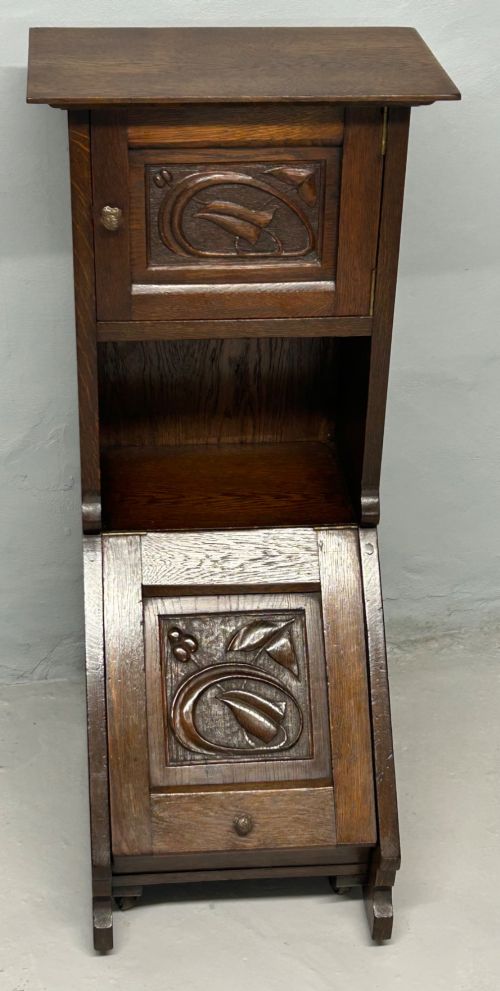
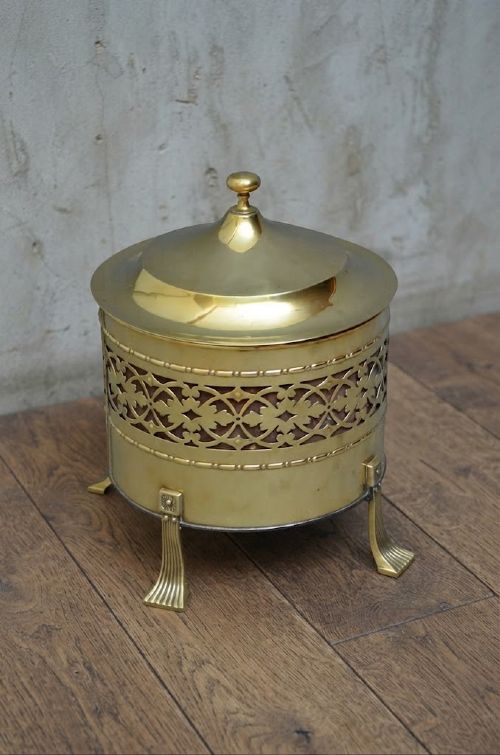
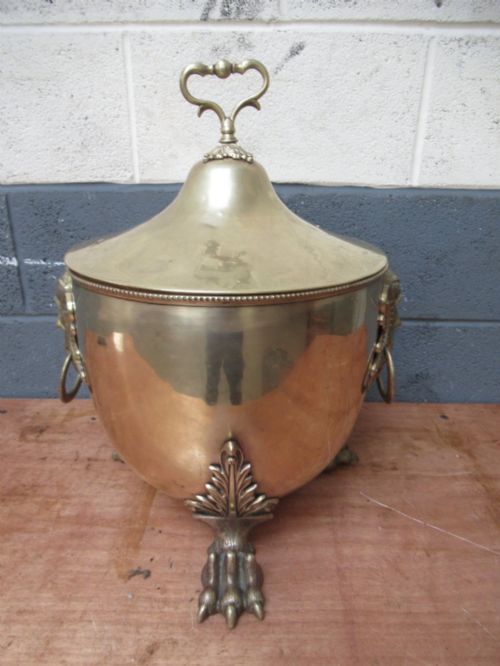
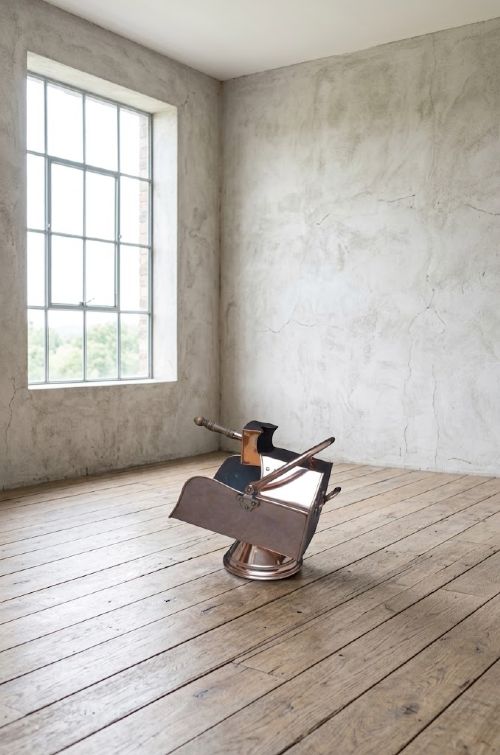
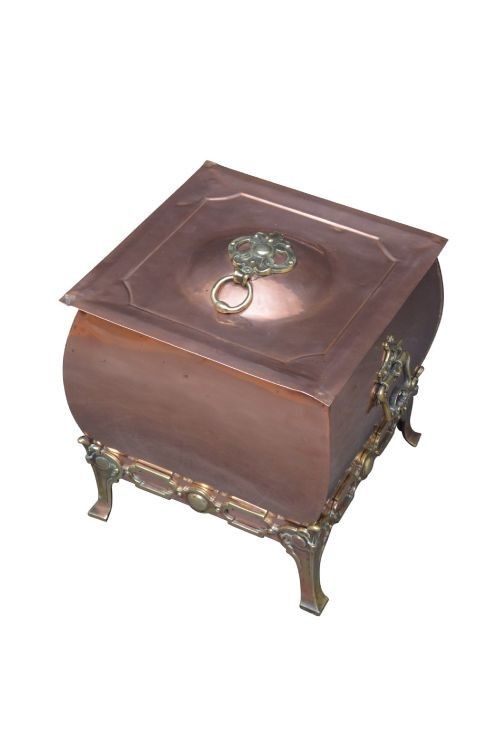
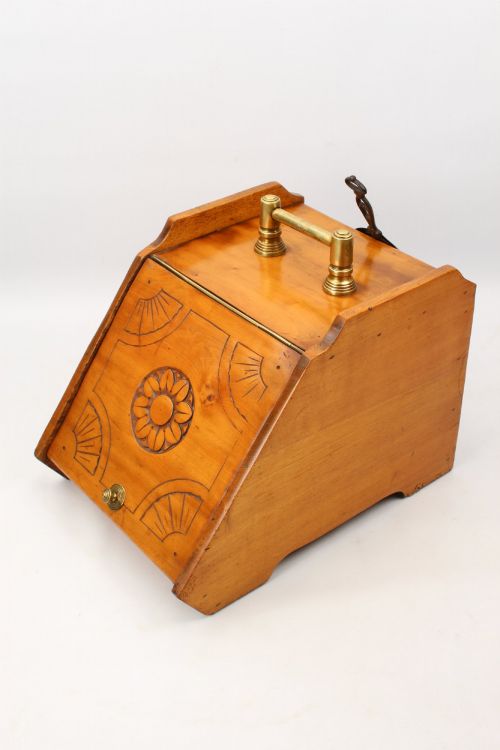
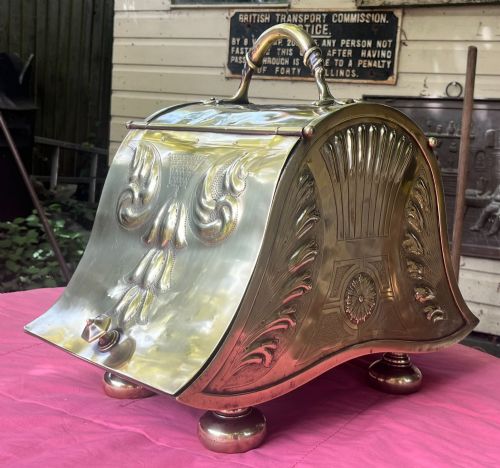
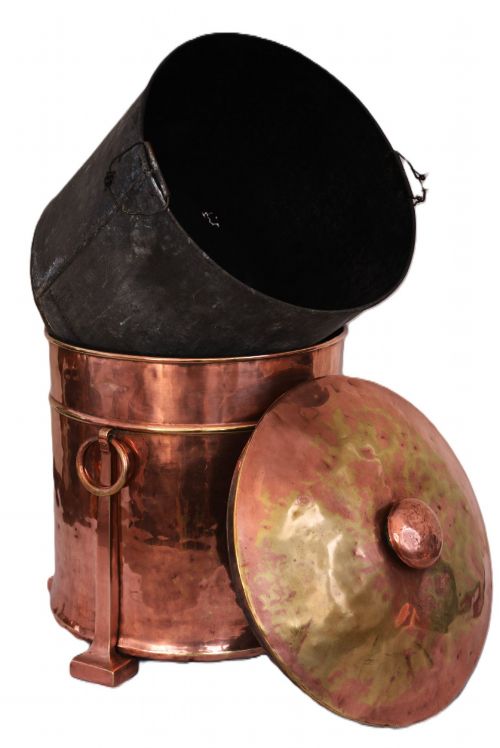
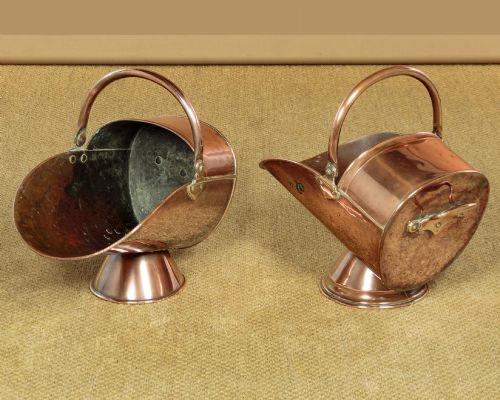
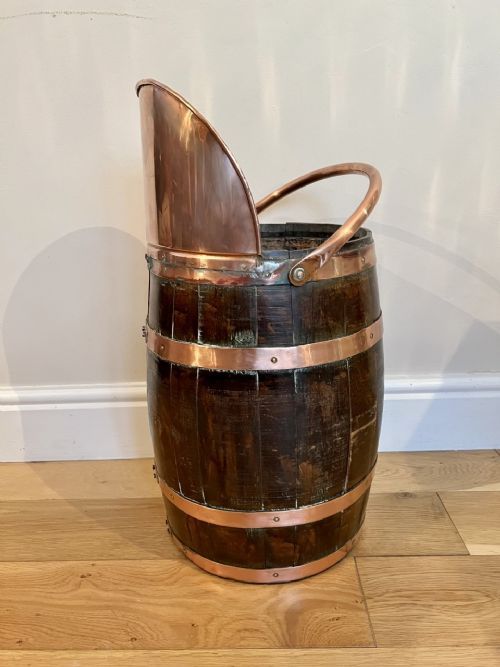
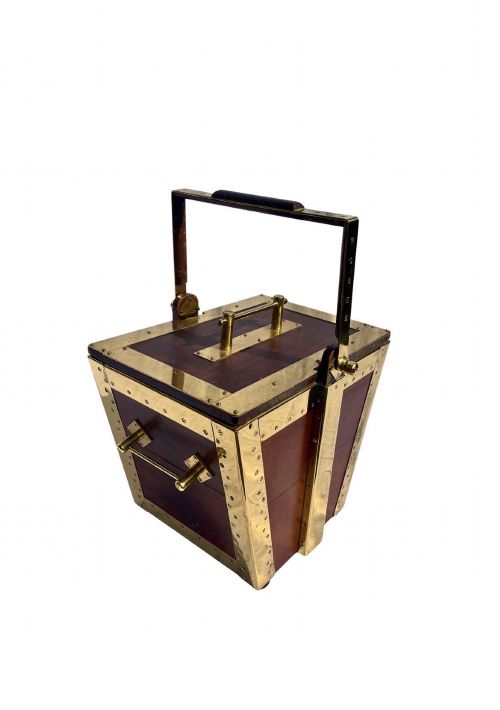
An edwardian coal scuttle is a practical fireside accessory designed to hold coal, logs, or kindling near the fireplace. The pieces on this page appear in various forms, including traditional helmet buckets, hinged purdonium cabinets, and open cylindrical log bins.
Most examples date from the Edwardian period and the late nineteenth century, though the selection also includes Victorian, Arts and Crafts, and Art Nouveau variants. These items function equally well today as storage containers for firewood or as decorative planters.
The objects span multiple timber and metal constructions, reflecting the domestic heating needs of the era when solid fuel kept every room warm.

How they were made
Makers utilised sheet metals such as brass and copper, often shaping them into helmets, buckets, and bins with riveted seams and rolled edges. Many metal pieces include swing handles and decorative embossing or fretwork designs.
Wooden versions rely on solid oak, walnut, or mahogany, frequently featuring coopered stave construction, carved panels, or inlaid details. Several designs incorporate internal metal liners to protect the wood from moisture and debris.
Edwardian Coal Scuttle Retail Price Guide 2026
Typical asking prices for edwardian coal scuttle among the pieces listed under this phrase on Sellingantiques today, from the lower quarter to the upper quarter. They describe what is for sale here now, not the wider market.
Listings feature items spanning the Victorian, Edwardian, and Art Deco eras, constructed from brass, copper, oak, walnut, and wrought iron.
What varies in quality
Quality rests on the integrity of construction, seen in solid timber framing, tight metal riveting, and the survival of original internal liners and matching shovels. Pieces that retain their structural soundness and original surface finish stand apart.
Design ambition also separates examples, with simple utilitarian buckets sitting below elaborate Art Nouveau carved purdoniums, detailed fretwork, and items influenced by the Arts and Crafts movement or makers like Benham and Froud.
Benham and Froud
The Edwardian Coal Scuttle Glossary
- Purdonium
- A box-like cabinet with a sloping drop-down front designed to hold coal indoors. These units usually include an internal metal liner and space to store a small shovel.
- Coal helmet
- A metal bucket shaped with a flared rim and a pointed lip resembling a classical helmet. This form makes pouring fuel onto the fire straightforward.
- Coopered
- A method of construction where tapered wooden staves are joined side by side and bound with metal hoops, much like a traditional barrel.
- Fretwork
- An ornamental design created by cutting open patterns through thin sheets of metal or wood. This technique appears on decorative panels of Edwardian fireside pieces.
- Jardiniere
- An ornamental pot or stand for holding plants or flowers. Many metal coal buckets serve this secondary purpose in modern homes.
Edwardian Coal Scuttle: Frequently Asked Questions
What is a purdonium?
A purdonium is a specialised coal box, usually made from oak or walnut with a hinged, sloping front panel. It typically houses a removable metal liner to catch coal dust and holds a matching shovel inside.
These cabinets were designed to keep fuel tidy and out of sight in polite Victorian and Edwardian sitting rooms.
How do I use an antique coal scuttle today?
These vessels make ideal storage containers for modern fireplace hearths, holding logs, kindling, or bagged coal. Many people also repurpose brass and copper buckets as large indoor planters for houseplants.
Their sturdy metal liners and robust construction allow them to handle everyday domestic tasks just as they did a century ago.
Are these pieces made of solid wood or veneer?
Edwardian and late nineteenth-century examples appear in both solid timbers, such as oak and mahogany, and veneered constructions. Coopered bins use solid wood staves bound by metal hoops.
Carved purdoniums often feature solid panels or applied mouldings to handle the weight and friction of daily fuel storage.
What is the difference between Arts and Crafts and Art Nouveau styles here?
Arts and Crafts pieces emphasise honest construction, hand-hammered copper surfaces, and simple utilitarian forms. Art Nouveau items showcase flowing, organic lines, stylized plant motifs, and decorative brasswork.
Both styles influenced the metal coal buckets and wooden boxes produced around the turn of the twentieth century.