


Edwardian Cheval Glass
An edwardian cheval glass is a freestanding floor mirror set in a pivoting frame, designed to give a full-length view for daily dressing.
Edwardian Cheval Glass
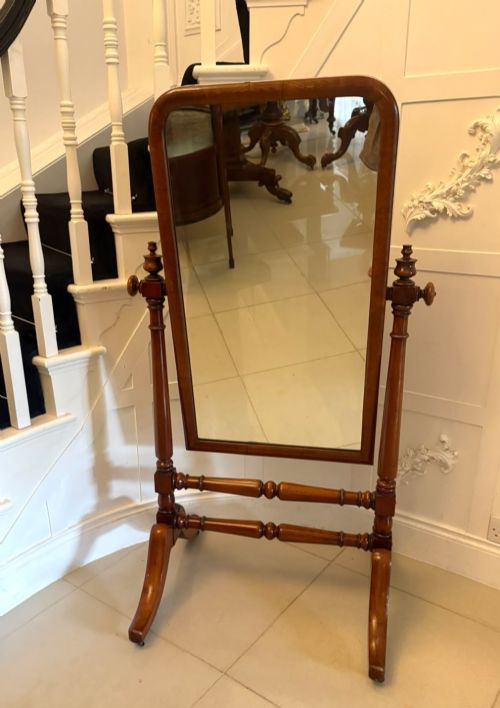
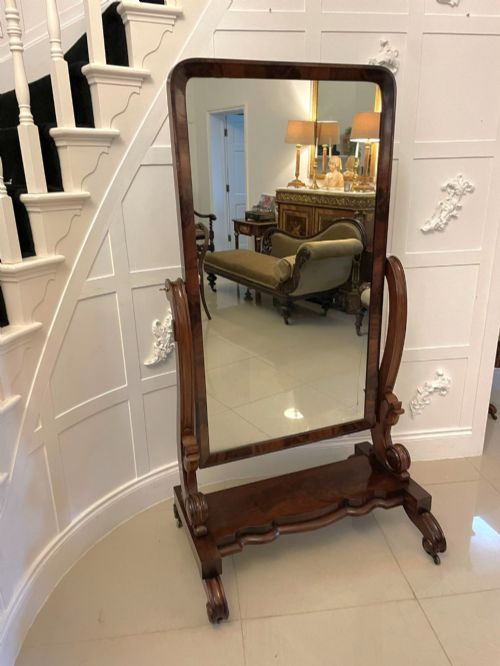
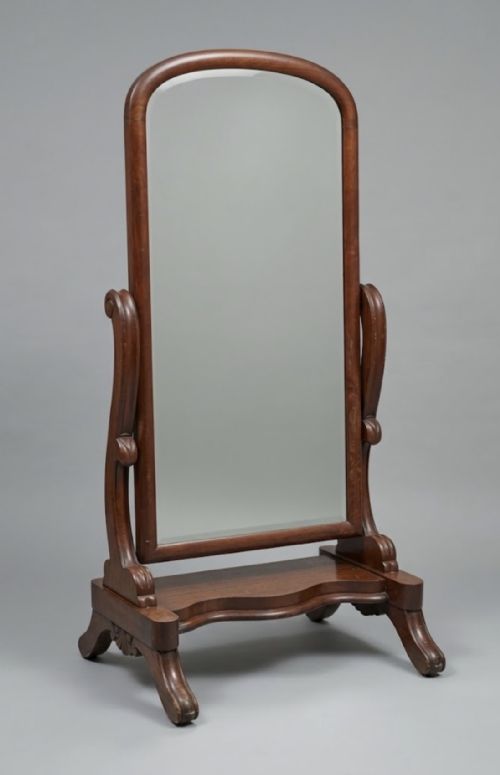
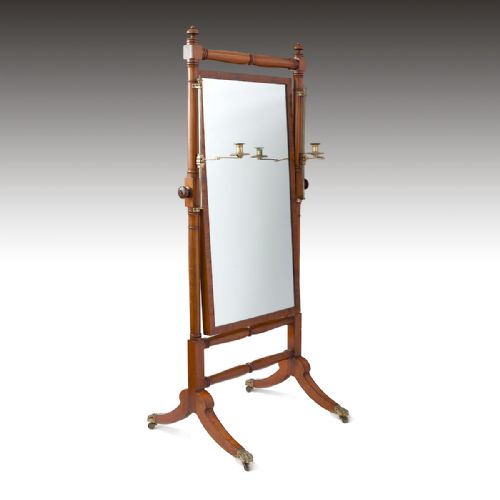
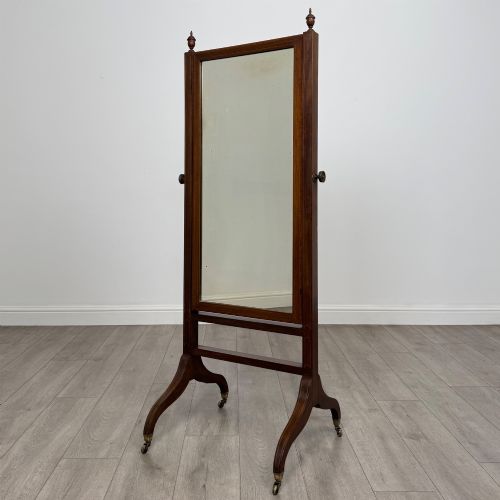
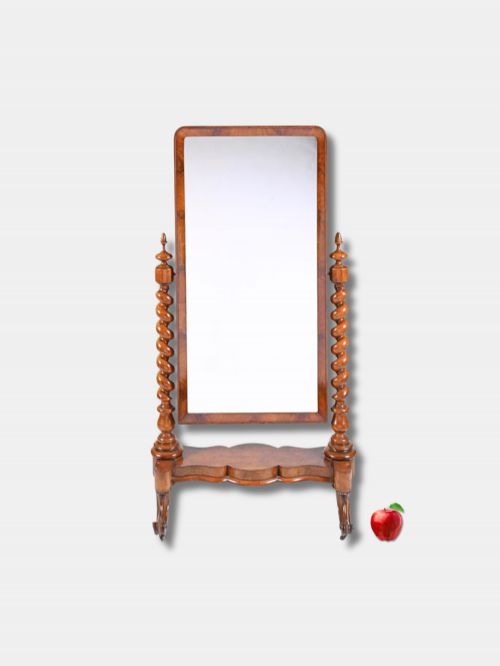
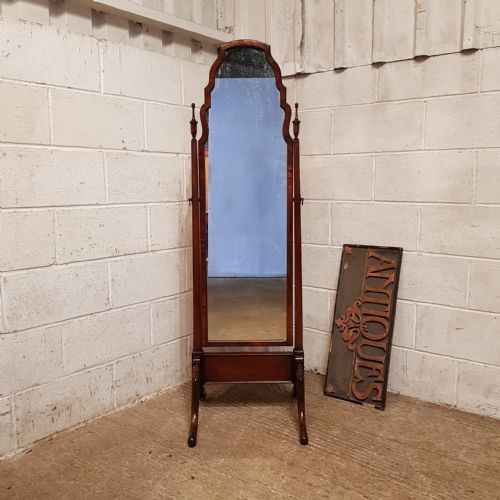
An edwardian cheval glass is a floor-standing, pivoting mirror that allows a full-length view for the bedroom or dressing room. These pieces stand on four legs or a robust frame, holding the glass between vertical uprights.
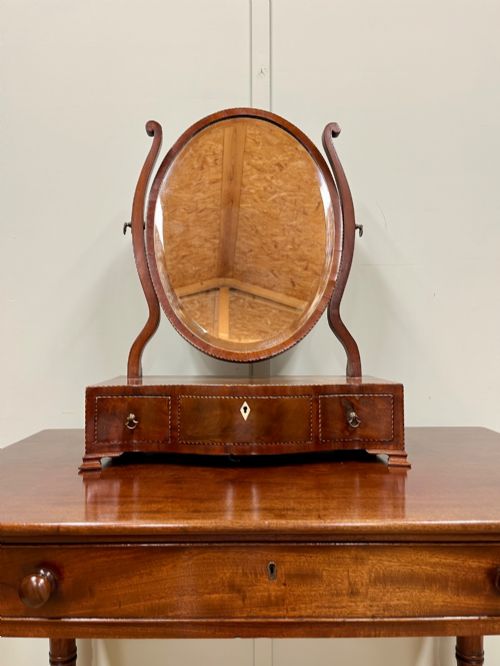
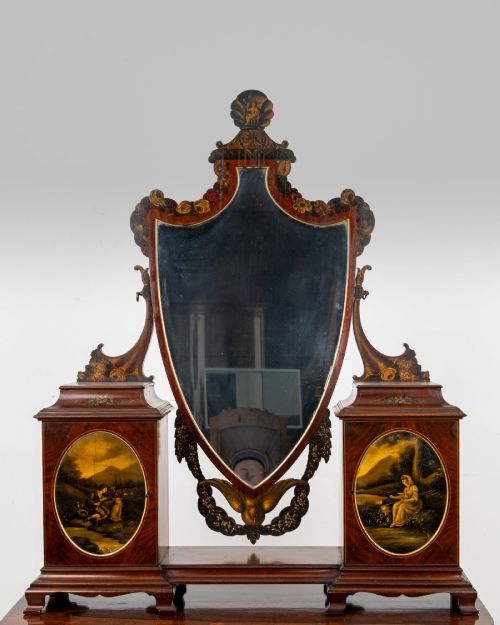
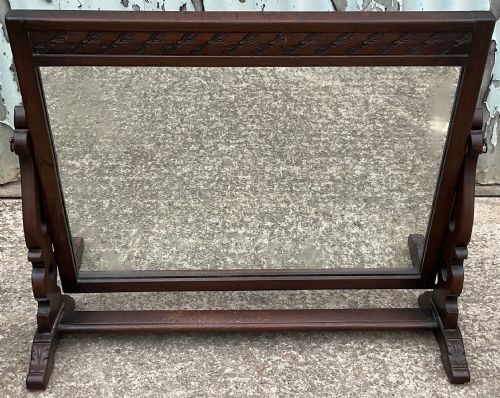
The versions most often met on this page date from the Edwardian period and the surrounding nineteenth-century eras, constructed primarily in mahogany or satinwood. Alongside full-height floor mirrors, the selection includes smaller table-top dressing glass variants and dressing table mirrors.
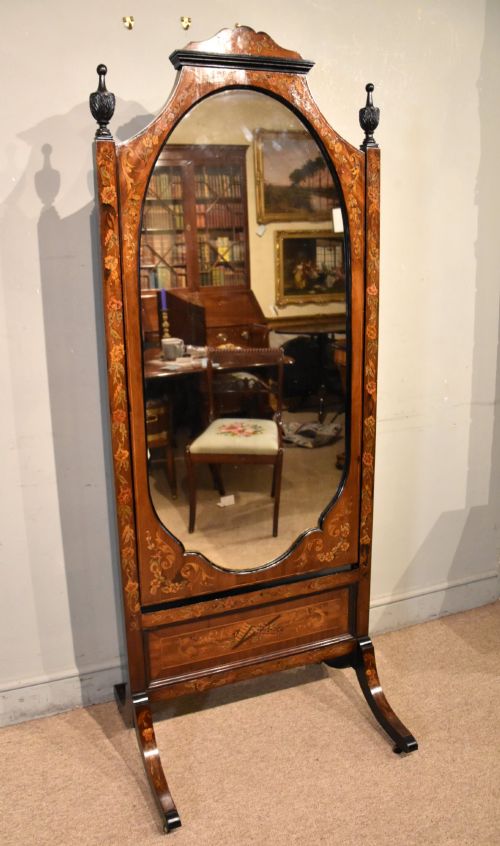
Makers of the period adapted earlier Regency and Georgian proportions for Edwardian homes, frequently incorporating inlaid marquetry or simpler rectangular frames. The form balances practical utility with decorative cabinet work suited to bedroom interiors.
Materials and Construction
Timbers such as mahogany, oak, and satinwood form the primary structural frames, often enhanced with marquetry inlay or brass fittings. Cabinet makers utilised traditional joinery to support the weight of the pivoting glass plate.
The mirror glass itself is held securely within a wooden frame that swings on brass pivots or screw pins mounted to vertical supports. Barley twist turnings or plain uprights connect the frame to sturdy feet or a base.
Listings feature pieces spanning Victorian, Edwardian, Georgian, and Regency periods, constructed in mahogany, satinwood, oak, and brass.
Judging Quality and Proportion
Quality rests in the selection of cabinet timbers and the crispness of any inlaid marquetry or turned details. Mahogany and satinwood examples with fine grain patterns and solid brass hardware represent the upper tier of the range.
The stability of the frame and the smoothness of the pivoting mechanism determine daily usability. Superior pieces maintain balanced proportions between the height of the glass and the spread of the base legs.
Gillow
The Edwardian Cheval Glass Glossary
- Cheval glass
- A large, freestanding mirror mounted on a frame that allows it to swing or pivot. The term derives from the French word for horse, referring to the four-legged supporting frame.
- Marquetry inlay
- Decorative patterns formed by fitting small pieces of contrasting veneer into the primary wood surface. This technique frequently ornaments Edwardian satinwood and mahogany panels.
- Barley twist
- A turned wooden support shaped in a spiral twist resembling barley sugar. This decorative carpentry appears on Victorian and Edwardian furniture uprights.
- Dressing mirror
- A smaller mirror designed to sit atop a dressing table or chest of drawers. These portable pieces share the pivoting mechanism of larger floor-standing cheval glasses.
Edwardian Cheval Glass: Frequently Asked Questions
What is an edwardian cheval glass?
An edwardian cheval glass is a freestanding, full-length mirror held in a pivoting wooden frame. It allows the user to tilt the glass plate to various angles for dressing.
These pieces typically stand on four feet or a stable base, operating without the need for wall fixings. They serve as both practical furniture and decorative bedroom items.
How do I date a cheval mirror?
Dating relies on observing the timber choices, inlay styles, and turning techniques used in the frame. Edwardian examples often feature satinwood with marquetry, whereas earlier nineteenth-century versions lean towards solid mahogany or oak.
Hardware such as brass pivots and screw fittings also provide clues to the period of manufacture. Examining the construction methods behind the mirror back helps confirm its age.
Where should I place a cheval mirror?
A cheval glass belongs in a bedroom, dressing room, or hallway where full-length reflections are useful. Because the frame is freestanding, you can position it near a window to catch natural light.
Ensure the floor surface is level so the pivoting frame remains stable and balanced. Allow enough clearance around the base for the mirror to tilt freely.
Are these mirrors adjustable?
Yes, the defining feature of a cheval glass is its ability to tilt back and forth on side pivots. Metal pins or screws secured to the upright supports hold the mirror plate at the desired angle.
This adjustable mechanism allows viewers of different heights to use the glass comfortably. Over time, the pivot screws may need gentle tightening to maintain the preferred tension.