

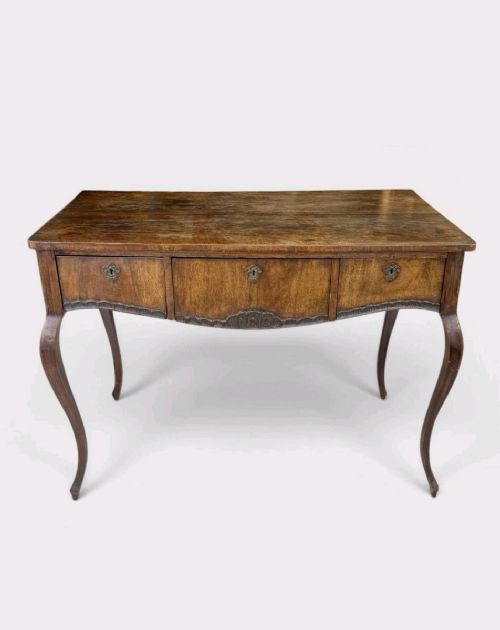
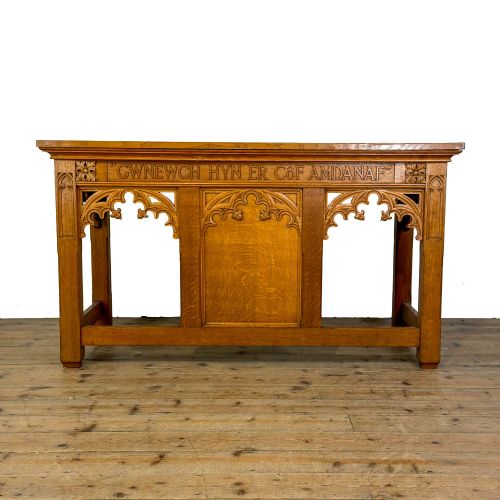
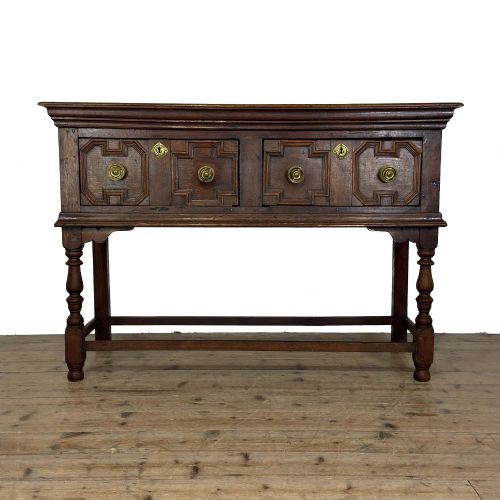
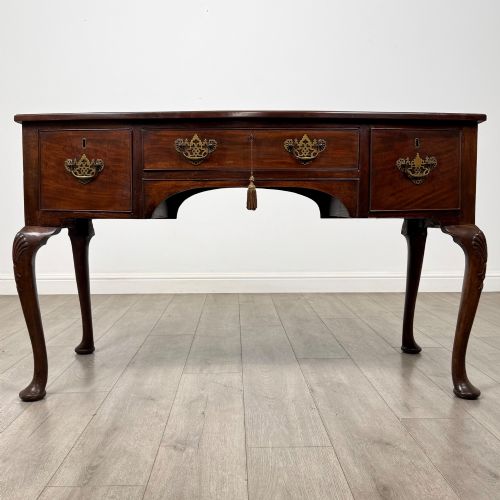
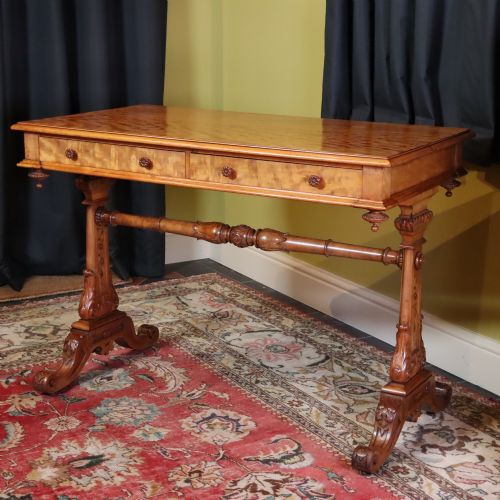
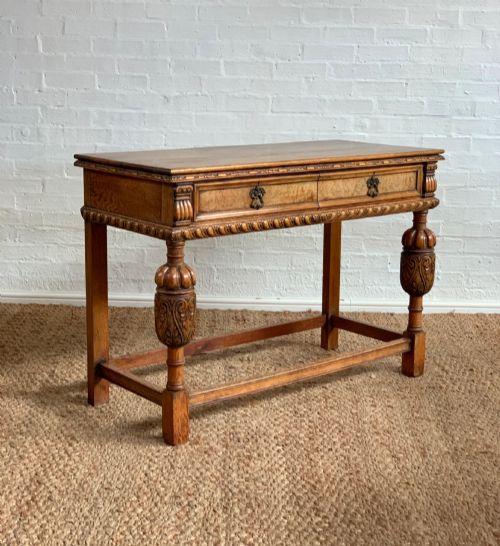
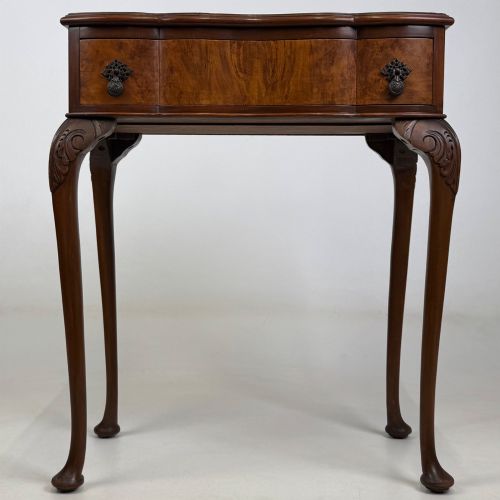
Edwardian Carved Console Table
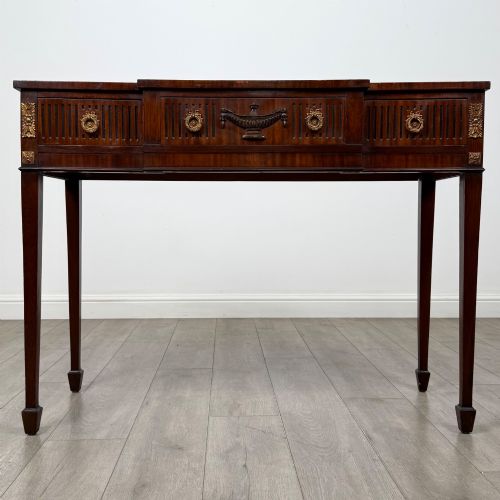
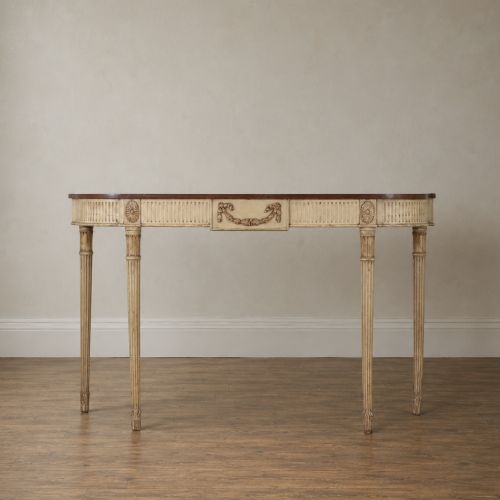
An Edwardian carved console table brings architectural presence and timber warmth to a hallway, resting against a wall with understated poise.
Edwardian Carved Console Table
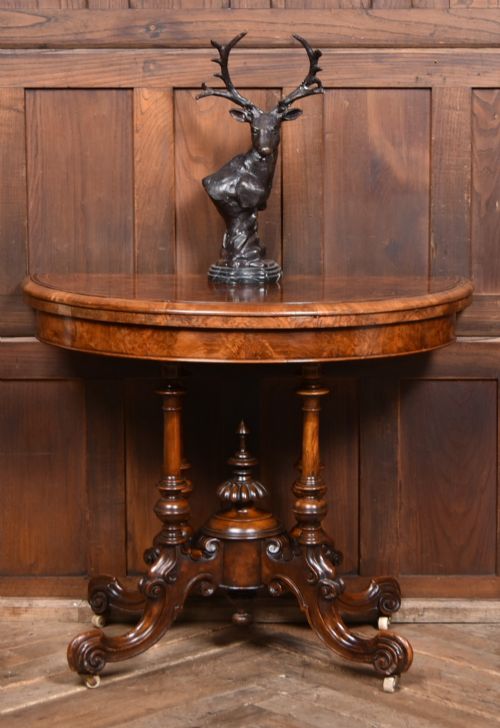
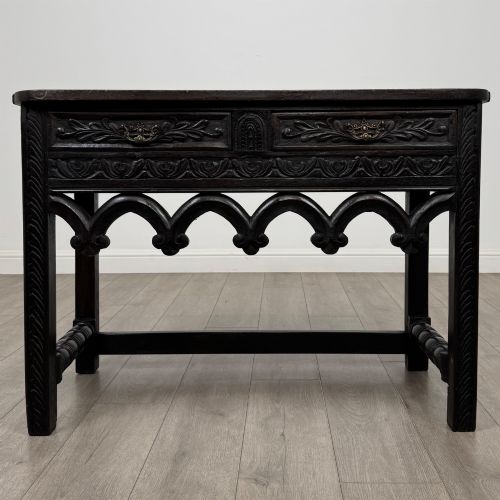
An edwardian carved console table sits primarily within the Edwardian and Victorian eras, alongside related side, card, and writing tables. These pieces emerge in mahogany, oak, and walnut, frequently adopting revival styles such as Chippendale, Jacobean, and Gothic.
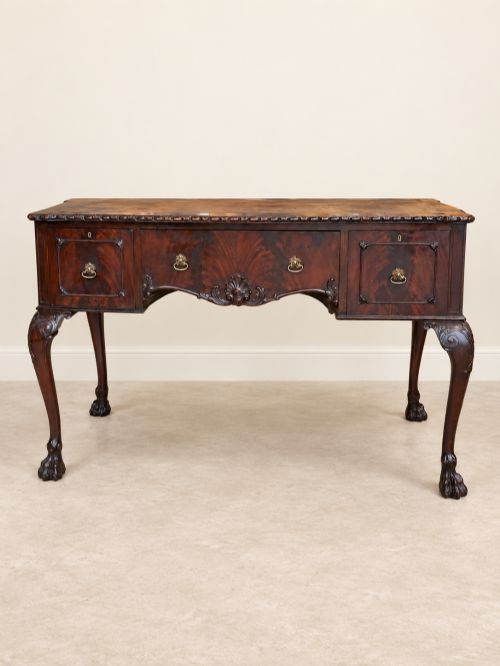
The selections span console tables, side tables, and dresser bases, offering narrow profiles suited to hallways and reception rooms. While Edwardian examples predominate, surrounding periods from the late nineteenth and early twentieth centuries supply comparable forms.
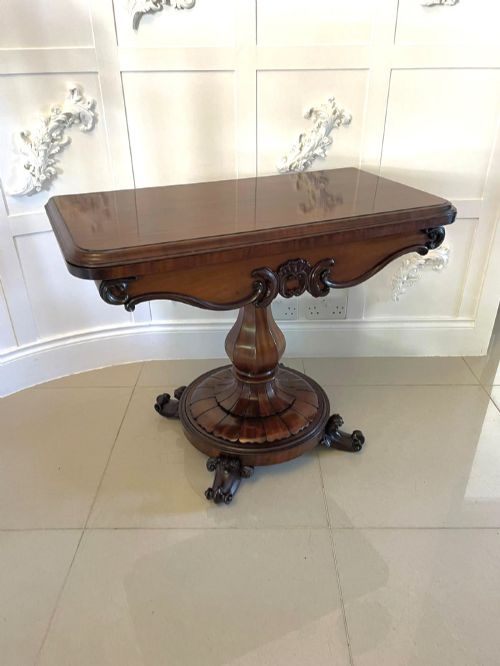
Makers and workshops constructed these tables for domestic display and daily utility, resulting in varied surface arrangements including drawers, fold-over leaves, and marble tops.
Materials and Construction
Cabinetmakers utilised dense hardwoods such as mahogany, oak, and walnut, often selecting burr or figured veneers for decorative surfaces. These timbers provided the structural integrity necessary for carved legs, friezes, and supporting stretcher bases.
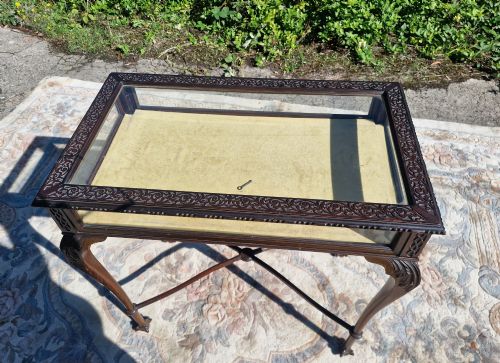
Secondary materials like giltwood, marble, glass, and brass appear on specific revival and neoclassical pieces, adding contrasting textures to the wooden frames. Joinery methods relied on traditional techniques to house drawers and secure folding top mechanisms.
Several tables feature secret compartments designed to conceal playing cards from competing players.
Design and Execution
The distinction between standard domestic pieces and finer examples rests upon the depth and crispness of the carving, alongside the selection of timber figures. Superior tables demonstrate thoughtful grain alignment in mahogany or burr walnut veneers.
Proportion and decorative restraint dictate the overall success of the form, where well-integrated hardware and balanced revival detailing elevate a console table above routine production.
Beresford and Hicks London
The Edwardian Carved Console Table Glossary
- Console Table
- A table designed to stand against a wall, frequently secured to it or supported by front legs and rear brackets. These pieces serve decorative and functional roles in entrance halls and principal rooms.
- Burr Walnut
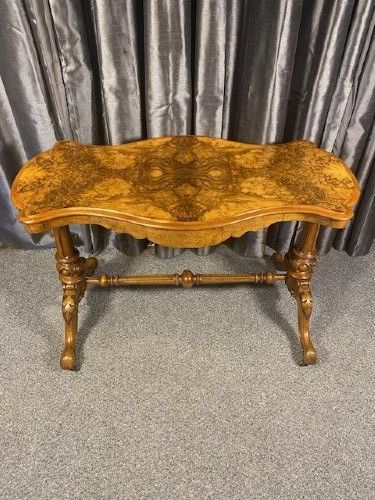
- Timber taken from a walnut tree growth containing distorted grain patterns, yielding highly decorative swirling veneer panels. Cabinetmakers applied these timbers to prominent surfaces for visual impact.
- Giltwood
- Wood that has been coated with gold leaf or metallic paint to create a lustrous surface finish. This treatment appears frequently on neoclassical and revival console tables.
- Demi-Lune
- Half-moon shape characteristic of tables built to fit flush against a wall. The configuration appears frequently in card and side tables from the Edwardian period.
- Gothic Revival
- An architectural and decorative style drawing inspiration from medieval design motifs. Pieces often feature pointed arches, tracery, and robust oak construction.
Edwardian Carved Console Table: Frequently Asked Questions
Where should a console table go?
Console tables fit naturally in entrance halls, narrow corridors, or beneath living room mirrors where floor space is limited. Their shallow depth allows them to sit flush against walls without obstructing pathways.
They also function as serving surfaces in dining rooms or writing desks in studies, depending on the specific drawer configuration and height.
How do I identify Edwardian furniture?
Edwardian pieces date from the reign of King Edward VII, spanning the early years of the twentieth century. They often draw heavily upon earlier Georgian and Sheraton designs, utilising lighter mahogany timbers and subtle inlay.
Compared to heavier Victorian furniture, Edwardian examples tend to feature brighter finishes and more restrained proportions, reflecting changing domestic tastes.
How do I care for antique wood?
Antique timber benefits from consistent indoor humidity and protection from direct sunlight, which can fade polished surfaces over time. Gentle dusting with a dry cloth prevents the accumulation of abrasive particles.
Periodic application of appropriate wax feeds the wood and maintains the natural lustre of mahogany, oak, and walnut without building up heavy residues.