


Edwardian Caned Armchair
An edwardian caned armchair brings together woven natural cane and timber frames to create a light yet supportive seat for the home.
Edwardian Caned Armchair
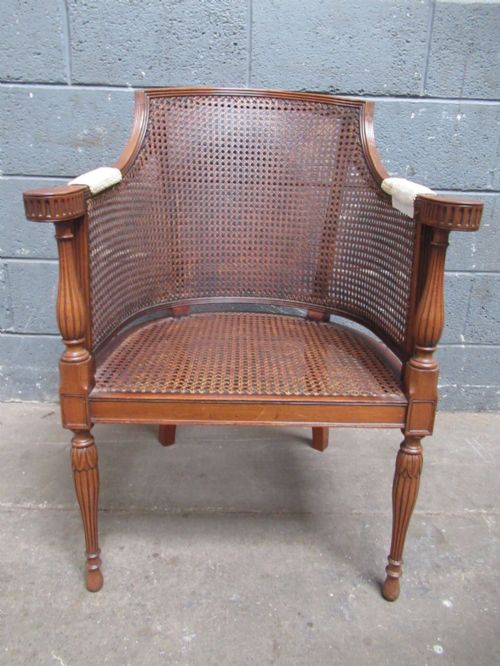
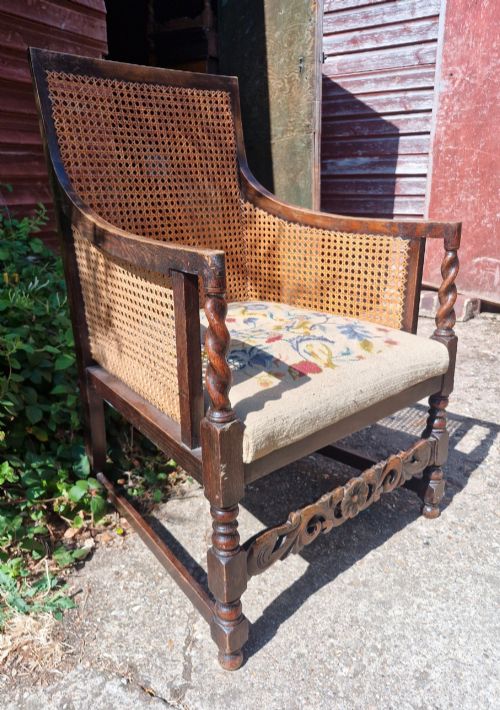
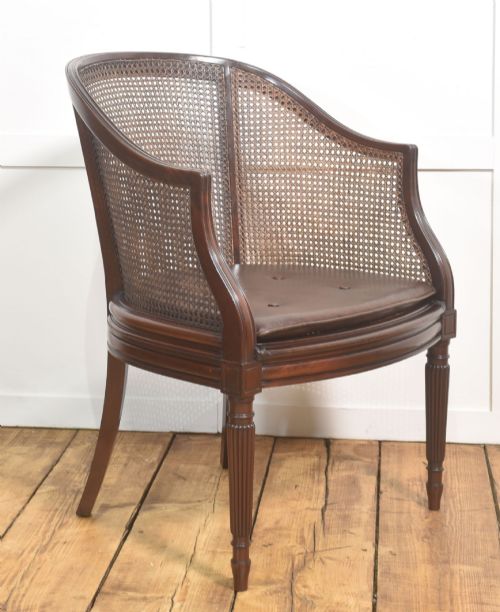
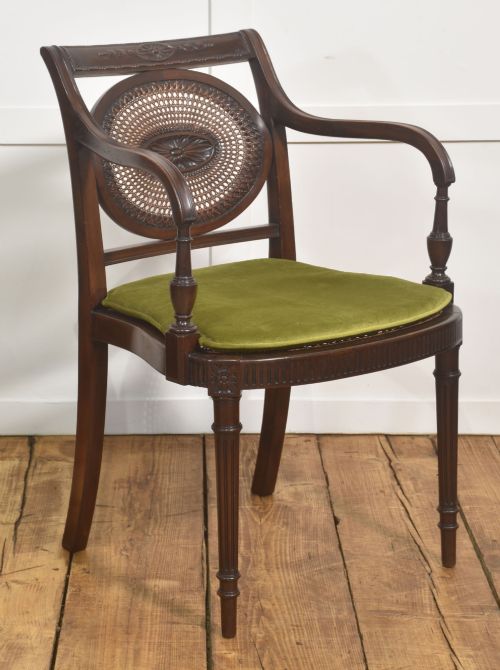
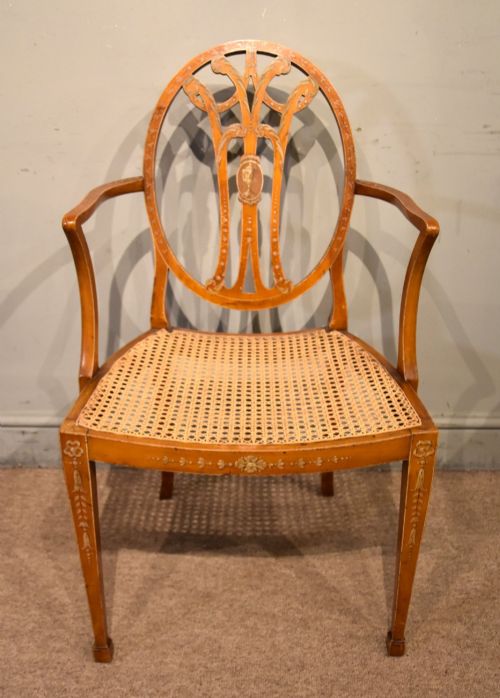
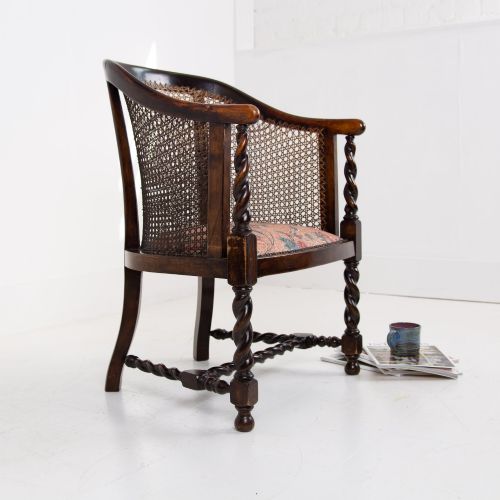
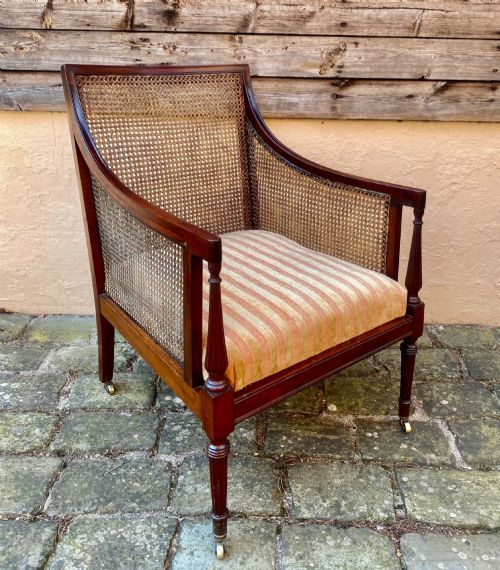
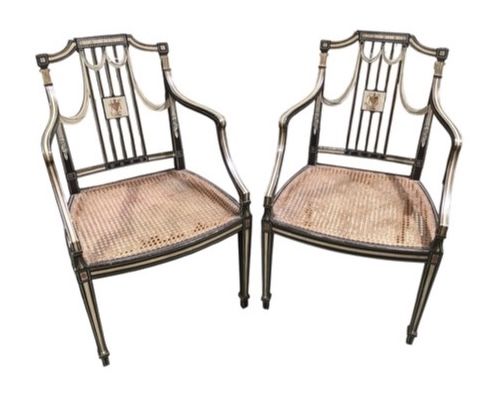
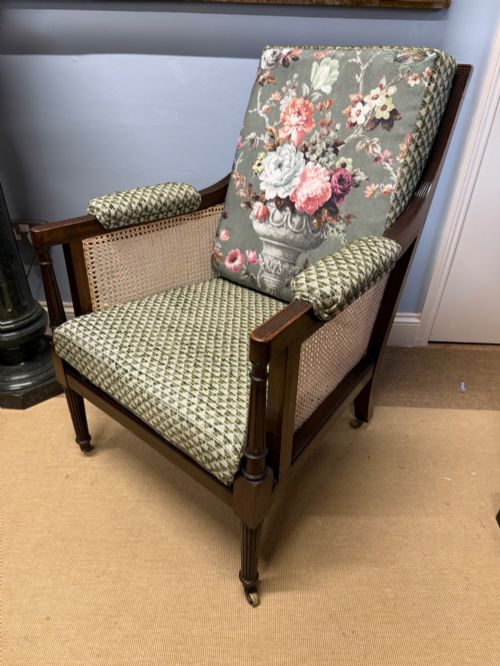
When searching for an edwardian caned armchair, you encounter seating constructed with woven cane panels set into wooden frames. These pieces often take the form of tub chairs, library armchairs, and low lounge seats designed for comfort.
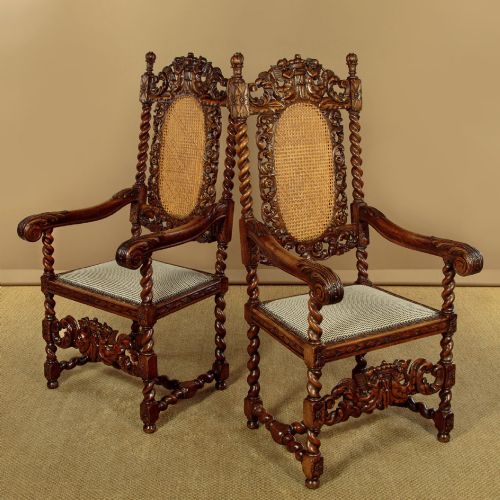
The materials span mahogany, walnut, and oak frames paired with handwoven cane seats and backrests. Alongside pieces from the Edwardian era itself, you find related items from the nineteenth and early twentieth centuries showing stylistic influences from the Regency and Sheraton revivals.
The forms range from compact bedroom chairs to substantial bergere armchairs with upholstered cushions. Many examples reflect the lighter aesthetic favoured at the turn of the twentieth century, moving away from heavier Victorian designs.
Materials and construction
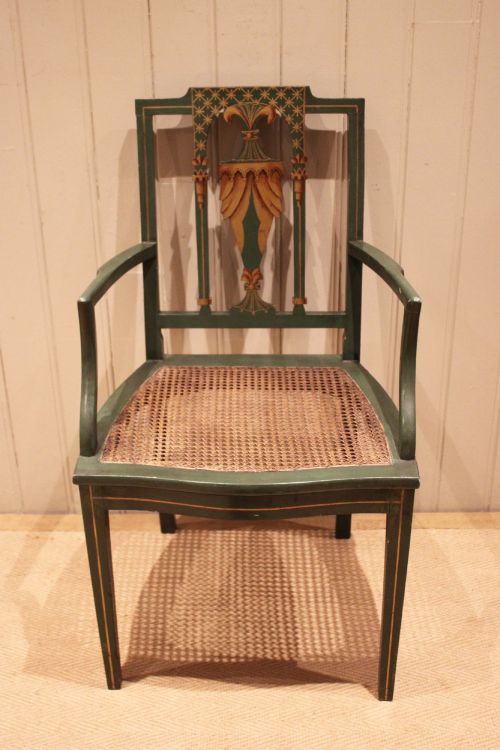
Cabinetmakers constructed the supportive skeletons of these chairs using dense hardwoods like mahogany, walnut, and oak, occasionally incorporating satinwood or painted finishes. These timber frames were frequently shaped with curved rails, carved details, or inlay to define the silhouette.
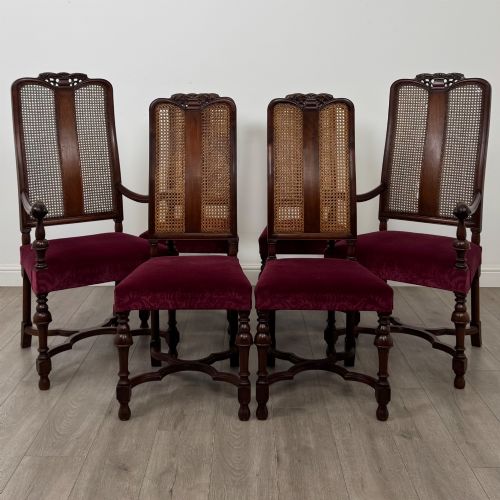
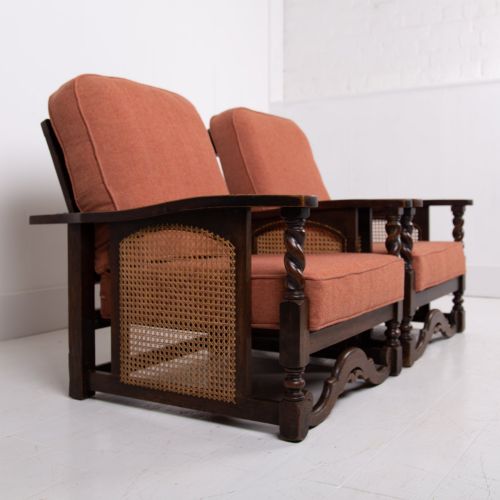
The defining characteristic is the canework, threaded by hand through drilled holes in the wooden frame to form flexible, supportive mesh panels for backs and seats. Many armchairs are completed with loose squab cushions upholstered in fabric, leather, or velvet to sit atop the woven base.
Periods represented span from the seventeenth century through Victorian and Edwardian eras into the nineteen-twenties.
Distinctions in quality
The standard of an edwardian caned armchair depends heavily on the precision of the timber framing and the tightness of the cane weaving. Finer pieces display crisp hand-carving, well-joined corners, and evenly tensioned cane panels that distribute weight uniformly.
Makers who supplied higher-end furnishings utilised superior grades of figured mahogany or walnut and employed skilled artisans for both the woodwork and the cane seating. The presence of original upholstery details, harmonious proportions, and balanced decorative carving further separates finer examples from simpler production.
James Shoolbred·Dryad of Leicester·Dryad and Co
The Edwardian Caned Armchair Glossary
- Bergere
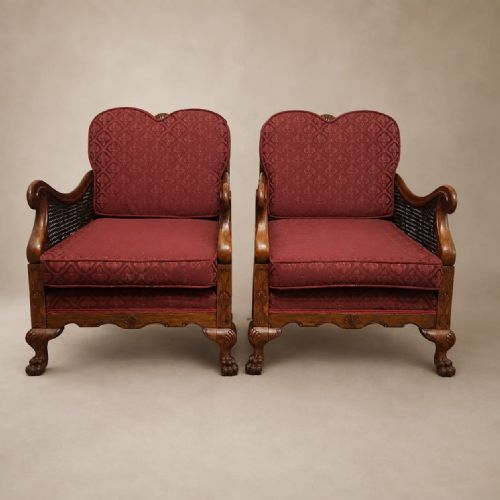
- An enclosed upholstered armchair with wooden framing and woven cane sides and back panels. This French-inspired form became particularly popular in British seating during the Edwardian period.
- Cane
- Strips of rattan plant peeled and woven into open mesh patterns for chair seats and backs. It provides a resilient, breathable surface.
- Tub chair
- A deep-seated armchair with a continuous curved back and armrest rail forming a rounded enclosure. The design offers a snug sitting position.
- Sheraton Revival
- A late nineteenth and early twentieth century design style drawing on the neoclassical furniture forms of George Sheraton. Pieces often feature satinwood, delicate inlay, and painted decoration.
- Squab cushion
- A loose, removable padded cushion designed to sit directly on a chair base for added comfort. These are frequently covered in leather, velvet, or fabric.
Edwardian Caned Armchair: Frequently Asked Questions
What is a bergere armchair?
A bergere armchair is a fully or partially enclosed seat featuring wooden framing combined with woven cane panels on the back and sides. They typically include a fitted loose cushion for the seat base.
These chairs were designed for comfortable lounging in libraries and drawing rooms, offering a lighter alternative to heavily padded Victorian upholstery.
How do I care for cane seating?
Cane requires moderate humidity and gentle cleaning to prevent the natural plant fibres from drying out and becoming brittle. Dust the woven mesh regularly with a soft brush.
Avoid placing these chairs near direct heat sources or in overly dry rooms, and occasionally wipe the cane with a slightly damp cloth to maintain its flexibility.
Are these chairs comfortable for daily use?
Most of these armchairs are fitted with supportive squab cushions placed over the woven cane base, providing a comfortable sit. The resilient nature of tensioned cane also offers natural give.
While designed for reading and relaxing rather than slouching, they suit everyday sitting rooms when paired with appropriate cushions.
How can I tell an Edwardian chair apart from a Victorian one?
Edwardian seating generally displays lighter proportions, brighter wood tones, and simpler neoclassical revival motifs compared to heavier, darker Victorian designs. The influence of Sheraton and Regency styles is more pronounced.
Victorian pieces often lean towards heavier carving, dark walnut or mahogany, and deep buttoned upholstery, whereas Edwardian examples favour airier cane panels and painted finishes.