


Caned Barrel Chair
A caned barrel chair brings curved comfort and woven texture into a room, offering a supportive embrace through its rounded back.
Caned Barrel Chair
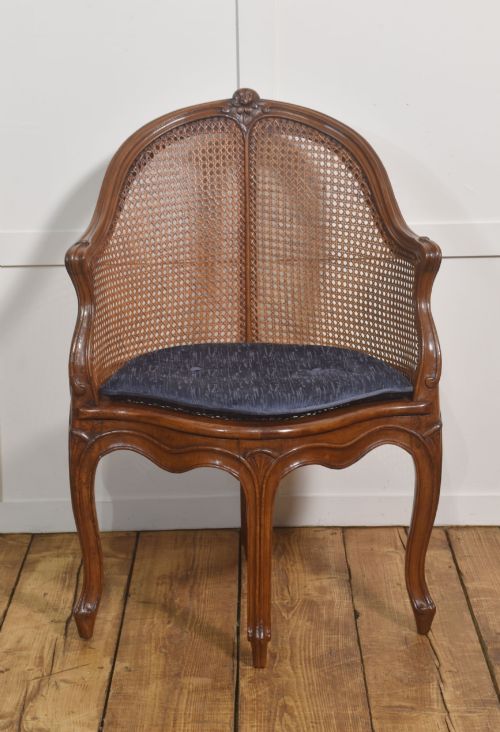
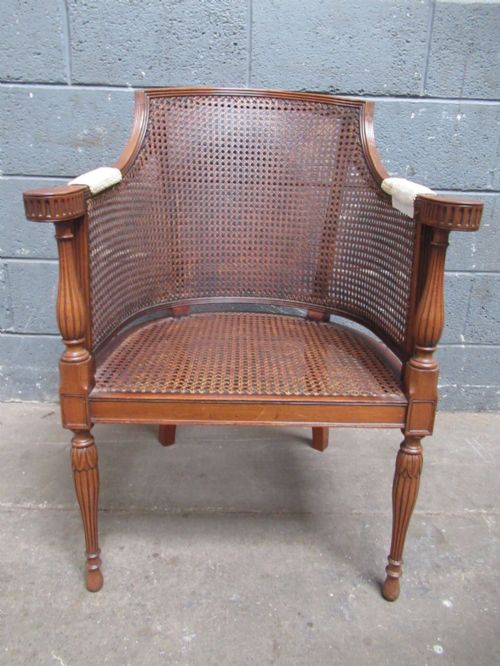
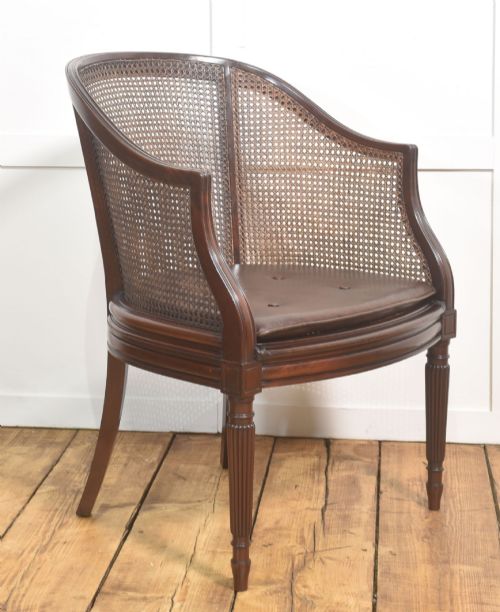
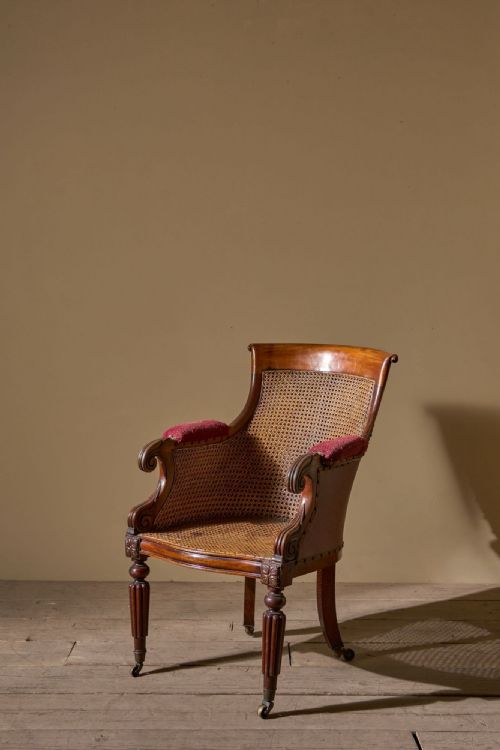
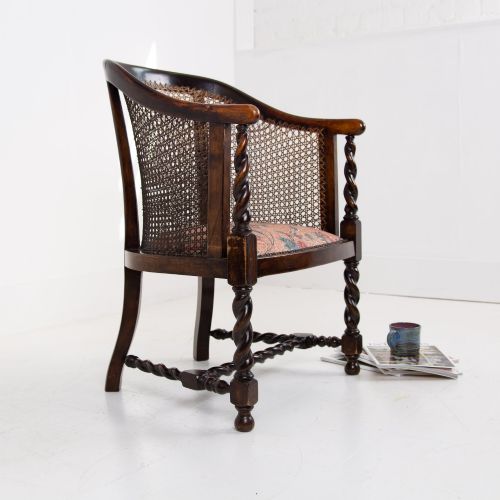
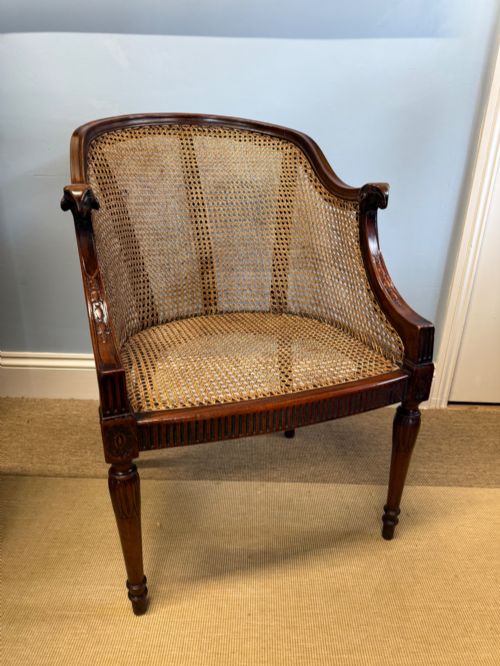
When searching for a caned barrel chair, a buyer encounters tub-shaped armchairs and bergères featuring rounded backs designed to enclose the sitter. These seating forms appear across several periods, including the Regency era, Victorian times, the Edwardian period, and the 1930s.
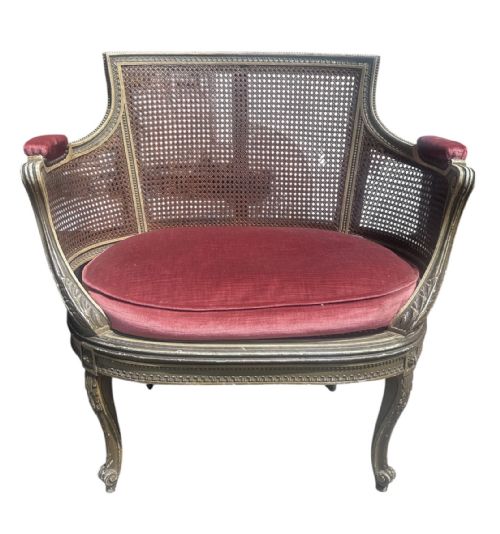
The most common versions on this page are mahogany and walnut tub chairs or library armchairs originating from the nineteenth and early twentieth centuries. French Louis XV style influences and Anglo Indian designs also emerge among the available armchairs.
Makers shaped these pieces as country house library chairs, parlour musician chairs, and deep lounge seating meant for reading rooms. The combination of enclosed timber frames and woven seating provides a distinctive silhouette that bridges formal reception rooms and relaxed studies.
How they were made
Craftsmen built the structural frames using hardwoods such as mahogany, walnut, and teak, occasionally applying a simulated or faux rosewood finish to achieve a polished surface. These solid timber skeletons provide the rigid support required for the curved barrel shape.
Caning, rattan cane, and woven panels form the characteristic backrests and seats, threaded through the wooden framework by hand. Artisans combined this open weave with upholstered elements in fabric, velvet, leather, and brass detailing to complete the armchairs.
Caned Barrel Chair Retail Price Guide 2026
Typical asking prices for caned barrel chair among the pieces listed under this phrase on Sellingantiques today, from the lower quarter to the upper quarter. They describe what is for sale here now, not the wider market.
Musicians once perched on specialised parlour chairs with low arms designed to keep their elbows entirely free for playing.
What varies in quality
The refinement of the timber carving and the precision of the curved frame construction distinguish the finer examples from simpler provincial pieces. Superior chairs maintain tight joinery along the sweeping barrel back without looseness in the arms.
The integrity and tightness of the woven cane work also define the standard of a piece, alongside the quality of secondary materials like select mahogany or detailed brass mounts. Original frames retain crisp moulding lines that heavier subsequent sanding or clumsy repairs tend to soften.
The Caned Barrel Chair Glossary
- Bergère
- An enclosed upholstered armchair with wooden framing where the sides are frequently filled with cane work. This French form offers deep, comfortable seating proportions.
- Tub chair
- An armchair featuring a continuous curved back and arms forming a single circular or tub-like enclosure. The design derives from eighteenth-century seating intended to keep out drafts.
- Cane
- Material split from the rattan palm stem and woven into open patterns to form flexible, breathable backrests or seats. It provides both structural support and visual lightness.
- Simulated rosewood
- A painted or stained wood finish designed to imitate the rich grain and deep colour of genuine rosewood. Cabinet makers utilised this technique on alternative timbers during the Regency period.
Caned Barrel Chair: Frequently Asked Questions
What is a caned barrel chair?
A caned barrel chair is an armchair featuring a rounded, tub-shaped back fitted with woven cane panels. These seats combine wooden frames with open wickerwork to create a supportive and breathable enclosure.
Such chairs function well in libraries, studies, and drawing rooms where deep seating and elegant curved silhouettes are desirable.
How do I date a caned barrel chair?
Dating relies on observing the timber choice, construction methods, and stylistic details associated with periods like the Regency era, Victorian times, or the 1930s. Regency examples often display simulated rosewood finishes, while Edwardian and Victorian pieces tend to use solid mahogany or walnut.
Tool marks, framing thickness, and the specific gauge of the cane work also offer clues to the workshop era of manufacture.
Where were these chairs used?
These armchairs served primarily in country house libraries, drawing rooms, and music rooms as comfortable reading or parlour seats. Their enclosed barrel backs provided shelter from drafts in large, high-ceilinged rooms.
Today, they adapt easily to modern living spaces as accent seating in studies, bedrooms, or main reception areas.
How do I care for cane seats?
Cane requires moderate humidity to prevent the natural rattan fibres from drying out and becoming brittle over time. Regular dusting with a soft brush keeps the woven mesh clean without damaging the material.
Placing the chair away from direct heat sources and harsh sunlight helps preserve the strength and flexibility of the cane.