



Georgian Bergere Chair
A georgian bergere chair offers deep-seated comfort with woven cane panels, bringing classical elegance to a library or study.
Georgian Bergere Chair
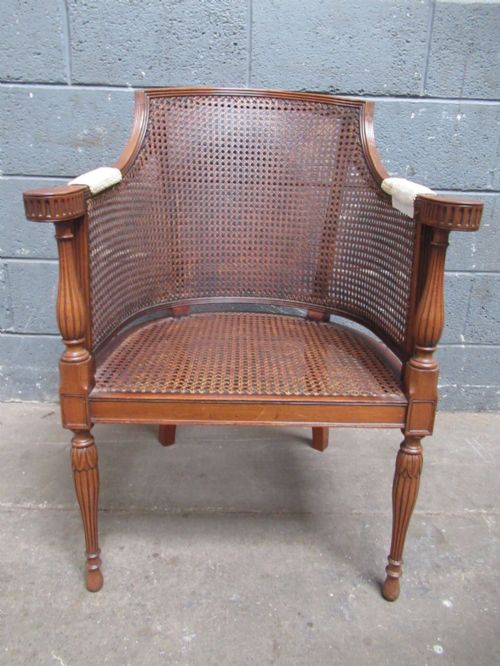
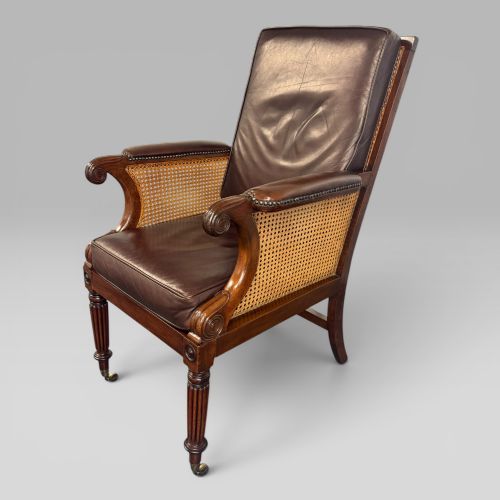
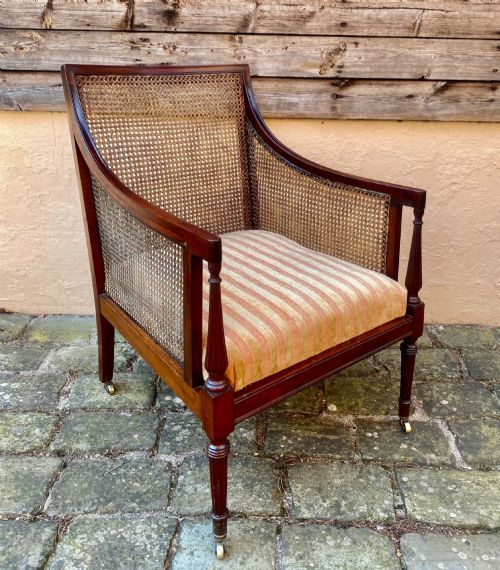
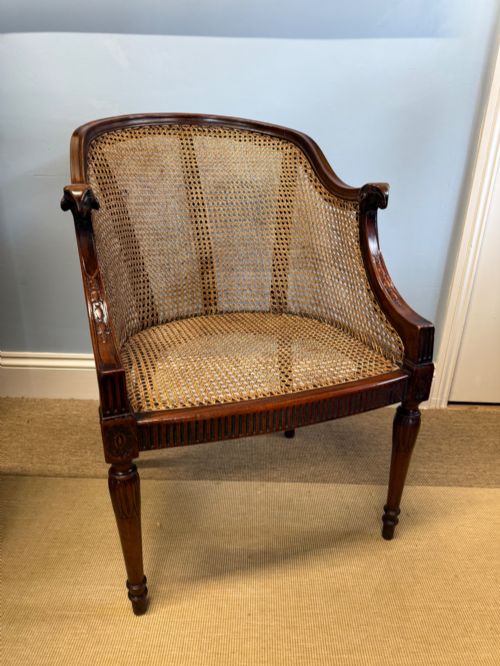
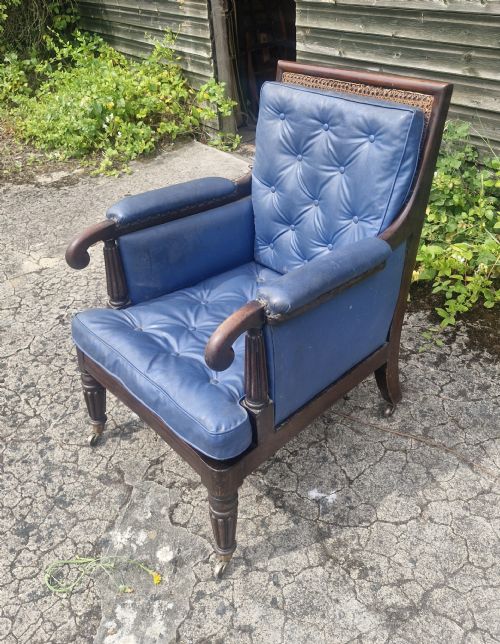
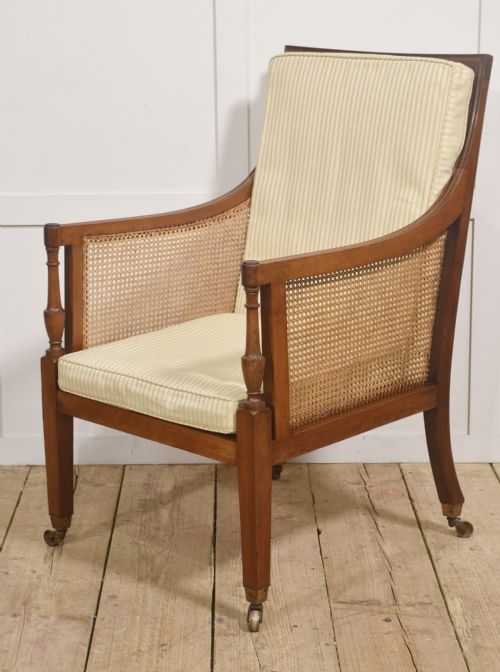
A georgian bergere chair is a deep upholstered armchair featuring closed cane or rattan work to the sides and back, designed for reading and leisure. The form developed during the Georgian and Regency periods, evolving into library armchairs with generous proportions and low seats.
On this page, buyers meet various interpretations spanning the Regency era, William IV period, and later revivals from the nineteenth and twentieth centuries. Alongside full-sized library armchairs, the selection includes side chairs, tub shapes, and smaller childs armchairs.
Origins trace back primarily to British workshops and cabinet makers working in mahogany, rosewood, and painted or simulated timbers. These seating pieces survive in formats ranging from simple cane panels to elaborate designs with brass mounts, leather upholstery, and carved details.
Distinctions in quality
The sophistication of the timber carving and the precision of the frame joinery distinguish finer examples from standard production. Well-drawn proportions and generous curves indicate thoughtful design originating from skilled cabinet making workshops.
The regularity and tightness of the cane work reveal the proficiency of the artisan who wove the panels into the frame. Original surfaces, patination, and intact secondary materials preserve the historical integrity of each piece.
Attribution to prominent makers elevates certain pieces, particularly those reflecting the design language associated with documented firms. Subtle details such as lyre fronts, painted decoration, or gilt highlights separate standard seating from exceptional library armchairs.
Gillows
The Georgian Bergere Chair Glossary
- Bergère
- An enclosed upholstered armchair with wooden framing and cane or rattan panels to the sides and back. This French-inspired form became a staple of British library seating.
- Caning
- A weaving technique utilising split rattan or cane to create supportive, breathable panels for chair backs and arms. It requires considerable skill to tension correctly within a hardwood frame.
- Regency
- A stylistic period spanning the early nineteenth century defined by classical restraint and archaeological revival. Furniture from this era often incorporates bold mahogany grains and brass detailing.
- William IV
- A transitional design period bridging late Regency and early Victorian aesthetics between eighteen-thirty and eighteen-thirty-seven. Pieces from this time typically display heavier proportions and robust mahogany construction.
- Klismos
- An ancient Greek chair shape with curved back legs and a concave backrest revived during the nineteenth century. This graceful form occasionally appears combined with bergere seating elements.
Georgian Bergere Chair: Frequently Asked Questions
What is a bergere chair?
A bergere chair is a traditional upholstered armchair characterised by enclosed sides and back panels woven from cane or rattan. These seats were originally designed for refined lounging and reading in formal libraries.
Over time, cabinet makers adapted the form into various configurations, including library armchairs and smaller reading seats. The defining feature remains the woven cane work enclosed within a solid wood frame.
How do I date a georgian bergere chair?
Dating involves examining the timber species, joinery techniques, and overall stylistic proportions of the frame. Earlier Georgian and Regency examples typically feature native or imported hardwoods like mahogany with hand-turned or reeded legs.
Later nineteenth-century and Edwardian pieces often display heavier framing or revival characteristics. Comparing the style of the arm supports and leg turnings to documented examples helps narrow down the period of manufacture.
Were these chairs used in libraries?
Library armchairs formed a primary use for these deep-seated chairs, providing comfort during long hours of reading. Their generous proportions and upholstered seats made them ideal for private studies and drawing rooms.
Many examples feature castors on the feet to allow easy repositioning across large rooms. The breathable cane panels also offered comfort in heated interior spaces before modern climate control.
Are the cane panels original?
Cane panels on antique seating frequently undergo re-weaving due to the natural fragility of dried rattan over centuries of use. Expert restorers often replicate historical weaving patterns to maintain the appearance and structural integrity of the piece.
Inspecting the tension and colour of the cane alongside the surrounding wood can indicate whether the panels have been renewed. Professional re-caning ensures the chair remains stable and usable.
How do I care for cane and mahogany?
Maintaining cane requires gentle dusting and occasional light moisture to prevent the natural fibres from becoming brittle. Keeping the chairs away from direct heat sources helps preserve both the rattan and the underlying wood.
Mahogany frames benefit from periodic waxing with traditional beeswax to nourish the grain and protect the surface patination. Avoiding harsh chemical cleaners preserves the historical finish of the timber.