

Edwardian Breakfront Cabinet
An edwardian breakfront cabinet brings stately architecture into a room, offering generous display and storage through its characteristic projecting centre section.
Edwardian Breakfront Cabinet
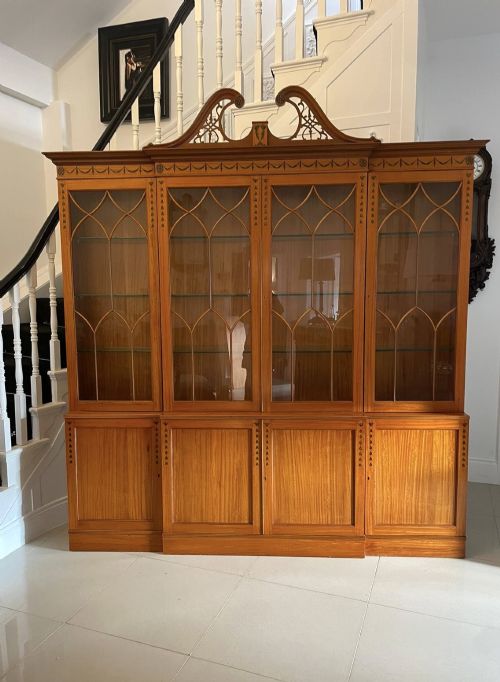
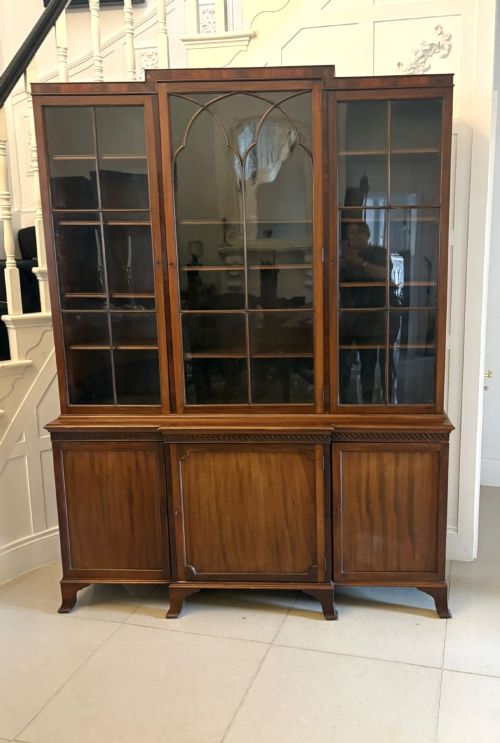
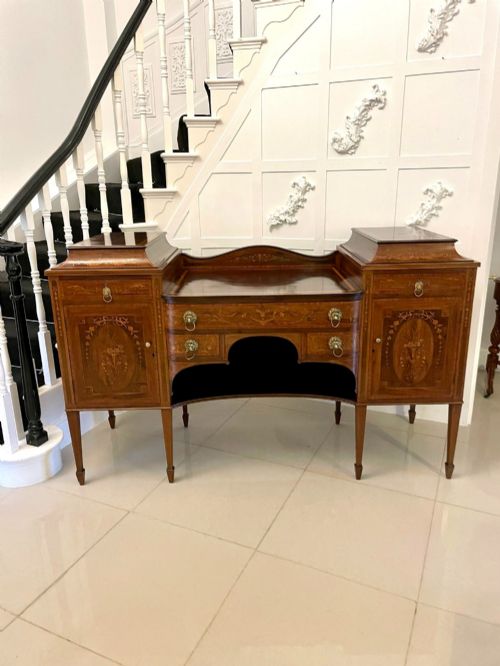
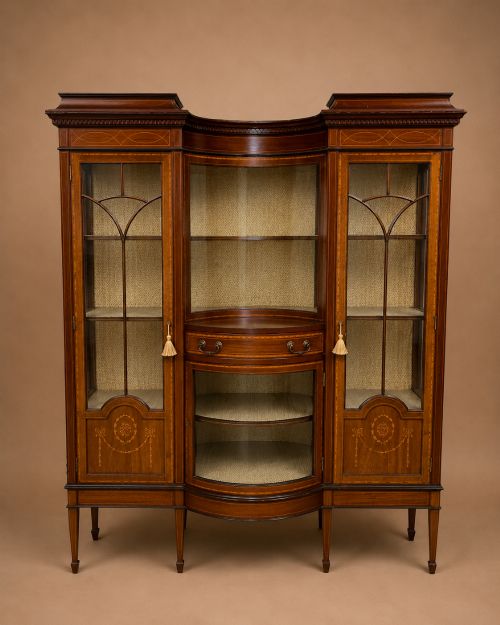
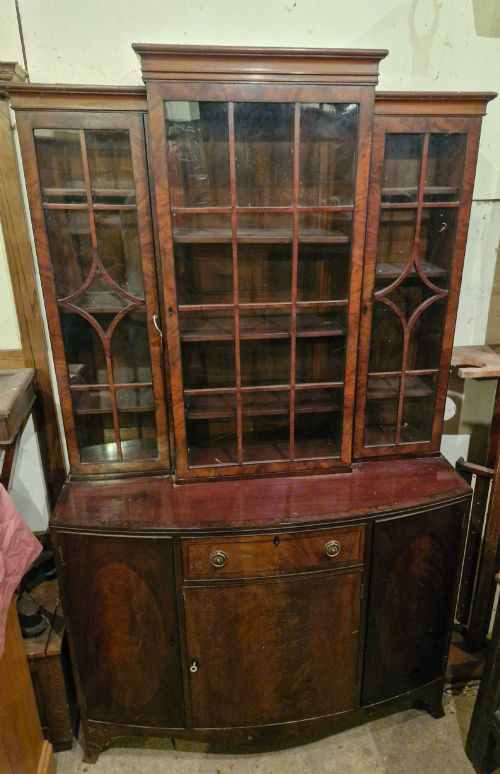
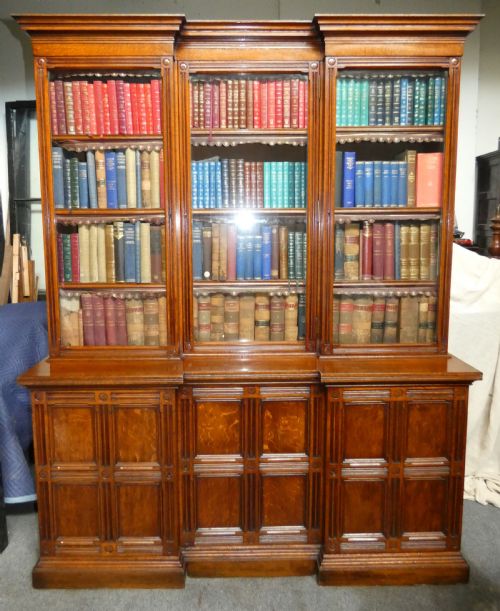
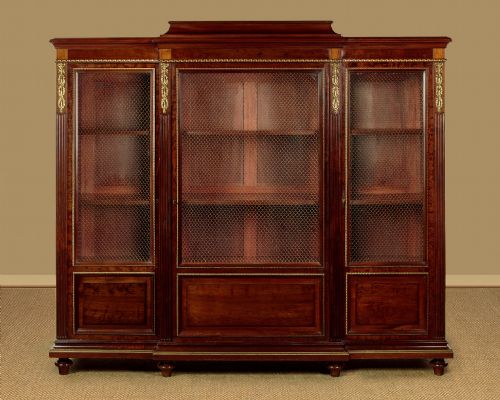
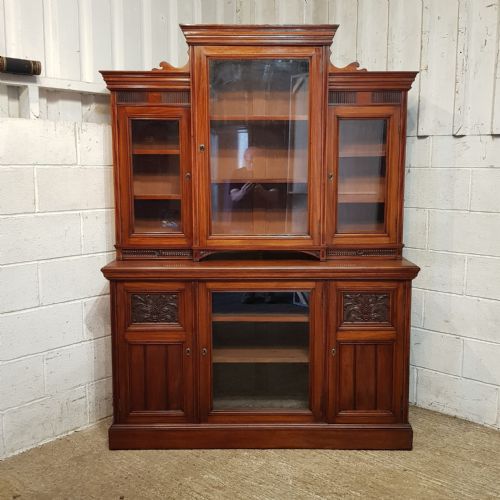
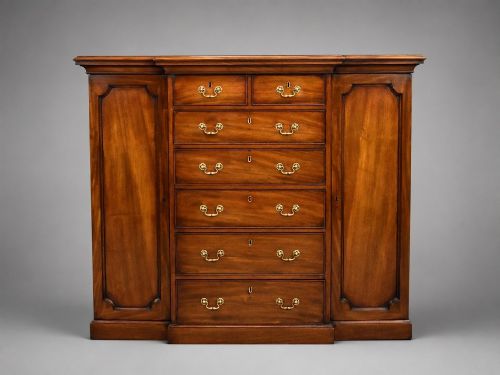
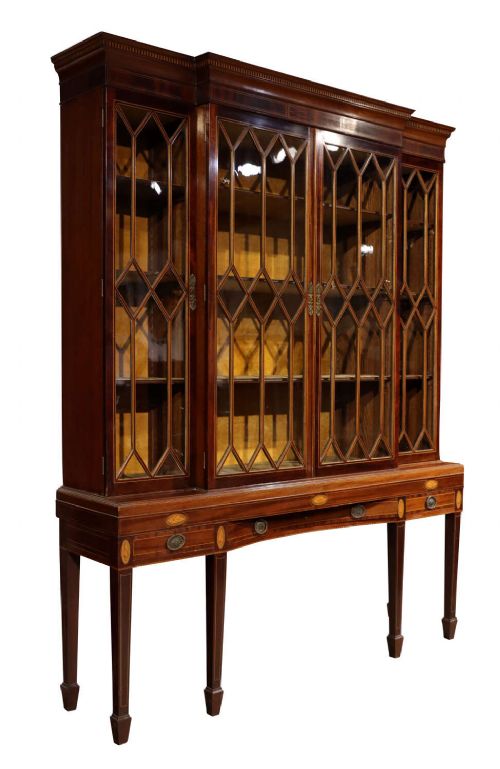
An edwardian breakfront cabinet stands as a substantial piece of furniture defined by a recessed central section flanked by projecting ends, typically housing books, porcelain, or fine objects behind glazed or panelled doors. These pieces emerge predominantly from the Edwardian era and the late nineteenth century, drawing heavily on Sheraton Revival, Chippendale Revival, and Neo-Classical design vocabularies.
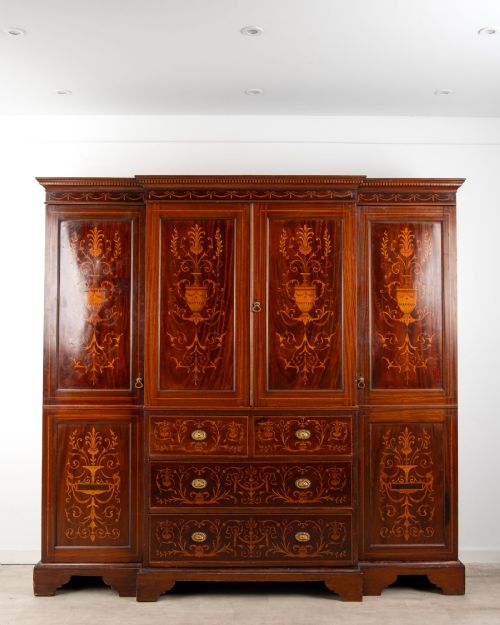
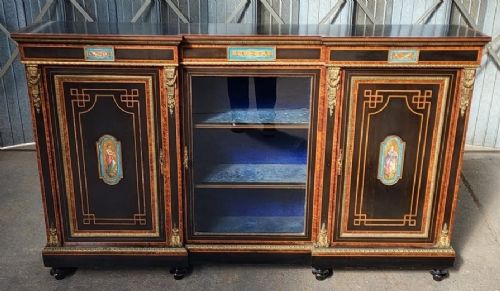
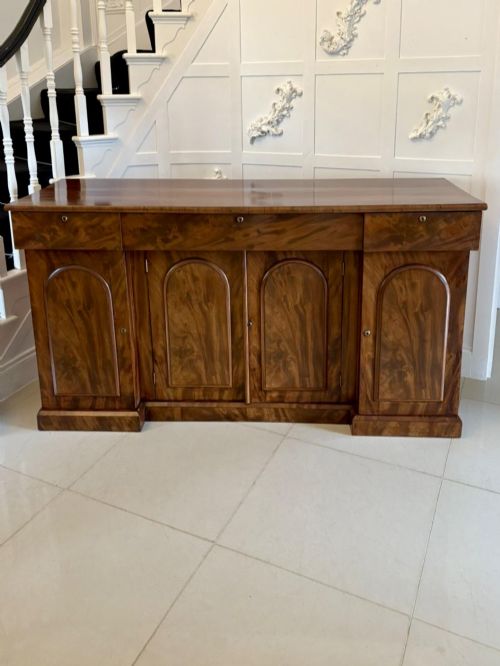
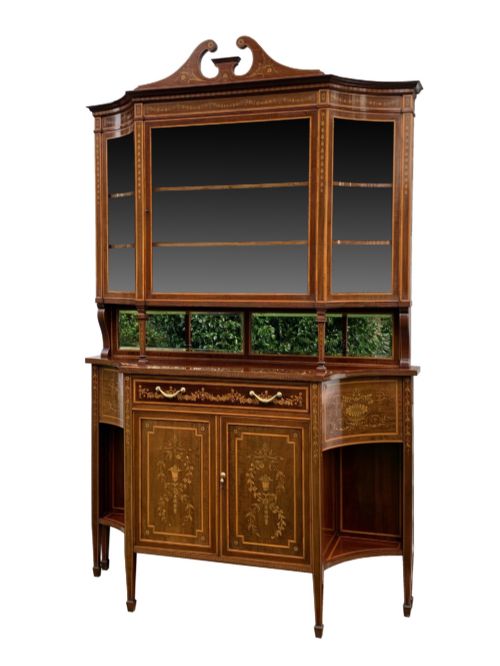
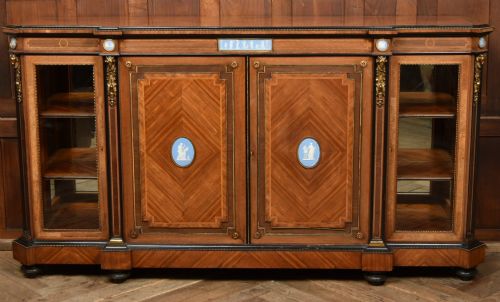
The version most commonly met on this page is the mahogany display cabinet or bookcase, frequently accented with satinwood stringing, marquetry inlay, or brass mounts. Alongside these tall library pieces, one encounters sideboard configurations and lower dwarf cabinets designed to sit beneath wall-hung art.
Materials and construction
Cabinet makers built these frames primarily in mahogany, walnut, and satinwood, often selecting figured timbers such as flame mahogany or burr walnut for the primary door panels and drawer fronts. Cabinetry of this scale relied on solid carcases lined with secondary timbers, faced with carefully matched veneer grains.
Surface ornamentation involved intricate marquetry, brass stringing, ormolu mounts, and hand-painted floral decoration on satinwood ground. Glazing took the form of individual panes held by delicate astragal bars or broader leaded frameworks.
Object forms recorded here range from tall library bookcases and display cabinets to low credenzas, sideboards, compactum wardrobes, and bedside cabinets.
Judging execution
Quality reveals itself in the precision of the timber matching and the subtlety of the inlay work, where lesser pieces rely on printed or repetitive motifs rather than hand-cut marquetry. The crispness of the astragal glazing bars and the weight of the brass hardware distinguish standard workshop production from notable maker output.
Structural integrity rests on the seasoning of the timber and the true alignment of the breakfront projection, which requires expert joinery to prevent warping across wide cabinet fronts over decades of changing household temperatures.
Hewetsons London·Edwards and Roberts·Maple and Co
The Edwardian Breakfront Cabinet Glossary
- Breakfront
- A cabinet design where the central section projects forward from the flanking side wings, creating architectural depth across the façade.
- Astragal
- A narrow wooden moulding used to divide a glass door into smaller individual panes within a bookcase or display cabinet.
- Marquetry
- Decorative patterns formed by fitting together small pieces of tinted wood, shell, or ivory veneer onto a solid ground.
- Satinwood
- A lustrous, yellowish timber imported from the tropics, prized by cabinet makers for banding and fine inlay work during the revival periods.
- Ormolu
- Gilt bronze mounted onto furniture as decorative feet, escutcheons, or corner brackets.
Edwardian Breakfront Cabinet: Frequently Asked Questions
What is an edwardian breakfront cabinet used for?
These cabinets served primarily as principal storage furniture in drawing rooms, libraries, and dining rooms, designed to house valuable porcelain, glassware, or leather-bound library books.
The glazed upper sections protected delicate collections from household dust while displaying them openly to guests, whereas lower wooden cupboards concealed household silver or linen.
How do I tell an edwardian piece from a victorian one?
Edwardian pieces generally exhibit a lighter, more restrained aesthetic, often employing satinwood accents, delicate marquetry, and brighter polished mahogany inspired by eighteenth-century Sheraton designs.
Victorian cabinets tend to be heavier in proportion, utilising darker ebonised finishes, rosewood, burr walnut, and robust brass or ormolu mounts that reflect a more opulent interior style.
Are these cabinets one piece or modular?
Most large breakfront bookcases and display cabinets were constructed in two or more distinct sections to facilitate transport, featuring a heavy lower base cabinet and a separate upper glazed bookcase.
Dwarf cabinets and sideboards were typically built as single, fixed units due to their lower height and shallower depth.
How should I care for satinwood and mahogany surfaces?
Maintaining these polished timber surfaces requires avoiding direct sunlight to prevent the fading of delicate satinwood and dyed inlay veneers over time.
Gentle dusting with a dry, soft cloth and occasional applications of traditional beeswax help preserve the natural lustre of the French polished finish without building up greasy residues.