
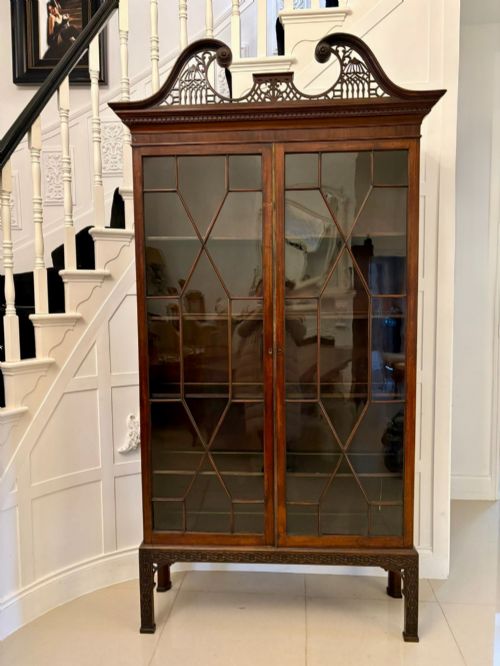
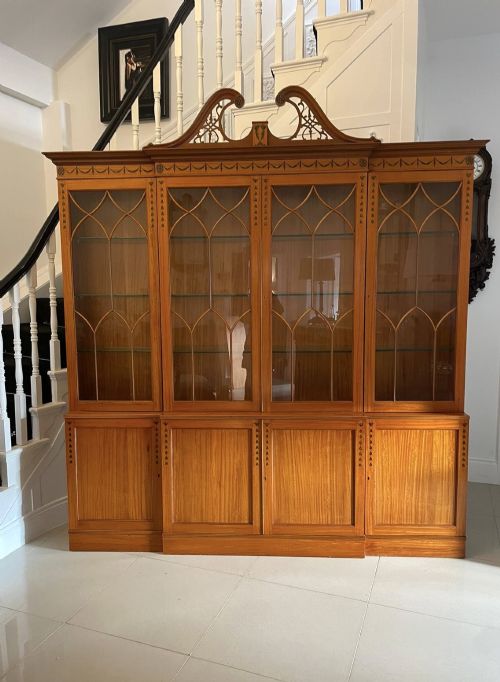
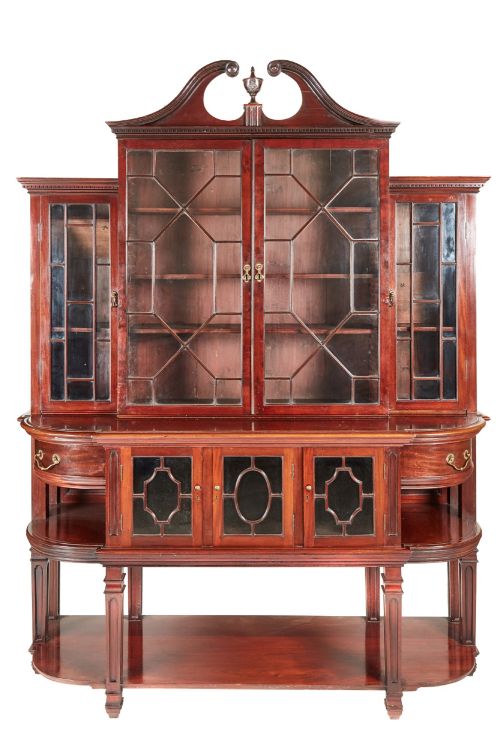
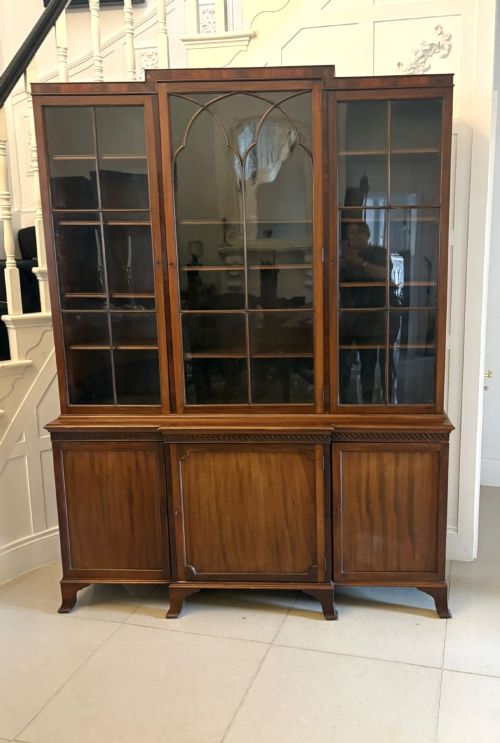
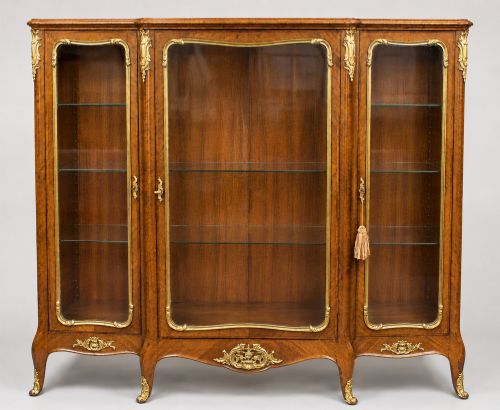
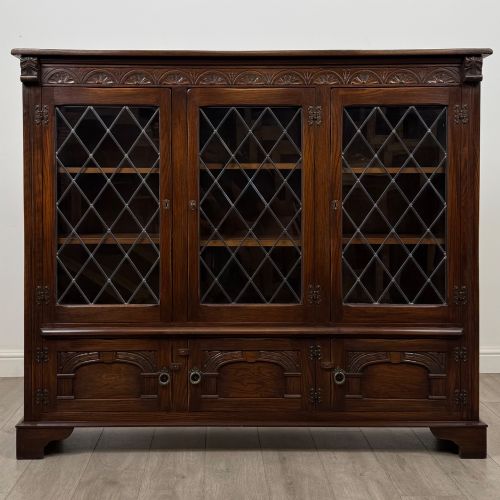
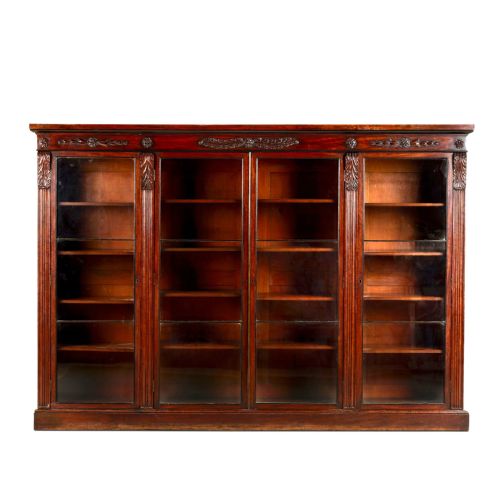
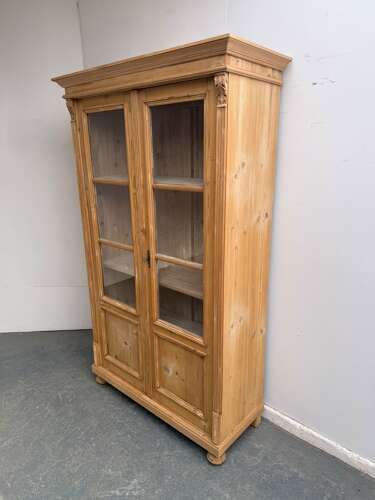
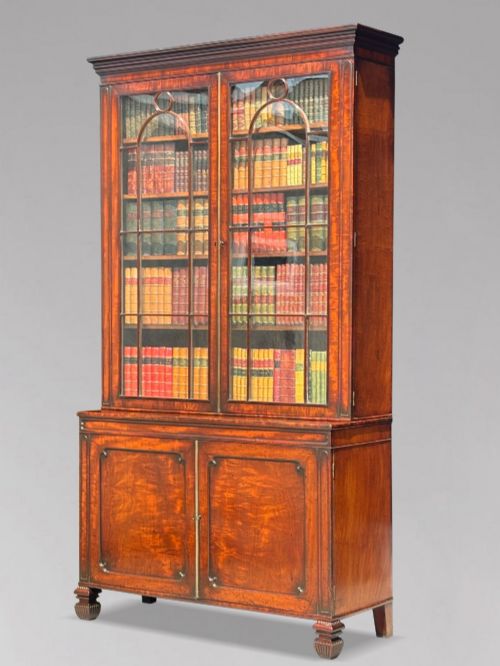
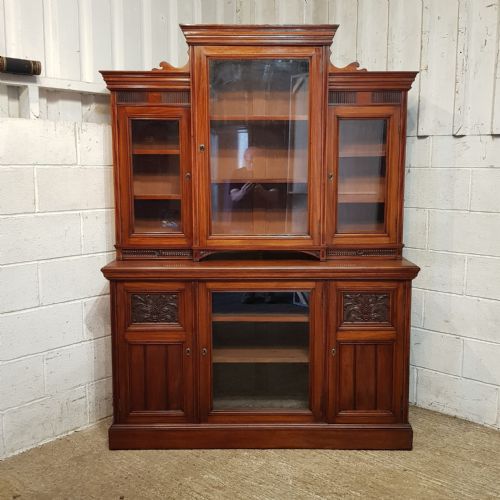
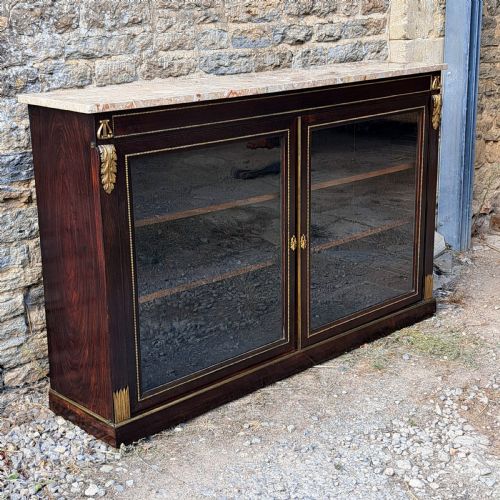
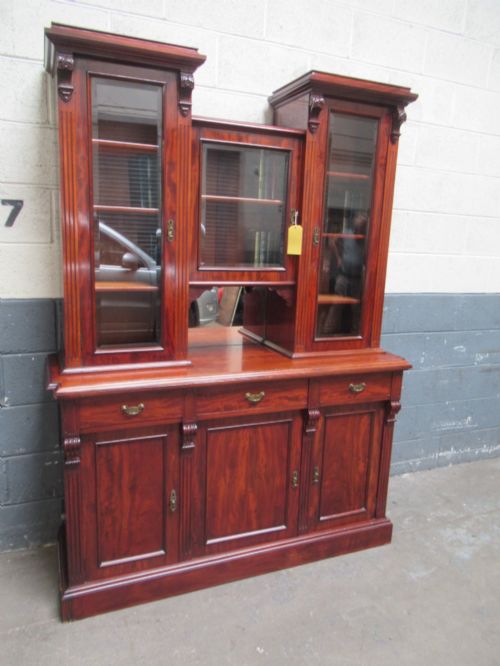
Large Glass Display Cabinet
A large glass display cabinet brings presence to a room, housing precious volumes and fine objects behind transparent panels.
Large Glass Display Cabinet
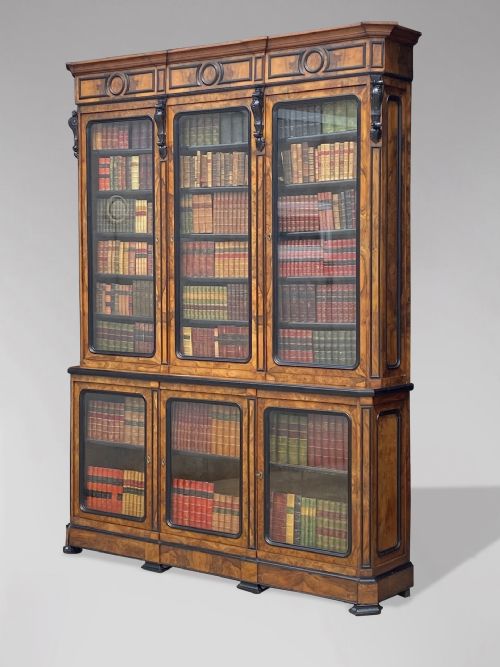
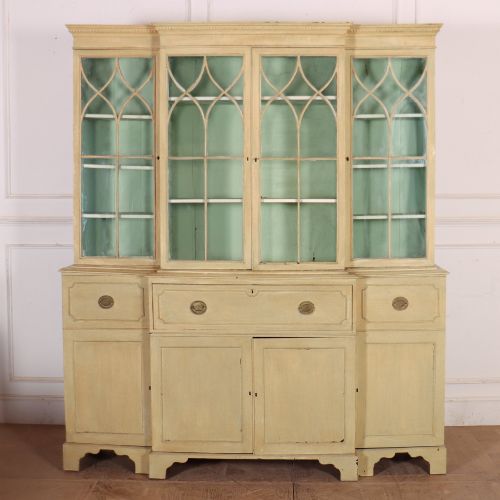
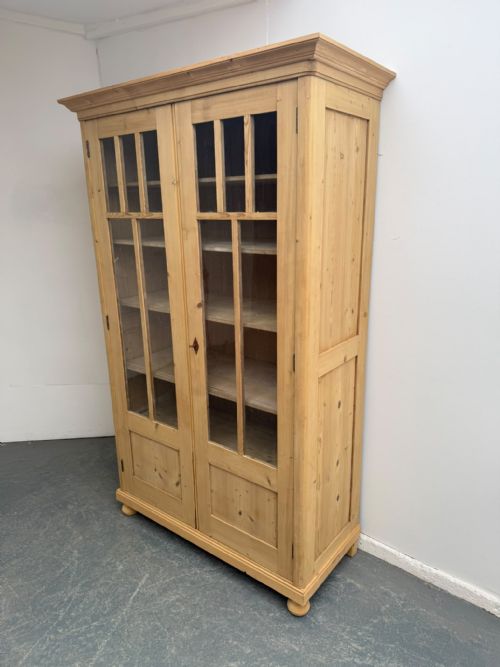
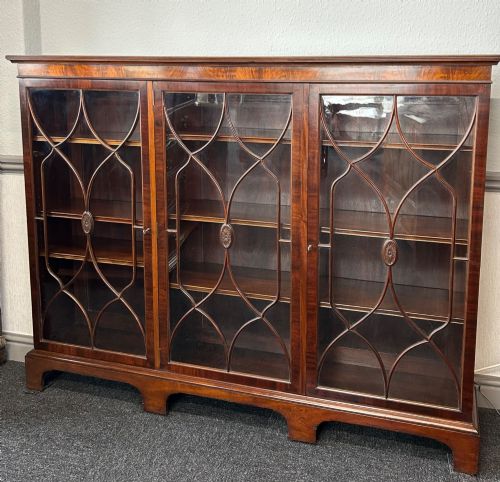
A large glass display cabinet serves as a grand storage piece, encompassing bookcases, breakfront display cabinets, credenzas, and shop display counters. Buyers encounter these forms frequently across nineteenth-century Victorian and Edwardian periods, alongside later twentieth-century iterations.
Originating primarily from British workshops, French cabinets, and Italian studios, these pieces combine extensive timber framing with large glass viewing areas. They range from formal library bookcases to specialised specimen cabinets designed to hold curated collections.
Materials and construction techniques
Makers utilised sturdy hardwoods including mahogany, walnut, oak, and satinwood, often applying burr walnut or exotic kingwood veneers to primary surfaces. Structural integrity depended on dense timber frames designed to support heavy glass doors and numerous internal shelves.
Decorative elements relied on meticulous craftsmanship, incorporating ormolu mounts, brass details, and intricate marquetry or inlay work. Astral and astragal glazing bars divided large glass panes into precise geometric patterns, holding individual sheets securely in place.
Surface finishes included hand-applied wax, French polish, and original painted decoration, which protected the wood while accentuating its natural grain. Specialised pieces integrated mirrors and velvet-lined interiors to enhance the display of stored items.
Materials documented across the inventory include mahogany, walnut, oak, satinwood, burr walnut, kingwood, ormolu, brass, and glass.
Markers of superior craftsmanship
Quality rests in the selection of timber and the precision of the cabinetmaker's joinery. Superior examples display carefully matched wood veneers, symmetrical grain patterns, and robust internal construction that prevents sagging under heavy loads.
The refinement of decorative details distinguishes exceptional pieces from standard workshop output. Hand-carved mouldings, crisp ormolu mounts, and finely formed astragal glazing bars indicate a higher tier of production.
Originality of components, including glass panes, hardware, and painted decoration, elevates a cabinet's standing. Pieces retaining their fitted interior shelving and working locks demonstrate greater integrity.
Wylie and Lochhead·Hille
The Large Glass Display Cabinet Glossary
- Astral glazed
- Refers to glass doors divided into panes by wooden or metal bars, allowing clear visibility of the interior contents while providing structural support.
- Breakfront
- A cabinet design where the central section projects forward from the flanking outer sections, creating architectural depth and varied proportions.
- Credenza
- A low-profile storage unit, frequently featuring glass doors or curved ends, commonly utilised in Victorian drawing rooms for display and storage.
- Ormolu
- Gilded bronze ornamentation applied to furniture, popular in French and revival pieces to add metallic contrast and decorative richness.
- Marquetry
- Decorative veneer work forming pictorial or geometric patterns using various coloured woods, applied to the exterior surfaces of cabinet furniture.
- Vitrine
- A glass-fronted display cabinet specifically designed to exhibit porcelain, small artefacts, or curiosities from all visible angles.
Large Glass Display Cabinet: Frequently Asked Questions
Where should a large display cabinet be placed?
These tall pieces demand stable, well-supported flooring and enough clearance to open wide glazed doors comfortably without obstruction. Placing them away from direct sunlight protects both the wooden timber frames and any sensitive items stored inside.
Positioning them against a solid interior wall allows the architectural proportions of breakfront designs and bookcases to anchor the room. Adequate ambient lighting helps illuminate the contents behind the glass panes effectively.
How are antique glazed cabinets cleaned?
Dust timber surfaces gently with a dry, soft cloth to prevent particulate buildup on polished mahogany, walnut, or satinwood finishes. Avoid harsh chemical sprays that might degrade historic wax or French polish over time.
Clean the glass panels using a mild, non-abrasive glass cleaner applied to a cloth rather than sprayed directly, preventing moisture from seeping into wooden framing joints or antique glazing putty.
Can shelves inside these cabinets be adjusted?
Many nineteenth-century and Edwardian bookcases feature fixed wooden shelving integrated into the primary structural framing of the interior. Altering these heights typically requires professional intervention to avoid compromising the stability of the cabinet walls.
Later or revival pieces occasionally incorporate adjustable shelf supports, allowing owners to modify vertical spacing to accommodate taller books or varied display objects.
How do I identify a revival style cabinet?
Revival pieces borrow architectural motifs and forms from earlier centuries, such as Georgian, Regency, or Louis XV aesthetics, while utilising nineteenth or twentieth-century construction methods. Look for standardised hardware, machine-cut joints, or specific revival indicators in the design nomenclature.
Comparing the timber treatment and secondary woods against known period pieces helps clarify whether a cabinet is a true period example or a later interpretation.