
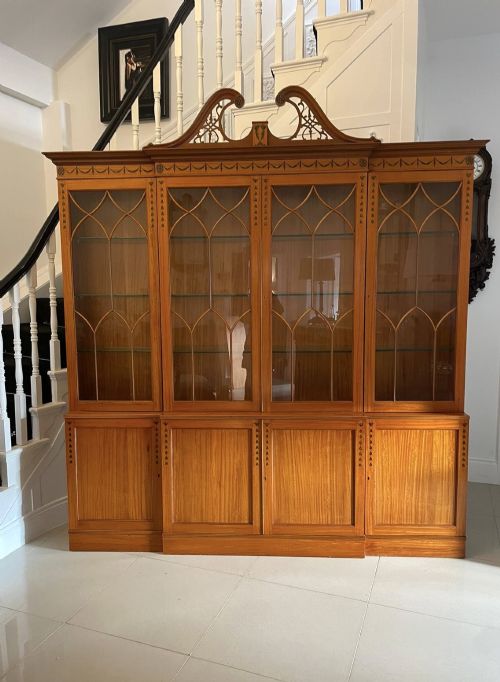

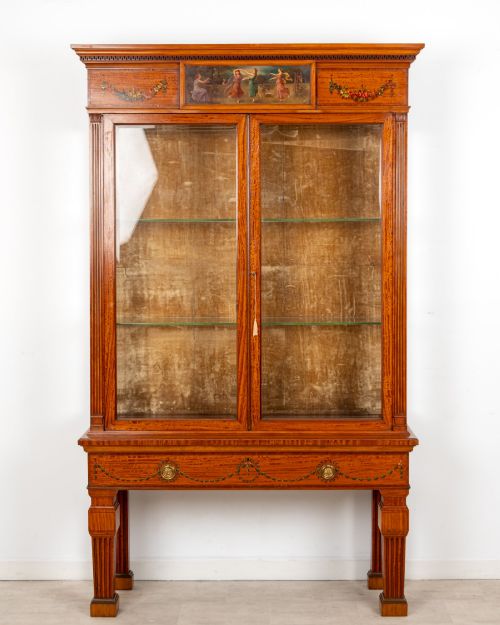
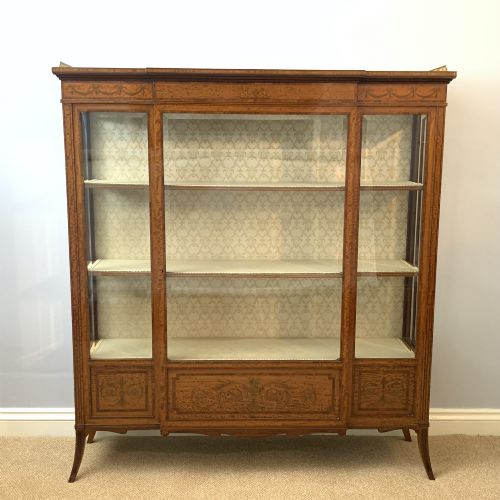
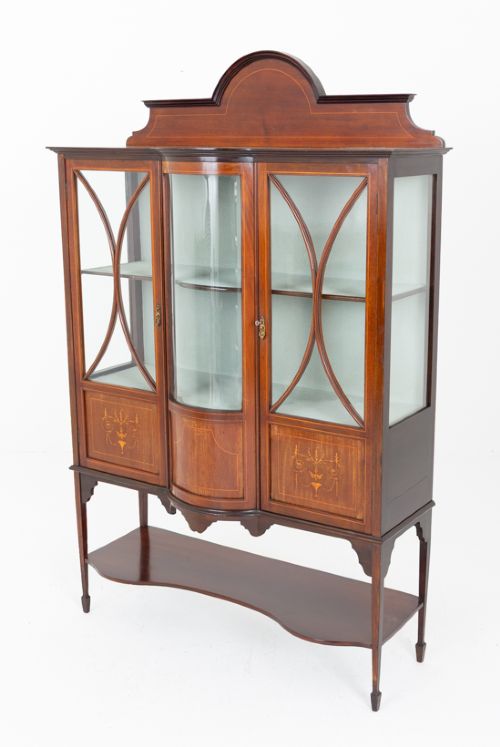
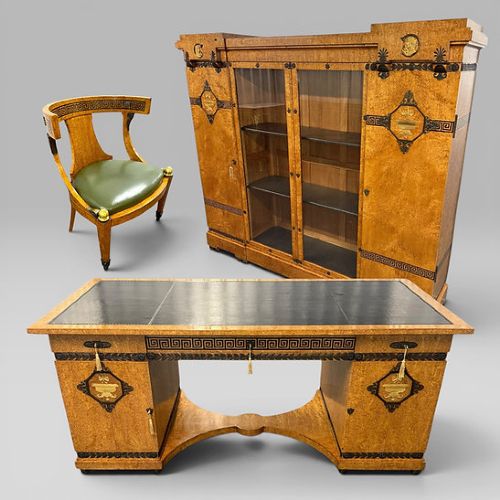
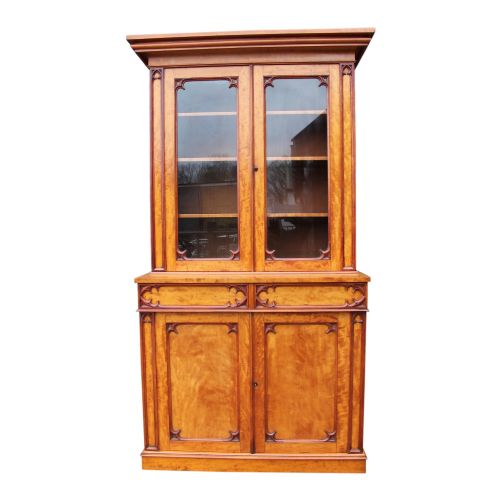
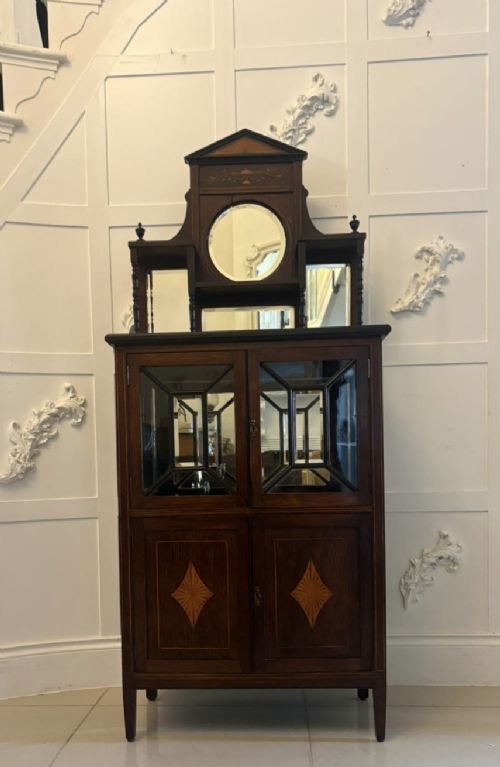
Satinwood Bookcase Cabinet
A satinwood bookcase cabinet brings together fine timber and glazed display, offering a practical library and a refined focal point.
Satinwood Bookcase Cabinet
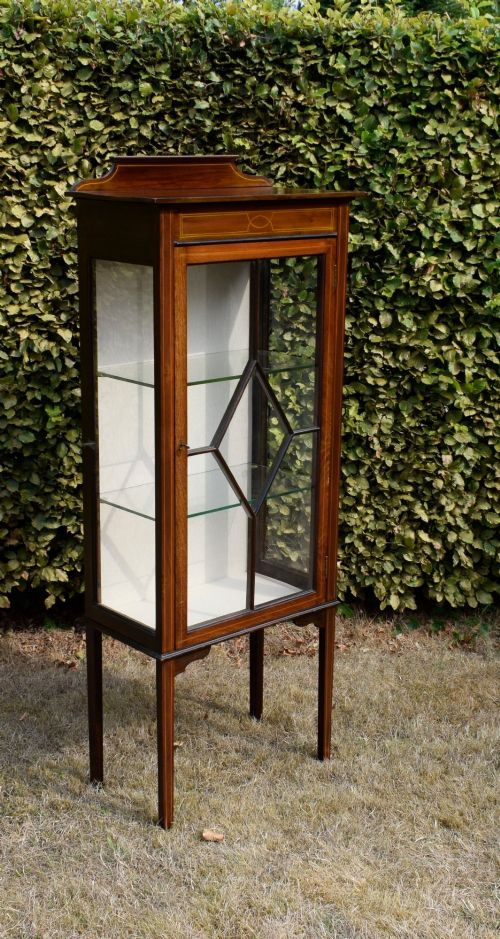
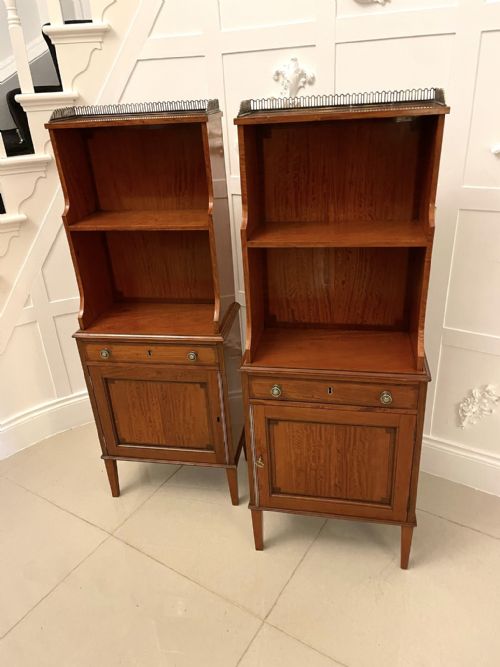
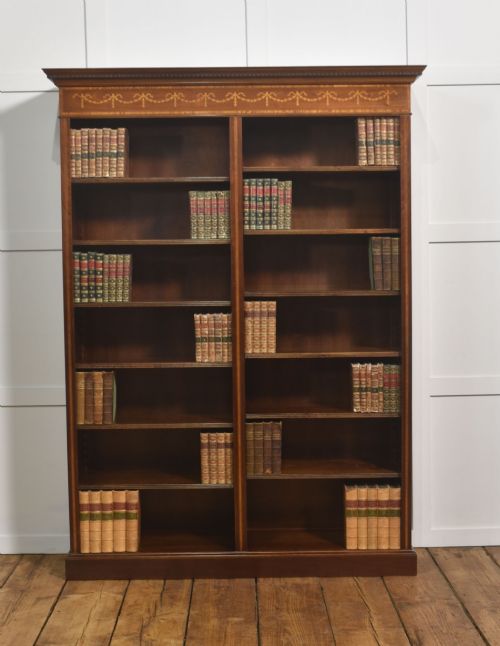
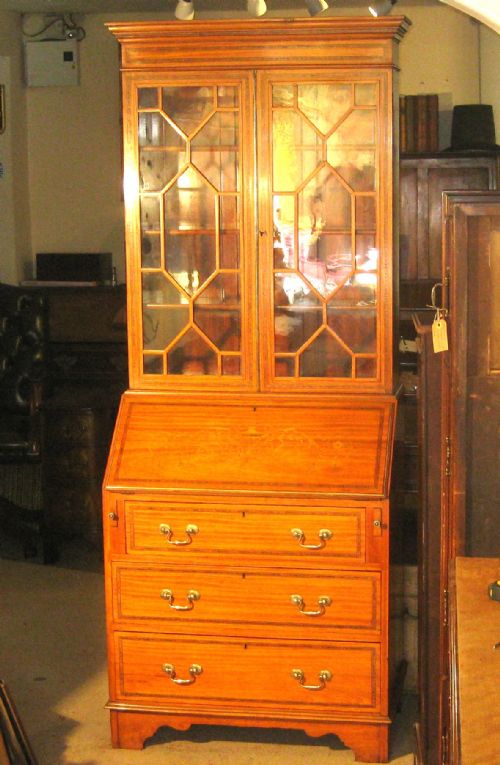
When you search for a satinwood bookcase cabinet, you encounter pieces intended to display volumes while showcasing light-reflecting veneers. These items combine upper shelving or glazed display sections with lower enclosed cupboards or bureau desks.
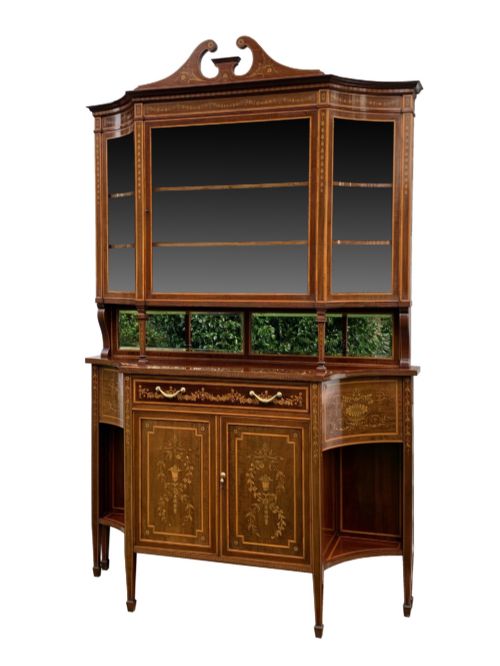
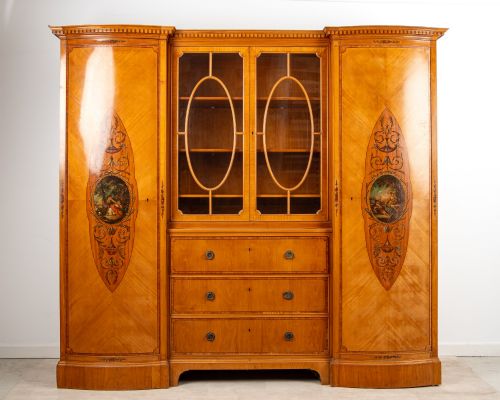
The versions most frequently met on this page date from the Edwardian era and the late nineteenth century, often reflecting a revival of eighteenth-century taste. Makers combined functional storage with decorative surfaces, producing breakfront display cabinets, tall bookcases, and compact secretaire units.
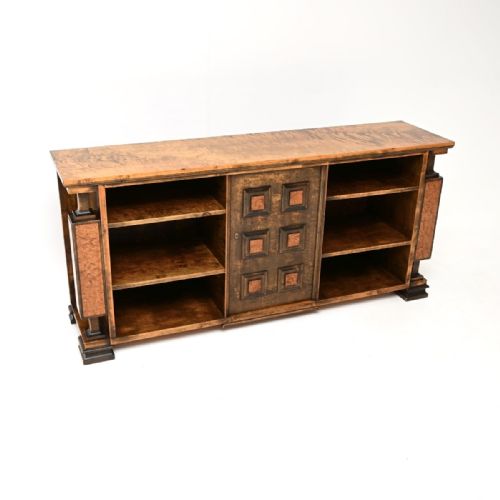
Examples range from Georgian originals to twentieth-century interpretations, utilising the golden sheen of satinwood alongside contrasting banded timbers. Buyers encounter everything from tall breakfront libraries to small-scale collector cabinets designed for refined domestic interiors.
Materials and Construction
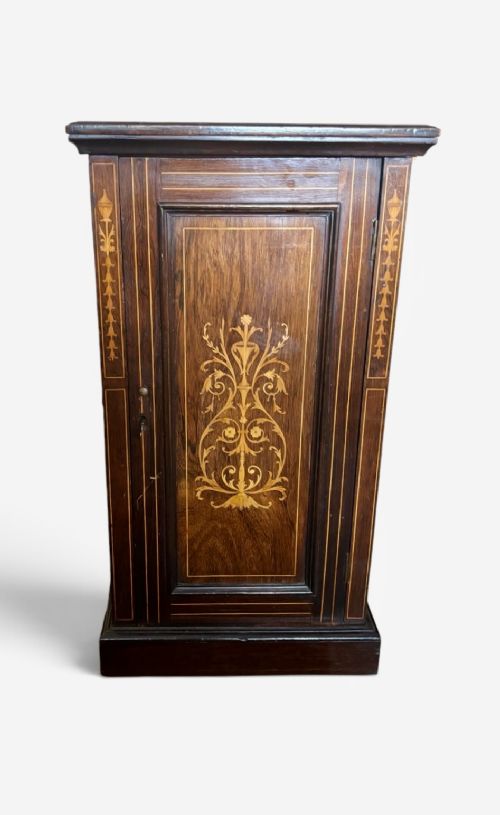
Craftsmen applied figured satinwood veneers over sturdy carcases of mahogany, pine, or oak, often adding contrasting cross-banding in rosewood, walnut, or tulipwood. These surfaces frequently received hand-painted floral panels, delicate line inlay, and marquetry motifs.
Glazing bars divided glass doors into geometric or astral patterns, while internal fittings incorporated adjustable wooden shelves, fabric linings, and mirrored backs. Brass hardware, including locks, handles, and hinges, completed the construction of these refined library pieces.
Object forms span open bookcases, breakfront display cabinets, secretaire units, and compact wardrobes.
Distinctions in Quality
The standard of a satinwood bookcase cabinet rests upon the choice of timber and the precision of its decorative details. Pieces featuring heavily figured veneers, elaborate hand-painted panels, and intricate marquetry sit at the upper end of the scale.
Construction methods also dictate worth, visible in the tightness of veneer joints, the thickness of secondary timbers, and the presence of original brass fittings. Greater care in matching grain patterns across large surfaces distinguishes superior workshop production.
Edwards & Roberts·Gillows·Hampton & Sons·Maple & Co.·Mercier Frères
The Satinwood Bookcase Cabinet Glossary
- Satinwood
- A hard, yellow timber with a natural sheen, prized for fine veneer work on nineteenth-century furniture. It takes a high polish and reflects light effectively in domestic settings.
- Secretaire
- A desk disguised as a chest of drawers or cabinet, featuring a drop-down writing flap. Inside, small drawers and pigeonholes provide compartments for correspondence.
- Marquetry
- Decorative patterns formed by fitting together thin slices of various coloured woods into a veneer. Craftsmen use this technique to create floral motifs and geometric borders.
- Breakfront
- A piece of furniture where the central section projects forward from the flanking wings. This configuration adds architectural depth and visual weight to large cabinets.
- Astral Glazing
- Wooden framing bars that divide glass panes into narrow, intricate geometric shapes. These patterns are typical of eighteenth-century and revival bookcase doors.
Satinwood Bookcase Cabinet: Frequently Asked Questions
What is a satinwood bookcase cabinet?
It is a hybrid piece of furniture combining bookshelf or display space with enclosed lower storage, surfaced in pale, light-reflecting satinwood veneer.
These items were designed for drawing rooms and libraries, serving both to house volumes and to showcase decorative arts.
How do I date a satinwood cabinet?
Dating relies on secondary timbers, construction methods, and stylistic cues such as painted decoration or inlay patterns. Edwardian revival pieces often feature lighter carcases and machine-cut details compared to eighteenth-century originals.
Examining the hinges, backboards, and drawer linings provides further clues regarding the manufacturing period.
Where should I place one?
These cabinets suit studies, drawing rooms, or reception spaces where adequate natural light enhances the golden tones of the timber. Keeping them away from direct heat sources protects the delicate veneers from shrinking or cracking.
Pairing them with period seating or neutral walls allows the painted panels and contrasting stringing to stand out.
What distinguishes Sheraton Revival pieces?
Sheraton Revival furniture draws inspiration from late eighteenth-century neoclassical designs, employing symmetrical layouts and delicate painted motifs. Makers of this later movement favoured satinwood grounds with floral garlands and ribbon swags.
These Edwardian interpretations capture the elegance of the earlier Georgian era while utilising contemporary workshop techniques.