


Edo Period Porcelain Vases
When you handle edo period porcelain vases, you touch centuries of Japanese ceramic history crafted in Arita for domestic and export markets.

Edo Period Porcelain Vases
Edo period porcelain vases encompass works produced in Japan between the seventeenth and nineteenth centuries, centring on the production hub of Arita. These vessels range from simple bottle forms and trumpet beakers to large lidded jars and garnitures designed for display.
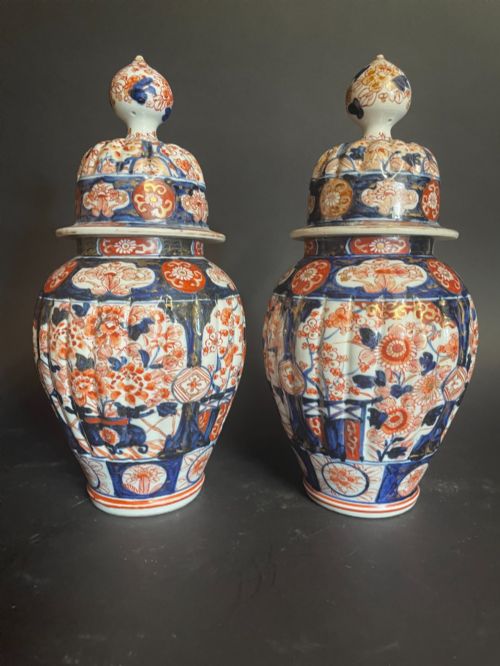
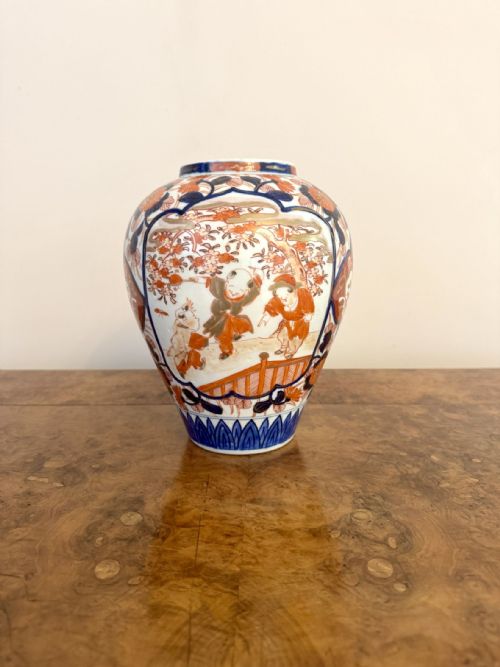
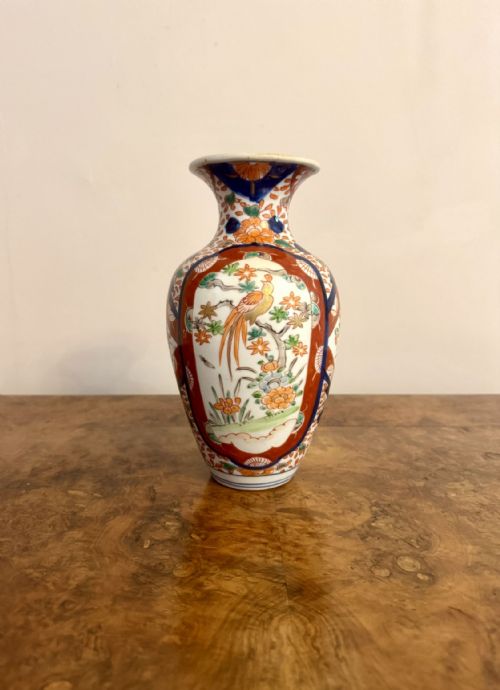
You will frequently encounter pieces decorated in the Imari palette alongside blue and white porcelain. The selection includes individual cabinet items as well as matched pairs and larger groupings that survive from earlier decorative schemes.
How they were made
Potters shaped high-firing porcelain clay on the wheel before applying underglaze cobalt blue and iron-red and gold enamel overglaze decorations. Artisans utilised kilns in Arita to fire these dense bodies to vitrification, producing durable vessels.
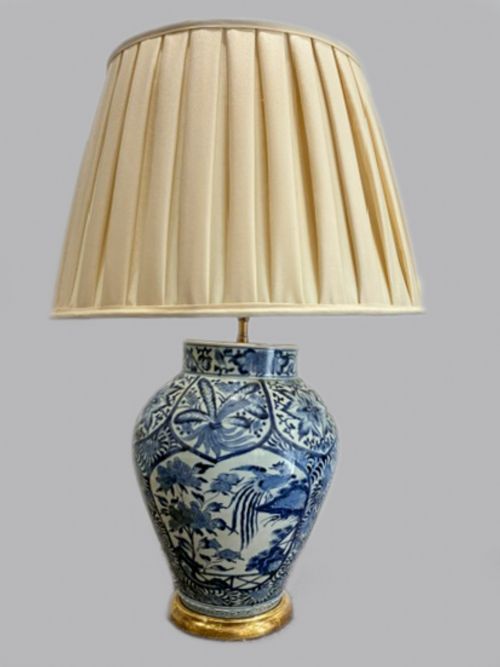
Many survivors incorporate applied elements such as brass or gilt mounts added during later European adaptations, particularly when pieces were converted into table lamps.
Old kiln waste sites in Arita reveal that imperfect pots were simply recycled into local cottage foundations.
What varies in quality
Quality rests in the crispness of the underglaze painting and the richness of the enamel and gold leaf application. Finer examples display balanced proportions in baluster and hexagonal shapes with meticulously controlled brushwork.
The preservation of the overglaze enamels and the crispness of the moulded porcelain form distinguish superior specimens from simpler commercial wares.
The Edo Period Porcelain Vases Glossary
- Arita
- The Japanese town in Hizen province where porcelain production began in the early seventeenth century. Most pieces searched under this heading originated from its kilns.
- Imari palette
- A decorative scheme utilising underglaze blue, iron red, and gilt highlights on a white porcelain ground. This style became immensely popular for export.
- Garniture
- A set of three or more matching vases and lidded jars designed to be displayed together on a mantelpiece or cabinet.
- Baluster
- A vase form with a rounded body that tapers toward the base and swells out near the centre. It remains a standard shape in Japanese ceramics.
- Trumpet beaker
- A slender vase shape that flares outward toward the rim, resembling a musical horn. Examples often feature blue and white designs from the seventeenth century.
Edo Period Porcelain Vases: Frequently Asked Questions
What is an Arita vase?
An Arita vase is a porcelain vessel made in the Hizen province town of Arita during the Edo period. These pieces were created for both Japanese domestic use and European export.
They encompass various forms including bottle vases, jars, and beakers decorated in blue and white or the Imari palette.
How do I date an Edo period vase?
Dating relies on stylistic clues such as the purity of the porcelain body, the specific tones of the cobalt blue, and the complexity of the enamel work. Seventeenth-century pieces often show simpler blue and white designs, while later examples incorporate rich Imari palettes.
Examining the potting technique and form also helps distinguish early Arita creations from nineteenth-century revivals.
Why are some vases converted to lamps?
Many Japanese porcelain vases were fitted with brass or gilt mounts and wired for electricity during the nineteenth and twentieth centuries to suit Western interior tastes. This conversion was a common practice for repurposing antique vessels into functional lighting.
Collectors often encounter these mounted examples among surviving pieces today.
What is a garniture set?
A garniture is a matched set of three or more vases and lidded jars intended to be displayed together as a decorative unit. These sets were placed on mantelpieces or large pieces of furniture in grand interiors.
Surviving complete sets are highly regarded by collectors of Japanese porcelain.