


Japanese Ceramic Bottle Vases
Japanese ceramic bottle vases combine slender necks and rounded bodies, offering a distinct traditional form that collectors seek for display.
Japanese Ceramic Bottle Vases
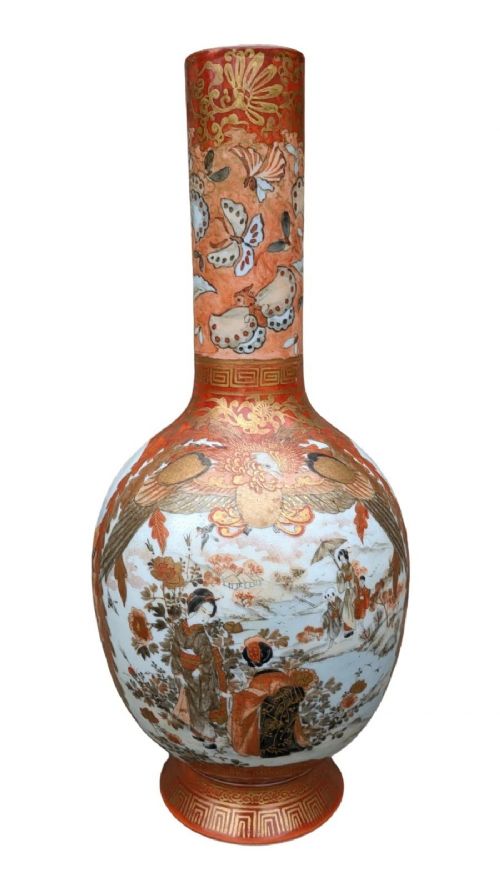
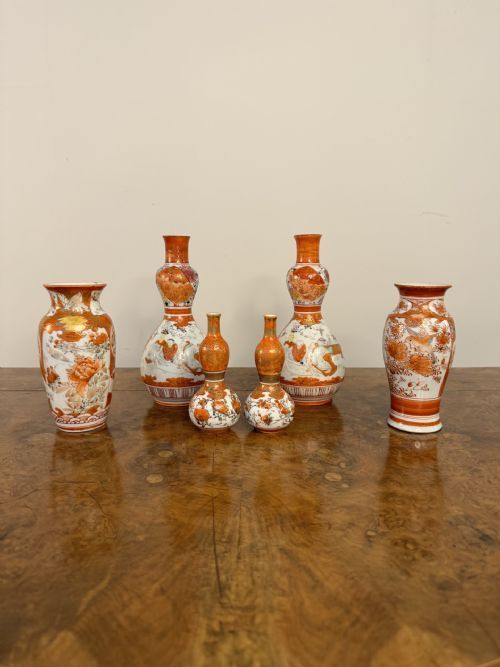
Japanese ceramic bottle vases comprise vessels featuring narrow necks and globular or tapering bodies designed to hold single stems or stand alone as decorative objects. The examples available here span multiple centuries, ranging from seventeenth-century Arita wine bottles to nineteenth-century Imari and Kutani productions.
Buyers frequently encounter Satsuma and Imari styles from the Meiji and Victorian periods, alongside earlier Edo period creations. These pieces reflect diverse regional kilns and stylistic traditions, including export wares made for Western markets.
How they were made
Potters shaped porcelain and earthenware on the wheel before applying cobalt blue pigments, enamel colours, and occasional gold leaf accents. Firing took place in wood-fired or coal-fired kilns, which imparted unique characteristics to the glazes.
Decoration involved hand-painting intricate floral, figurative, or geometric motifs directly onto the ceramic surface, sometimes utilising underglaze cobalt glaze beneath clear protective finishes.
Some miniature vases are small enough to hold just a single cherry blossom petal rather than a full bloom.
What varies in quality
The refinement of the hand-painted brushwork distinguishes superior examples from standard production pieces, particularly in the precision of Satsuma and Kutani details. Weight, potting symmetry, and the vibrancy of enamel and gold leaf application further separate high-grade vessels from simpler utilitarian forms.
Choshuzan·Jissei·Yoshisada
The Japanese Ceramic Bottle Vases Glossary
- Imari
- A style of Japanese porcelain featuring a distinct palette of cobalt blue, iron red, and gold. This ware was widely exported to Europe from the port of Imari during the Edo period.
- Kutani
- Japanese coloured pottery and porcelain characterised by bold pictorial designs and rich enamel palettes. These wares often depict landscapes, figures, and natural motifs.
- Arita
- The Japanese town and surrounding region famous for being the birthplace of Japanese porcelain production. Kilns here produced significant quantities of export and domestic vessels.
- Satsuma
- A type of Japanese earthenware featuring a crackled ivory glaze decorated with delicate enamel and gold patterns. Many Satsuma pieces were produced specifically for Western export during the nineteenth century.
- Meiji Period
- The era of Japanese history lasting from 1868 to 1912, marked by extensive international trade and highly detailed decorative arts.
Japanese Ceramic Bottle Vases: Frequently Asked Questions
How do I date a Japanese bottle vase?
Dating relies on identifying the artistic style, glaze characteristics, and potting techniques associated with specific historical eras such as the Edo or Meiji periods. Reference marks, regional kiln traits, and decorative motifs provide further chronological clues.
Changes in export regulations and Western influences during the nineteenth century also help narrow down the period of manufacture.
What is the difference between Imari and Kutani?
Imari wares typically utilise a porcelain body decorated in underglaze cobalt blue, iron red, and gold leaf, creating a rich and structured visual effect. They were heavily exported through the port of Imari.
Kutani wares are often earthenware or porcelain featuring bolder, more painterly enamel scenes in greens, purples, yellows, and reds, focusing on narrative or naturalistic subjects.
How were these vases used historically?
Many of these vessels served practical household or ceremonial functions, such as holding wine, water, or single floral stems within traditional Japanese interiors. Over time, specific shapes were adapted for the European export market as purely decorative display pieces.
Larger garnitures were often placed on mantelpieces or within cabinets to showcase the owner's taste for East Asian craftsmanship.
How should I display a bottle vase?
Because of their slender necks and balanced forms, these vases look striking as standalone focal points on shelves, sideboards, or mantelpieces. Placing them away from direct sunlight helps preserve the delicate enamel and gold leaf details.
Pairing them with neutral backgrounds allows the intricate patterns of Imari, Satsuma, or Kutani styles to stand out clearly.