
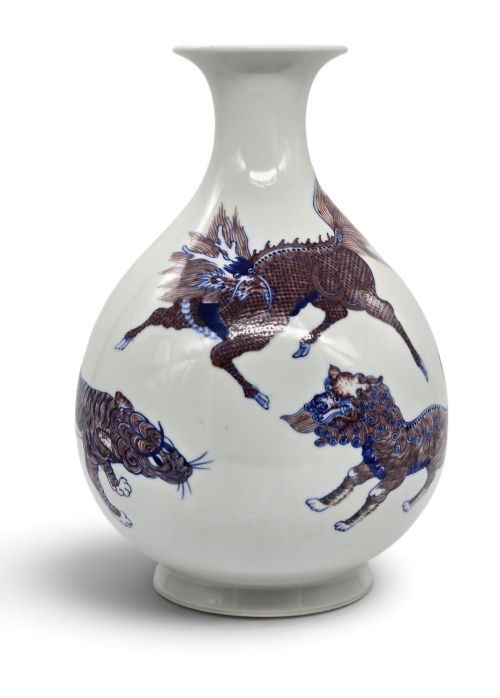
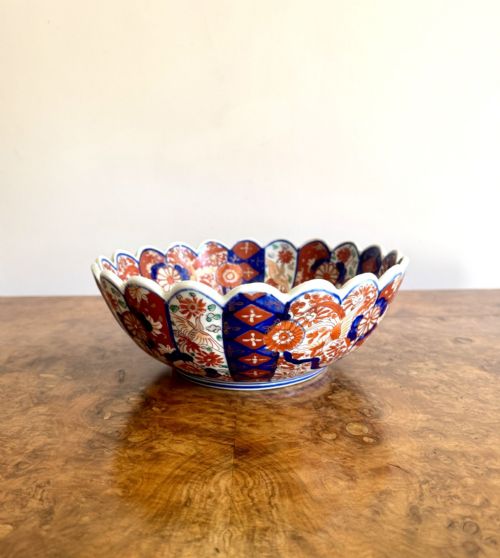


Blue White Red Porcelain
Blue white red porcelain unites cobalt painting with copper red and enamel iron-red pigments across diverse export and domestic wares.

Identifying blue white red porcelain
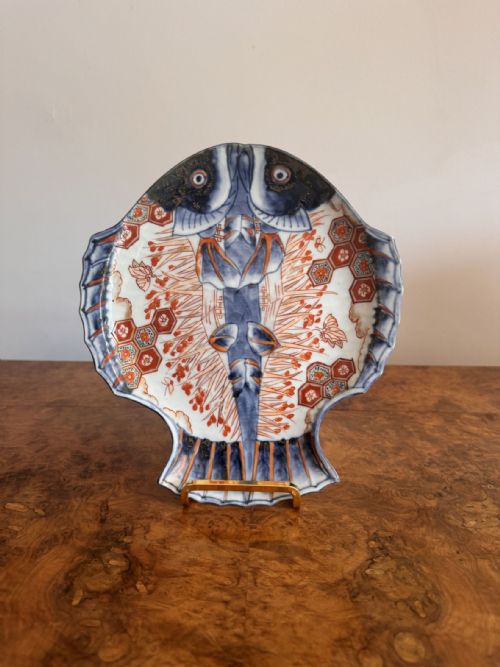
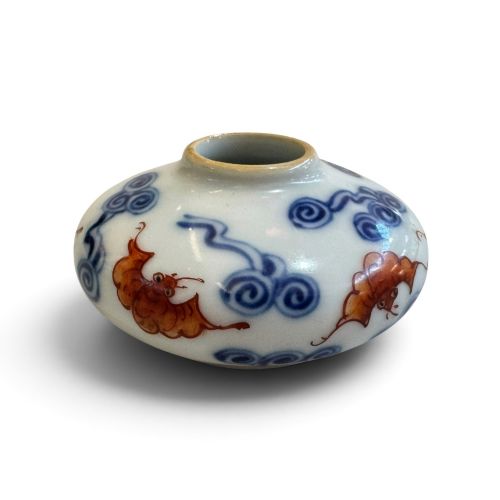
The objects originate from Chinese Qing Dynasty workshops, eighteenth-century Chinese export trade, and Japanese Edo or Meiji periods with Imari styles. Buyers encounter brush washers, snuff bottles, miniature teapots, and table lamps alongside traditional vessel forms.
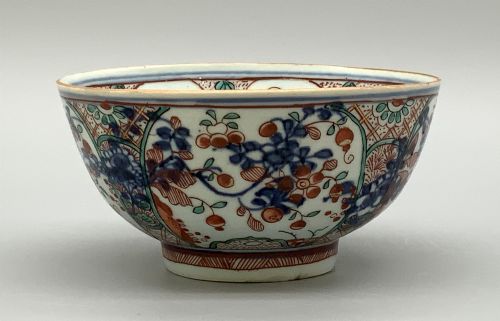
Chinese pieces frequently display underglaze red alongside blue underglaze painting, while Japanese examples utilise traditional Imari palettes incorporating iron-red enamel. Forms range from utilitarian scholar's implements to large decorative jardinieres and vases.
Materials and construction
Makers shaped refined ceramic bodies from porcelain clay before applying mineral pigments beneath or over the transparent glaze. Cobalt oxide provided the blue underglaze decoration, while copper oxides or iron-rich enamels achieved the red tones.
Certain pieces incorporate additional decorative details such as gold leaf applied over the glaze surface. Firing took place in high-temperature kilns to vitrify the porcelain body and fuse the cobalt underglaze, followed by lower-temperature firings for enamel colours.
Retail Price Guide 2026
Typical UK retail prices for blue white red porcelain, calculated from the Sellingantiques database of over a million retail prices indexed since 2003. This retail price guide relies exclusively on Sellingantiques data; no external sources or auction records are used, so the figures do not describe the wider market.
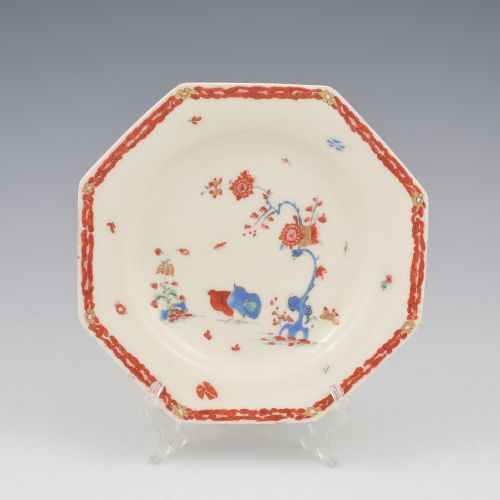
Object forms represented include scholar's objects, jardinieres, vases, decorative plates, and decorative bowls in Imari, Qing Dynasty, and Chinoiserie styles.
Assessing craftsmanship
Quality separates through the precision of the underglaze brushwork and the stability of the copper red firing. Controlled copper reduction yields rich crimson tones rather than dull greys or spreading blurs.
The refinement of the porcelain body and the evenness of the glaze application distinguish standard domestic wares from exceptional export pieces. Supplementary embellishments like gold leaf execution indicate the tier of the workshop.
The Blue White Red Porcelain Glossary
- Underglaze red
- A copper-based pigment applied beneath the transparent ceramic glaze before firing. It requires precise kiln temperature control to achieve its characteristic red hue.
- Imari
- A Japanese export style originating in Arita, traditionally employing a palette of underglaze blue, iron-red enamel, and gold leaf. These wares gained immense popularity across Europe.
- Jardiniere
- A large ornamental ceramic pot designed to hold living plants or flowers. They often feature robust proportions and decorative panels.
- Brush washer
- A scholar's object used in traditional East Asian calligraphy and painting to clean ink brushes. These vessels are typically compact and finely potted.
- Chinoiserie
- European decorative art reflecting Chinese artistic influences, frequently seen in eighteenth-century export porcelain. The style interprets Eastern motifs through Western design sensibilities.
Frequently Asked Questions
What is underglaze red?
Underglaze red is a copper oxide pigment painted directly onto the porcelain body before the transparent glaze is applied. The piece is then fired at high temperatures.
Because copper is highly volatile in the kiln, achieving a clear red rather than a dull grey requires precise temperature control and kiln atmosphere management.
How do I care for these?
Display these porcelain pieces away from direct sunlight and areas subject to sudden temperature fluctuations. Dust them gently with a soft, dry cloth.
Avoid using liquid cleaners or abrasive materials, particularly on pieces featuring overglaze enamel or delicate gold leaf details.
What is Imari porcelain?
Imari porcelain refers to Japanese wares exported from the port of Imari, typically decorated in a distinctive palette of underglaze blue, iron-red, and gold.
These pieces often feature intricate floral and geometric patterns that influenced ceramic production across Europe during the eighteenth century.
How do I date these pieces?
Dating relies on stylistic markers, pigment characteristics, and potting techniques associated with periods like the Qing Dynasty, eighteenth-century export, and the Meiji era.
Examining the foot ring, glaze texture, and base markings provides further clues regarding the manufacturing period.