
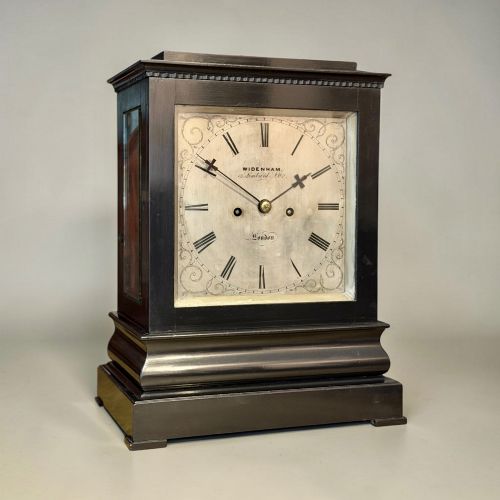
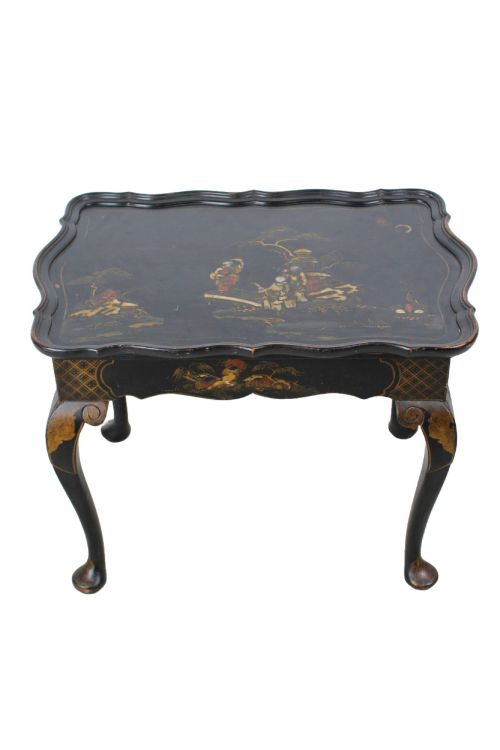
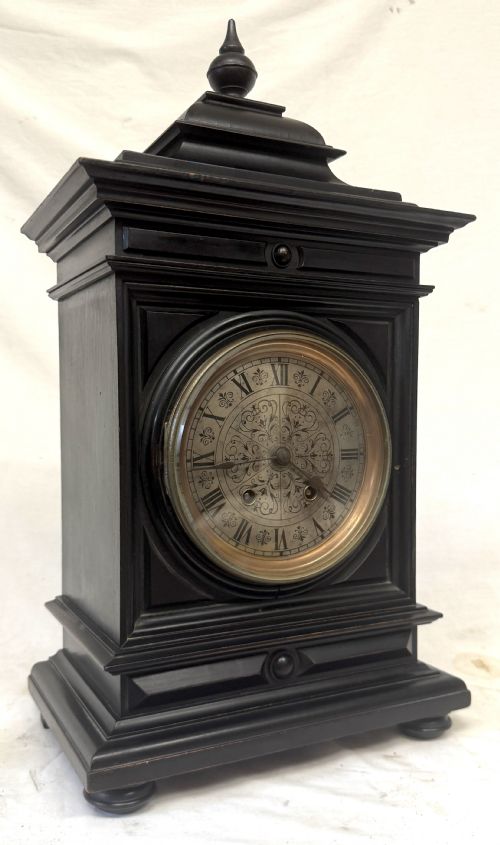
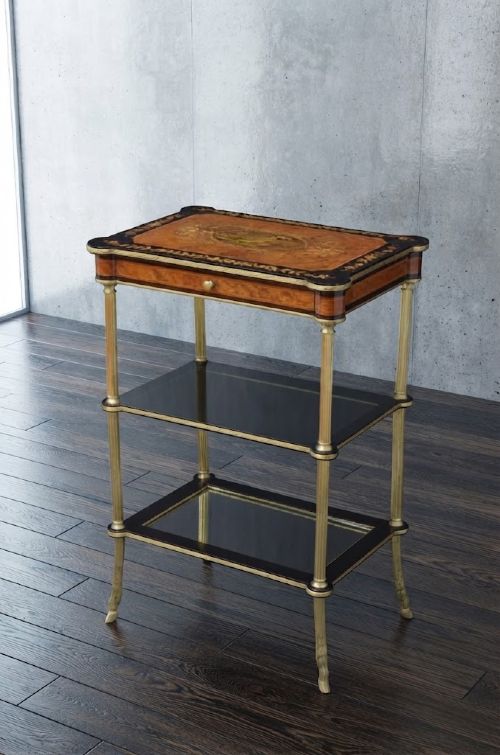
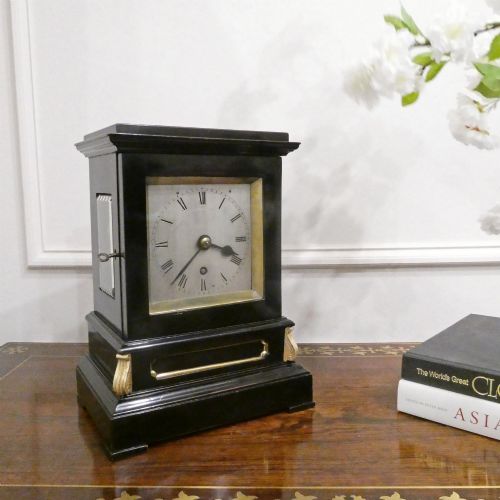
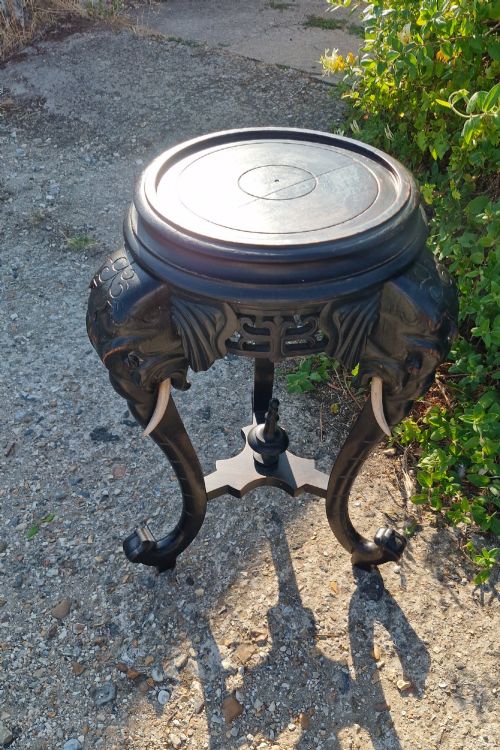
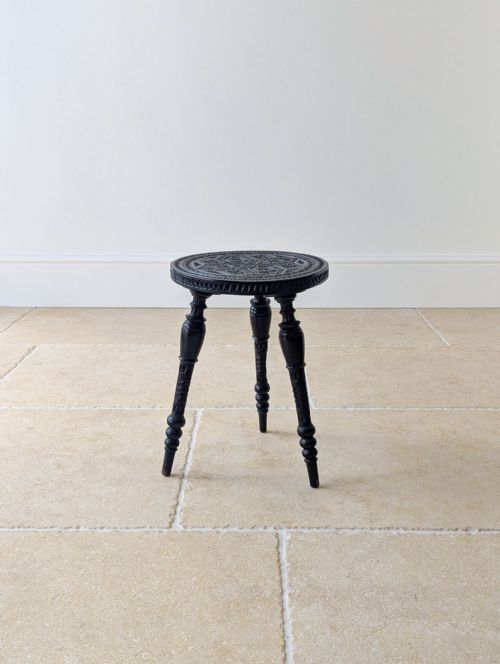
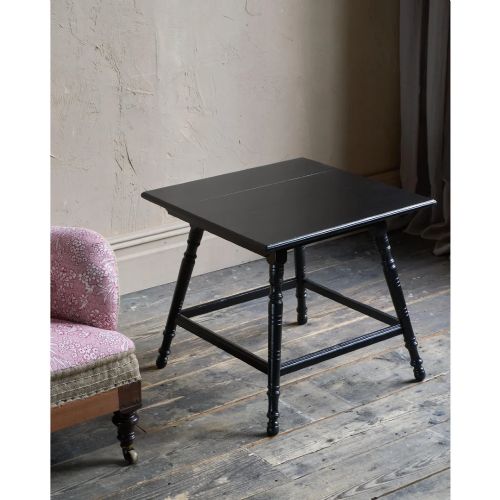
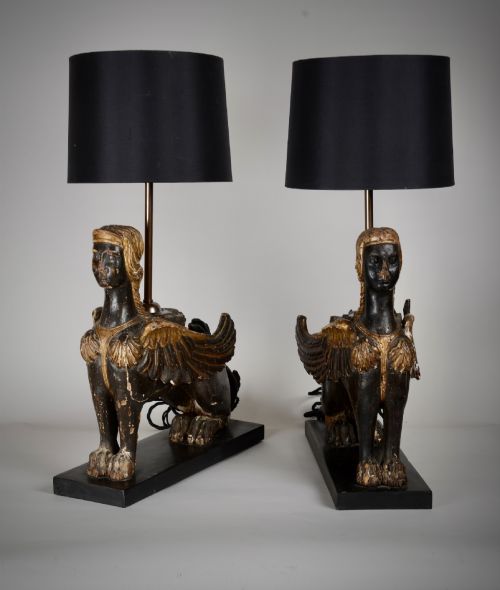
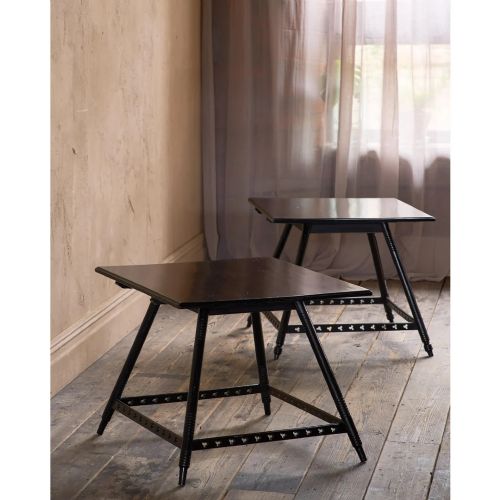
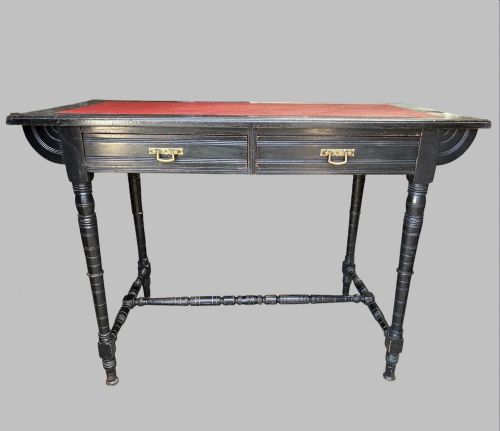

Ebonised Wooden Table
An ebonised wooden table brings the dark, striking finish of simulated ebony into a room, offering a dramatic alternative to natural timber.
Ebonised Wooden Table
An ebonised wooden table covers a range of practical forms designed for display and daily use. Visitors to this selection encounter occasional tables, side tables, writing desks, and centre tables created across the nineteenth and early twentieth centuries.
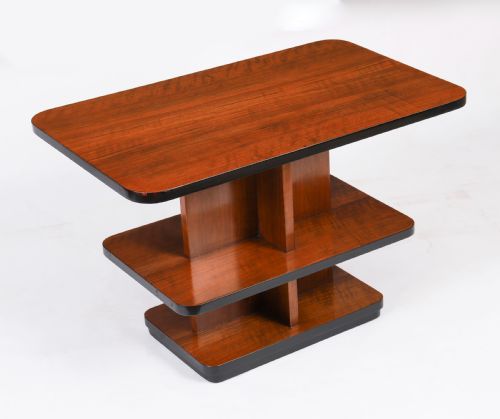
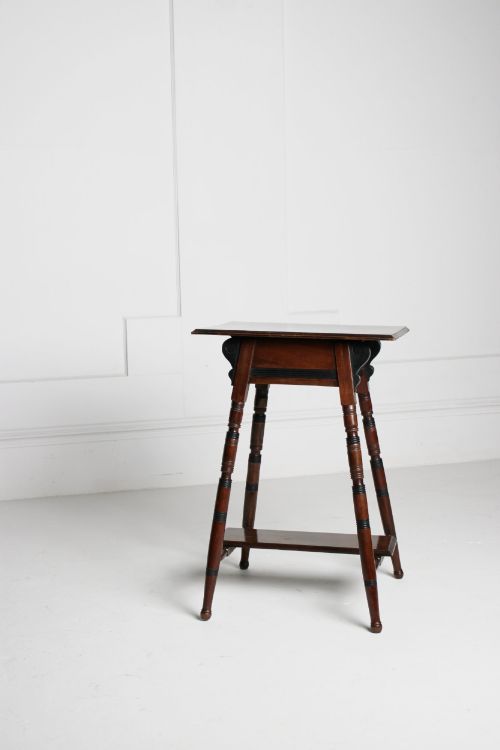
The majority of pieces date from the Victorian era, particularly the Aesthetic Movement of the 1880s, alongside later Edwardian and Art Deco examples. These tables often feature geometric tiers, octagonal surfaces, or turned supports suited for smaller spaces.
How they were made
Maker's workshops built these tables using common structural hardwoods such as beech or fruitwood, applying a dense black stain and polish to imitate expensive ebony. Some examples incorporate contrasting materials like brass, glass, inlaid woods, or hand-painted details.
Cabinetmakers utilised specialised joinery for multi-tiered occasional tables and folding designs, while surface ornamentation ranged from chip-carving to marquetry panels and mirrored tiers.
Materials paired with ebonised wood across these listings include brass, glass, walnut, burr walnut, and painted paper.
What varies in quality
The distinction between standard commercial output and finer work lies in the depth of the ebonisation and the crispness of the secondary carving or inlay. Superior pieces display careful preparation of the timber beneath the black finish, preserving sharp mouldings and structural integrity over time.
Design ambition separates basic occasional tables from sophisticated Aesthetic Movement or Anglo-Indian creations, where proportion, secondary woods, and decorative mounts demonstrate the maker's skill.
Hindley and Sons·Liberty and Co·Druce and Co
The Ebonised Wooden Table Glossary
- Ebonised
- Wood treated with a black stain or finish to simulate genuine ebony. This technique gained immense popularity during the nineteenth century for furniture and decorative objects.
- Aesthetic Movement
- A late nineteenth-century design style emphasising decorative arts for their own sake. Pieces from this movement often utilise ebonised surfaces, geometric lines, and oriental influences.
- Occasional table
- A small, movable table designed for specific, intermittent tasks such as holding books or tea. These forms became widespread in Victorian and Edwardian domestic interiors.
- Centre table
- A freestanding table intended to stand away from walls as a focal point in a room. They frequently feature detailed carving or multi-sided tops.
Ebonised Wooden Table: Frequently Asked Questions
How do I clean an ebonised table?
Dust the surface regularly with a soft, dry cloth to prevent the accumulation of grit. Avoid modern chemical polishes, which can build up and dull the dark finish.
Apply a traditional beeswax sparingly if the timber appears dry, buffing it gently to maintain a soft sheen without creating a greasy residue.
Where should I place a centre table?
A centre table requires sufficient surrounding space to allow movement and visibility from all angles. Placing it in the middle of a principal room or a wide hallway lets the design be appreciated fully.
Ensure the table sits away from direct heat sources and strong sunlight, which can fade or crack the ebonised finish over decades.
What is an Aesthetic Movement table?
Aesthetic Movement tables embrace simplified forms, dark ebonised finishes, and often draw inspiration from Japanese design. They reject heavy Victorian ornamentation in favour of clean geometry and structural clarity.
These tables frequently incorporate multiple tiers, brass fittings, or painted highlights that contrast sharply with the black wood.
How do I date a Victorian ebonised table?
Examine the construction methods beneath the surface, looking for hand-cut joints, timber shrinkage patterns, and the type of secondary wood used. Style markers such as turned legs and incised gilt detailing provide further clues.
Consult records of known makers or retailers who stamped their pieces during the nineteenth century to narrow down the decade of manufacture.