


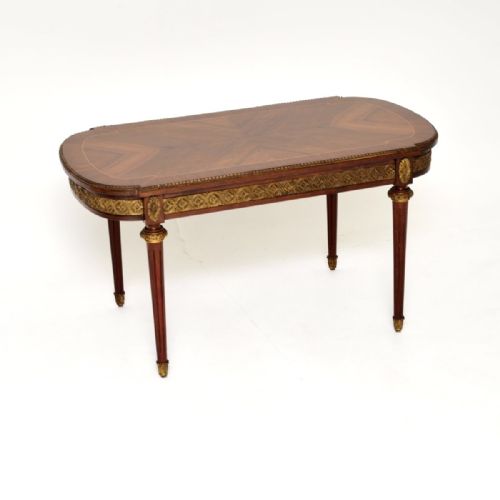

French Marquetry Tea Table
A french marquetry tea table brings together intricate wood inlay and gilt mounts, offering a surface for display that carries distinct continental polish.
French Marquetry Tea Table
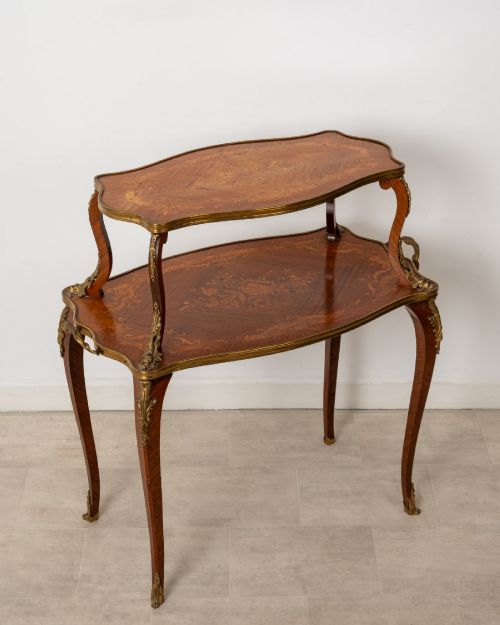
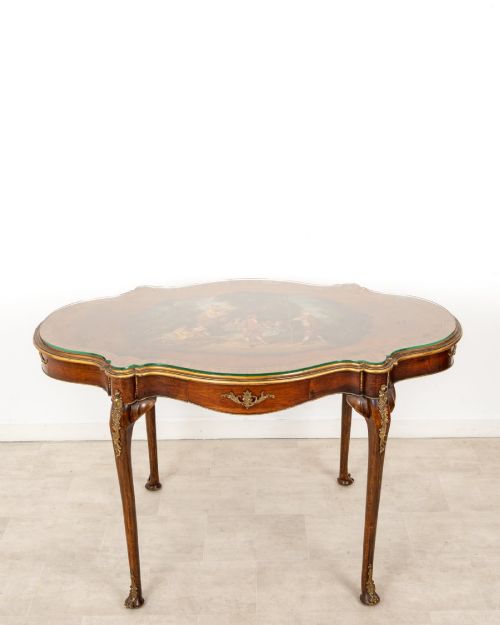
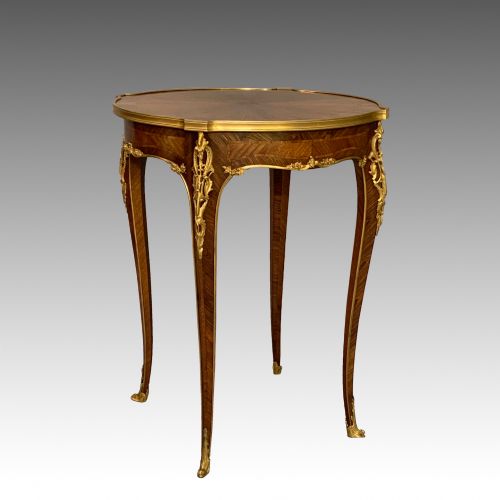
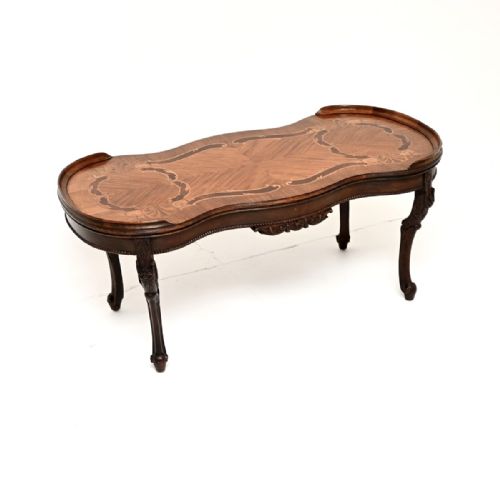
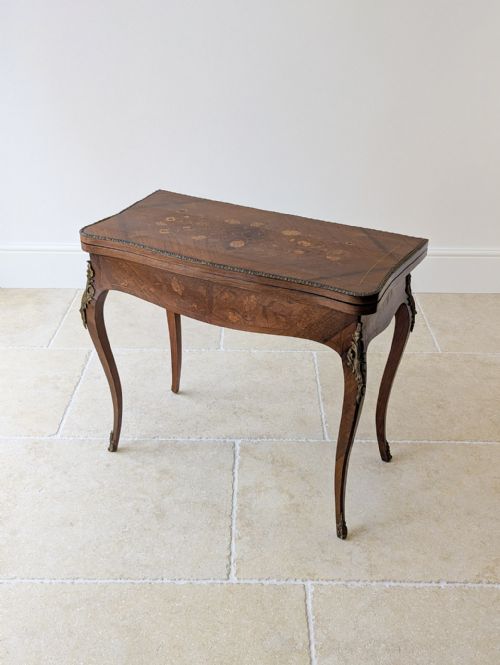
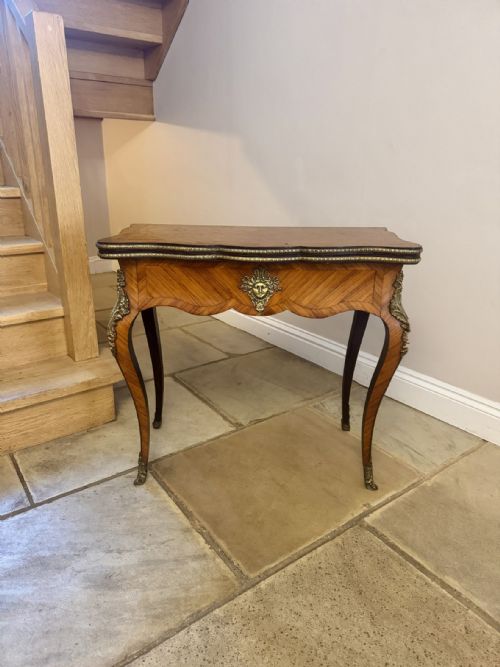
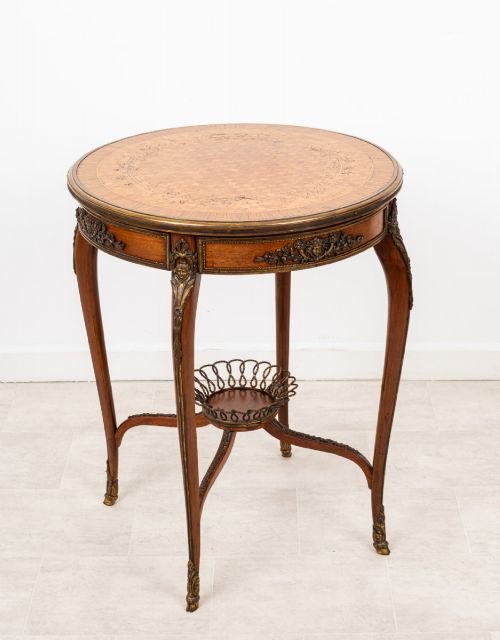
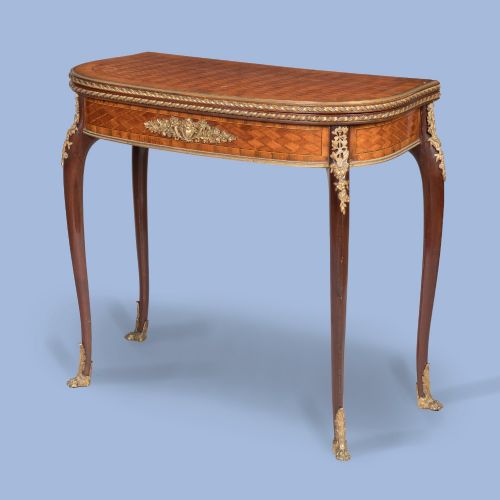
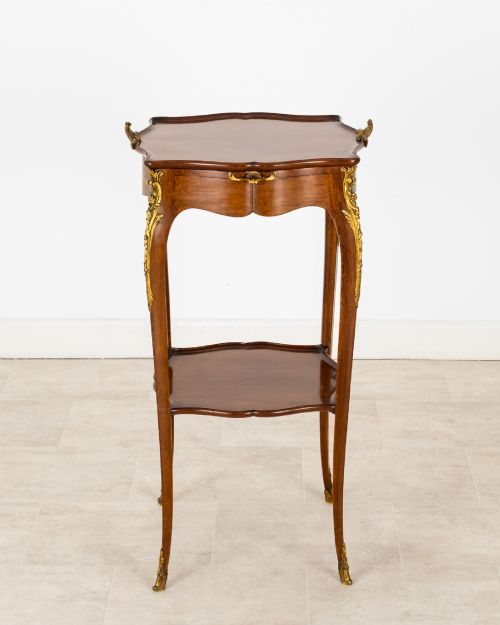
A french marquetry tea table is typically encountered as a nineteenth-century piece reflecting Louis XV or Louis XVI revivals, built for parlor use. These forms encompass centre tables, card tables, and tiered etagères designed with decorative wood veneers.
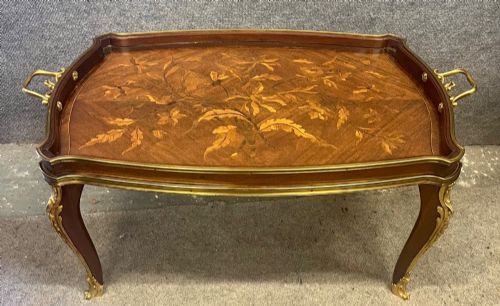
The materials span kingwood, walnut, and mahogany, often accented with floral marquetry and parquetry patterns. Makers working in London and Paris produced these occasional and games tables to serve decorative functions in formal reception rooms.
How they were made
Cabinetmakers utilised contrasting timbers such as satinwood, rosewood, and kingwood, slicing them into fine veneers to compose pictorial floral arrangements and geometric parquetry. These decorative surfaces were laid onto a supportive carcass using traditional animal glues.
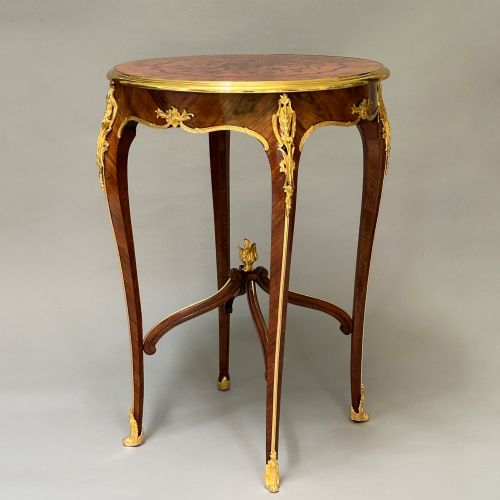
Cast ormolu and gilt bronze mounts, alongside brass accents, were shaped to frame the edges, aprons, and legs of each table. Such metalwork added structural emphasis and protected vulnerable corners from everyday wear.
French Marquetry Tea Table Retail Price Guide 2026
Typical asking prices for french marquetry tea table among the pieces listed under this phrase on Sellingantiques today, from the lower quarter to the upper quarter. They describe what is for sale here now, not the wider market.
Listings feature nineteenth-century periods alongside Edwardian examples, utilising kingwood, walnut, and mahogany.
What varies in quality
The sophistication of the marquetry design separates standard production from exceptional examples, seen in the crispness of the floral shading and the precision of the veneer cuts. Finer pieces employ a wider variety of natural timbers to create depth and contrast within the pictorial panels.
The weight and detail of the gilt bronze or ormolu mounts dictate the overall tier of the piece. Crisp chasing on the metalwork and substantial timber frames indicate a higher grade of workshop execution.
Joseph-Emmanuel Zwiener·François Linke·Edwards & Roberts·Gillows
The French Marquetry Tea Table Glossary
- Marquetry
- Decorative patterns formed by fitting together small pieces of wood veneer. This technique creates pictorial scenes or floral motifs across the table top.
- Parquetry
- Geometric wood inlay arranged in patterns such as cubes or chequers. It differs from marquetry by relying on regular, repeating lines rather than pictorial compositions.
- Ormolu
- Gilded bronze mounts applied to furniture edges and legs. The metal is cast and chased to achieve sharp decorative detail.
- Etagere
- A set of open shelves or tiered stands used for display. These forms often incorporate marquetry tops and brass galleries.
- Crossbanding
- A border of veneer laid around the perimeter of a table top with the grain running perpendicular to the centre. This frames the primary marquetry panel.
French Marquetry Tea Table: Frequently Asked Questions
How do I spot Louis XV style?
Louis XV style pieces are defined by curving lines, cabriole legs, and asymmetrical floral marquetry. The overall silhouette avoids straight edges in favour of organic, flowing contours.
Ormolu mounts on these items usually trace the shoulders of the legs and the sweep of the apron, accentuating the rococo revival aesthetic.
What is parquetry?
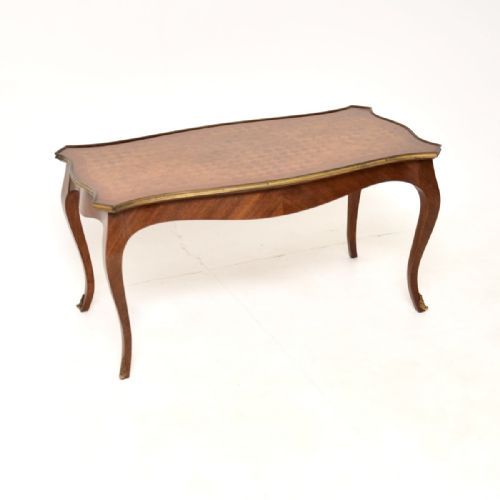
Parquetry is a form of wood inlay that uses geometric shapes like squares, triangles, or cubes to create repeating patterns. It contrasts with floral marquetry by depending on architectural symmetry.
Tables featuring parquetry often highlight the natural grain differences between timbers such as kingwood and mahogany.
Where were these tables used?
These pieces served practical and decorative roles in nineteenth-century drawing rooms and parlours. Card tables and games tables provided surfaces for evening entertainment.
Occasional tables and etagères held decorative objects, lamps, or tea service items, functioning as mobile display pieces.
How do I date a nineteenth-century table?
Dating relies on combining the evidence of construction methods, timber choices, and stylistic revival cues. Pieces referencing Louis XVI revival often feature straighter tapered legs and symmetrical parquetry.
Nineteenth-century examples frequently employ kingwood and rosewood veneers over mahogany or walnut carcasses, matching the dominant tastes of the period.