

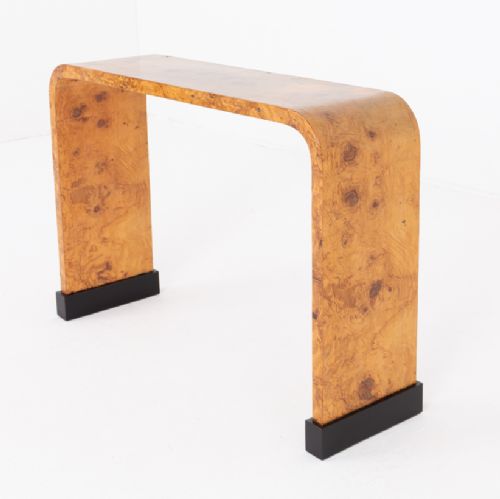
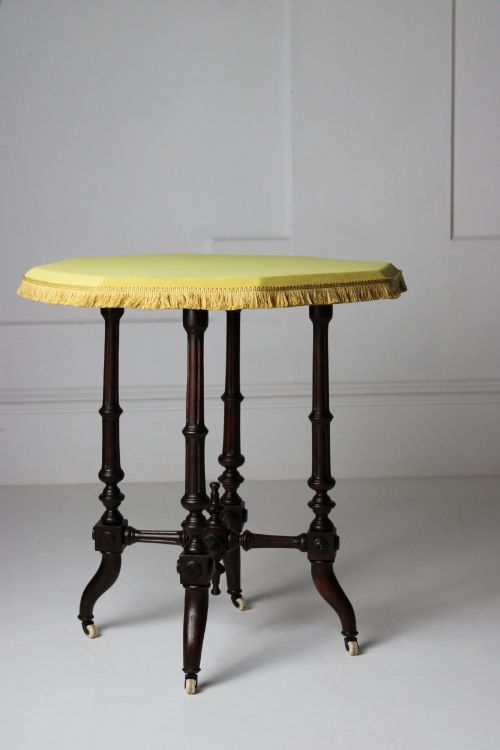


Ebonised Wood Hall Table
An ebonised wood hall table brings dark, striking grain and linear focus to an entrance, grounding a hallway with Victorian presence or Regency line.
Ebonised Wood Hall Table
An ebonised wood hall table is a narrow or freestanding surface designed for an entranceway, taking forms such as console tables, side tables, and centre tables. These pieces emerge from the nineteenth century, including Victorian, Regency, and Aesthetic Movement periods, alongside later Art Deco examples.
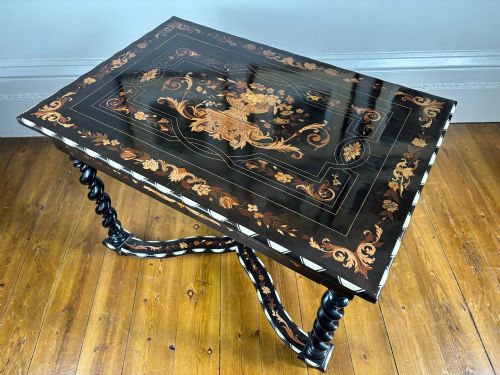
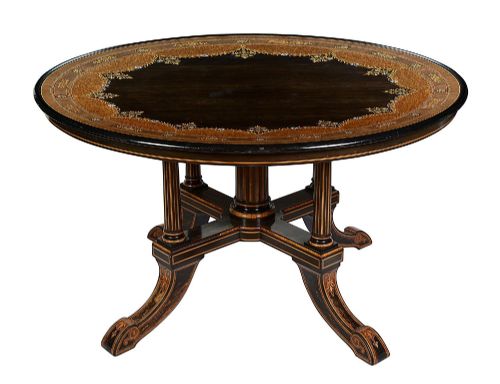
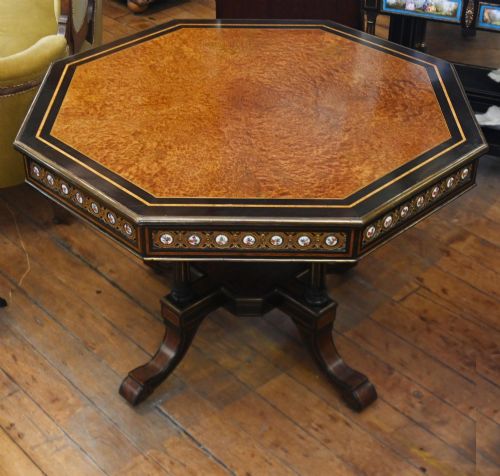
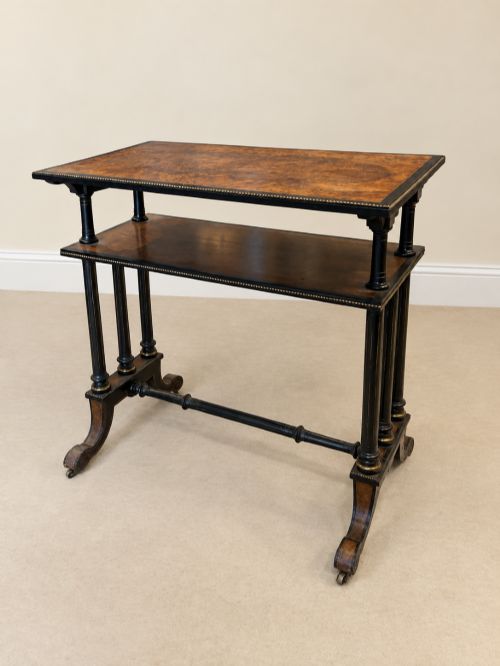
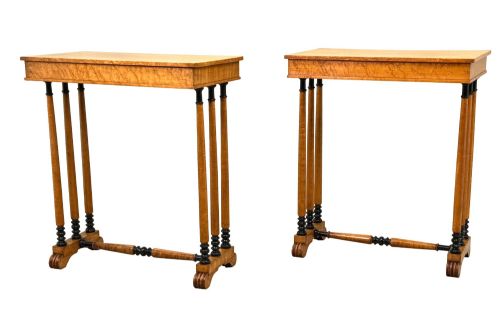
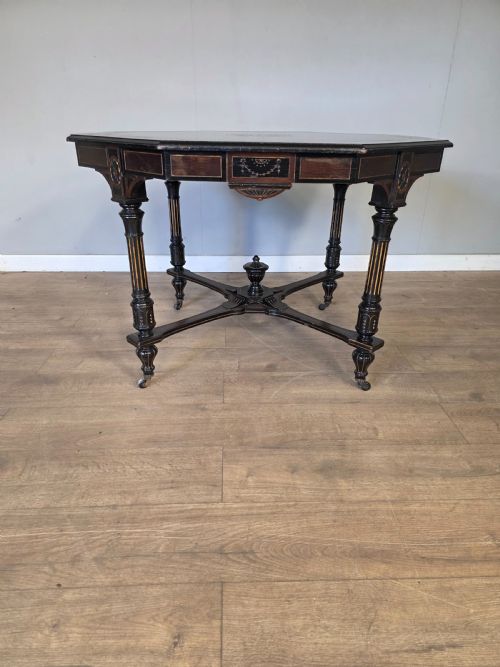
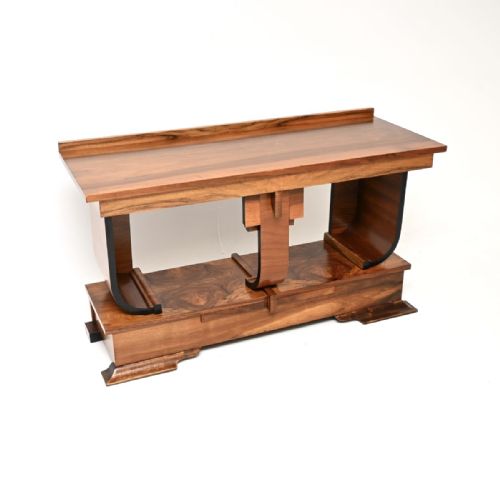
The versions met most often on this page span nineteenth-century ebonised hardwood and blackened finishes, frequently paired with marquetry, brass details, and contrasting woods like walnut, amboyna, and burr birch.
How they were made
Cabinet makers achieved the characteristic dark finish by staining or ebonising timber to mimic ebony, often applied to hardwoods, mahogany, or birch. Surfaces frequently incorporate intricate marquetry, bone inlay, and contrasting veneers such as amboyna and burr walnut.
Structural elements are joined using period cabinet-making techniques, occasionally incorporating cast solid brass sabots, gilt bronze, or carved details to accentuate the dark polished frames.
Ebonised Wood Hall Table Retail Price Guide 2026
Typical asking prices for ebonised wood hall table among the pieces listed under this phrase on Sellingantiques today, from the lower quarter to the upper quarter. They describe what is for sale here now, not the wider market.
Materials recorded on this page include ebonised wood, brass, burr walnut, mahogany, amboyna, and bleached oak.
What varies in quality
Quality rests in the precision of the ebonised finish and the crispness of any carved or inlaid detail, such as bone inlay, marquetry, and brass mounts. Superior pieces display harmonious proportions and refined secondary timbers beneath the dark surface.
The depth of the grain preparation and the integrity of the joinery separate standard production from masterwork pieces associated with specific design movements and workshops.
Collinson + Lock·Daniel Cottier·Cottier and Co
The Ebonised Wood Hall Table Glossary
- Ebonised
- Wood treated with stain, dye, or paint to imitate expensive ebony. This dark finish gained popularity during the Victorian and Aesthetic Movement periods.
- Marquetry
- The art of applying decorative pieces of veneer to a structure to form intricate patterns. Examples here feature floral or geometric designs in contrasting woods and bone.
- Console table
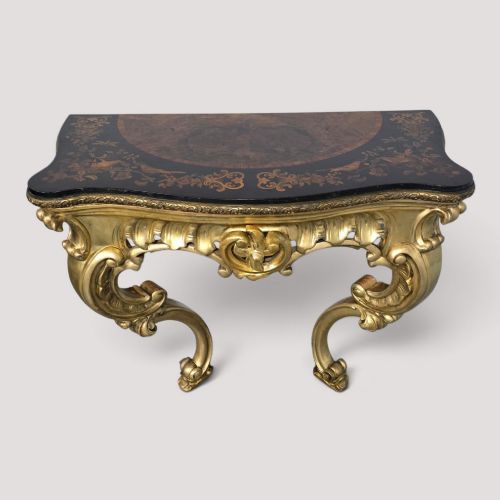
- A table fixed to a wall or freestanding with front legs, designed for narrow spaces like hallways. These often feature decorative carving or gilt work.
- Centre table
- A freestanding table meant to be viewed from all sides, placed in the middle of a room or grand hall. Nineteenth-century examples often utilise amboyna, walnut, or ebonised hardwood.
Ebonised Wood Hall Table: Frequently Asked Questions
What is an ebonised hall table?
An ebonised hall table is a nineteenth-century or later piece of furniture finished with a dark stain to resemble ebony. These tables serve narrow entryways and transitional spaces.
They appear in various styles including Victorian, Regency, and Art Deco, often combining dark wood surfaces with marquetry or brass details.
How do I style a hall table?
A hall table works well against an entrance wall, styled with lamps, ceramics, or mirrors. Its dark ebonised finish provides a strong visual anchor in light or neutral hallways.
Ensure the depth of the table matches the clearance needed for your entryway.
How do I date an ebonised table?
Dating relies on the secondary timbers, construction methods, and stylistic cues of the period. Victorian and Regency pieces show specific joinery and veneer choices like burr walnut or amboyna.
Design movements such as the Aesthetic Movement also provide clear chronological markers for ebonised furniture.
What woods are beneath ebonised finishes?
Makers used various hardwoods, mahogany, birch, and walnut as a base before applying the dark ebonised finish. The underlying timber often shows through where wear has occurred over time.
Some pieces also incorporate contrasting panels of burr birch, amboyna, or maple.