




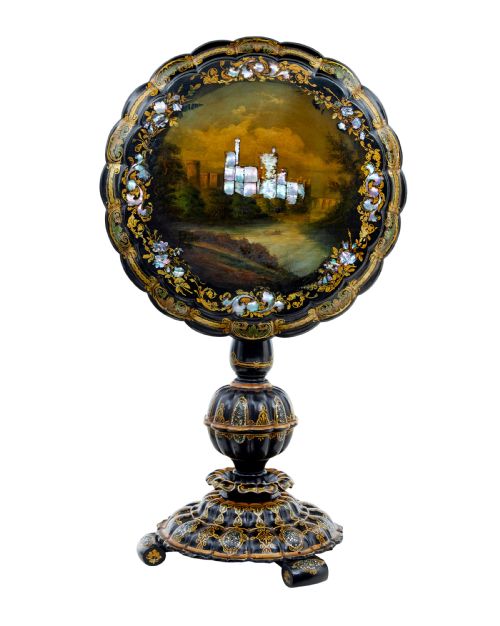


Black Inlaid Side Table
A black inlaid side table brings dark timber and precise surface detail into a room, offering both a functional surface and a striking focal point.
Black Inlaid Side Table
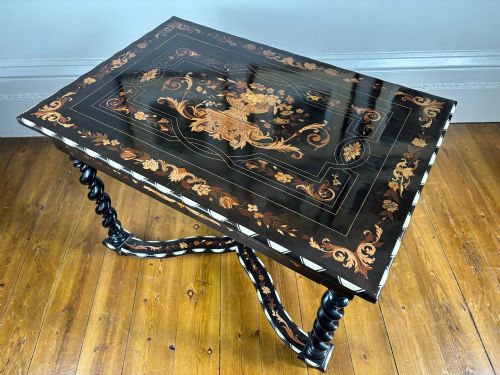
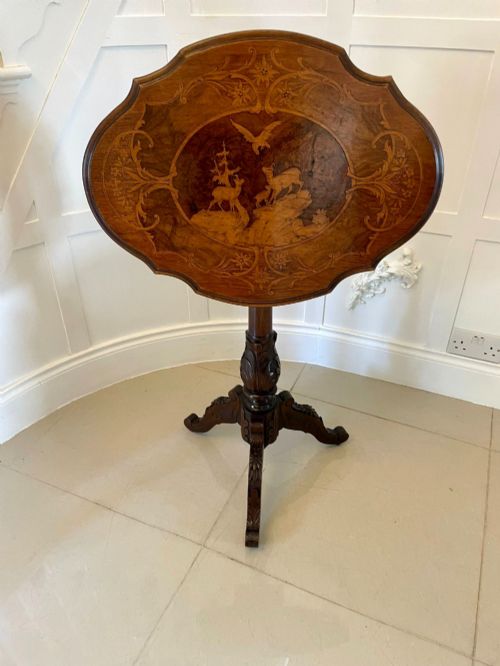
When you search for a black inlaid side table, you encounter dark or ebonised surfaces decorated with contrasting materials such as brass, bone, ivory, or lighter wood marquetry. The pieces span periods from the eighteenth century through the Victorian era to the early twentieth century, taking forms such as occasional tables, centre tables, and games tables.
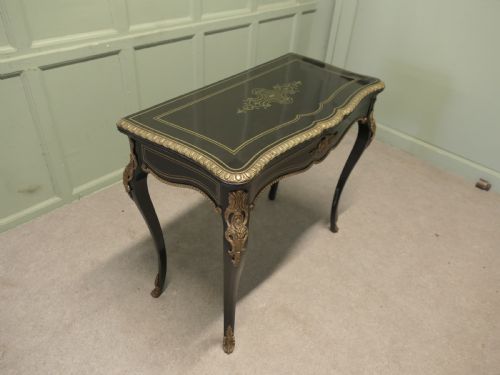
You are most likely to meet nineteenth-century Victorian and French Napoleon III examples finished in ebonised wood with intricate brass stringing or floral marquetry. These compact items served functional roles in period drawing rooms and parlours, providing a stable platform for lamps, books, or decorative objects while adding visual weight to a scheme.
How they were made
Maker's workshops utilised dense native and exotic timbers, frequently applying ebonisation to pearwood, fruitwood, or walnut to imitate costly ebony. Surfaces were then channelled or prepared to receive precise brass inlay, bone sections, or multi-timber marquetry patterns.
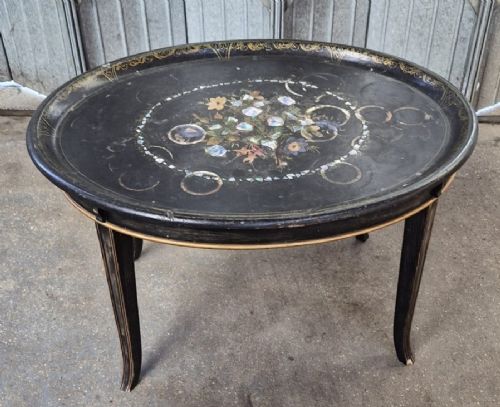
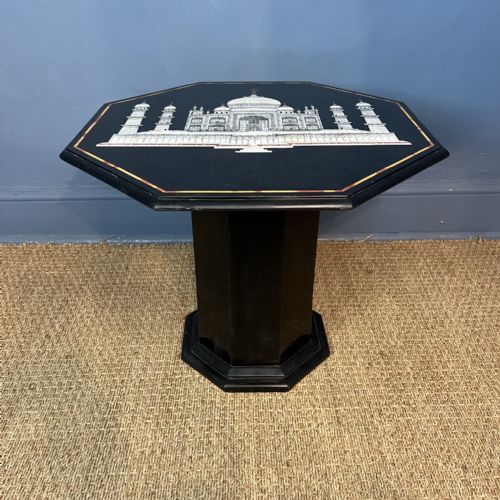
The decorative schemes often incorporated specialised techniques like pietre dure stone inlay, mother-of-pearl placement, or painted papier-mâché. Ormolu mounts and cast bronze elements were frequently added to corners, borders, and legs to accentuate the dark polished timber.
Black Inlaid Side Table Retail Price Guide 2026
Typical asking prices for black inlaid side table among the pieces listed under this phrase on Sellingantiques today, from the lower quarter to the upper quarter. They describe what is for sale here now, not the wider market.
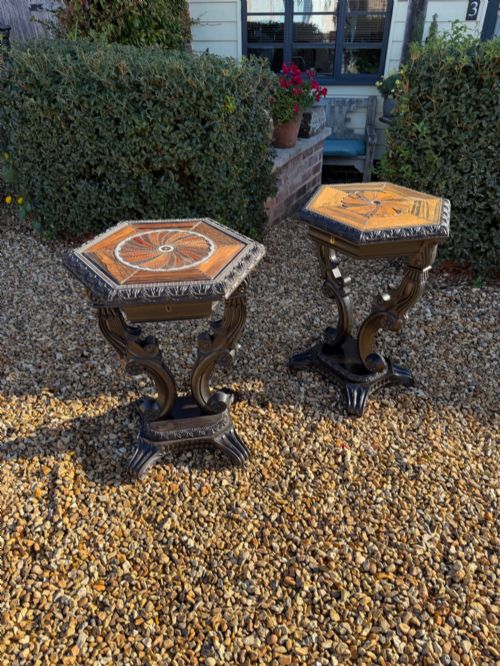
Materials recorded across the selection include ebonised wood, marble, brass, tortoise-shell, mother-of-pearl, and various marquetry veneers.
What varies in quality
The standard of a black inlaid side table rests upon the crispness of the cutting and the exactness with which the contrasting materials sit flush within the timber ground. Superior examples display microscopic gaps around intricate brass or bone motifs, whereas lesser pieces reveal filler or lifted edges where shrinkage has occurred over time.
The choice of secondary woods and the depth of the initial ebonisation also distinguish fine cabinet-making from mass production. Tables featuring hand-cut marquetry with varied grain direction and sophisticated figuration command greater appreciation than those relying on stamped or stencilled surface decoration.
Maison Millet
The Black Inlaid Side Table Glossary
- Ebonised
- Wood treated with stain, dye, or paint to simulate the appearance of genuine ebony. This dark finish was especially popular during the Victorian and Aesthetic periods.
- Marquetry
- Decorative woodwork where pieces of veneer are fitted into a ground to form geometric or pictorial designs. Craftsmen select woods of contrasting natural colours to create depth.
- Ormolu
- Gilt bronze mounts applied to furniture edges, feet, and aprons. The technique involves applying a gold amalgam to cast bronze before heating.
- Pietra Dura
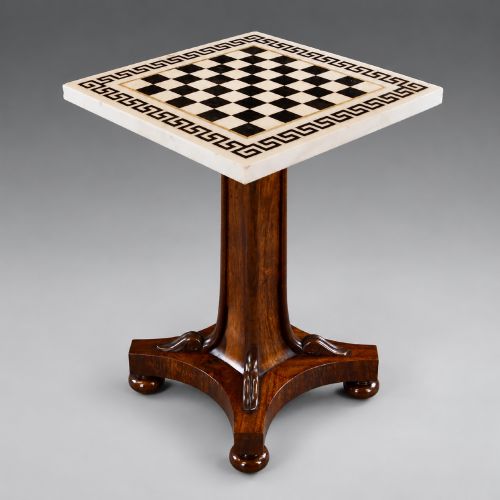
- Inlay work using cut and fitted polished coloured stones to create formal or naturalistic pictures. It frequently appears on Italian tabletop surfaces.
- Papier-mâché
- A composite material made from paper pulp or layers of paper bound with glue, pressed, and hardened. It takes a smooth black lacquer finish well and accepts mother-of-pearl inlay.
Black Inlaid Side Table: Frequently Asked Questions
What periods do these tables come from?
The listings encompass items primarily from the nineteenth century, including Victorian, Regency, and French Napoleon III eras. Earlier Georgian pieces and twentieth-century examples also appear.
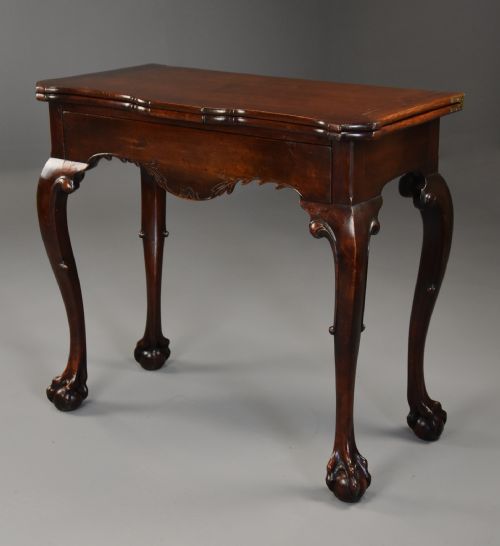
Craftsmanship styles shift between these eras, moving from eighteenth-century walnut tea tables to intricate Victorian ebonised and marquetry occasional pieces.
How were these tables used originally?
They functioned as versatile furniture for drawing rooms, boudoirs, and halls, serving as tea tables, games tables, or plant stands. Many held lamps, writing equipment, or decorative ornaments.
Specialised forms like tilt-top tables and writing desks were designed to be moved easily or stored against walls when not in use.
How do I care for an ebonised surface?
Keep the timber away from direct sunlight and excessive heat sources to prevent the ebonised finish from fading or cracking. Dust gently with a dry, soft cloth.
Avoid commercial liquid polishes and abrasive cleaners, applying a light coat of appropriate wax only when the timber appears dry.
How can I tell brass inlay from painted lines?
Run a fingertip lightly across the decorative surface to feel for the slight elevation or exact flushness of the metal wire. Painted lines remain completely flat under the polished clear coat.
Under magnification, genuine brass inlay reveals minute joins and occasional tiny pins used to secure the metal into the prepared wood channel.